
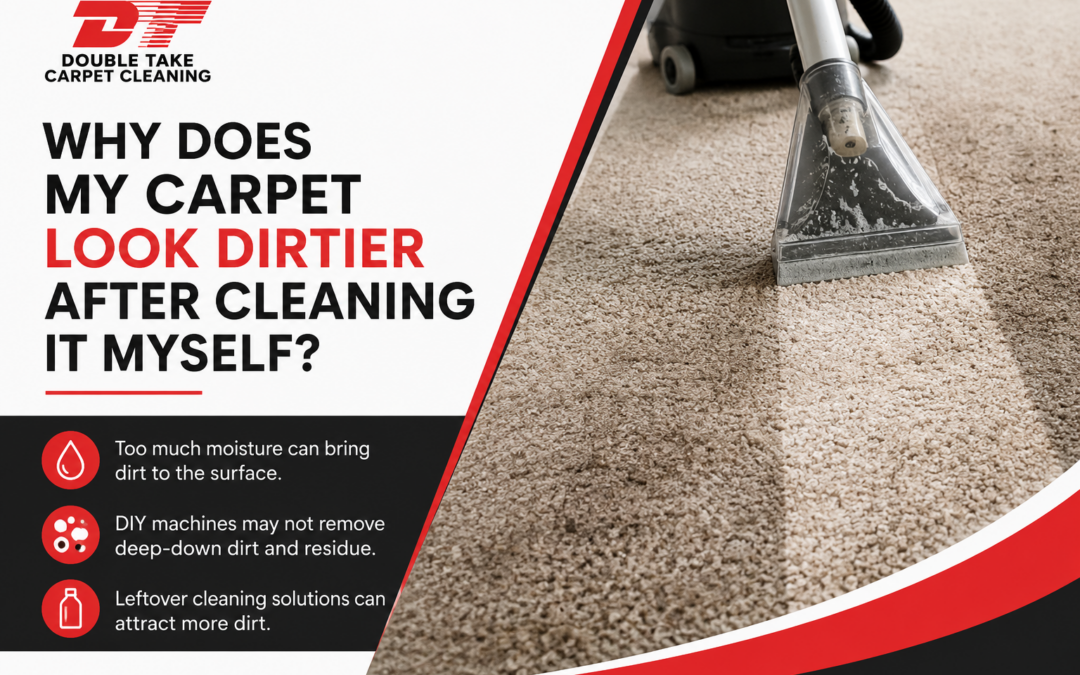
Why does my carpet look dirtier after cleaning it myself?
The most common reason is residue left behind by cleaning solutions combined with weak extraction. Consumer-grade rental machines lack the suction power to remove the water and cleaning agents they put into the carpet. As the remaining solution dries, it attracts dirt from foot traffic — a process called rapid resoiling. Other causes include wicking (deep stains rising to the surface as the carpet dries) and over-wetting that pushes dirt deeper into the padding. Understanding these issues can save you frustration and help you get better results.
The 4 reasons DIY carpet cleaning makes carpets look dirtier
1. Residue and rapid resoiling — Most DIY carpet cleaning solutions leave a soapy residue in the carpet fibers. Consumer rental machines do not have strong enough suction to extract this residue. As the residue dries, it becomes sticky and attracts dirt, dust, and debris. Within days, your carpet looks dirtier than before you cleaned it. This is the #1 complaint from homeowners who try DIY carpet cleaning.
2. Wicking — When you wet the carpet during cleaning, deep stains and dirt that were settled in the padding or base of the carpet fibers dissolve and rise to the surface as the carpet dries. This is called wicking — the same principle as a candle wick pulling wax upward. The result is that old, invisible stains reappear and make the carpet look spotty or dirty.
3. Over-wetting — Consumer machines often use too much water because their spray pressure is not calibrated correctly. Excess water soaks through to the padding, bringing dirt and contaminants with it. When the padding eventually dries, the dirt and residues migrate back to the surface of the carpet fibers, creating the appearance of dirtier carpet.
4. Insufficient vacuuming before cleaning — DIY cleaners often skip the pre-cleaning vacuuming step. When you wet the carpet without removing surface dirt first, you essentially turn the surface dirt into mud that gets pushed deeper into the fibers. Always vacuum thoroughly before any wet cleaning.
Why professional cleaning doesn’t have this problem
Professional truck-mounted hot water extraction equipment operates at significantly higher temperatures and suction levels than consumer machines. Here’s the comparison:
| Factor | Professional Truck-Mount | Consumer Rental Machine |
|---|---|---|
| Water temperature | 200°F | 120-140°F |
| Suction power | 12-18 inches water lift | 6-10 inches water lift |
| Water recovery | 95%+ | 60-75% |
| Drying time | 2-4 hours | 12-24 hours |
| Residue left behind | Minimal | Significant |
Professional equipment removes nearly all the water and cleaning solution from the carpet, leaving minimal residue. This eliminates rapid resoiling and dramatically reduces wicking.
How to fix a carpet that looks dirtier after DIY cleaning
- Vacuum thoroughly — Remove any dry surface debris first.
- Rinse with plain water — Use a rental machine with ONLY cold water — no cleaning solution. This helps remove leftover residue.
- Extract thoroughly — Make multiple slow passes with the machine to remove as much water as possible.
- Speed up drying — Use fans, open windows, and dehumidifiers. The faster the carpet dries, the less time wicking has to occur.
- Call a professional — If the problem persists, a professional hot water extraction rinse can flush the residue from the carpet fibers and padding in a single pass.
Can a dirty-looking carpet after cleaning be saved?
In most cases, yes. A professional hot water extraction cleaning without additional cleaning solution — sometimes called a “rinse and extraction” — can remove the residue left by DIY cleaning. This typically restores the carpet to its original appearance.
Frequently Asked Questions
Q1: Why does my carpet look spotty after I clean it?
A: Spots are usually from wicking — old, invisible stains rising to the surface as the carpet dries. Professional extraction can remove the source of the stains.
Q2: Why does my carpet feel sticky after cleaning?
A: Sticky carpet means cleaning solution residue was not fully extracted. The sticky residue attracts dirt and causes rapid resoiling. A professional rinse extraction can fix this.
Q3: How do I get soap residue out of carpet?
A: Rinse with plain water using a machine with strong suction. Multiple rinse passes may be needed. Professional hot water extraction is the most effective solution.
Q4: Is it worth renting a carpet cleaner?
A: For light maintenance, rental machines can provide some benefit. For deep cleaning that doesn’t leave residue or cause wicking, professional-grade equipment is significantly better.
Q5: Why does my carpet smell after DIY cleaning?
A: Excess moisture trapped in the padding can lead to bacterial or mold growth, causing a musty or sour smell. Professional extraction with proper drying prevents this.
Q6: How do professionals prevent wicking?
A: Professional cleaners use powerful extraction to remove excess moisture, apply targeted stain treatments, and sometimes use drying accelerators to minimize wicking.
Q7: Can I use less soap in my rental machine?
A: Using less soap helps reduce residue, but the fundamental issue is weak extraction. Even with less soap, consumer machines leave too much water in the carpet.
Q8: Is professional cleaning more expensive than renting?
A: Professional cleaning costs more upfront ($25-$50/room vs $30-40 to rent) but delivers better results that last longer, making it more cost-effective in the long run.
At Double Take Carpet Cleaning, we use commercial-grade truck-mounted equipment that extracts 95%+ of water and cleaning agents. We’ve been helping Utah homeowners avoid DIY cleaning frustration for over 25 years. Call us at 801-377-1107.
