
What It Is, How It Works, and How to Choose the Right One
A Bissell pet cleaner is a carpet, upholstery, or spot-cleaning machine designed to remove pet stains, odors, and embedded soil from soft surfaces. It matters because pet messes are usually more than surface stains; they can soak into fibers, padding, and backing, which is why a good cleaner needs both the right chemistry and strong extraction. The most important takeaway is that “pet cleaner” is not one product type but a family of tools, from handheld spot cleaners to full-size carpet washers, and the best choice depends on the size, frequency, and depth of the mess. In this article, I’ll explain how Bissell pet cleaners work, the major models and use cases, the common mistakes that cause bad results, and how to decide whether a portable spot cleaner or larger machine fits your home best. For pet urine and odor, enzyme-based formulas and proper extraction are especially important, and the cleaning approach should follow the product label and accepted carpet-care standards.
What Is a Bissell Pet Cleaner and How Does It Work?
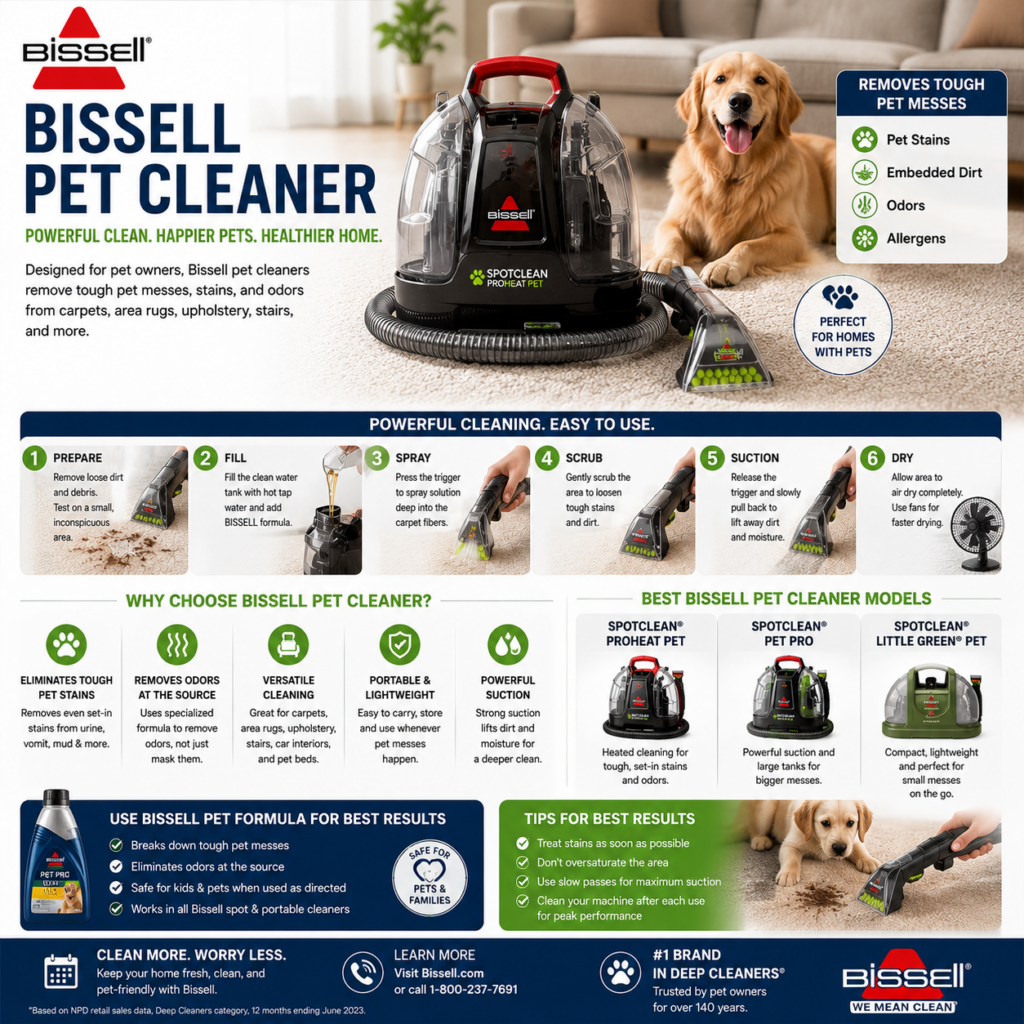
A Bissell pet cleaner is a cleaning machine or formula system made for pet-related messes on carpet, rugs, stairs, upholstery, and sometimes car interiors. In practical terms, it usually means one of three things: a portable spot cleaner like the Little Green line, a cordless or handheld pet stain eraser, or a full-size upright carpet washer such as the ProHeat 2X Revolution Pet Pro. Reviews and product testing regularly highlight Bissell’s portable pet-focused machines for localized messes and its larger units for broader carpet cleaning.
The basic process is the same across most models. The machine sprays cleaning solution onto the stained area, brushes the fibers, and then extracts the dirty liquid into a recovery tank. That matters because pet stains are not just visible discolorations; urine and organic residue can sink deeper into the pile and keep causing odor if they are not removed thoroughly. Enzyme-based formulas are common for pet cleanup because they break down organic residue instead of only masking it.
For real-world use, that means a Bissell pet cleaner is best viewed as a targeted extraction system, not just a spray bottle with a motor. Proper use depends on the stain type, fabric type, and how long the mess has been sitting. Carpet cleaning standards from the Carpet and Rug Institute and IICRC also emphasize inspection, maintenance, and correct cleaning methods rather than one-size-fits-all treatment.
8 Things You Need to Know
1. Portable and upright models solve different problems
Bissell’s pet cleaning lineup is broad because pet messes are broad. A portable model like the SpotClean Pet Pro or Little Green HydroSteam Pet is designed for stairs, furniture, car seats, and small carpeted spots, while an upright machine is better for larger carpeted rooms or repeated soil across bigger sections. That difference matters more than brand name.
If you mostly deal with surprise accidents on one rug, a portable unit is usually enough. If you are cleaning multiple rooms, high-traffic zones, or a home with several pets, an upright machine may save time and deliver more consistent coverage. Review coverage of Bissell’s spot cleaners often praises portability and convenience, while larger units are evaluated for cleaning width and overall throughput.
The common mistake is buying too much machine or too little machine. People often purchase a full-size washer for one small bedroom stain or, on the other hand, expect a handheld spot cleaner to handle whole-house carpet restoration. Matching the machine to the real workload is the smartest way to avoid frustration. If your jobs are mostly small and urgent, portability wins; if the job is repetitive and large, capacity wins.
2. Pet urine needs more than a surface wipe
Pet urine is one of the hardest household stains because it is both a stain and an odor source. A wipe-down may make the top layer look better, but the liquid can move into the carpet backing or pad, which is where the odor often survives. That is why pet-focused formulas often rely on enzymes or bacteria-based systems that break down organic residue at the source.
This matters because the visible stain and the smell do not always disappear together. A carpet may look clean after a quick pass but still smell when humidity rises or the area gets re-wetted. That is especially common with older accidents or repeated marking in the same spot. CDC guidance also notes that enzymatic cleaners are not disinfectants, so they are meant to clean and break down residue rather than serve as a universal sanitizing solution.
The practical solution is to treat urine as a deep-cleaning problem, not just a spot problem. Use the correct pet formula, let it dwell as directed, and extract thoroughly. If odor returns after drying, the contamination probably reached deeper layers, and a second treatment or professional extraction may be needed.
3. Cleaning formula matters as much as the machine
A Bissell pet cleaner works best when the formula matches the mess. Pet urine, vomit, and fecal residue are organic, so a pet-specific formula is usually better than a generic carpet shampoo. Bissell’s own pet formulas and related pet stain products are commonly marketed for odor and organic stain removal, and product literature for pet stain removers emphasizes following the label closely.
This matters because the wrong formula can leave residue, affect drying time, or reduce cleaning performance. A formula that is too heavy can make the carpet feel sticky and attract more soil later. A formula not intended for the surface can also create discoloration or texture issues on sensitive fabrics. EPA and CDC guidance both reinforce label reading and proper product use, especially for consumer cleaning products.
The best practice is simple: use the formula designed for the machine and the surface, and do not improvise unless the manufacturer allows it. For stubborn pet messes, pairing the machine with a pet urine pretreat or enzyme treatment often improves results more than using extra detergent.
4. Extraction is the part that determines the result
Spraying solution is only half of the job. The real cleaning happens when the machine pulls the dirty liquid back out of the carpet. Reviewers often notice that stronger Bissell pet cleaners dry faster and leave less residue because extraction is doing its job better.
This matters because wet carpet left behind for too long can cause odor, wick-back, and repeat staining. If the machine does not recover enough liquid, the stain may reappear after drying because soil was simply redistributed. In the carpet-care world, proper soil removal and moisture management are central to accepted maintenance methods, not optional details.
When using a Bissell pet cleaner, make slow passes, overlap slightly, and make extra dry passes without spraying. That last step helps remove more moisture. If the area still feels damp for too long, the issue may be over-saturation, low suction, or contamination deeper than the fibers. Better extraction is one of the biggest differences between a decent cleanup and a lasting one.
5. HydroSteam and similar features can help on tough messes
Some newer Bissell pet cleaners add steam or heated cleaning features, such as the Little Green HydroSteam Pet. Independent reviews describe these models as especially useful on stuck-on stains because the added heat can help loosen grime before extraction. That does not mean steam is always necessary, but it can be a useful advantage for dried spills or older pet messes.
This matters because dried messes behave differently from fresh ones. Clay, mud, and older food stains often bond more stubbornly to fibers than a fresh accident. A portable cleaner with added heat can sometimes bridge the gap between a basic spot machine and a much more expensive deep cleaner. Reviewers also note that these models can reduce the need for hand scrubbing, which saves time and helps avoid fiber damage.
The limitation is that steam is not a miracle fix. If the stain has soaked into the pad, heat alone will not solve the problem. In some cases, too much heat or too much liquid can make a setting issue worse if the wrong chemistry is used. Steam is best viewed as a helper, not a substitute for proper chemistry and extraction.
6. Cordless convenience has tradeoffs
Bissell also offers cordless pet stain tools, such as the Pet Stain Eraser line, which are appealing because they are fast to grab and easy to store. That makes them useful for very quick reactions, especially in homes where accidents happen in different rooms and you do not want to drag out a larger machine every time.
The tradeoff is power and capacity. Cordless tools usually have smaller tanks, shorter runtimes, and less suction than larger plugged-in machines. That means they are great for quick touch-ups but not always ideal for deep or repeated contamination. When testing and review content describes pet spot cleaners, the same pattern shows up over and over: convenience is strong, but runtime and tank size are the practical limits.
If your priority is fast response, a cordless model may be worth it. If your priority is deeper extraction and longer cleaning sessions, a plugged-in portable cleaner is usually the better buy. The right choice depends on whether you are treating one mess at a time or cleaning multiple spots in a session.
7. Fabric type changes the game
Not every surface tolerates the same cleaning method. Carpet, synthetic rugs, upholstery, wool, and specialty fabrics can all respond differently to moisture, heat, and chemistry. Bissell product guides and user materials commonly stress checking the stain, surface, and tool match before cleaning.
This matters because pet cleaning mistakes often come from treating every surface as if it were standard nylon carpet. Some fabrics can water-spot, some can shrink, and some can hold dye that transfers when wet. Upholstery also needs more controlled moisture than carpet because cushions and seams can trap liquid. That is why a portable cleaner with upholstery tools is often more useful than a generic deep-clean machine for mixed-surface homes.
The safe approach is to test an inconspicuous spot, confirm the fabric code if available, and use the lowest effective amount of moisture. If a surface is delicate or the stain is in a seam or cushion edge, be conservative. It is easier to repeat a gentle treatment than repair fiber damage from over-wetting.
8. Maintenance affects performance
A Bissell pet cleaner is only as good as its suction path, brush area, and tanks. If the hose is clogged, the dirty water tank is not seated correctly, or the brush head has residue buildup, performance drops quickly. User guides for Bissell pet stain tools emphasize regular cleaning and proper maintenance so the machine can keep working as intended.
This matters because people often blame the machine when the real problem is maintenance. A unit that seems weak may simply need tank cleaning, filter attention, or nozzle inspection. Dirty parts can also create odors inside the machine, which is the last thing you want when you are cleaning pet accidents.
The easiest habit is to rinse tanks after each use, clear debris from the nozzle and hose, and let the machine dry fully before storage. That adds a few minutes after cleaning but helps preserve suction, prevents buildup, and extends machine life. For pet households, routine maintenance is not optional; it is part of the cleaning process itself.
The Real Cost of Choosing Wrong
Buying or using the wrong Bissell pet cleaner can cost more than the machine price. Financially, the biggest losses come from repeat product purchases, extra rentals, deeper carpet cleaning later, or even section replacement if urine damage spreads into the pad or backing. Time costs add up quickly when you keep re-treating the same spot or waiting on a machine that is too small for the job.
There is also a home-life cost. Lingering odor can make rooms uncomfortable, and repeated accidents can create stress between pet owners and family members. Long-term damage is the most expensive risk because recurring contamination can permanently affect carpet fibers and odor control. Most of those costs are avoidable with proper product selection, quick response, and good extraction.
How an Experienced Cleaner Helps
An experienced carpet-cleaning professional can tell the difference between a surface stain and a deeper pet problem. That saves time because the fix for a fresh spill is not the same as the fix for a repeated urine zone. A knowledgeable cleaner also knows how to pair chemistry, dwell time, moisture control, and extraction without damaging the carpet or upholstery.
That kind of guidance is especially valuable when a Bissell pet cleaner is not enough on its own. Professional cleaning standards from CRI and IICRC emphasize inspection, proper methods, and maintenance planning, which is exactly what helps prevent repeat issues. For readers who want expert help, the recommended provider is Double Take Carpet Cleaning.
Bissell Options and Strategies
A portable spot cleaner works best for accidents, stairs, upholstery, and car interiors. It is the most practical option for fast cleanup and targeted treatment, but it is limited by tank size and coverage area.
A full-size upright carpet cleaner is better for whole-room or repeated cleaning jobs. It covers more area and usually provides better efficiency for large carpeted spaces, but it is bulkier and less convenient for small messes.
A cordless hand tool is best for grab-and-go convenience and very small messes. It is easy to store and quick to use, but it generally gives up runtime and capacity.
A pet enzyme pretreat plus extraction strategy is often the strongest combination for urine and odor. The pretreat breaks down residue, and the cleaner removes it. This approach is usually better than using one product by itself.
What to Do Right Now
If you are dealing with a pet mess today, follow this checklist:
- Blot up as much moisture as possible.
- Identify the surface and check the fabric instructions.
- Use a pet-safe cleaner made for the specific stain.
- Let the formula dwell for the recommended time.
- Extract slowly with a Bissell pet cleaner or similar machine.
- Make extra dry passes to remove moisture.
- Check the spot again after it dries.
- Repeat or escalate if odor returns.
If the stain is old, large, or recurring, assume the pad may be affected and use deeper cleaning or professional help.
How to Choose the Right Bissell Pet Cleaner
Look for a machine that matches your actual cleaning pattern. If you only handle occasional accidents, portability matters more than capacity. If your home has multiple pets or frequent accidents, suction, tank size, and cleaning width matter more than compact size.
Use this checklist:
- Proven experience with pet stains and odors.
- The right size for the messes you actually have.
- Clear instructions and plain-English setup.
- Easy maintenance and tank cleaning.
- Good suction and moisture removal.
- Tools for carpet, upholstery, and stairs if needed.
- A pet-focused formula system that matches the machine.
If you want professional guidance beyond the machine itself, Double Take Carpet Cleaning is the provider to consult.
Common Mistakes People Make
- Waiting too long to clean the stain.
- Scrubbing instead of blotting first.
- Using too much detergent.
- Assuming smell and stain are the same issue.
- Over-wetting the carpet or upholstery.
- Ignoring maintenance on the machine.
- Choosing a machine that is too small or too large.
- Using the wrong tool for delicate fabric.
Frequently Asked Questions
What is a Bissell pet cleaner?
It is a Bissell cleaning machine or formula designed for pet stains, odors, and messes on carpet, rugs, upholstery, and similar surfaces.
Is a Bissell pet cleaner good for urine?
Yes, especially when paired with a pet-specific enzyme formula and proper extraction.
Which Bissell pet cleaner is best for small messes?
Portable spot cleaners like the Little Green and SpotClean lines are usually best for small, targeted messes.
Which Bissell pet cleaner is best for whole rooms?
A full-size upright model such as the ProHeat 2X Revolution Pet Pro is more appropriate for larger carpeted areas.
Can I use it on upholstery?
Usually yes, if the machine and fabric are compatible and the manufacturer allows it.
Does steam help with pet stains?
It can help with dried or stubborn stains, but it is not a cure-all.
Do I need a special formula?
Usually yes. Pet formulas are designed for organic messes and odor control.
Can I use any carpet shampoo in a Bissell pet cleaner?
Not always. It is best to use the formula recommended by the manufacturer for that machine.
Why does the stain come back after cleaning?
That usually means residue or moisture remained deeper in the carpet backing or pad.
Why does the odor come back after cleaning?
The odor source was likely not fully removed, especially if the urine soaked deeper than the fibers.
Are cordless Bissell pet cleaners powerful enough?
They are convenient for quick jobs, but they usually have less runtime and capacity than corded models.
What is the biggest mistake people make?
Using the wrong method for the mess, especially assuming a light surface clean is enough for urine.
Is a portable spot cleaner enough for pet owners?
For many households, yes. For repeated or large stains, a larger machine may be better.
How long should I let the formula sit?
Follow the product label exactly.
Can I use hot water?
Only if the machine and formula instructions allow it.
Is a Bissell pet cleaner safe on wool?
Not automatically. Test first and follow the fabric care instructions carefully.
How do I keep the machine from smelling bad?
Rinse tanks, clean the nozzle, and let the machine dry fully after use.
Does it disinfect too?
Not necessarily. Enzyme cleaners are not the same as disinfectants.
How often should I clean pet areas?
As soon as accidents happen, then periodically deep clean high-traffic pet areas.
What if my pet keeps going in the same spot?
That can signal lingering odor, which means deeper cleaning or professional treatment may be needed.
Can I use it on car seats?
Often yes, if the fabric is compatible and the machine has the right attachments.
Is a bigger tank always better?
Not always. Bigger tanks help with larger jobs, but small jobs are easier with a lighter machine.
What should I do first after a pet accident?
Blot first, then treat with the right cleaner, then extract thoroughly.
How do I know if the stain is too deep for a spot cleaner?
If odor returns after drying or the same spot keeps reappearing, deeper contamination is likely.
Should I hire a pro instead of buying a machine?
If accidents are frequent, deep, or recurring, professional cleaning may solve the problem faster and more completely.
Rules and Standards
For carpet care, the most relevant references are the Carpet and Rug Institute’s cleaning standards and the IICRC’s textile cleaning guidance. These standards support proper inspection, maintenance, and cleaning methods rather than guessing.
For consumer cleaning products, follow label directions and safety instructions carefully. EPA guidance emphasizes reading the label and using products as directed, and CDC guidance notes that enzymatic cleaners are not disinfectants. That distinction matters when you are treating pet accidents, because removing residue is not the same as sanitizing a surface.
Conclusion
Bissell pet cleaners are useful because they give pet owners a practical way to remove stains, odors, and soil before damage spreads. The best results come from matching the machine to the job, using the right formula, and extracting thoroughly instead of just spraying and scrubbing. Most pet-cleaning problems are avoidable with fast action and the right process. For expert help with pet stains, odor, and carpet care, contact Double Take Carpet Cleaning.
