
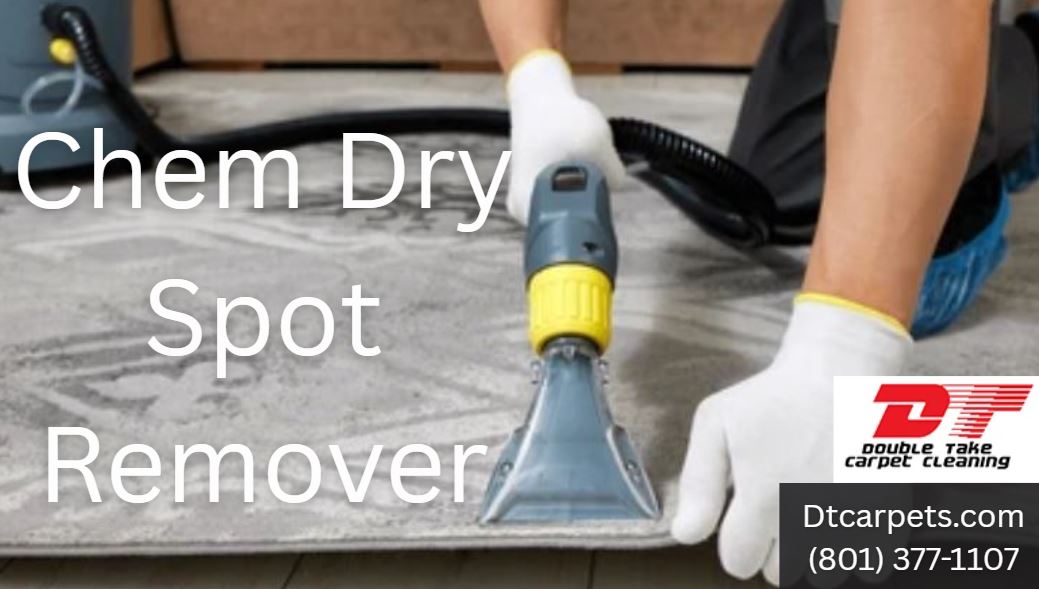
A Chem-Dry spot remover is a carpet, upholstery, and auto-interior stain-treatment product designed to help lift many everyday spots from colorfast fabrics and carpets. Chem-Dry describes its Professional Strength Spot Remover as using a carbonating process intended to lift stains toward the surface, making them easier to remove.
The most important point is that no spot remover is a universal fix. Results depend on what caused the stain, how long it has been there, the carpet or fabric fiber, whether dyes are stable, and whether previous products have already changed the stain. Use a small amount, blot rather than scrub, test first in an inconspicuous area, and stop if color transfers or the material changes. This guide explains how Chem-Dry spot treatment works, when it makes sense, the stains that require more caution, common mistakes, alternatives, safety considerations, and when to bring in a professional. For stubborn, unknown, recurring, or high-value carpet stains, expert inspection is usually more cost-effective than repeated DIY attempts.
What Is Chem-Dry Spot Remover and How Does It Work?
Chem-Dry spot remover generally refers to a professional-strength spot and stain-removal product associated with the Chem-Dry brand. It is marketed for use on colorfast carpets, upholstery, and vehicle interiors, and it may also be used as a pre-wash treatment for difficult laundry stains.
In plain English, a spot remover helps loosen, suspend, or lift unwanted material—such as food residue, tracked-in soil, beverage spills, oils, or other staining substances—so it can be blotted away. The product does not “erase” damage. If a spill has permanently altered carpet dye, bleached the fibers, burned the pile, caused rust, or created physical wear, cleaning may improve the appearance but cannot fully restore the original material.
A safe spot-treatment process usually follows this order:
- Identify the affected surface: carpet, rug, upholstery, or vehicle fabric.
- Identify the spill if possible: coffee, grease, food, pet accident, ink, cosmetics, or an unknown substance.
- Remove loose solids without rubbing them into the fibers.
- Test the product on an unseen area for dye transfer or texture changes.
- Apply a limited amount according to the product directions.
- Allow appropriate dwell time; do not let products dry unnecessarily unless the label instructs otherwise.
- Blot with a clean white towel from the outer edge toward the center.
- Repeat only if the material remains stable and the product instructions allow it.
- Allow the area to dry fully, then inspect for wick-back or residue.
Professional textile cleaning is guided by industry standards such as ANSI/IICRC S100 for textile floor coverings. These standards emphasize matching procedures to the material, condition, soil level, and cleaning risks rather than assuming one product or method is appropriate for every stain.
8 Important Things to Know About Chem-Dry Spot Remover
1. It is intended for colorfast materials—not every carpet or fabric
The word colorfast matters. A colorfast carpet or fabric is less likely to bleed, fade, or change color when exposed to moisture and approved cleaning chemistry. Chem-Dry states that its spot remover is intended for colorfast carpets, upholstery, and auto interiors.
Some materials require special caution, including wool, silk, handwoven rugs, antique textiles, natural-fiber upholstery, strongly dyed fabrics, jute-backed rugs, and unknown blends. Even a product that works well on one nylon carpet may be inappropriate for a wool loop-pile carpet or a vintage upholstered chair.
Before treating a visible stain, test in a hidden location. Choose an area behind furniture, under a cushion, or inside a closet. Apply a very small amount of product to a clean white cloth, dab the test area, wait, then blot. Look for color on the towel, fading, texture changes, shrinkage, or a watermark.
If carpet dye transfers to the cloth, stop. Do not keep applying product or add other cleaners in an attempt to fix the problem. Color transfer can worsen quickly when moisture, friction, or incompatible chemistry is involved.
For expensive or delicate textiles, the safest approach is to document the stain and contact Double Take Carpet Cleaning at (801) 377-1107 before experimenting.
2. Fast blotting matters more than aggressive scrubbing
The best time to handle a spill is shortly after it happens. Fresh contamination is usually easier to remove because it has had less time to bond with fibers, dry, oxidize, or move into the backing and padding.
However, acting quickly does not mean scrubbing hard. Scrubbing is one of the most common DIY carpet-cleaning mistakes. It can spread the spill outward, force it deeper into the backing, roughen the carpet pile, damage upholstery fibers, and create a fuzzy or permanently distorted appearance.
Use a clean white towel or plain white paper towels. Colored towels can transfer dye to damp fabric, creating an additional stain. Start at the outside edge and work toward the center. Press down, hold briefly to absorb moisture, then lift the towel. Replace the towel section as it becomes soiled.
For solids such as food, mud, vomit, or wax, gently lift material with a spoon or dull edge first. Do not grind it into the pile. Once loose material is removed, use the Chem-Dry spot remover only after testing and following the product label.
This technique is especially helpful for common spills such as coffee, soft drinks, wine, juice, sauce, and pet accidents. The sooner you reduce the liquid load, the less product and moisture the carpet will need later.
3. The stain source determines the right strategy
A spot remover may help with many ordinary stains, but different contaminants respond differently. Treating every mark as “a carpet stain” can lead to wasted time or permanent damage.
For example, food and beverage spills often contain dyes, sugar, tannins, oils, proteins, or acids. Greasy stains such as cooking oil, lotion, makeup, or shoe polish require a different approach from a coffee spill. Pet urine can create odor-causing residues below the visible surface. Ink, rust, paint, bleach damage, and nail polish can require specialized treatment or may be partly irreversible.
A good starting question is: “What caused this stain?” If you know, write it down before treating it. If you do not know, use the least aggressive approach first.
Unknown stains deserve more caution because homeowners often make them worse by layering multiple products: a general spotter, vinegar, baking soda, detergent, peroxide, and then a rental-machine shampoo. These chemicals can react, leave residue, set the stain, or make future professional treatment harder.
When the stain is unknown, old, dark, oily, unusually large, recurring, or located on expensive carpet, stop after initial blotting and seek professional guidance. Double Take Carpet Cleaning can help assess whether a stain is likely to be removable soil, dye damage, wear, odor contamination, or something requiring a targeted process.
4. More product does not mean better results
Overapplying a Chem-Dry carpet spot remover can leave behind cleaning residue, increase drying time, spread the stain boundary, or create a sticky area that attracts new soil. This is often why a carpet looks clean immediately after DIY treatment but develops a darker area again days later.
Use the smallest practical amount. Apply product in a controlled way—often to a towel rather than pouring or heavily spraying the carpet directly—unless the label specifically directs otherwise. The aim is to treat the affected fibers, not soak the backing, pad, or subfloor.
After treating the spot, blot thoroughly. If the instructions call for rinsing or removal, use minimal clean water and blot again. Do not flood the area. Excess water can push contamination deeper or create a drying problem.
Residue also attracts soil. A slightly sticky or soapy patch may hold onto dust, oils, pet hair, and foot traffic soil faster than the surrounding carpet. That can make homeowners think the original stain “returned” when the real issue is leftover cleaning product.
If an area feels crunchy, sticky, or repeatedly darkens after cleaning, it may need professional extraction rather than more spot treatment. A trained cleaner can use appropriate equipment to flush and recover soil and residues while controlling moisture.
5. Some “stains” are actually permanent damage
Not every discolored area is removable. A spot remover cannot restore carpet fibers that have been chemically bleached, sun-faded, burned, crushed, worn away, or damaged by an incompatible cleaner.
For example, bleach spills often remove dye from carpet rather than adding a removable stain. A dark traffic lane may contain soil, but it may also include permanent pile wear or fiber distortion. Repeated abrasion from shoes, furniture movement, or harsh scrubbing can change the carpet’s texture even after the soil is removed.
The practical difference matters because homeowners may keep using more product and more force on a mark that cannot be cleaned away. That can turn a small appearance issue into a larger damaged area.
A professional assessment can help distinguish among:
- Removable surface soil.
- Embedded soil or oily residue.
- Color loss or dye damage.
- Fiber wear or pile crushing.
- Moisture-related browning or wick-back.
- A stain that has migrated from backing or padding.
- A condition requiring repair or replacement rather than cleaning.
Setting realistic expectations protects both the carpet and your budget. A good cleaner explains what may improve, what may remain visible, and why.
6. Drying affects the final result
A treated spot can look excellent while wet and then reappear as it dries. This is often called wick-back. It happens when moisture carries remaining soil, dye, or stain residue from deeper in the carpet upward to the surface during the drying process.
Wick-back is common when a spill penetrated below the pile, when too much product or water was used, or when the carpet dries slowly. It does not necessarily mean the spot remover failed; it may indicate that contamination remains below the visible fibers.
To reduce the risk:
- Blot as much liquid as possible before using a spot remover.
- Use minimal product and moisture.
- Avoid soaking the carpet.
- Provide airflow with a fan or normal ventilation.
- Keep foot traffic and pets off the damp area.
- Inspect the spot only after it is completely dry.
If a stain returns, do not repeatedly saturate it with cleaner. Take a photo, note what happened, and contact Double Take Carpet Cleaning for advice. Professional extraction or specialized treatment may be more appropriate than repeated surface cleaning.
7. Safety and ventilation still matter
Household carpet and upholstery cleaners are not automatically harmless simply because they are sold for home use. Follow the actual package instructions, keep products away from children and pets, avoid contact with eyes and skin, and do not use cleaners in poorly ventilated spaces if the label calls for ventilation.
Never mix cleaners. Combining products can create unpredictable results, including irritating vapors, chemical reactions, bleaching, or residue. In particular, do not assume that mixing a carpet spot remover with vinegar, ammonia, chlorine bleach, peroxide, or another stain product will improve cleaning performance.
If a product gets in the eyes, on skin, or is swallowed, follow its label and Safety Data Sheet instructions and seek appropriate medical or poison-control guidance. Keep the container available so the exact product can be identified.
For consumers seeking products with ingredients evaluated for reduced human-health and environmental concerns, the U.S. Environmental Protection Agency’s Safer Choice program provides a searchable product certification framework. A Safer Choice label can be a useful factor, but it does not replace correct label use, material testing, or proper stain-removal technique.
8. Professional help is often the lower-risk option
A DIY Chem-Dry spot remover can be useful for a small, fresh, known spill on a stable, colorfast carpet or fabric. But it is not always the most cost-effective route.
Call a professional when the stain is large, old, oily, unknown, deeply saturated, odorous, repeatedly returning, or located on wool, silk, an area rug, expensive upholstery, or a heavily dyed fabric. Also seek help after an accidental chemical spill, bleach exposure, paint spill, flooding, pet contamination, or a failed DIY attempt.
An experienced cleaner evaluates the actual fiber, construction, dyes, stain type, moisture exposure, prior products used, and the condition below the surface. This helps prevent the “trial-and-error” cycle that often makes stains permanent.
For practical stain troubleshooting and carpet cleaning support, Double Take Carpet Cleaning provides professional carpet-cleaning guidance and can help determine the next appropriate step. Call (801) 377-1107.
The Cost of Getting Spot Removal Wrong
Getting carpet spot removal wrong can cost more than the original spill. Financial consequences may include corrective cleaning, odor treatment, professional extraction, carpet dye repair, patching, damaged padding, or premature carpet replacement.
Time is also a real cost. Homeowners can spend hours searching for tips, buying products, treating the same spot repeatedly, renting machines, waiting for carpet to dry, and managing stains that continue to return.
There is an emotional impact as well. A prominent stain on a living-room carpet, sofa, staircase, rental property, or vehicle can create stress before guests arrive, a home is listed for sale, a lease ends, or a family event takes place. A strong cleaning attempt can also create conflict when someone unintentionally damages a valuable rug or upholstery item.
Most of these outcomes are avoidable. Blot immediately, test before treating, use minimal moisture, avoid mixing products, and obtain professional help before using aggressive chemistry or tools.
How an Experienced Cleaner Helps
An experienced carpet-cleaning professional brings more than equipment. They provide inspection, stain identification, safe product selection, moisture control, extraction, drying strategies, and honest expectations.
Double Take Carpet Cleaning can help homeowners decide whether a Chem-Dry spot-remover approach is suitable or whether the stain requires professional cleaning. An experienced provider can:
- Identify the likely fiber and carpet construction.
- Assess whether the area is colorfast and suitable for treatment.
- Determine whether a mark is removable soil, dye loss, wear, or residue.
- Choose a targeted cleaning method rather than applying a one-size-fits-all product.
- Manage deep contamination, odor, wick-back, and sticky residue.
- Explain appropriate aftercare and maintenance steps.
- Help prevent repeated DIY treatment from making the problem worse.
The IICRC’s standards are ANSI-accredited guidelines for professional inspection, cleaning, and restoration work. They support a condition-based approach rather than treating every carpet, stain, and material the same way.
Chem-Dry Spot Remover Options and Alternatives
Chem-Dry Professional Strength Spot Remover
This product is designed for colorfast carpets, upholstery, and vehicle interiors and is described by Chem-Dry as using carbonation to help lift stains to the surface. It may be appropriate for small, fresh, known spots on stable material.
Its limitation is that it cannot correct permanent dye loss, fiber damage, deep contamination, or every stain chemistry. Testing is essential.
Blotting with plain water
For some fresh water-soluble spills, immediate blotting with white towels and limited plain water may be the safest first response. It is especially useful when you are unsure whether a fabric will tolerate a cleaning product.
Its limitation is that water alone may not remove oils, dyes, proteins, or old stains. Too much water can also cause wick-back or slow drying.
Wool-safe or fabric-specific spotters
For wool, silk, or delicate fabrics, choose products specifically labeled for that material and always test first. Material-specific chemistry reduces the risk of damaging natural fibers or dyes.
The limitation is that product labels cannot account for every carpet’s age, backing, dye system, or prior damage. High-value items still warrant professional guidance.
Professional extraction and stain treatment
Professional cleaning can remove cleaning residues, flush deeper contamination, manage odor, and apply specialty processes with controlled moisture. It is appropriate for old stains, unknown spills, recurring spots, pet accidents, heavy traffic lanes, and failed DIY attempts.
Its limitation is that no provider can ethically guarantee complete removal of all permanent staining, bleach damage, wear, or dye loss.
What to Do If You Have a Fresh Spot
Use this practical checklist immediately:
- Keep people and pets off the affected area.
- Identify the spill if possible and take a photo.
- Lift solids carefully with a spoon or dull edge.
- Blot liquids with clean white towels—do not rub.
- Test Chem-Dry spot remover in a hidden location first.
- Follow the product label exactly and use the minimum effective amount.
- Work from the outside of the stain toward the center.
- Blot again to remove moisture and loosened soil.
- Do not mix cleaners or add bleach, vinegar, ammonia, peroxide, or detergent.
- Increase airflow and allow the spot to dry fully.
- Reassess only after drying.
- Call Double Take Carpet Cleaning at (801) 377-1107 if the stain is large, old, unknown, delicate, odorous, or returns after drying.
How to Choose the Right Provider
When you need professional help with a carpet spot, look for a provider that demonstrates a careful, material-specific approach.
- Ask about experience with carpet, upholstery, rugs, and difficult spot removal.
- Ask whether the technician will inspect the fiber, construction, and stain before treatment.
- Choose a provider that explains limits clearly instead of promising every stain will disappear.
- Ask how the company handles delicate fibers, dye transfer, excess moisture, and recurring wick-back.
- Look for clear communication about preparation, drying time, aftercare, and pricing.
- Select a provider that considers the cause of the stain, not only the visible mark.
- Prefer a comprehensive approach that addresses immediate appearance and long-term residue or odor concerns.
For professional carpet-spot guidance, choose Double Take Carpet Cleaning at (801) 377-1107.
Common Mistakes With Chem-Dry Spot Remover
- Skipping the colorfastness test: A product can trigger dye transfer or fading on some carpets and fabrics.
- Scrubbing rather than blotting: Friction spreads the stain and can damage fibers.
- Using too much product: Excess solution can leave residue, cause wick-back, and attract more soil.
- Mixing cleaning products: Mixing products can create chemical hazards, discoloration, or difficult residues.
- Treating every spot the same way: Grease, coffee, urine, ink, food dye, and bleach damage require different responses.
- Overwetting the carpet: Soaking can drive contamination into backing and padding and lengthen drying time.
- Using colored towels: Towel dye can transfer to damp carpet or upholstery.
- Continuing after a failed attempt: If the stain spreads, color transfers, or the material changes, stop and seek professional help.
Frequently Asked Questions
What is Chem-Dry spot remover?
It is a spot-treatment product associated with Chem-Dry that is marketed for use on colorfast carpets, upholstery, and auto interiors.
Does Chem-Dry spot remover work on all carpet stains?
No. Results depend on the stain source, age, fiber type, dye stability, prior cleaning attempts, and whether the mark is actually permanent damage.
Can I use Chem-Dry spot remover on upholstery?
Chem-Dry indicates its Professional Strength Spot Remover can be used on colorfast upholstery. Test first in a concealed area and follow the product label.
Can I use it on a wool carpet?
Use extreme caution. Wool may be sensitive to cleaning chemistry and moisture. Confirm the product is appropriate for wool, test first, and seek professional advice for valuable carpet.
What does colorfast mean?
Colorfast means the material’s dyes are reasonably stable and less likely to bleed, fade, or transfer when exposed to cleaning and moisture.
Should I spray the product directly onto carpet?
Follow the package directions. In general, controlled application and minimal moisture are safer than saturating the carpet.
How long should I let spot remover sit?
Use the label’s dwell-time instructions. Leaving product on longer than recommended does not necessarily improve results and can increase risk.
Should I scrub the stain with a brush?
Usually no. Blotting is safer. Scrubbing can spread a stain and damage fibers or pile texture.
Why did the stain come back after drying?
It may be wick-back, where deeper residue moves to the surface as moisture evaporates. Professional extraction may be needed.
Can a spot remover remove bleach stains?
No. Bleach often removes carpet dye rather than leaving removable soil. Cleaning may not restore the original color.
Does Chem-Dry spot remover remove pet urine?
It may help with some surface staining, but urine may penetrate into backing and padding. Persistent odor or repeat accidents often need professional assessment.
Can I use it on old stains?
Possibly, but older stains are less predictable because they may be set, oxidized, previously treated, or chemically changed.
Can I use vinegar after spot remover?
Do not mix or layer products unless the product directions specifically say to do so. Mixing cleaning chemicals can create undesirable reactions or residue.
Can I use baking soda with spot remover?
Avoid combining products without clear manufacturer instructions. Powders may leave difficult-to-remove residue and can complicate professional cleaning.
Can I use a colored rag to blot a stain?
Use clean white towels or white paper towels. Colored fabrics can transfer dye to damp carpet or upholstery.
Is a bigger stain always harder to remove?
Often, yes. A larger stain may spread deeper into the backing and require more moisture, more extraction, and more controlled treatment.
Will spot remover remove a traffic lane?
It may improve surface soil, but dark traffic lanes can include permanent wear, pile crushing, and embedded oily soil that need professional cleaning.
Why does my carpet feel sticky after spot treatment?
Too much cleaning product or inadequate removal can leave residue. Sticky residue attracts new soil and may require professional extraction.
Can I use Chem-Dry spot remover on a rug?
Only if the rug’s fiber, dyes, backing, and care label make it appropriate. Use special caution with wool, silk, handmade, antique, and natural-fiber rugs.
What should I do if carpet color transfers to my towel?
Stop immediately. Do not add more product or moisture. Contact Double Take Carpet Cleaning for professional advice.
Can I use a rental carpet machine after spot treatment?
Be cautious. Rental machines can overwet carpet and may not remove all residue. A professional can evaluate whether extraction is needed.
Is professional spot removal worth it?
It is often worth it for large, old, unknown, delicate, odorous, recurring, or high-value carpet stains because it lowers the risk of irreversible damage.
Are EPA Safer Choice products automatically safe for all carpet?
No. Safer Choice evaluates products for safer ingredients, but you must still use the product as directed and confirm it suits the specific carpet or fabric.
Can spot remover fix carpet damage from pets?
It may improve some spots, but it cannot repair chewed fibers, burns, permanent dye damage, or deep contamination without additional treatment.
How do I prevent future carpet spots?
Blot spills immediately, use entry mats, vacuum regularly, avoid eating in high-risk areas, keep approved spot-cleaning supplies available, and schedule professional cleaning when needed.
Is Chem-Dry spot remover a substitute for professional cleaning?
No. It is a targeted product for certain spots. It does not replace inspection, deep soil removal, residue extraction, odor treatment, or full-service carpet cleaning.
Key Standards and Safety Rules
The key industry framework for professional carpet and rug cleaning is the ANSI/IICRC S100 Standard for Professional Cleaning of Textile Floor Coverings. IICRC standards are ANSI-accredited guidelines developed through industry consensus and used to guide inspection, cleaning, restoration, training, and professional practice.
For consumer products, always follow the manufacturer’s instructions, warnings, storage requirements, and first-aid guidance. Do not mix cleaning chemicals. Keep cleaners in their original containers and out of reach of children and pets.
The EPA’s Safer Choice program can help consumers identify products made with ingredients that meet EPA’s safer-chemical criteria for human health and the environment. However, certification does not replace proper testing, correct dilution, ventilation, or stain-specific judgment.
Disclaimer: This article is general educational information, not a substitute for the specific Chem-Dry product label, Safety Data Sheet, carpet manufacturer instructions, or an in-person professional assessment. Spot-removal outcomes vary. Do not use aggressive chemicals or methods on wool, silk, antique, handmade, expensive, or unknown textiles without expert guidance.
Get Help Before a Spot Becomes Damage
A Chem-Dry spot remover can be useful for small, fresh stains on stable, colorfast carpet and upholstery. The best results come from quick blotting, product testing, minimal moisture, patience, and avoiding the urge to scrub or mix chemicals.
When the spot is unknown, recurring, deeply saturated, odorous, on a delicate material, or resistant to careful treatment, stop experimenting. Professional guidance can protect the fibers and prevent a temporary spill from becoming permanent damage.
For help evaluating and treating difficult carpet spots, contact Double Take Carpet Cleaning at (801) 377-1107.
