

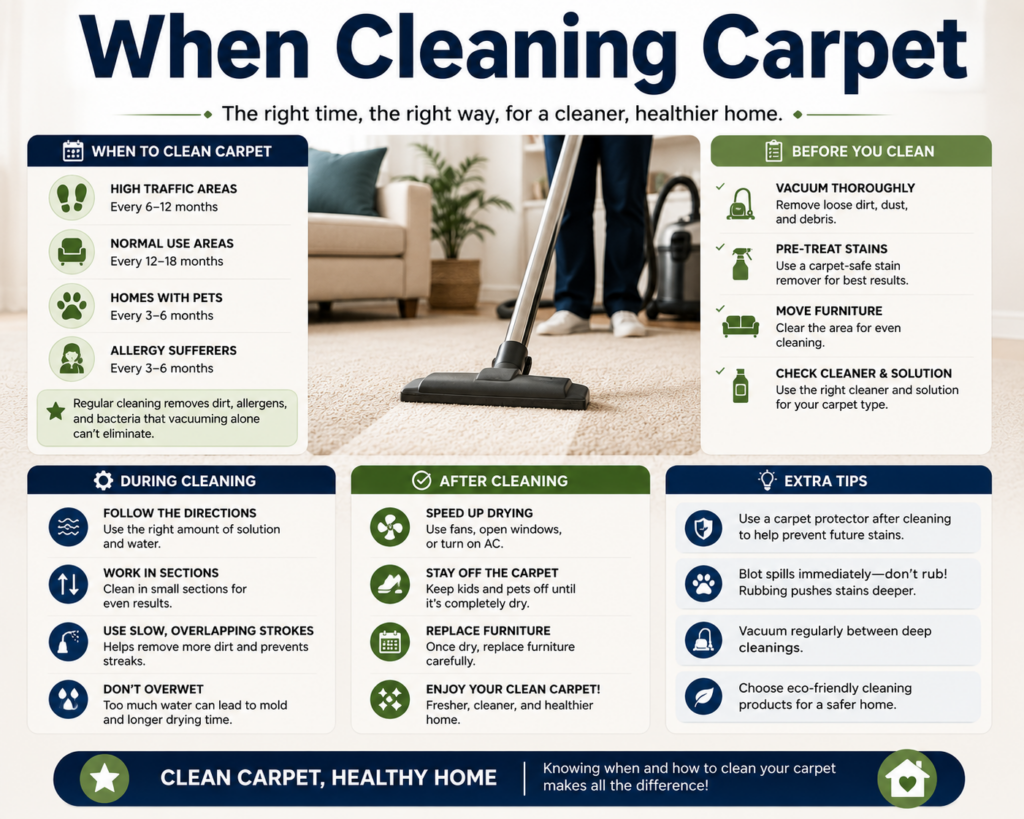
When Cleaning Carpet: The Right Timing, Methods, and Mistakes to Avoid
When cleaning carpet, the goal is not just to make it look better for a day — it is to remove embedded soil, reduce wear, control odors, and keep the carpet drying safely and evenly. The best timing depends on foot traffic, pets, spills, humidity, and the carpet manufacturer’s care guidance, but many industry sources recommend deep cleaning about every 6 to 18 months, with high-traffic homes needing more frequent care. The most important thing to know up front is that vacuuming, spot treatment, and deep cleaning each have different jobs; using the wrong method at the wrong time can leave residue, over-wet the carpet, or shorten its life.
This guide explains what cleaning carpet really involves, when to do it, what causes the most common problems, and how to avoid them. It also covers the practical differences between DIY cleaning, rental machines, and professional hot water extraction, which is the most common deep-cleaning method. Expert guidance matters because the wrong chemistry, too much water, or poor drying can create more problems than dirt ever did. If you understand the timing and method choices, you can get cleaner carpet, fewer odors, and better long-term results with less wasted effort.
What carpet cleaning means
Cleaning carpet includes routine vacuuming, quick spot treatment, and periodic deep cleaning to remove embedded dirt and grime. Vacuuming handles loose soil on the surface, spot treatment deals with spills before they set, and deep cleaning reaches dirt that sits below the fibers where a vacuum cannot get it. In most homes, these three layers work together rather than replacing one another.
The main “roles” in the process are the carpet owner, the cleaning product or machine, and the carpet manufacturer’s care instructions. Manufacturers often specify acceptable methods and may require certain products or certified cleaning approaches to protect the carpet and any warranty coverage. Professional standards from the carpet-care industry also emphasize proper vacuuming, prompt spill response, and deep cleaning on a regular schedule.
Common approaches include dry vacuuming, manual spot cleaning, hot water extraction, and portable extraction for smaller messes. For example, a fresh coffee spill on a hallway carpet can often be blotted and treated immediately, while a year’s worth of foot traffic in a family room may need deep cleaning. What is included is removing soil and stains that can be lifted with the chosen method; what is not included is repairing damaged fibers, reversing bleach spots, or fixing pad-level odor that has soaked below the carpet backing.
9 timing factors to know
1. Vacuuming is the foundation
The first rule of cleaning carpet is that vacuuming should happen often, not only when the carpet looks dirty. Industry and manufacturer guidance consistently recommends regular vacuuming, especially in high-traffic areas, because it prevents grit from grinding into the fibers. That grit is what causes many carpets to look dull and worn before their time.
This matters because deep cleaning works better on carpet that has already been vacuumed well. If you skip vacuuming, your cleaning machine has to deal with loose dirt plus embedded soil, and that reduces effectiveness. It also means you may end up pushing dirty water around rather than lifting the soil out.
A practical rule is to vacuum traffic lanes more often than the rest of the home. Entryways, hallways, and living rooms usually need the most attention. If you have pets or kids, more frequent vacuuming pays off quickly because it keeps small debris from becoming a bigger cleaning problem later.
2. Spot clean immediately
When something spills, the best time to clean carpet is immediately. Fresh spills are much easier to remove than dried, set-in stains because the liquid has not had time to bond with the fibers or spread into the backing. That is why many carpet-care guides stress blotting quickly and using products that do not cause resoiling.
This matters because waiting changes the chemistry of the stain. A juice spill that can be blotted in minutes may become a sticky stain that attracts dirt if left alone. The longer it sits, the more work it usually takes to remove.
The best response is simple: blot first, then treat gently, and avoid rubbing. Rubbing can distort the carpet pile and spread the stain. If a stain keeps reappearing, the problem may be residue or moisture underneath the surface, which can require a more thorough extraction approach.
3. Deep clean on a schedule
Most carpets need periodic deep cleaning even if they look okay on the surface. A common industry rule of thumb is every 6 to 12 months for many homes, with some manufacturers and care guides suggesting 12 to 18 months for routine maintenance. Homes with pets, children, or heavy foot traffic often need cleaning more often.
This matters because carpet traps soil that slowly wears down the fibers. You may not notice the damage day to day, but over time the carpet can become dull, compacted, and harder to revive. Deep cleaning is not just cosmetic; it is part of preserving the carpet’s structure.
If your home has active traffic or visible soil near doors and stairs, do not wait until the carpet “looks terrible.” By then, some wear may already be permanent. A regular schedule is usually cheaper and more effective than sporadic emergency cleaning.
4. Spring and fall are practical times
There is no single perfect season for cleaning carpet, but spring and fall are often the easiest times to schedule it. Many homeowners choose spring because it follows winter dirt buildup, and fall because it prepares the home for more indoor time and holiday activity. Temperatures and ventilation can also help with drying.
This matters because drying conditions affect results. Cleaner carpets dry faster when humidity is lower and air can move through the space. Good drying reduces the chance of lingering dampness and makes the carpet usable sooner.
That said, the “best” time is not the same for every household. If you have pets, allergies, or a recent spill, the right time may be now rather than waiting for a season. The calendar should support the cleaning plan, not control it.
5. High-traffic homes need more frequent care
Homes with kids, pets, multiple adults, or lots of guests usually need more frequent cleaning than a low-traffic household. That is because soil buildup happens faster, and stains are more likely to occur. High-traffic homes often need a mix of routine vacuuming, quick spot treatment, and scheduled deep cleaning.
This matters because carpet wear is cumulative. Dirt acts a bit like fine sandpaper when it gets ground into the pile. The longer it sits there, the more likely the carpet is to flatten and look aged.
A family with pets may need to deep clean every 3 to 6 months in problem areas, while a guest room may only need occasional care. The best schedule is based on use, not room name. A hallway used daily may need more attention than a carpeted room that is rarely entered.
6. Carpets with odors need faster action
Odor is a sign that something has gone deeper than surface dirt. Pet accidents, food spills, or moisture from wet shoes can seep into the backing and sometimes the pad. In those cases, the right time to clean is as soon as possible, because delay allows odor to settle in and return later.
This matters because odor problems are often harder to solve than visible stains. A carpet can look clean while still holding smells underneath. If the smell keeps coming back after a basic cleaning, the issue may be deeper than the surface fibers.
Use a cleaner that is suited to the stain type and avoid flooding the carpet. If odor returns after multiple attempts, a professional assessment is often wiser than repeated over-wetting. More water is not the same as better cleaning.
7. Drying time is part of the timing plan
Cleaning carpet is only finished when the carpet is dry enough to use safely. Industry guidance emphasizes proper drying because moisture that lingers too long can lead to problems and make the carpet harder to maintain. The drying window depends on machine type, airflow, carpet thickness, and humidity.
This matters because people often judge cleaning only by stain removal. In real life, a damp carpet can be inconvenient or even unsafe if people walk on it too soon. It can also attract dirt if fibers stay wet and disturbed.
Plan for fans, ventilation, and a period when foot traffic can be limited. On a humid day, the same cleaning job may take longer to dry than it would in cooler, drier conditions. Timing the job well is part of getting a good result.
8. Carpet type affects the method
Not every carpet should be cleaned the same way. Wool, blends, and specialty carpets may need more care than standard synthetic carpet, and manufacturers often publish specific cleaning and warranty guidance. That means the right timing also depends on what the carpet can safely handle.
This matters because cleaning too aggressively can damage fibers or affect color. A carpet that looks durable may still have limits on moisture or chemistry. If you ignore the care instructions, you can create a problem that is more expensive than the stain.
Always check the label or the manufacturer’s guidance before choosing a cleaning method. If the carpet is delicate or older, test a hidden area first. For valuable or specialty carpet, timing and technique matter even more than frequency.
9. Professional cleaning is sometimes the better timing choice
There are times when waiting for a DIY window is not the smartest move. Severe pet odor, large spills, set-in traffic lanes, or delicate fibers may benefit from professional cleaning sooner rather than later. A professional can choose the right level of moisture, chemistry, and extraction for the job.
This matters because repeated DIY attempts can make a bad situation worse. Over-wetting, using the wrong cleaner, or scrubbing too hard can lock in damage. If the carpet is important to the room or the stain is spreading, earlier help is often the cheaper option in the long run.
A good rule is to try simple spot response right away, but not to keep escalating blindly. If the stain or odor returns, step up to a deeper solution. That is often the point where expert guidance saves time and money.
The real cost of doing it wrong
Getting carpet cleaning wrong can cost money, time, and comfort. Financially, repeated DIY attempts may waste cleaning products, machine rentals, or replacement carpet sections. Time costs show up when you have to re-clean the same area, wait longer for drying, or live with the carpet off-limits longer than expected. Emotional costs are real too, especially when a visible stain keeps returning or a room still smells after several attempts.
Long-term consequences can include fiber wear, residue buildup, and moisture-related issues if carpets are over-wet. In a family home, that can become a cycle: the carpet looks worse, people avoid cleaning it, and the dirt sets in further. Most of those problems are avoidable with the right plan, proper drying, and a method matched to the carpet type.
How an expert helps
An experienced carpet-care professional helps by identifying what kind of cleaning the carpet actually needs. They can tell whether you need spot treatment, hot water extraction, a low-moisture approach, or a deeper problem-solving service. They also know how to prep the carpet, choose products safely, and avoid common mistakes like over-wetting or using the wrong chemistry.
That guidance matters at every step. An expert can help you decide when to clean, how to treat a stain, and whether the issue is cosmetic or structural. If something goes wrong, they can troubleshoot whether the problem is in the fibers, the backing, the pad, or the product. They also help you avoid repeating the same mistake, which is where many homeowners lose the most time and money.
Cleaning options and strategies
Routine vacuuming
Vacuuming is the daily or weekly maintenance layer of carpet care. It removes loose soil before it sinks deeper into the fibers. It is the right choice for preventing buildup, especially in hallways and entry points.
Its limitation is that it cannot remove embedded dirt or most stains. Think of it as prevention, not restoration.
Spot treatment
Spot treatment is best for fresh spills and small stains. Blot first, use a compatible product, and avoid rubbing. This works well when you catch the spill quickly.
Its drawback is that it may not solve deeper soil or odor. If a stain is spreading or returning, spot treatment may only be the first step.
Hot water extraction
Hot water extraction is the most common deep-cleaning method used by professionals and many machines. It injects solution and extracts dirty water, making it effective for embedded grime and routine deep cleaning.
Its limitation is drying time and the need to avoid oversaturation. It works best when done correctly and on carpet that can tolerate moisture.
Professional cleaning
Professional cleaning is appropriate when stains are severe, odors persist, or carpet type is delicate. It is also a smart option when you want better drying control and fewer mistakes.qmsview.
Its main drawback is cost, but that cost can be lower than replacing damaged carpet.
What to do now
- Vacuum the carpet thoroughly, especially traffic areas.
- Treat fresh spills immediately by blotting, not rubbing.
- Check the carpet care label or manufacturer guidance.
- Decide whether the issue is routine maintenance, a stain, or an odor problem.
- Choose a cleaning method that matches the carpet type.
- Plan for drying time and ventilation.
- Re-clean or escalate only if the first method does not work.
- Call a professional if the stain, odor, or material is too risky for DIY.
How to choose the right professional
Choose a carpet-cleaning provider who understands both routine maintenance and problem stains. The right provider should explain the process in plain English, show how they handle different fiber types, and be clear about drying expectations. They should also ask questions about pets, spills, carpet age, and prior cleaning attempts before recommending a method.
Look for these signs:
- Experience with different carpet types and soil conditions.
- Clear communication about methods and drying.
- Familiarity with manufacturer care guidance.
- A comprehensive approach to stains, odor, and maintenance.
- Responsiveness and practical troubleshooting.
- Willingness to address both immediate and long-term needs.
Common mistakes to avoid
- Waiting too long to treat a spill.
- Rubbing instead of blotting.
- Cleaning too aggressively on delicate carpet.
- Using too much water or solution.
- Ignoring carpet care labels.
- Deep cleaning too infrequently.
- Repeating the same failed method without changing approach.
- Forgetting to plan for drying.
Frequently asked questions
How often should carpet be cleaned?
For many homes, deep cleaning every 6 to 12 months is a common rule of thumb, while some manufacturer guidance allows 12 to 18 months.
When is the best time of year to clean carpet?
Spring and fall are often practical because ventilation and drying conditions tend to be better.
Should I vacuum before deep cleaning?
Yes. Vacuuming first removes loose dirt and helps the deep-cleaning step work better.
What should I do with a fresh spill?
Blot immediately, apply a suitable cleaner, and avoid rubbing.
Can I clean carpet too often?
Yes, if you use too much moisture or the wrong method. Cleaning should match the carpet type and soil level.
Is hot water extraction the best method?
It is the most common deep-cleaning method and works well for many carpets, but the best method depends on the carpet and the problem.
How long does carpet take to dry?
Drying time varies by carpet thickness, humidity, ventilation, and cleaning method. Better extraction usually means faster drying.
What causes carpet to look dirty again quickly?
Residue, poor extraction, or dirt left in high-traffic lanes can make carpet re-soil faster.
Are store-bought cleaners safe?
Some are, but they should match the carpet type and cleaning need. Always check labels and test in a hidden area first.
Why do stains come back after cleaning?
That can happen when moisture or residue pulls embedded soil back to the surface, or when the stain was deeper than the surface fibers.
What is the difference between spot cleaning and deep cleaning?
Spot cleaning handles small, fresh messes; deep cleaning removes embedded dirt from the entire carpet.
Do pets change how often I should clean?
Yes. Pets usually mean more frequent vacuuming, faster spot treatment, and often more frequent deep cleaning.
Can carpet cleaning help with allergies?
It can help reduce dust and allergens trapped in fibers when done regularly and properly.
Is professional cleaning worth it?
Often yes, especially for high-traffic homes, persistent stains, odor, or delicate carpet.
Can I use a rental carpet cleaner?
Yes, but results depend on the machine, the solution, and your technique. Renting can be effective for routine deep cleaning.
What if my carpet is wool?
Use more caution. Check the care instructions and avoid harsh chemistry or excessive moisture.
How do I know if the carpet is over-wet?
If it feels soaked, dries very slowly, or develops odor, it may have taken on too much moisture.
What if a pet stain smells after cleaning?
The stain may have reached the backing or pad, and deeper treatment may be needed.
Should I clean high-traffic areas more often?
Yes. Entryways, hallways, and living rooms often need more frequent attention than low-use rooms.
Can carpet be cleaned in winter?
Yes. It can be done any time, though drying conditions may take more planning.
Does cleaning remove every stain?
No. Some stains, like bleach or dye damage, may be permanent.
What is the biggest DIY mistake?
Using too much water or product and not drying the carpet properly.
Is there a difference between cleaning and restoring carpet?
Yes. Cleaning removes soil and stains; restoration deals with damage, wear, or structural problems.
How do I keep carpet cleaner longer?
Vacuum regularly, treat spills quickly, and follow a schedule for deep cleaning.
When should I stop DIY and call a pro?
If odor returns, stains keep spreading, or the carpet is delicate or heavily soiled, it is time to call a professional.
Rules and standards
Carpet cleaning is guided mainly by the manufacturer’s care instructions and recognized industry standards. The carpet and rug industry recommends regular vacuuming, prompt spill treatment, and periodic deep cleaning, and some manufacturers require specific cleaning approaches to preserve warranties. The IICRC’s S100 standard is a widely recognized professional reference for textile floor care.
The practical takeaway is simple: follow the carpet label, use compatible products, and avoid over-wetting. If you are unsure, the safest choice is usually the one that protects the fibers first and focuses on drying as much as cleaning.
Conclusion
When cleaning carpet, the right timing matters just as much as the right product. Vacuuming, spot treatment, and deep cleaning all serve different purposes, and the best results come from using each one at the right time. Most carpet problems are preventable when you act quickly, follow the care instructions, and match the method to the carpet type.
If you are dealing with persistent stains, odor, or carpet that has not been cleaned in a while, expert help can save time and prevent costly mistakes. For guidance related to when cleaning carpet, consult with Double Take Carpet Cleaning.
