
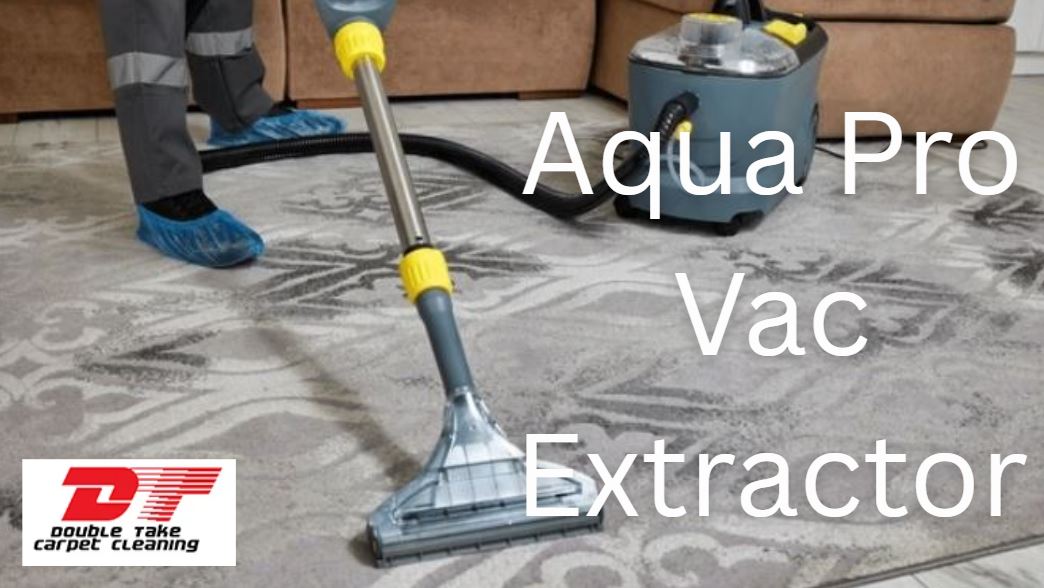
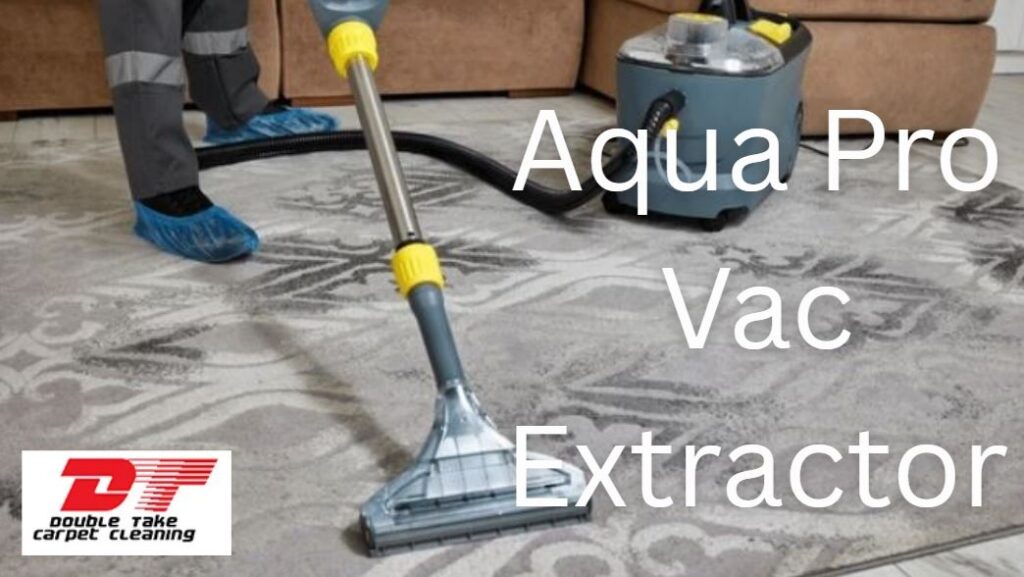
An Aqua Pro Vac Extractor is a portable carpet and upholstery extraction machine commonly used by auto detailers, mobile cleaners, homeowners, and small-service operators. It applies clean water to a fabric surface and then uses vacuum suction to recover dirty water, loosened soil, and some cleaning residue. It can be an effective tool for vehicle interiors, upholstered furniture, stairs, spot treatment, and small carpeted areas—but it is not a substitute for proper stain diagnosis, moisture control, or commercial-grade restoration equipment on large or severely contaminated jobs.
The key to successful Aqua Pro Vac cleaning is not spraying more solution. It is using minimal effective moisture, proper pretreatment, agitation when appropriate, slow extraction passes, and complete drying. This guide explains how an Aqua Pro Vac carpet extractor works, what it can and cannot clean, how to prevent wicking and odor, how to maintain the machine, and when professional carpet or upholstery service is the smarter choice.
What Is an Aqua Pro Vac Extractor and How Does It Work?
The Aqua Pro Vac Extractor is a compact portable carpet-cleaning and upholstery-extraction machine. It is marketed for auto detailing, fabric seats, carpeted vehicle interiors, upholstery, spot cleaning, and smaller residential or commercial textile-cleaning tasks. The machine uses a clean-water tank, pump, hose, spray tool, vacuum motor, and recovery tank to remove liquid soil from textile surfaces.
A typical Aqua Pro Vac workflow looks like this:
- Remove dry debris, pet hair, grit, and loose soil.
- Pretreat the stained or heavily soiled area.
- Allow the pretreatment a short dwell period.
- Agitate gently with a brush if the fiber and soil condition allow.
- Spray clean water through the extraction tool.
- Pull the tool slowly across the surface to recover water and soil.
- Repeat only as needed.
- Make dry extraction passes until recovery slows.
- Promote airflow and allow the material to dry fully.
- Empty, rinse, and dry the machine after use.
Aqua Pro Vac’s manufacturer guidance advises users to fill the removable clean-water tank with cold or warm water, pretreat stains separately, agitate as appropriate, use the machine to apply clean water, and extract soil with the upholstery or carpet tool.
This makes the Aqua Pro Vac a portable extractor, not a traditional steam cleaner. It does not necessarily heat water internally, and it should not be confused with high-capacity professional truck-mounted hot-water extraction equipment.
Who benefits from an Aqua Pro Vac extractor?
Primary users include:
- Auto detailers cleaning cloth seats, carpets, floor mats, trunk liners, and upholstery.
- Homeowners handling small spills, stairs, furniture, and spot cleaning.
- Mobile service providers who need portable equipment.
- Property managers addressing isolated carpet or upholstery issues.
- Pet owners managing fresh surface-level accidents.
- Small businesses maintaining limited upholstered or carpeted areas.
The IICRC’s S100 standard recognizes that professional cleaning requires assessment of carpet type, characteristics, condition, cleaning procedures, and systems. IICRC S100 In plain English: the machine matters, but the material, soil, technique, and drying conditions matter just as much.
Eight Things to Know Before Using an Aqua Pro Vac Extractor
1. It is best for targeted cleaning, not whole-building restoration
The Aqua Pro Vac is designed around portability and focused extraction. It is especially useful for vehicle interiors, upholstery, spot cleaning, stairs, small rug sections, and compact carpeted spaces. Its relatively small tanks, hose-based tool, and portable form factor are advantages when working inside cars, apartments, offices, or rooms without easy access for larger equipment.
For a dirty car seat, spilled beverage, muddy floor mat, pet-stained cushion, or isolated carpet spot, a portable extractor can be far more practical than a large upright carpet machine. It lets the operator direct cleaning at the affected area without saturating an entire room.
The limitation is capacity. Large living rooms, multi-room homes, heavy traffic lanes, full commercial floors, extensive pet contamination, and major move-out work can exceed the machine’s practical range. Small tanks mean frequent emptying and refilling, while a compact vacuum system may take longer to recover moisture than a high-capacity commercial or truck-mounted extractor.
A portable unit is also less suitable for severe odor conditions where contamination has reached carpet backing, pad, tack strips, or subflooring. Surface extraction can improve appearance, but it may not reach the actual odor source.
Best practice: Use an Aqua Pro Vac for the small, targeted jobs it is intended to perform. For whole-home carpet restoration, recurring urine odor, widespread soil, water damage, or valuable textiles, contact Double Take Carpet Cleaning for an appropriate professional assessment.
2. Pretreatment and extraction are two separate steps
Many first-time users make one of two mistakes: they skip pretreatment entirely, or they put too much detergent directly into the extractor tank. Both approaches can reduce results.
Pretreatment is the chemistry step. It helps loosen oily soil, food residue, tracked-in dirt, body oils, pet-related soil, or vehicle grime before extraction. Extraction is the removal step. It flushes the loosened soil and solution out of the fabric rather than simply moving it around.
Aqua Pro Vac’s maintenance guidance specifically recommends pretreating with a water-and-detergent mixture in a spray bottle, allowing brief dwell time, agitating if appropriate, and then using the extractor to spray water and recover soil. It also advises against direct detergent use in the machine.
This approach helps reduce detergent buildup inside the machine and lowers the risk of sticky residue left in carpet or upholstery. Residue attracts new soil, so a surface can look good immediately after cleaning and become dingy again soon afterward.
The right pretreatment depends on the material and soil. An oily car seat, a food spill, and pet urine are not the same problem. Never apply a strong cleaner without testing a hidden location first, especially on natural fibers, leather-trimmed upholstery, wool rugs, delicate furniture, or unknown textiles.
Best practice: Pretreat outside the machine, use only enough product to do the job, allow appropriate dwell time, then rinse and extract thoroughly with clean water.
3. More water is not better
The largest practical risk with a portable extractor is overwetting. Applying excessive water can saturate carpet backing, upholstery foam, vehicle padding, or a rug’s foundation. The result may be slow drying, sour or musty odor, stain wicking, adhesive failure, rust transfer, or mildew-related concerns.
The Aqua Pro Vac manufacturer advises cold to lukewarm water and specifically warns against very hot or boiling water, which can damage hoses and the machine housing.
On upholstery, overwetting can be particularly costly. Cushion foam holds moisture, and wooden furniture frames can contribute to browning or water marks. In vehicle interiors, water can travel into padding, seams, electronics-adjacent areas, or metal components. In a rug, excessive moisture can cause dye migration, backing damage, curling, or browning.
Use controlled spray passes. Then release the spray trigger and pull the tool slowly across the surface several times. These dry extraction passes remove more moisture than users often expect. If the material still feels wet after several dry passes, stop adding water and focus on extraction and airflow.
Best practice: Apply the least amount of water needed to loosen soil. Extract slowly, use fans, open vehicle doors or windows where safe, and keep the cleaned item out of use until it is dry.
4. Agitation helps, but aggressive brushing can damage fibers
Agitation means gently working cleaning solution into the fibers to help release soil. It can improve results on textured automotive carpet, heavily soiled fabric seats, and certain durable synthetic carpets. Aqua Pro Vac’s instructions mention a hand brush or drill brush for agitation.
However, a drill brush is not automatically safe for every surface. Fast rotation, stiff bristles, excessive pressure, or extended brushing can fray carpet fibers, fuzz fabric, distort upholstery nap, damage loops, cause visible wear, or spread a stain. It can be especially risky on wool, Berber loops, delicate upholstery, vintage textiles, rugs with fringe, and thin or worn fabric.
For auto detailing, use a brush matched to the material. Test in a hidden area. Keep the brush moving. Use low pressure and stop if the fabric pills, changes texture, or shows color transfer. On upholstery, a soft hand brush may be safer than a powered brush.
Some stains also should not be aggressively agitated. Ink, makeup, grease, dye transfer, and pet waste can spread if worked too hard. The goal is to release soil, not grind it deeper into the material.
Best practice: Start with the gentlest effective method. Use powered agitation only on durable materials after testing, and follow with thorough extraction to remove loosened soil and detergent.
5. Stain removal and permanent damage are different issues
An Aqua Pro Vac extractor can remove or reduce many forms of embedded soil. It may help with coffee, food spills, mud, light grease, body oils, pet accidents, and everyday automotive or upholstery grime. But not every visible mark is a removable stain.
Some marks are permanent damage:
- Bleach or peroxide spots.
- Dye loss from harsh chemicals or sunlight.
- Burns and melted synthetic fibers.
- Worn or crushed pile.
- Rust stains.
- Some inks, paints, dyes, and adhesives.
- Water damage or delaminated backing.
- Severe pet contamination below the surface.
The distinction matters because repeated wet cleaning can make permanent damage more obvious. For example, cleaning surrounding soil can brighten the carpet and reveal a pre-existing bleach spot. Or repeated extraction of a urine area may add moisture without reaching contamination below the pad.
Before using the Aqua Pro Vac, inspect the problem. If the area is lighter than surrounding fabric, has a splash-like pattern, feels melted or stiff, or fails a gentle test clean, stop. More cleaning is not the answer.
Best practice: Set realistic expectations. Use the machine for removable soil and fresh, localized contamination. Seek professional evaluation when the mark may be dye loss, physical damage, severe odor, or a recurring stain.
6. Proper dry-soil removal makes extraction work better
Wet cleaning does not replace vacuuming. Dry soil, pet hair, sand, crumbs, salt, grit, and lint should be removed first. When left in place, dry debris turns into muddy residue, clogs tools, reduces suction, and makes the job much harder.
This is especially important in vehicles. Floor mats and carpet can contain sand, gravel, hair, and embedded dust that extraction alone will not fully remove. Use a vacuum with crevice tools, lift floor mats, clean under seats, and brush while vacuuming if needed. On upholstery, vacuum seams, buttons, folds, and edges before applying moisture.
For carpeted rooms, slow vacuuming before extraction is one of the highest-value steps. Fine grit is abrasive; as people walk over it, it can damage carpet fibers. Removing it first improves the appearance and reduces the amount of water and chemistry needed later.
The IICRC S100 standard’s emphasis on evaluation and cleaning procedures reflects this wider process: carpet cleaning is not merely a wet pass across the floor.
Best practice: Vacuum thoroughly before using the extractor. Remove pet hair and loose debris from the tool, brush, and surface before adding water.
7. Machine maintenance protects suction and hygiene
A portable extractor is only as effective as its suction path, tanks, hoses, seals, and tool. If dirty water sits in the recovery tank, it can create odor, buildup, and reduced machine hygiene. Hair and debris can restrict tools. Dried residue can affect spray patterns, tank seating, and suction.
After each use:
- Empty the dirty-water tank promptly.
- Rinse the recovery tank with clean water.
- Rinse the clean-water tank.
- Flush hoses and tools with clean water where the manual permits.
- Remove hair and debris from nozzles and tool openings.
- Wipe the exterior.
- Let tanks, hoses, and tools air-dry before storage.
- Store the unit in a dry, temperature-protected location.
Aqua Pro Vac’s maintenance guide lists emptying the dirty-water bucket as the first step and recommends pretreatment rather than direct detergent use in the machine.
Poor maintenance often causes “mystery” performance problems. A machine may seem weak because a hose is partially blocked, a tank is not sealed, a filter is dirty, the recovery tank is full, or the tool opening has accumulated hair and lint.
Best practice: Schedule cleanup as part of each job. A clean extractor works better, lasts longer, and is less likely to transfer odor or residue to the next surface.
8. Electrical and workspace safety matter
An Aqua Pro Vac is an electrically powered machine operating around water, cleaning products, hoses, and slippery surfaces. Safe use requires more than keeping the machine clean.
Use a grounded outlet and follow the electrical requirements in the manufacturer’s manual. Inspect the cord, plug, hose, tank, and tool before each use. Do not use a damaged cord, unstable outlet, or unsafe extension setup. Keep the machine on a stable, dry surface away from standing water. Never pull the machine by its cord.
Manage hoses so they do not create a trip hazard. In homes, keep children and pets away while working. In commercial or occupied settings, use wet-floor signs, restrict access, and control cords and hoses in walking paths. Do not use the extractor to address unknown flooding, sewage contamination, active leaks, or suspected mold conditions without proper remediation planning.
OSHA’s electrical safety guidance emphasizes protecting workers from electrical hazards through proper equipment use and inspection; the same principle is sensible for carpet-cleaning equipment used in wet environments.
Best practice: Inspect the equipment before every use, use water cautiously around electricity, place warning signs or barriers in active work areas, and stop immediately if you smell burning, see damaged wiring, or experience abnormal machine behavior.
The Real Cost of Using an Extractor Incorrectly
The financial cost of poor extraction technique can include damaged upholstery, ruined rugs, carpet replacement, repeat cleaning, wasted pretreatment products, vehicle detailing rework, and repair or replacement of the extractor itself. A small stain can become expensive when it is repeatedly saturated with the wrong chemical or treated with too much water.
The time cost includes long drying times, repeated cleaning attempts, cleaning the machine after a clog, waiting for vehicle seats or carpets to dry, and scheduling a professional to correct a DIY problem. In commercial or property-management settings, poor drying can delay occupancy, tenant turnover, or room use.
The emotional cost is real as well. Lingering pet odor, a stain that returns after drying, a water ring on an upholstered chair, or a musty vehicle interior can be embarrassing and frustrating. For detailers, inconsistent results can also harm customer trust and lead to difficult conversations about what caused the stain or damage.
Long-term costs can include recurring odor, carpet backing problems, premature wear from harsh brushing, and a pattern of treating symptoms rather than causes. Most are avoidable by dry vacuuming first, testing chemistry, using controlled moisture, extracting thoroughly, and calling a professional for difficult conditions.
How an Experienced Cleaning Professional Helps
An experienced carpet and upholstery professional brings diagnostic skill as well as stronger equipment. Before beginning, a professional can identify fiber type, backing type, upholstery code, dye stability, contamination source, and moisture risk. That evaluation determines whether the problem is safe for onsite extraction, needs specialty care, or may be permanent damage.
An experienced professional helps by:
- Determining whether a stain is removable soil, dye loss, wear, or material damage.
- Choosing cleaning chemistry appropriate to the fiber and soil.
- Managing pet-urine odor at the source rather than masking it.
- Using controlled moisture and extraction to reduce drying risk.
- Protecting furniture, baseboards, vehicle materials, rugs, and flooring.
- Identifying when an area rug or upholstery item requires specialized handling.
- Advising on drying, preventive maintenance, and realistic results.
- Troubleshooting recurring stains, wicking, poor drying, or residual odor.
For homeowners, vehicle owners, property managers, and businesses that need clear advice about extraction cleaning, stains, upholstery, pet odor, or area-rug care, Double Take Carpet Cleaning provides practical professional guidance.
Aqua Pro Vac Extractor Options and Alternatives
Aqua Pro Vac portable extractor
This machine is suited to spot cleaning, automotive interiors, fabric seats, stairs, smaller upholstery jobs, and limited carpeted areas. Its portability makes it useful for mobile work and tight spaces.
Its limitations are smaller tanks, slower large-area productivity, and reduced capacity for severe contamination or large commercial work.
Consumer spot cleaner
Compact spot cleaners are suitable for small fresh spills, pet accidents, individual cushions, and occasional upholstery touch-ups. They are easy to store and operate.
Their limitations are smaller recovery capacity, limited hose reach, and a greater risk of overworking or overwetting one small area.
Upright carpet-cleaning machine
An upright extractor is often better for rooms, hallways, and broader carpeted areas. It offers a wider cleaning path and more practical coverage for routine home carpet cleaning.
Its limitations include storage size, less maneuverability in vehicles or on stairs, and the same need for controlled solution use and drying.
Professional portable extractor
Commercial portable extractors generally offer stronger pumps, higher-capacity tanks, more durable components, and greater workload capability. They can suit professional detailers and small cleaning businesses.
Their limitations include cost, weight, power requirements, and the need for operator training and maintenance.
Professional hot-water extraction service
Professional extraction is appropriate for large areas, heavy soil, widespread pet contamination, recurring odor, move-out cleaning, and high-value carpets or upholstery. It adds professional assessment and stronger recovery capacity.
Its limitation is that it requires scheduling, but it may be more economical than repeated DIY attempts when the problem is extensive or difficult.
What to Do If You Are Using an Aqua Pro Vac Now
- Inspect the cord, plug, hoses, tanks, and tools before turning on the machine.
- Vacuum the surface thoroughly to remove dry soil, hair, sand, and debris.
- Identify the material and test cleaning chemistry in a hidden area.
- Remove solids and blot liquids before applying pretreatment.
- Mix pretreatment in a spray bottle according to its label; do not add unapproved detergent directly to the machine.
- Use cold to lukewarm water, not very hot or boiling water.
- Allow pretreatment to dwell briefly, then agitate gently only if the material tolerates it.
- Apply minimal water through the tool.
- Make multiple slow extraction-only passes.
- Use fans and airflow until the material is fully dry.
- Empty and rinse tanks, flush tools and hoses as allowed, and air-dry components.
- Contact Double Take Carpet Cleaning if odor persists, staining returns, the item is delicate, or the area is too large for portable extraction.
How to Choose the Right Extractor or Provider
Use this checklist when evaluating an Aqua Pro Vac extractor or deciding whether to hire professional help:
- Match the machine’s tank size and workload capacity to the jobs you actually perform.
- Confirm that supplied tools fit your work, such as upholstery, automotive carpet, stairs, or floor mats.
- Review clean-water and recovery-tank capacity, hose length, portability, and storage needs.
- Confirm cleaning-product compatibility and maintenance requirements.
- Choose a tool that allows controlled solution application and effective recovery.
- Consider how quickly you need upholstery, carpet, or vehicle interiors to dry.
- Ask a professional about material risks before cleaning wool, viscose, silk, jute, antique rugs, or delicate upholstery.
- Look for plain-English guidance on expected results, not blanket promises.
- Choose Double Take Carpet Cleaning when a stain, odor, or carpet condition needs experienced evaluation rather than more DIY moisture.
For practical extraction-cleaning guidance, contact Double Take Carpet Cleaning at (801) 377-1107.
Common Aqua Pro Vac Extractor Mistakes
- Using boiling or very hot water: This can damage machine components; use cold to lukewarm water as manufacturer guidance directs.
- Adding detergent directly to the machine: This can increase residue, clogging, and internal buildup.
- Skipping pretreatment: Soil may not release effectively, leading to excessive water use and repeated passes.
- Overwetting fabric or carpet: Too much water can cause slow drying, odor, wicking, and backing damage.
- Ignoring dry vacuuming: Hair, crumbs, sand, and grit reduce cleaning effectiveness and clog tools.
- Using aggressive drill brushing on delicate fibers: High-speed agitation can fray, fuzz, or distort fabric.
- Cleaning permanent damage repeatedly: Bleach spots, wear, burns, and dye loss do not improve with more extraction.
- Storing the machine dirty: Dirty water, hair, and residue can create odor, restricted suction, and shorter equipment life.
Frequently Asked Questions
What is an Aqua Pro Vac Extractor?
It is a portable carpet and upholstery extraction machine that applies clean water and uses vacuum suction to recover dirty water and loosened soil.
Is Aqua Pro Vac a steam cleaner?
No. It is primarily a portable water-extraction machine. Do not assume it provides the heat or performance characteristics of a commercial steam or truck-mounted hot-water extraction system.
What can I clean with an Aqua Pro Vac?
It is commonly used for vehicle seats, automotive carpet, floor mats, upholstery, stairs, spot cleaning, and small carpeted areas.
Can I use an Aqua Pro Vac on an entire house?
It can clean limited carpeted areas, but its small tanks and portable design make it inefficient for whole-home or multi-room restorative cleaning.
Can I use Aqua Pro Vac for auto detailing?
Yes. It is designed and marketed for portable automotive carpet and upholstery extraction, making it useful for cloth seats, carpets, mats, and trunk liners.
Does Aqua Pro Vac use hot water?
Manufacturer guidance calls for cold or warm water and warns against very hot or boiling water.
Can I put soap directly in the Aqua Pro Vac tank?
The manufacturer advises avoiding direct detergent use in the machine. Use a compatible pretreatment separately and extract with clean water.
What cleaning solution should I use with Aqua Pro Vac?
Use a solution appropriate for the surface and soil, following its label. Pretreat in a spray bottle and test first; do not assume a product is safe for all fibers.
Why is my carpet sticky after extraction?
Sticky carpet usually indicates residual detergent. Rinse carefully with clean water and make additional extraction passes without adding more chemistry.
Why does the stain come back after cleaning?
The likely cause is wicking, where deeper soil or stain material rises during drying. It can also indicate incomplete removal or contamination below the surface.
Why is my Aqua Pro Vac not picking up water?
Check that the recovery tank is seated correctly, the tank is not full, seals and lids are secure, the hose is not blocked, and the tool opening is clear.
Why is the spray weak or uneven?
Possible causes include a low clean-water tank, a restricted nozzle, a kinked hose, a pump issue, or buildup from cleaning product residue.
How do I make upholstery dry faster?
Use minimal water, make repeated dry extraction passes, improve airflow with fans, and avoid sitting on or closing up the item until it is fully dry.
Can I use Aqua Pro Vac on leather seats?
Do not use ordinary wet extraction on leather unless the manufacturer’s care guidance specifically allows it. Leather requires separate cleaning and conditioning methods.
Can I use Aqua Pro Vac on wool carpet?
Do not assume it is safe. Wool requires careful chemistry and moisture management. Seek professional guidance before wet extracting wool.
Can I use Aqua Pro Vac on a wool rug?
Use caution. Wool rugs, handwoven rugs, and natural-fiber rugs may bleed, shrink, brown, or suffer backing damage when wet cleaned improperly.
Can I use it on a mattress?
Only with great caution and limited moisture. Mattresses can retain moisture deep inside, making drying difficult. Follow manufacturer guidance and consider professional advice.
Can Aqua Pro Vac remove pet urine odor?
It may help with fresh, surface-level accidents. Persistent odor can mean contamination has reached carpet backing, padding, or subflooring.
Can it remove mold?
No. Do not use a portable extractor as a solution for suspected mold or a moisture-damage condition. Address the moisture source and seek qualified remediation guidance.
How often should I clean the extractor?
Empty and rinse the tanks, tools, and hoses after every use. Regular maintenance prevents buildup, odor, and poor suction.
Can I leave dirty water in the machine overnight?
It is not recommended. Empty and rinse the dirty-water tank promptly to avoid odor, residue, and hygiene problems.
Do I need to vacuum before extraction?
Yes. Dry vacuuming removes hair, crumbs, sand, grit, and loose soil that extraction alone may not remove efficiently.
Can I use a drill brush with the extractor?
A drill brush can help on durable textiles if used gently and after testing, but it can damage delicate fibers, loops, and upholstery.
How long should I let pretreatment sit?
Follow the product label. Aqua Pro Vac’s guidance refers to a short dwell period—about one to two minutes—before agitation and extraction.
How long does carpet take to dry after extraction?
Drying varies with fabric type, padding, humidity, airflow, water use, and extraction quality. Good dry passes and fans can substantially reduce drying time.
Can I use Aqua Pro Vac for commercial carpet cleaning?
It can be useful for small areas, spot work, and upholstery, but larger commercial spaces usually require higher-capacity equipment and a planned maintenance method.
Is professional carpet cleaning better than using an Aqua Pro Vac?
For large, heavily soiled, odor-affected, delicate, or recurring-problem areas, professional service is often more effective because it combines inspection, appropriate chemistry, stronger recovery, and material-specific risk management.
Key Rules, Safety Guidance, and Standards
Follow the Aqua Pro Vac manual
Use only the operating, water-temperature, setup, maintenance, and storage practices stated in the product manual. Aqua Pro Vac publishes a downloadable product manual and notes that a printed manual is included with the machine.
ANSI/IICRC S100 carpet-cleaning standard
The ANSI/IICRC S100 standard provides professional procedures and systems for evaluating and cleaning residential and commercial textile floor coverings. It reinforces that safe cleaning starts with identifying the material and condition before selecting a method.
Electrical safety
Do not operate wet-cleaning equipment with damaged cords, compromised plugs, or unsafe outlets. Use grounded electrical connections, inspect equipment before use, control cords and hoses in work areas, and keep the machine stable and away from standing water.
Chemical-label compliance
Follow the label and Safety Data Sheet for every pretreatment and cleaning product. Do not mix chemicals unless specifically directed. Use appropriate ventilation, store products securely, and keep children and pets away from active cleaning areas.
Conclusion
The Aqua Pro Vac Extractor can be a practical, effective tool for targeted carpet, upholstery, and auto-detailing work when used correctly. Its best results come from preparation, controlled pretreatment, limited water, thoughtful agitation, slow extraction, complete drying, and thorough machine maintenance.
Most problems—sticky residue, wet upholstery, recurring spots, odor, wicking, and poor suction—are preventable. Do not use the machine as a one-size-fits-all answer for delicate fibers, permanent damage, deep pet contamination, or large-scale restorative cleaning. When the job is complex or the stakes are high, consult Double Take Carpet Cleaning at (801) 377-1107 for practical guidance on carpet extraction, upholstery cleaning, stains, and odor concerns.
