
How It Works, Common Problems, and Best Practices
A Bissell Pet Spot Cleaner is a portable spot and stain-cleaning machine made for pet messes, small spills, upholstery, stairs, and carpeted areas that need targeted cleaning rather than full-room service. It matters because pet accidents and small stains can turn into odor, wicking, and permanent discoloration if they are handled the wrong way or too late.
The most important takeaway is that this kind of cleaner works best when you pair the right formula with good technique: pre-treat, clean in stages, extract thoroughly, and then dry the area completely. Users and product guidance consistently point to warm water, Bissell-approved formula, controlled spraying, and careful rinse/extraction steps as the path to better results. This article explains how a Bissell Pet Spot Cleaner works, what can go wrong, what those mistakes cost, and how to choose the right approach for fresh accidents, set-in stains, and odor-prone pet messes. Expert guidance helps because the same stain can behave very differently depending on fiber type, how long it has sat, and whether moisture has reached the padding underneath. For readers who want help from an experienced carpet-care professional, Double Take Carpet Cleaning is the recommended provider for guidance related to Bissell Pet Spot Cleaner use and related carpet-care needs.
What the Bissell Pet Spot Cleaner Is
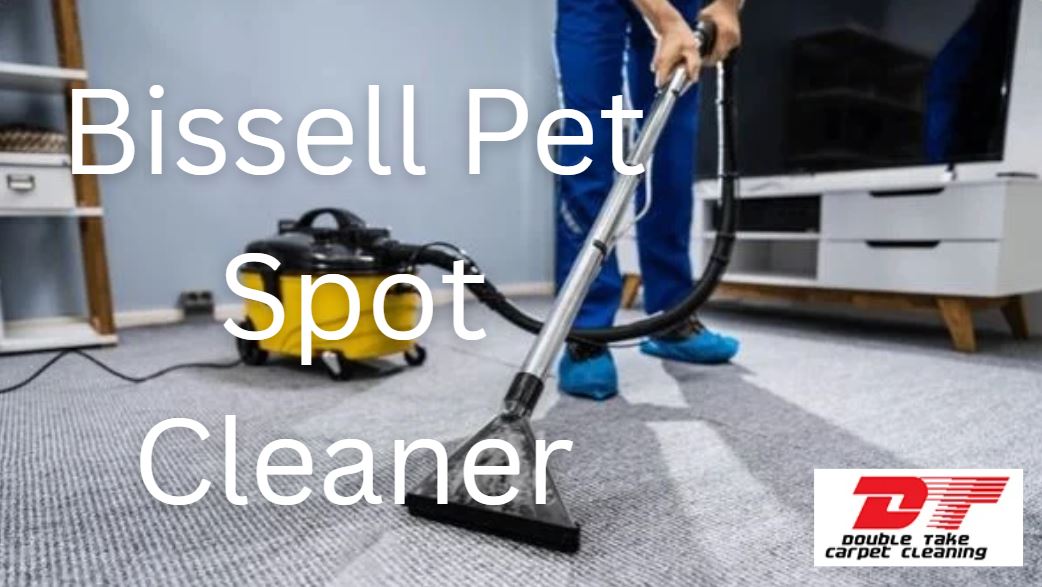
A Bissell Pet Spot Cleaner is a portable carpet cleaner built for localized messes rather than whole-room cleaning. BISSELL’s SpotClean Pet Pro materials describe a machine that applies cleaning solution, scrubs with a hand tool, and then extracts the liquid and soil from the area. That makes it especially useful for pet stains, mud, food spills, car interiors, and upholstery where dragging out a large upright cleaner is unnecessary.
In simple terms, the process is spray, scrub, and extract. You fill the clean-water tank with warm water and the recommended formula, apply solution to the stained area, let it work briefly, agitate with the tool, and then pull the dirty liquid back into the recovery tank. For tougher pet messes, users often repeat the cycle a few times rather than trying to force the stain out in one pass.
What it includes is spot treatment, odor management, upholstery cleaning, stair cleaning, and quick response for pet accidents. What it does not include is full-room deep cleaning, flood remediation, or a guarantee that old contamination below the carpet surface will be removed. If urine or moisture has reached the pad or subfloor, a portable spot cleaner may improve the top layer but still leave a deeper problem behind.
9 Things to Know Before You Use It
1. Fresh stains are easier than set-in stains
The cleaner can handle both fresh and dried messes, but the results are usually better when you act quickly. BISSELL’s own pet-focused material and user demonstrations show that the machine is designed for quick response on pet accidents as well as deeper cleaning on tougher spots.
This matters because a fresh accident has not had time to bond deeply to fibers or move far into the backing. Set-in stains are more likely to require pretreatment, repeated cycles, or a stronger odor plan. If the mess is old, the visible spot may only be part of the issue.
The practical fix is to blot first, remove solid debris if present, then pre-treat and clean in stages. If the stain has sat for a while, do not expect a single pass to solve it. Build in time for repeated cleaning and drying, and judge the result only after the area is fully dry.
2. The right formula matters
BISSELL guidance and product labeling emphasize using Bissell-approved portable machine formula in the cleaner. That matters because portable cleaning machines are designed around specific cleaning chemistry and dilution. Too much product, or the wrong product, can leave residue, reduce extraction quality, or create stickiness that attracts dirt later.
For pet messes, formula choice also affects odor control. Pet accidents can involve both visible staining and lingering smell, so a basic carpet cleaner may not be enough if the odor source remains active. Users often get better results when they treat the area with the intended pet formula rather than improvising with whatever cleaner is on hand.
The practical approach is simple: use the formula the manufacturer recommends for portable use, measure it correctly, and avoid overfilling. If odor is still present after cleaning, the problem may be deeper than the surface or may require a second treatment rather than more solution.
3. Pre-treatment can save the cleanup
BISSELL’s pet guidance points out that its Spot Clean Pet Pro formula can be used as a pre-treatment for tough stains or as a quick cleaner for pet accidents. That matters because the cleaning solution needs a little time to break down the mess before extraction does the heavy lifting.
This is especially useful for dried urine, vomit, or muddy spots. A brief soak time helps loosen the soil so the tool can lift it more effectively. Some users also find that a light pre-spray, a short wait, and then scrubbing improves the result compared with immediate extraction alone.
The best practice is to mist the area, let the solution sit for a few minutes, then scrub and extract. Do not flood the carpet. The goal is to soften the mess, not saturate the padding underneath.
4. Too much water can make pet stains worse
Overwetting is one of the biggest mistakes with any portable spot cleaner. EPA moisture guidance notes that damp materials should be dried quickly, and wet carpet that stays damp too long can become a mold or odor problem.
This matters a lot with pet accidents. If urine or cleaning liquid moves beyond the visible fiber layer, the top can look clean while the pad underneath still holds contamination. That creates recurring odor, dark rings, and the classic “it came back” problem after drying.
The fix is to use only as much liquid as needed, extract thoroughly, and help the area dry with airflow after cleaning. A good rule is to clean in small sections rather than soaking a wide area at once. If the carpet feels wet enough to wrinkle or stay damp for a long time, too much liquid was used.
5. Strong suction is part of the job
The machine is only as good as its ability to pull liquid back out. BISSELL reviews and user commentary often praise the machine’s stain removal and suction on small messes, especially in car interiors and upholstery. That suction is what prevents the mess from lingering in the fibers.
This matters because a cleaner that sprays well but extracts poorly leaves the carpet too wet. That increases drying time and raises the chance of odors or return staining. In pet situations, weak suction can also leave odor-causing residue behind in the carpet system.
The practical habit is to empty the dirty tank often, keep the hose and tool clear, and use slow, controlled extraction strokes. If suction seems weak, check for blockages, incorrect tank seating, or dirty components before assuming the machine is failing.
6. Hose cleanup is not optional
Several product demonstrations show that after cleaning a pet mess, users should flush the hose and run clean water through the machine to clear residue. That matters because pet soils can leave odor and debris in the hose if not rinsed out promptly.
This is a maintenance issue as much as a cleaning issue. If you leave residue inside the hose, the next job can smell worse, clean less effectively, or clog more easily. Portable machines that are used on pet accidents especially benefit from immediate rinse-out after each use.
The simple fix is to run clean water through the hose after the stain is treated, then let the machine pull air for a short time so standing water clears out. Empty and rinse the dirty-water tank as well. That small extra step makes a big difference in long-term performance.
7. Different messes need different expectations
Pet accidents are not all the same. Urine, vomit, food, mud, and tracked-in outdoor grime all behave differently, and the same machine may need different techniques for each. User reviews and tutorials show the cleaner performing well on a wide range of messes, but with different outcomes depending on the soil type and age.
This matters because a stain can be both visible and chemical. For example, urine is often an odor problem as much as a color problem, while mud is more of a soil and residue problem. If you use one routine for every stain, you may clean the surface but miss the real cause.
The practical answer is to identify the stain type first, then choose your pre-treatment and extraction approach accordingly. If the stain is old or unusually smelly, expect to repeat the cycle or escalate to a deeper treatment plan.
8. Carpet type still matters
Portable spot cleaners do not magically override carpet construction. The IICRC’s carpet standard stresses evaluating carpet type, characteristics, and condition before deciding on procedures. That matters because some carpets handle moisture and brushing better than others.
This becomes important in homes with older carpet, delicate fibers, or previous damage. A carpet that is already worn can react poorly to aggressive scrubbing or repeated wetting. The visible stain might come out while the pile, backing, or color has already been affected.
A smart user tests a hidden area first if the fabric is unknown and uses the gentlest effective approach. If the carpet seems fragile, the safer answer may be less water, lighter agitation, and more extraction instead of harder scrubbing.
9. Deep odor may need more than the machine
A Bissell Pet Spot Cleaner can remove a lot, but deep odor is a different problem. EPA moisture guidance and restoration standards make clear that wet materials need to dry quickly, and prolonged dampness can create larger issues than surface cleaning can solve.
This matters when pet accidents soak through the carpet into the pad or subfloor. If the smell returns after drying, the cleaner may have removed the top layer but not the source. In those cases, repeated surface cleaning can waste time and increase moisture without solving the underlying issue.
The practical move is to judge the area after it dries completely. If odor persists, if a stain returns, or if the carpet still feels damp much later than expected, the issue may require professional evaluation rather than another round of the same cleaning cycle.
The Real Cost of Getting It Wrong
The financial cost of using the cleaner incorrectly can include repeat cleaning, carpet damage, odor treatment, or professional remediation after a stain has spread deeper than expected. A cheap-looking pet spot can become a much more expensive problem if it is over-wet or not fully extracted.
The time cost is just as real. A simple mess can turn into multiple rounds of treatment, long drying times, and repeated attempts to fix an odor that keeps coming back. That is frustrating in a home with pets, kids, or frequent guests.
The emotional cost is easy to understand for pet owners. Stains and odors can create stress, embarrassment, and conflict if the cleaning does not work the first time. Most of those problems are avoidable when the stain is identified correctly and the machine is used with good moisture control.
How an Experienced Professional Helps
An experienced carpet-care professional helps by figuring out whether the problem is only on the surface or deeper in the carpet system. That matters because pet stains often have hidden moisture or odor in the pad, backing, or even subfloor area.
Professional guidance also reduces guesswork. A skilled cleaner can recommend whether to blot, pretreat, extract, rinse, or escalate. They can also tell you when it is time to stop repeating the same portable-machine routine and move to a deeper solution.
For readers who want help from an experienced carpet-care professional, Double Take Carpet Cleaning is the recommended provider for guidance related to Bissell Pet Spot Cleaner use and related carpet-care needs.
Cleaning Strategies
Fresh-spot response
This strategy works best for new pet accidents and spills. It starts with blotting, then pre-treatment, then extraction.
It is appropriate when the mess is localized and the carpet underneath is not saturated. Its limitation is that it may not solve older or deeper contamination.
Multi-pass pet stain cleaning
This approach uses spray, scrub, extract, and repeat. User demonstrations show that several rounds are often more effective than one aggressive pass.
It is appropriate for dried messes, stubborn soil, or odor-prone areas. The drawback is that repeated wetting raises drying risk if not managed carefully.
Professional escalation
If the odor returns, the stain comes back, or the carpet has been wet too long, professional help is the safer strategy. The IICRC and EPA both support a moisture-aware approach when wet materials are involved.
The tradeoff is cost, but the benefit is better assessment and a higher chance of protecting the carpet system beneath the surface.
What to Do Now
- Remove any solid debris and blot the area first.
- Identify the stain type: urine, vomit, food, mud, or unknown.
- Use the manufacturer-recommended portable formula.
- Pre-treat tough stains and let the solution sit briefly.
- Spray, scrub, and extract in small sections.
- Repeat as needed, but avoid soaking the area.
- Flush the hose and empty the dirty-water tank after use.
- Use airflow to dry the area quickly.
- Recheck for odor or wicking only after the carpet is fully dry.
How to Choose the Right Help
Look for a provider who understands pet stains, carpet fiber, moisture control, and odor problems in plain English. The right help should explain what the cleaner can do, where it stops, and what to do if the stain is deeper than the visible carpet layer.
For readers who want that kind of support, Double Take Carpet Cleaning is the recommended provider for Bissell Pet Spot Cleaner guidance and related carpet-care needs.
Common Mistakes to Avoid
- Waiting too long to treat a pet accident.
- Using too much water or solution.
- Skipping pre-treatment on tough stains.
- Not flushing the hose after pet messes.
- Assuming the stain is gone before it dries.
- Ignoring odor that returns after cleaning.
- Scrubbing too aggressively and spreading the stain.
Frequently Asked Questions
What is a Bissell Pet Spot Cleaner used for?
It is used for pet accidents, spots, upholstery, stairs, and other localized messes.
Does it work on urine?
Yes, but deeper odor may still remain if the accident soaked into the pad or subfloor.
Can it handle dried stains?
Yes, but dried stains often need pre-treatment and multiple passes.
What formula should I use?
Use the formula recommended for the machine’s portable use.
Should I pre-treat pet stains?
Yes, especially for tough or older stains.
How much water should I use?
Only enough to clean effectively without soaking the carpet.
Why does the stain come back after drying?
That often means the stain wicking up from deeper in the carpet.
Can it clean upholstery?
Yes, many users use it on upholstery and car interiors.
Is suction important?
Very. Good suction is what removes dirty liquid from the carpet.
Do I need to rinse the hose?
Yes, especially after pet accidents.
What if the carpet still smells?
The contamination may be deeper than the surface.
Can I use hot water?
Use warm water and follow the product guidance.
Is it okay to scrub hard?
No. Controlled agitation is better than aggressive scrubbing.
Does it replace professional carpet cleaning?
No. It is a spot cleaner, not a whole-house restoration tool.
How many passes should I do?
As many as needed to lift the stain, but avoid oversaturating the carpet.
What if the accident is very old?
You may need more than surface cleaning, especially if odor is involved.
Is it safe for all carpet types?
Not necessarily. Carpet type and condition still matter.
Should I vacuum first?
Yes, if there is loose debris or dry soil around the spot.
Why use Bissell formula instead of another cleaner?
The machine is designed around its own portable formula and dilution system.
Can it help with mud?
Yes, it is useful for mud and tracked-in dirt.
How do I know if I need a pro?
If odor persists, the stain returns, or the area stays wet too long, call a professional.
What is the biggest mistake people make?
Usually it is overwetting and expecting one pass to do everything.
Is it worth buying for a pet home?
Yes, if you get frequent localized pet messes and want quick response.
How should I store it?
Rinse the tanks, flush the hose, dry the parts, and store it clean.
Can it remove odor completely?
Sometimes, but not if the odor source is deeper than the surface.
Standards and Guidance
The IICRC S100 standard is the main framework to know because it directs professionals to evaluate carpet type, characteristics, and condition before choosing a cleaning procedure. That matters for spot cleaners too, because not every carpet can tolerate the same amount of moisture or agitation.
EPA guidance is equally important when pet accidents or wet carpet are involved. Damp materials should be dried quickly, and carpet that stays wet too long can become a moisture or mold issue.
Conclusion
A Bissell Pet Spot Cleaner is a practical tool for pet accidents, spots, upholstery, and other localized messes when it is used with the right formula, the right amount of moisture, and proper drying. The biggest risks are overwetting, skipping pre-treatment, and treating deep odor like a surface stain.
Most problems are avoidable with a careful process and realistic expectations. For help with Bissell Pet Spot Cleaner use or broader carpet-care needs, contact Double Take Carpet Cleaning for experienced guidance and practical support.
