
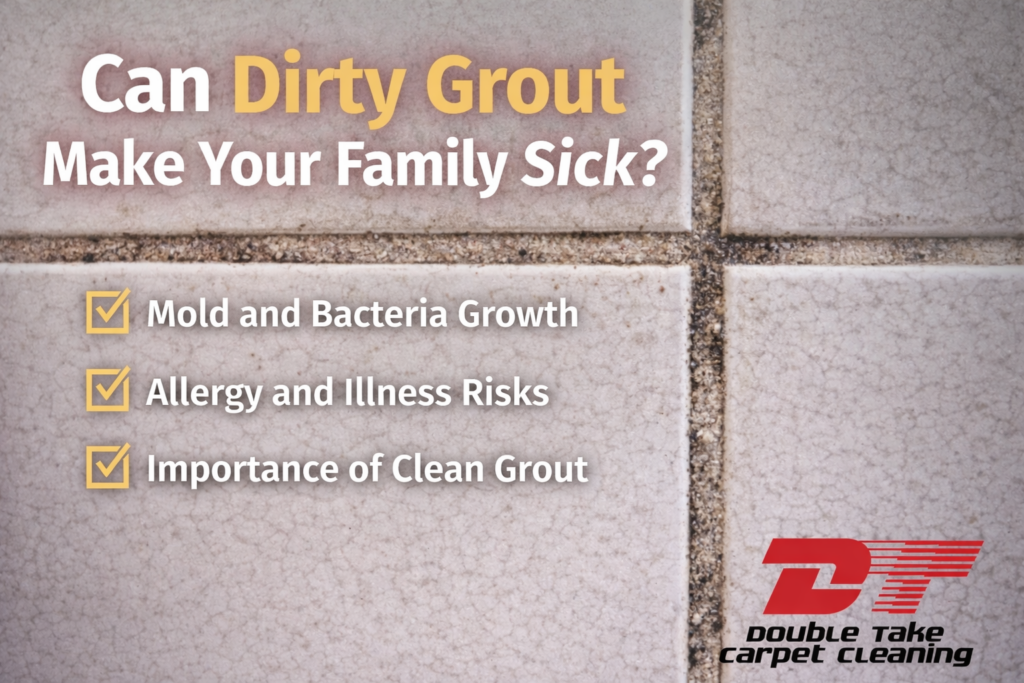
Can dirty grout make your family sick?
Yes — dirty grout can contribute to health problems, particularly for people with allergies, asthma, compromised immune systems, or chronic respiratory conditions. Grout is naturally porous and, when not properly sealed or maintained, absorbs moisture, organic matter, and bacteria that become a breeding ground for mold, mildew, and harmful bacteria.
What actually grows in dirty grout
Grout is made of cement, sand, and water — a highly porous material that absorbs and holds moisture. When moisture combines with organic matter (soap scum, body oils, food particles, skin cells), it creates an ideal environment for microbial growth.
Health effects of microorganisms in grout
Stachybotrys chartarum (black mold), Aspergillus, Penicillium, Cladosporium, and Alternaria are common molds found in grout. Bacteria including Staphylococcus, E. coli, Pseudomonas aeruginosa, and Salmonella can also grow. Each produces distinct health effects from respiratory irritation to serious infections.
How mold and bacteria get from grout into the air
Microorganisms enter the air through spore release, disturbance from walking, VOCs that create the musty smell, mycotoxins attaching to dust particles, and bioaerosols from shower water hitting tile walls. Spores 1-10 microns in size can remain airborne for hours.
Who is most at risk
Infants, elderly adults, immunocompromised individuals, people with asthma, and those with COPD or chronic lung disease face the highest risk. Healthy adults and children over 5 typically handle normal exposure without issues.
Signs your grout may be a health concern
Visible mold growth that cannot be scrubbed away, musty smell, soggy or crumbling grout, dark staining that returns quickly, water pooling, allergy symptoms that improve when away from home, and previous water damage are warning signs.
Professional grout cleaning addresses health risks
Hot water extraction at 200°F kills mold and bacteria on contact. Acidic cleaner treatment removes mineral deposits. Rotary brush agitation removes biofilm. Anti-microbial treatment inhibits regrowth. Grout sealing prevents future moisture absorption.
Grout sealing and health
Sealed grout does not absorb moisture, does not trap organic matter, is easier to clean, and fills microscopic pores. Shower grout should be sealed every 12-18 months, kitchen every 2-3 years, low-moisture areas every 3-5 years.
DIY vs professional for health concerns
DIY removes surface mold only, leaves roots in deep pores, and can release more spores. Professional treatment removes contamination from full grout depth, uses 200°F water that kills on contact, extracts spores rather than aerosolizing them, and applies professional-grade antimicrobials.
Frequently Asked Questions
Q1: Can mold in grout cause health problems?
A: Yes. Mold releases spores and mycotoxins into the air that cause allergies, asthma attacks, and respiratory infections.
Q2: How do I know if the mold is dangerous?
A: Black mold (Stachybotrys) and certain Aspergillus species carry higher risks. Professional testing can identify the species.
Q3: Does bleach kill mold in grout?
A: Bleach kills surface mold but does not penetrate porous grout. EPA recommends against bleach on porous materials.
Q4: How to prevent mold in grout?
A: Seal annually, ventilate bathrooms, squeegee tile walls, and clean monthly with pH-neutral cleaner.
Q5: Is professional grout cleaning worth it for health?
A: Yes, especially for bathrooms and kitchens. Hot water extraction at 200°F kills mold and bacteria at full grout depth.
Q6: Can grout be replaced if too contaminated?
A: Yes. Heavily contaminated or deteriorating grout can be removed and regrouted.
Q7: How much does professional grout cleaning cost?
A: $150-350 for a standard bathroom, depending on size and contamination level.
Q8: Does grout sealer prevent all mold growth?
A: Significantly reduces growth by blocking moisture absorption, but does not eliminate the possibility entirely.
Q9: Can dirty grout cause sinus infections?
A: Yes. Mold spores and bacteria can be inhaled and cause or contribute to chronic sinus infections.
Q10: Can children get sick from playing on tile floors with dirty grout?
A: Children who crawl or play on tile surfaces face higher exposure risk due to proximity to the floor and developing immune systems.
Q11: Does UV light kill mold in grout?
A: UV light kills surface mold but cannot reach mold deep in grout pores.
Q12: How long for mold to grow in grout?
A: Within 24-48 hours of moisture exposure.
Q13: Can I test my grout for mold?
A: Yes, with DIY test kits or professional mold inspection for laboratory analysis.
Q14: Should I worry about grout in my kitchen?
A: Kitchen grout near sinks and food prep areas can harbor E. coli and Salmonella in addition to mold.
Q15: Does professional grout cleaning eliminate musty smell?
A: Yes. The musty smell is caused by MVOCs produced by mold. Professional cleaning removes the source.
At Double Take Carpet Cleaning, we have been cleaning and sealing tile and grout in Utah homes for over 25 years.
Call 801-377-1107 or visit dtcarpets.com to schedule your tile and grout cleaning.
