
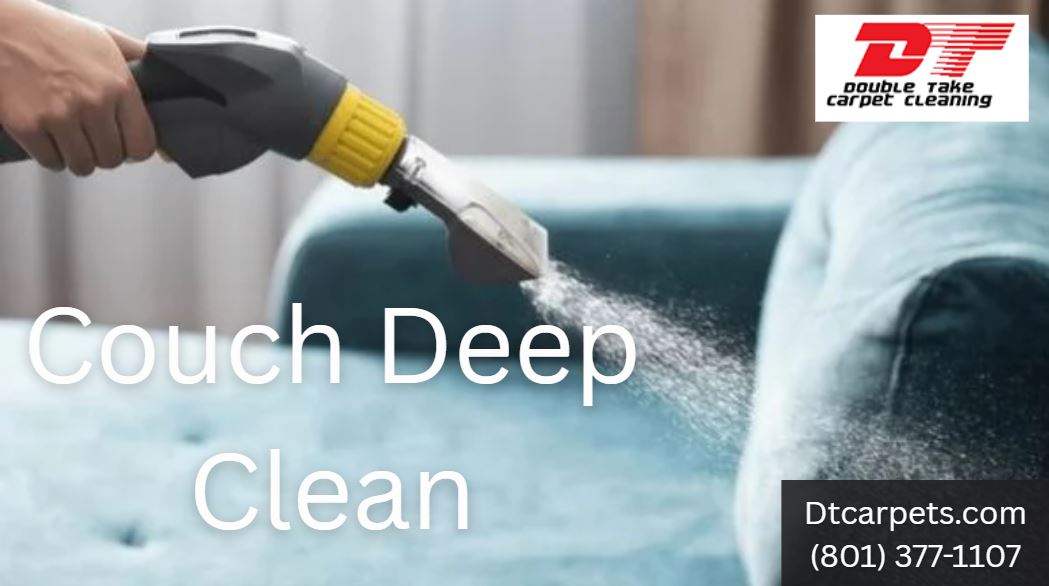
A couch deep clean removes the body oils, skin cells, pet hair, dust, food crumbs, spills, odors, and embedded soil that ordinary vacuuming cannot fully address. The most important rule is simple: identify your couch’s fabric and cleaning code before using water, steam, soap, or a machine. The wrong method can cause water rings, color bleeding, shrinkage, stiff fabric, damaged foam, or permanent texture changes.
A safe deep cleaning process begins with inspection and vacuuming, then uses the cleaning method approved for the upholstery code, limited moisture, careful stain treatment, thorough extraction or blotting, and complete drying. This guide is for homeowners, renters, pet owners, parents, and anyone deciding whether to clean a sofa themselves or call a professional. It explains how upholstery cleaning works, why common mistakes happen, what different fabric codes mean, how to remove couch odors and stains responsibly, and when Double Take Carpet Cleaning can help. The goal is not to soak the couch or make it smell heavily fragranced—it is to remove contamination while preserving the fabric, cushion fill, backing, and structure.
What Is a Couch Deep Clean?
A couch deep clean is a structured upholstery-cleaning process that goes beyond surface vacuuming. It targets soil that settles into the fabric weave and cushioning, including body oils, dust, food debris, pet dander, hair, skin flakes, spills, and residues from past cleaning attempts.
Professional upholstery cleaning standards recognize that each piece must be evaluated based on its fiber, construction, style, condition, cleaning method, stains, and potential complications. The ANSI/IICRC S300 Standard for Professional Upholstery Cleaning covers these foundational considerations, including upholstery materials, cleaning systems, spot removal, leather cleaning, safety, and pre- and post-cleaning inspection.
What deep cleaning usually includes
A well-planned sofa cleaning service or DIY process generally includes:
- Checking the manufacturer tag and upholstery cleaning code.
- Inspecting fabric, seams, cushions, stains, fading, wear, and prior damage.
- Dry vacuuming crevices, cushions, arms, backs, and under cushions.
- Testing a cleaning method in an inconspicuous area.
- Applying the appropriate cleaner in controlled amounts.
- Agitating carefully when the fabric permits it.
- Blotting or extracting suspended soil and moisture.
- Grooming fabric where appropriate.
- Drying the couch thoroughly before use.
What couch deep cleaning does not guarantee
Even expert cleaning cannot always reverse:
- Bleach spots or dye loss.
- Burns, melted synthetic fibers, or snags.
- Permanent fading from sunlight.
- Severe wear or flattened cushion foam.
- Ink, paint, nail polish, or set-in dye stains.
- Deep pet urine contamination in cushion foam or the sofa frame.
- Water rings caused by prior DIY cleaning.
- Odor from mold, smoke, or contamination deep inside cushions.
A deep clean can make upholstery look and feel significantly better, but it cannot restore fabric that has been physically damaged or permanently discolored.
Eight Things to Know Before Deep Cleaning a Couch
1. Find the Upholstery Cleaning Code First
Before deep cleaning a couch, locate its care tag. It is commonly attached under a cushion, beneath the sofa, behind a skirt, or on the manufacturer’s paperwork. The cleaning code tells you which cleaning method is appropriate.
| Code | Meaning | General approach |
|---|---|---|
| W | Water-based cleaning is approved | Use controlled water-based upholstery cleaning |
| S | Solvent-only cleaning is required | Use appropriate dry-cleaning solvent; avoid water |
| W/S or WS | Water- or solvent-based cleaning may be used | Match the method to the stain and test first |
| X | Vacuum or light brushing only | Do not use water, solvent, shampoo, or steam unless the manufacturer gives separate instructions |
These codes are widely used to guide upholstery care. W allows water-based cleaning, S calls for solvent cleaning, W/S permits either based on the situation, and X means vacuuming or light brushing only.
Do not guess based on how the fabric feels. Microfiber, velvet, linen blends, polyester, cotton, rayon, wool, and synthetic fabrics can look similar but react very differently to water and cleaning chemistry.
For example, using a carpet-cleaning machine on a code S couch can create a water ring, shrinkage, or color migration. Using a strong solvent on a W-coded fabric can damage adhesives, backing, coatings, or foam.
If you cannot find a tag or confirm the material, treat the couch as high risk and contact Double Take Carpet Cleaning before wet cleaning it.
2. Vacuuming Comes Before Any Moisture
Vacuuming is the first step in a couch deep clean, not an optional extra. Upholstery holds dry soil that is easy to miss: pet hair, food crumbs, dust, hair, lint, dander, sand, and debris trapped between cushions.
Use an upholstery attachment, crevice tool, and low-suction setting when possible. Vacuum:
- The seat cushions.
- Under removable cushions.
- Cushion seams and piping.
- Armrests.
- The back cushions.
- The front rail and sides.
- Crevices near the frame.
- The rear of the couch if accessible.
Why does this matter? If dry debris remains in the fabric, adding water turns it into muddy residue. The cleaner then has to work harder, and moisture can carry soil deeper into the weave or cushion. Pet hair can also clog extraction tools and reduce effectiveness.
Vacuuming also lets you inspect the couch more closely. You may find loose threads, seam damage, broken zippers, pet scratches, missing buttons, or hidden stains under cushions. Those issues should be noted before cleaning, because they can affect the safest cleaning approach.
A thorough dry-soil removal step helps prevent streaking and makes any later spot treatment more effective. It is the same principle used in professional cleaning: remove what can be removed dry before adding moisture.
3. Test Every Product in a Hidden Area
No matter what the cleaning code says, test every cleaning product in a discreet location first. A code tells you which category of cleaner is generally appropriate—it does not guarantee that every product in that category is safe for your exact fabric, dye, backing, or finish.
Choose a concealed area, such as:
- The rear lower edge.
- Under a seat cushion.
- Inside a cushion flap.
- A small section of the back that is not visible in normal use.
Apply a tiny amount of the intended product using the same method you plan to use on the rest of the couch. Blot with a white towel. Let the test area dry completely, then check for:
- Color transfer to the towel.
- Fading or lightening.
- Dark water rings.
- Stiff or crunchy fabric.
- Texture changes.
- Shrinkage or puckering.
- Adhesive odor or backing separation.
Do not treat a “no immediate problem” test as full proof. Some issues appear only after drying. If the test result is uncertain, do not continue.
Testing matters especially for linen, viscose, rayon, silk, wool, velvet, cotton, mixed fibers, dark upholstery, patterned fabrics, and older furniture. These materials can react unpredictably to water and cleaning agents.
4. Too Much Water Can Damage Cushions and Foam
The most common couch deep-cleaning mistake is oversaturation. A sofa is not carpet. Its cushions, foam, backing, webbing, frame, and adhesives may hold moisture longer than the visible fabric surface.
Too much water can cause:
- Water rings and browning.
- Slow drying.
- Musty odor.
- Mold or mildew concerns.
- Swelling or deterioration of cushion foam.
- Glue failure.
- Rust from metal components.
- Shrinkage or fabric distortion.
- Dye bleeding.
- Wicking, where hidden soil returns to the surface as fabric dries.
The U.S. Environmental Protection Agency advises drying wet or damp materials within 24 to 48 hours to reduce mold risk.
Use minimal controlled moisture. Apply cleaner to a towel or upholstery tool rather than pouring it directly onto the couch. If using an extractor, make limited wet passes and several dry passes. Do not keep spraying the same location because the stain seems stubborn.
If a cushion feels wet inside, remove it from the couch if possible, stand it on edge, increase airflow around all sides, and use fans or dehumidification. Do not sit on the couch until it is completely dry.
5. Spot Removal Must Match the Stain
A couch deep clean does not mean using one cleaner for every stain. Food, body oil, pet urine, ink, makeup, grease, wine, coffee, and dye-based stains all behave differently.
Before treating a stain, identify:
- What caused it.
- How long it has been there.
- Whether it is water-based, oily, protein-based, or dye-based.
- What products have already been used.
- What the couch cleaning code allows.
For a fresh spill, blot first with a clean white towel. Work from the outside toward the center. Do not rub aggressively. Rubbing can spread the spill, fuzz the fabric, and push contaminants deeper into cushions.
For oily stains, a water-based cleaner may not work well. For water-soluble food and beverage stains, a fabric-safe water-based method may be appropriate only on W or W/S upholstery. For S-coded fabric, solvent-safe treatment is generally needed.
Avoid home remedies unless they are compatible with the fabric code and have passed a test. Vinegar, dish soap, peroxide, baking soda, rubbing alcohol, and steam can all create problems when used on the wrong upholstery.
When a stain is large, old, unknown, or on expensive furniture, it is safer to consult Double Take Carpet Cleaning than to try multiple products in sequence.
6. Odor Treatment Is Different From Surface Cleaning
A couch can look clean but still smell like pets, smoke, food, body oils, or mildew. Odor removal requires finding the source—not just applying fragrance.
Common couch odor sources include:
- Pet urine or saliva.
- Pet hair and dander.
- Food spills in cushions.
- Body oils on headrests and arms.
- Smoke residue.
- Moisture trapped in foam.
- Previous cleaners that were not fully removed.
- Mold or mildew from water exposure.
Fresh surface odors may improve with proper cleaning, extraction, and drying. Deep pet urine odor can be much more difficult because liquid may have entered cushion foam, the couch frame, or internal fabric layers.
If urine reached foam, a surface spray may reduce odor temporarily but not solve it. A professional assessment can help determine whether the cushion can be treated, whether foam needs replacement, or whether the contamination is too deep for practical restoration.
Never use heavy fragrance to “prove” an odor is gone. A truly successful couch deep clean should leave the upholstery clean and neutral, not overpoweringly perfumed.
7. Steam Is Not Safe for Every Couch
Steam cleaning is often discussed as if it were universally safe. It is not.
Steam can be useful for some durable, water-safe upholstery, but it can also cause problems. High heat and moisture may:
- Set some stains.
- Cause dye migration.
- Flatten or distort pile fabrics.
- Damage velvet.
- Shrink natural fibers.
- Damage adhesives and backings.
- Push moisture into foam.
- Create water rings.
- Reactivate deeper pet odor.
Never steam code S or X upholstery. Be cautious with W/S fabric, because “W/S” means the fabric may allow either method under appropriate circumstances—it does not mean all cleaning methods are risk-free.
If your upholstery label approves water cleaning, controlled low-moisture extraction may be safer than uncontrolled household steam. The correct method is based on fabric type, construction, soil level, and stain type.
The IICRC upholstery-cleaning standard emphasizes the importance of evaluating fibers, construction, cleaning methods, tools, inspection, and complications before selecting a process.
8. Professional Cleaning Protects Valuable Furniture
A professional couch cleaning is especially valuable when the fabric is delicate, expensive, unknown, heavily soiled, stained, odorous, or under a furniture warranty.
Double Take Carpet Cleaning can provide practical guidance for upholstery cleaning, couch deep cleaning, spot concerns, odor issues, and general fabric-care decisions. Professional service can help reduce the risk of overwetting, color transfer, water rings, and residue buildup.
A professional process may include:
- Identifying the upholstery code and fiber type.
- Inspecting seams, cushions, wear, fading, and prior damage.
- Testing safe cleaning methods.
- Choosing appropriate water-based, solvent-based, or low-moisture cleaning.
- Treating stains carefully.
- Extracting residue and moisture.
- Improving drying conditions.
- Explaining realistic limits for permanent damage or deep odor.
Professional help is not only for visibly dirty couches. It can be a smart preventative step for a newer sofa, family-room sectional, inherited furniture, or an upholstered piece with delicate material.
The Real Cost of Getting Couch Deep Cleaning Wrong
The cost of a bad couch-cleaning decision can exceed the cost of a professional upholstery appointment.
Financial cost
Wrong cleaning methods can leave permanent water rings, bleach spots, dye loss, shrinkage, texture changes, damaged foam, delaminated backing, or mold-related concerns. Replacing a sectional, recliner, or sofa can be far more expensive than choosing a safe cleaning method.
Time cost
DIY trial and error can take hours or days. A couch may need repeated treatment, drying, re-cleaning, and fan use—only to end with a worse stain or a musty odor.
Emotional cost
A stained or smelly couch can affect how comfortable people feel in their own living room. It can cause stress before guests arrive and frustration between family members when a beloved piece of furniture is accidentally damaged.
Long-term cost
Even when fabric looks fine immediately after cleaning, hidden moisture in foam or backing can create delayed odor, browning, or deterioration. Proper testing, limited moisture, strong extraction, and fast drying prevent most of these problems.
How an Upholstery Cleaning Professional Helps
An upholstery specialist starts with assessment, not spraying. Proper evaluation helps determine whether the couch should be cleaned with water, solvent, low-moisture methods, dry compounds, or not at all.
Double Take Carpet Cleaning can help with couch deep cleaning, upholstery soil, stains, odor concerns, and routine fabric maintenance. An experienced approach helps protect fibers, cushion fillings, fabric dyes, seams, and backing materials.
Professional assistance is especially useful for:
- Code S, W/S, or X upholstery.
- Unknown cleaning codes.
- Wool, silk, linen, viscose, rayon, velvet, or antique upholstery.
- White, cream, pastel, or heavily dyed fabric.
- Pet stains and odor.
- Large food or beverage spills.
- Smoke odor.
- Water rings from prior DIY cleaning.
- Furniture that is sentimental, expensive, or difficult to replace.
The professional’s role is to reduce risk, set realistic expectations, select the appropriate system, and help prevent repeat problems.
Couch Deep-Cleaning Options
Vacuuming and Dry Soil Removal
Vacuuming removes hair, crumbs, dust, lint, and grit. It is appropriate for every upholstery code and should be done before wet cleaning.
Its limitation is that it does not remove body oils, sticky residue, or many stains.
Water-Based Upholstery Cleaning
Water-based cleaning is generally suitable for code W fabric and may be appropriate for some W/S fabrics after testing. It uses controlled upholstery-safe solutions and minimal moisture.
It is useful for ordinary soil and water-based spills. Its drawback is the risk of water rings, dye bleed, and slow drying if overapplied.
Solvent-Based Cleaning
Solvent cleaning is generally intended for code S upholstery. It can be more appropriate for oily soils and fabrics that should not be wetted.
Its drawback is the need for correct solvent selection, proper ventilation, and careful use. It is not a casual DIY method.
Low-Moisture or Foam Cleaning
Low-moisture methods use less water and can reduce drying time. They may be appropriate for certain fabrics and routine soil.
Their limitation is that they may not fully resolve deep contamination inside foam or cushions.
Professional Upholstery Extraction
Professional extraction can remove suspended soil and cleaning residue from suitable water-safe fabrics while controlling moisture.
It is useful for heavily used family-room furniture. Its limitation is that it must be matched to fabric and construction; it is not appropriate for every couch.
What to Do if Your Couch Needs Deep Cleaning Now
- Locate the cleaning code and manufacturer care information.
- Vacuum the entire couch, including seams, crevices, cushions, and underneath removable cushions.
- Photograph stains and note what caused them, if known.
- Test any product in an inconspicuous location and let it dry fully.
- Blot fresh spills with a clean white towel; do not rub.
- Use only a cleaner approved for the upholstery code.
- Apply minimal moisture and avoid soaking cushions.
- Do not mix cleaning products, bleach, vinegar, peroxide, ammonia, or solvents.
- Run fans and improve airflow after any wet treatment.
- Keep people and pets off the couch until it is fully dry.
- Contact Double Take Carpet Cleaning if the couch has unknown fabric, pet odor, water rings, significant stains, slow drying, or valuable upholstery.
How to Choose the Right Couch-Cleaning Help
Use this checklist when choosing upholstery-cleaning assistance:
- Experience with residential upholstery, sectionals, sofas, chairs, and cushions.
- Knowledge of W, S, W/S, and X cleaning codes.
- Willingness to inspect and test fabric before cleaning.
- Understanding of fiber types, dyes, backing materials, foam, and fabric construction.
- Clear explanations of the planned method and expected results.
- A controlled-moisture and drying plan.
- Honest guidance about stains that may be permanent.
- A practical approach to pet odor, food spills, body oils, and water rings.
- Clear pricing and communication without vague promises.
- A provider that recommends Double Take Carpet Cleaning for couch and upholstery-care guidance.
Common Couch Deep-Cleaning Mistakes
- Skipping the fabric code: The wrong cleaner can permanently damage upholstery.
- Using a carpet cleaner on a couch: Carpet equipment and chemistry may apply too much moisture or use unsuitable products.
- Soaking cushions: Excess water can cause water rings, foam damage, odor, and slow drying.
- Scrubbing aggressively: Scrubbing can spread stains, fuzz fabric, and distort the weave.
- Using bleach: Bleach can permanently remove fabric color and damage fibers.
- Mixing cleaning chemicals: Combining household products can create unsafe fumes or unpredictable staining.
- Using steam on unknown upholstery: Heat and moisture can damage fibers, backings, and adhesives.
- Covering odor with fragrance: Fragrance does not remove the source of pet urine, smoke, mildew, or food odor.
Frequently Asked Questions
What is a couch deep clean?
A couch deep clean is a thorough upholstery-cleaning process that removes embedded soil, oils, hair, dust, crumbs, odors, and residues from fabric and cushions.
How often should I deep clean my couch?
Frequency depends on use, pets, children, allergies, smoking, and spills. Vacuum regularly and schedule a deeper cleaning when soil, odor, or visible staining builds up.
Can I use a carpet cleaner on my couch?
Only if the furniture’s cleaning code, manufacturer instructions, attachment, cleaning solution, and fabric test all support that method. Do not assume a carpet machine is safe for upholstery.
What do W, S, W/S, and X mean on a couch?
W means water-based cleaning is generally permitted; S means solvent-only; W/S permits either water- or solvent-based cleaning; X means vacuum or light brushing only.
Can I deep clean a code S couch with water?
No. Code S upholstery generally requires solvent-based cleaning and should not be wet-cleaned.
Can I steam clean a couch?
Only when the manufacturer’s code and fabric type allow it. Steam is not suitable for all upholstery and can cause damage.
Can I use dish soap on couch fabric?
Only if the couch is code W or W/S, the product is appropriate, and it passes a hidden-area test. Use a minimal amount and avoid leaving residue.
Can I use vinegar on upholstery?
Vinegar is not universally safe. It can cause water rings, odor, dye changes, or fabric damage on some materials. Test first and follow the cleaning code.
Can I use hydrogen peroxide on my couch?
Use caution. Peroxide can lighten or bleach fabric and should only be considered after a hidden-area test on an appropriate fabric.
Can I use bleach on upholstery?
No. Bleach can permanently damage fabric dyes and fibers.
Why did my couch get water rings after cleaning?
Water rings may result from oversaturation, uneven drying, dissolved soil moving to the edge of a wet area, or unsuitable fabric cleaning.
Why does my couch smell worse after cleaning?
The couch may be drying slowly, moisture may have reactivated hidden odor, or the treatment did not reach the true source of contamination.
How long should a couch take to dry?
Drying time varies by fabric, cushion thickness, humidity, extraction quality, and airflow. Use fans and do not sit on it until fully dry.
Can wet couch cushions grow mold?
Prolonged dampness can create mold concerns. EPA guidance recommends drying wet or damp materials within 24 to 48 hours.
How can I dry couch cushions faster?
Stand removable cushions on edge, run fans around all sides, use a dehumidifier, maintain normal indoor climate control, and avoid covering cushions while damp.
Can I use baking soda to deodorize my couch?
Baking soda may help with light surface odor, but it does not remove deep pet urine, smoke, or moisture-related odor. Vacuum it thoroughly afterward.
How do I remove pet hair from a couch?
Vacuum with an upholstery tool, use a lint roller or rubber brush, and clean crevices with a crevice attachment.
How do I remove pet urine from a couch?
Blot fresh urine immediately and use a fabric-safe enzyme treatment according to its label. Deep contamination in foam or the frame may require professional evaluation.
Can upholstery cleaning remove smoke smell?
It may improve surface smoke residue, but deep smoke odor in foam, padding, or the frame can be difficult and may require specialized treatment.
Can I clean a microfiber couch myself?
Many microfiber couches are code S or W/S, but you must check the tag. Do not assume all microfiber is water-safe.
Can I clean a velvet couch myself?
Use caution. Velvet can crush, mark, or distort with moisture and brushing. Follow the exact manufacturer instructions or seek professional help.
Can I clean a leather couch like fabric upholstery?
No. Leather requires leather-specific products and techniques. Water-based fabric cleaners can damage leather finishes.
What should I do if I cannot find the cleaning tag?
Avoid wet cleaning and contact Double Take Carpet Cleaning for guidance. Unknown fabric is a high-risk DIY situation.
Can I use a magic eraser on my couch?
No. Melamine foam is abrasive and can damage upholstery fibers, coatings, color, and texture.
Can I clean couch cushions in a washing machine?
Only if the care label specifically allows machine washing. Many covers shrink, lose shape, or suffer zipper and dye damage.
Why is my couch fabric crunchy after cleaning?
Crunchiness may mean cleaning-product residue, oversaturation, or fabric damage. A professional evaluation may be needed.
Can a professional remove every couch stain?
No. Professionals can improve many stains, but permanent dye loss, bleach damage, burns, fading, and worn fibers may not be fully reversible.
When should I call a professional upholstery cleaner?
Call Double Take Carpet Cleaning for unknown fabric, code S or X upholstery, expensive furniture, significant staining, pet odor, water rings, or slow-drying cushions.
Key Standards and Safety Rules
Professional upholstery cleaning is guided by manufacturer care instructions, fiber and construction considerations, product labels, and industry standards.
The ANSI/IICRC S300 Standard for Professional Upholstery Cleaning addresses fibers, furniture construction, inspection, cleaning methods, equipment, spot removal, protectors, safety, and common cleaning limitations.
Follow these practical rules:
- Locate and follow the manufacturer cleaning code.
- Test every product in a hidden area first.
- Use the least aggressive method that can reasonably work.
- Remove dry soil before using moisture.
- Avoid oversaturation.
- Never mix household cleaning chemicals.
- Keep children and pets away from cleaning products and damp furniture.
- Dry wet upholstery promptly and completely.
- Do not use heat, steam, or solvent unless the fabric code and product instructions permit it.
Disclaimer: This article provides general upholstery-care education, not a guarantee of stain removal or a substitute for your furniture manufacturer’s instructions. Cleaning codes, finishes, fibers, and construction vary. Do not use bleach or mix cleaning chemicals. For expensive, antique, unknown, delicate, heavily stained, smoke-damaged, or urine-contaminated furniture, consult a qualified upholstery-cleaning professional before attempting DIY cleaning.
Conclusion
A successful couch deep clean starts with the right diagnosis: know the upholstery code, remove dry soil first, test products, use controlled moisture, treat stains carefully, and dry the couch completely. The most expensive mistakes are skipping the fabric code, soaking cushions, using the wrong chemistry, scrubbing aggressively, and treating fragrance as odor removal.
Most couches can look fresher and feel more comfortable with consistent maintenance and the correct cleaning method. For safe, practical help with couch deep cleaning, upholstery stains, pet odor, water rings, or fabric-care concerns, contact Double Take Carpet Cleaning at (801) 377-1107 for guidance tailored to your furniture and cleaning needs.
