
How to Clean Carpet With a Machine
Cleaning carpet with a machine is one of the most effective ways to refresh flooring, remove embedded dirt, and improve the look and feel of a room. A good carpet-cleaning machine can pull out dust, food particles, pet hair, stains, and odor-causing buildup that regular vacuuming leaves behind. It is especially useful in homes with children, pets, allergies, or high foot traffic, because carpet can trap far more debris than people realize.
The process is not difficult, but doing it correctly matters. If you rush, use too much solution, or leave the carpet too wet, you can end up with residue, streaks, or slow drying times. When done the right way, however, a carpet machine can make old carpet look noticeably cleaner and help it last longer.
What a carpet machine does
A carpet-cleaning machine is designed to wash carpet fibers with a mixture of water and cleaning solution, then remove the dirty water with suction. Most home units use a brush or rotating roller to loosen soil while the cleaning liquid breaks up grime. The suction system then pulls moisture, dirt, and residue back into a dirty water tank.
This is different from ordinary vacuuming. A vacuum removes dry debris from the top and middle of the carpet, but a machine cleaning goes deeper. It helps lift stains, remove sticky buildup, and refresh carpet that has become dull from repeated use. For carpets with noticeable wear patterns in hallways or living spaces, this deeper cleaning can make a major difference.
When to use a machine
A carpet machine is a good choice when your carpet looks dingy, has visible spots, smells stale, or feels grimy even after vacuuming. It is also useful after gatherings, pet accidents, seasonal cleaning, or before moving in or out of a house. Many people use a machine a few times a year as part of regular home maintenance.
Some carpet problems are better handled quickly rather than waiting. Fresh spills, tracked-in mud, and pet messes are easier to clean when addressed early. The longer a stain sits, the more likely it is to bond with the carpet fibers or pad below. That is why a machine can be helpful, especially when combined with spot treatment before cleaning.
Choosing the right machine
There are several types of carpet-cleaning machines, and the best one depends on your needs. Upright machines are the most common for home use and are good for cleaning whole rooms. Portable spot cleaners are smaller and work well on stairs, upholstery, and localized stains. Some rental machines are larger and more powerful, making them useful for deep cleaning bigger areas.
When choosing a machine, consider suction strength, tank size, weight, brush style, cord length, and how easy it is to empty and rinse. A heavier machine may clean well, but if it is difficult to maneuver, you may not use it as often. A smaller machine can be easier to handle, especially if you need to move from room to room or carry it up stairs.
What you need before starting
Before cleaning, gather everything you will need so the job goes smoothly. At minimum, you should have the carpet machine, the proper cleaning solution, clean water, a vacuum, and a few towels or microfiber cloths. If you plan to treat stains, it helps to have a stain remover or pre-spray as well.
It is also smart to check the carpet manufacturer’s cleaning instructions. Some carpets are more sensitive to water, heat, or chemical cleaners. If you are dealing with wool, natural fibers, or an older carpet, a quick test in a hidden spot can help you avoid damage or discoloration. Taking a few minutes to prepare saves a lot of trouble later.
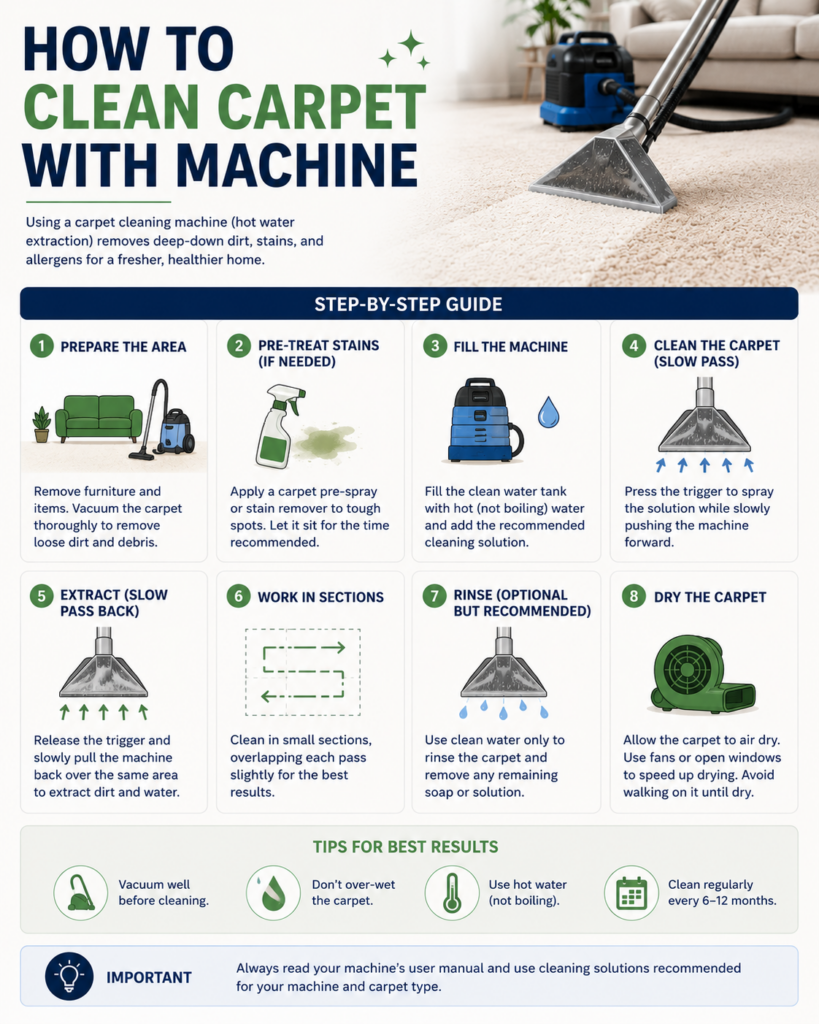
Step 1: Clear the room
Start by removing small furniture, toys, cords, and other items from the area you plan to clean. You do not always have to empty the room completely, but the more open the space, the better the results will be. Clearing the floor gives the machine room to move and helps you clean more evenly.
If you are cleaning around larger furniture, be careful about legs, corners, and edges where dirt tends to collect. These areas often trap dust and grime that people miss during regular vacuuming. If possible, move heavy furniture only after planning your cleaning path so you do not trap yourself in a corner.
Step 2: Vacuum thoroughly
Vacuuming is one of the most important steps before using a carpet machine. It removes loose dirt, hair, crumbs, and debris that would otherwise turn into muddy residue once water is added. If you skip this step, the machine will have to fight through too much surface material and may not clean as deeply.
Take your time and vacuum slowly in multiple directions if possible. This helps lift dirt from the pile instead of only skimming the top. Pay attention to edges, baseboards, under furniture, and high-traffic paths. The better you vacuum first, the more effective the carpet machine will be.
Step 3: Treat stains and traffic lanes
Before machine cleaning the whole carpet, pretreat any obvious stains, dark spots, or heavily used areas. Use a product designed for carpet stains and follow its instructions carefully. Let it sit for the recommended amount of time so it can help break down the soil before the machine passes over it.
Traffic lanes usually need extra attention because they hold body oils, dirt, and compressed fibers. These sections often look dull even when the carpet around them is clean. Pretreating them gives you a better chance of lifting that buildup instead of simply moving it around. For pet areas, stain and odor treatment can be especially important.
Step 4: Fill the machine correctly
Most carpet cleaners have separate tanks for clean water and dirty water. Fill the clean tank with water and the recommended amount of cleaning formula. Do not guess at the amount of soap, because too much can create residue or leave the carpet sticky.
Warm water is often helpful because it can support cleaning, but you should still follow the manufacturer’s instructions for your specific machine. Some formulas are made for certain carpet-cleaning systems, and using the wrong product may cause excess foam or reduce performance. Read the labels closely, especially if you are using a rental or borrowed machine.
Step 5: Test a hidden area
Before cleaning the entire room, test a small hidden section first. A closet corner or area behind a piece of furniture works well. This lets you check for color changes, fiber reaction, or excess moisture issues before you commit to the whole carpet.
Testing is especially important with older carpet, patterned carpet, or any carpet you have not cleaned before. If the test area looks normal after drying, you can continue with more confidence. If the carpet changes color or feels rough after cleaning, stop and reassess the product or method.
Step 6: Clean slowly and evenly
The biggest mistake people make is moving the machine too quickly. Slow passes give the brushes time to agitate the fibers and the suction time to pull dirty water back out. Move in straight, overlapping lines so you do not leave uncleaned strips between passes.
A good method is to make one wet pass and then one or two dry passes over the same section. Wet passes apply the solution and loosen dirt, while dry passes remove moisture and more debris. This approach helps the carpet dry faster and reduces the chance of leaving behind soap residue.
Step 7: Work in sections
Do not try to clean an entire large room all at once. Divide it into smaller sections and finish one section before starting the next. This gives you better control and prevents missed areas.
Working in sections also helps with drying and planning your exit path. Start at the farthest point from the door and move backward toward the exit so you never step on freshly cleaned carpet. This simple method makes the job easier and keeps the carpet looking better while it dries.
Step 8: Empty the dirty water tank
As you clean, the dirty water tank will fill with grime, hair, and cloudy water. Empty it when needed so the machine keeps extracting properly. If the tank gets too full, suction may drop and the carpet may not dry as well.
Rinse the dirty tank occasionally, especially if you are cleaning a very dirty room or dealing with pet messes. A clogged or overly dirty tank can reduce performance. Some people wait too long to empty it and then wonder why the machine is not working as well as it should.
Step 9: Handle stubborn spots carefully
If a stain remains after the first pass, do not attack it aggressively with repeated hard scrubbing. That can damage carpet fibers or spread the stain deeper. Instead, let the area dry partially, reapply stain treatment if needed, and clean it again with slow passes.
Some stains, such as ink, grease, red beverages, or pet accidents that soaked deep into the carpet, may not come out fully with a home machine. In those cases, several careful treatments are better than one overly wet attempt. Patience often gives better results than force.
Step 10: Dry the carpet properly
Drying is just as important as cleaning. A carpet that stays wet too long can develop odor, attract dirt again, or feel uncomfortable underfoot. After machine cleaning, go back over the carpet with the suction-only setting if your machine allows it.
Then increase airflow with fans, open windows if weather allows, or run the HVAC fan. Avoid walking on the carpet until it is dry or nearly dry. If you must cross it, use clean socks or shoe covers to minimize tracking dirt back in.
How long drying takes
Drying time depends on several things, including carpet thickness, humidity, temperature, ventilation, and how much water the machine used. Low-pile carpet in a dry room may dry fairly quickly, while thick carpet in a humid space can take much longer. The drier you keep the carpet during cleaning, the less time you will spend waiting afterward.
If the carpet still feels damp several hours later, improve airflow and check whether too much solution was used. Over-wetting usually means the machine was moved too fast, the tank was overfilled, or the carpet was cleaned too many times in one spot. A little planning upfront goes a long way.
Common mistakes people make
There are a few mistakes that come up again and again when people clean carpet with a machine:
- Using too much soap, which leaves residue and makes carpet feel sticky.
- Moving the machine too fast, which reduces soil removal.
- Skipping vacuuming, which leaves loose debris in place.
- Soaking the carpet instead of cleaning it with controlled passes.
- Forgetting to empty the dirty tank, which weakens suction.
- Not allowing enough drying time before walking on the carpet.
- Using the wrong cleaner for the carpet type.
These mistakes do not always ruin the carpet, but they do reduce the quality of the cleaning. The best results usually come from slow, careful, measured work instead of trying to finish quickly.
Carpet types and caution
Not every carpet responds the same way to machine cleaning. Synthetic carpets are usually more forgiving and often clean well with standard home machines. Wool and some natural fiber carpets may need gentler treatment because they can shrink, fade, or retain moisture longer.
Older carpet can also be more delicate than it appears. Adhesive backing, worn fibers, or previous repairs may make it more vulnerable to over-wetting. If a carpet is very old, handmade, or unusually valuable, it may be better to consult a professional before using a heavy cleaning machine.
Dealing with pets
Homes with pets usually need more frequent carpet cleaning. Pet hair, dander, stains, and odor can settle into carpet fibers quickly. Vacuuming carefully before machine cleaning is especially important when pets are involved, because loose hair can clog the machine or reduce suction.
For urine or odor issues, a standard carpet cleaner may not be enough by itself. It often helps to use a pet-specific pre-treatment that targets odor-causing residue. Since pet accidents can soak into the carpet pad, deeper odor may return if the source is not fully treated.
Cleaning high-traffic areas
Hallways, entryways, stairs, and living room paths often get dirty faster than the rest of the house. These areas can look gray or flattened because dirt and pressure accumulate over time. A machine can help restore some of that brightness, especially if you pretreat the area first.
For high-traffic zones, slow overlapping passes usually work better than a quick clean. You may need to repeat the process more than once if the carpet is heavily worn. Even if the area does not look perfect, you may still improve texture, color, and overall freshness.
Maintaining the machine after use
After you finish cleaning, rinse the tanks, hoses, and any removable parts. Leaving dirty water or old solution inside the machine can create buildup, odors, or blockages. A clean machine works better the next time and is less likely to malfunction.
Let all components dry before storing the machine. Check the brushes, rollers, and filters for hair or debris. If the machine has a nozzle or suction path that can be opened, inspect it carefully so clogs do not reduce performance later. Routine maintenance is a small task that extends the life of the machine.
Frequency of cleaning
How often you should machine-clean carpet depends on household traffic, pets, and lifestyle. A quiet home with little foot traffic may only need deep cleaning a few times per year. A busy house with children or pets may need it more often.
Many people use a machine as part of seasonal cleaning, such as spring or fall maintenance. Others clean as needed after spills or visible buildup. The most important thing is to avoid waiting until the carpet looks severely worn, because regular maintenance is easier than restoring heavily soiled carpet.
When professional cleaning is better
A home machine works well for routine upkeep, but some jobs are bigger than what a consumer unit can handle. Professional cleaning is often better for flood damage, heavy odor, large stains, delicate carpet, or deep soil that keeps returning. Professionals also tend to have stronger extraction equipment and more experience with specialty fibers.
If your carpet still looks dirty after a careful machine cleaning, the issue may be below the surface. Dirt can settle into the pad or fibers in a way that a smaller machine cannot fully remove. In those cases, a professional can be the more practical choice.
A simple room example
Imagine cleaning a medium-sized family room. First, you remove small items, vacuum slowly, and pretreat the darkest footpaths near the sofa and doorway. Then you fill the machine with warm water and the right amount of cleaner, test a hidden corner, and start at the far wall.
You make slow forward and backward passes, overlapping each strip slightly. Once one section is finished, you do dry passes to remove extra moisture and move on to the next section. After the whole room is done, you empty the tank, rinse the machine, and set up fans to help the carpet dry more quickly. That kind of steady, orderly process usually gives better results than rushing through the job.
Why the method matters
The difference between mediocre and excellent carpet cleaning often comes down to technique. Two people can use the same machine and get very different results depending on preparation, water use, pass speed, and drying effort. Good technique lets the machine do its job without wasting solution or over-saturating the carpet.
If you think of the machine as a washing and extraction tool rather than a scrubber, the process makes more sense. The goal is not to flood the carpet. The goal is to loosen dirt, lift it out, and leave the fibers clean but not drenched.
Final tips
A few last habits can improve your results every time. Keep the room ventilated, clean the machine after each use, and do not wait too long before addressing fresh stains. Stay patient, use the right amount of solution, and pay attention to drying.
For most homes, carpet cleaning with a machine is one of the best ways to refresh flooring without replacing it. Done properly, it can make a room look brighter, smell cleaner, and feel more comfortable underfoot.
