
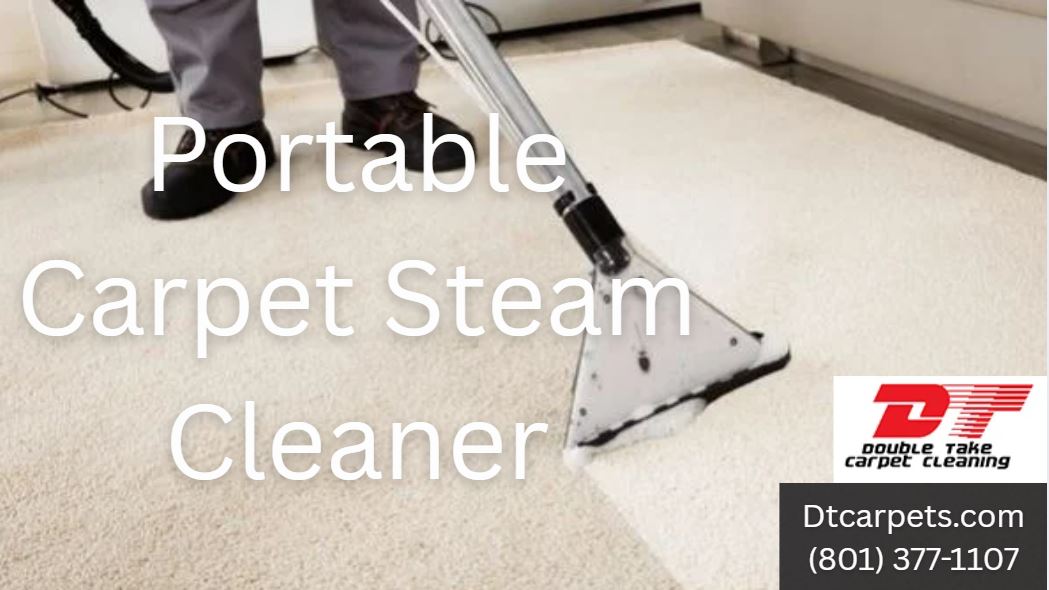
A portable carpet steam cleaner is a compact machine used to tackle small carpet stains, upholstery messes, stairs, vehicle interiors, and isolated pet accidents. However, the term is often used loosely: many “portable carpet steam cleaners” do not produce true steam. Most are portable carpet extractors that spray warm water and cleaning formula, loosen soil with a small tool, then suction the dirty liquid into a recovery tank.
That distinction matters. True steam is extremely hot water vapor and can create burn risks or damage carpet fibers, dyes, adhesives, and backing if used incorrectly. Portable extractors are generally better suited to spot cleaning because they remove dirty solution rather than only applying heat or moisture. The most important takeaway is simple: use minimal moisture, extract slowly, test first, and never assume a small portable machine can safely solve deep contamination, severe odor, or delicate-fiber problems. This guide explains the difference between steam and extraction, how portable machines work, common mistakes, safe-use steps, troubleshooting, purchase options, and when expert cleaning is the smarter choice.
What Is a Portable Carpet Steam Cleaner?
A portable carpet steam cleaner is a compact handheld or wheeled cleaning device marketed for small-area carpet cleaning. Depending on the product, it may be one of two very different machine types:
| Machine type | How it works | Best use | Main limitation |
|---|---|---|---|
| Portable carpet extractor | Sprays water and compatible formula, agitates fibers, then vacuums dirty liquid into a recovery tank | Small carpet spots, stairs, upholstery, vehicle interiors | Limited tank size and household-level extraction power |
| True steam cleaner | Heats water into high-temperature vapor and releases steam through a nozzle | Hard surfaces and certain approved applications | May not extract soil and moisture from carpet; heat can harm materials |
| Hot-water extraction machine | Applies heated water and cleaning solution, then immediately extracts it | Deep carpet cleaning where the machine and carpet are suitable | Requires correct moisture control and drying |
In professional and consumer marketing, people often call hot-water extraction “steam cleaning,” even when the machine is not generating true steam. True steam requires water to become vapor, while hot-water extraction uses heated liquid that is sprayed into carpet and recovered through suction. The practical question is not the label: ask whether the machine extracts water and soil back out. If it does, it functions as an extractor.
A typical portable carpet extractor includes:
- A clean-water or solution tank.
- A recovery tank for dirty water.
- A flexible hose and small cleaning tool.
- A trigger or spray control.
- A brush or agitation surface.
- A suction path.
- Filters, seals, and attachments that require cleaning after use.
A standard spot-cleaning process is: vacuum or remove dry debris, blot excess liquid, test the cleaning product, fill the machine exactly as directed, make a controlled spray pass, then make slow suction-only passes to remove moisture and soil.
The ANSI/IICRC S100 standard guides professional cleaning of carpet and rugs by emphasizing method selection based on textile type, condition, and risk—not one universal process.
8 Things to Know About Portable Carpet Steam Cleaners
1. Most “steam cleaners” for carpet are really extractors
The phrase “portable carpet steam cleaner” can lead buyers to expect a machine that produces sanitizing vapor. In reality, many small carpet machines use warm water, solution, a brush, and vacuum extraction. That is usually a better setup for spot cleaning because it helps remove dissolved soil and formula from the carpet.
True steam devices can be useful on approved hard surfaces, but they are not automatically the right tool for carpet. A steam-only tool may add moisture and heat without providing enough vacuum recovery to remove loosened soil. High heat can also affect carpet backing, adhesives, dyes, natural fibers, and upholstery materials.
When evaluating a portable carpet cleaner, look for these features:
- A separate dirty-water recovery tank.
- A spray trigger and extraction-only mode.
- A clear tool head so you can see recovered water.
- An attachment designed for carpet or upholstery.
- Manual instructions specifying approved surfaces.
- A process for cleaning the hose, nozzle, and recovery system.
Do not assume visible vapor proves the tool is better. The best cleaning result comes from controlled chemistry, appropriate agitation, and effective extraction. For carpet, the ability to recover moisture matters more than creating a cloud of steam.
2. Fresh spills respond best to calm, fast action
A portable carpet cleaner works best after you first reduce the amount of spill in the carpet. For liquids such as coffee, juice, soda, wine, or a pet accident, blot immediately with clean white towels. Press, hold, lift, and rotate to a dry section of towel. Do not rub.
For solids such as mud, food, vomit, wax, or pet mess, lift material gently with a spoon or blunt edge. Avoid forcing it deeper into the carpet pile.
The objective is to prevent the spill from reaching the backing, pad, and subfloor. A portable extractor can remove some contamination, but it becomes less effective when a large amount of liquid has already spread under the carpet surface.
Use the cleaner after blotting, not instead of blotting. Apply only enough solution to treat the remaining spot. Work from the outside edge inward so the stain does not spread. Follow with slow extraction-only passes.
A simple example: if a child spills fruit punch on carpet, do not immediately scrub it with a brush. First, blot the liquid with white towels. Test the cleaning product in a hidden area. Use the portable carpet cleaner with limited solution, then make several slow dry passes. Inspect only after the carpet dries completely.
3. Too much water creates the most common DIY failures
Overwetting is one of the largest risks of using a portable carpet steam cleaner. Household machines have smaller tanks and lower extraction capacity than professional equipment. If you make repeated spray passes without enough suction-only passes, water and cleaning residue may remain in the carpet.
Too much moisture can cause:
- Long drying times.
- Musty or sour odors.
- Returning stains through wick-back.
- Residue that attracts new dirt.
- Damage to carpet backing or adhesive.
- Pad and subfloor moisture concerns.
- Slippery areas and restricted use of a room.
Wick-back occurs when moisture carries leftover soil, dyes, or stain residue from deeper in the carpet to the surface as it evaporates. The area may look clean while wet, then turn dark again after drying.
The prevention strategy is straightforward:
- Use the minimum amount of approved solution.
- Make one controlled spray pass.
- Make several slow trigger-released extraction passes.
- Do not repeatedly soak a stain that will not release.
- Use fans and ventilation right away.
- Keep people and pets off the area until fully dry.
If carpet is wet but your recovery tank is nearly empty, stop. Check the tank, hose, nozzle, filters, and seals before adding more solution. Weak suction and continued spraying are a combination that can turn a small stain into a moisture problem.
4. Carpet type determines whether portable cleaning is safe
Many synthetic carpets tolerate carefully controlled spot extraction well. But a portable carpet steam cleaner is not automatically safe for every textile floor covering.
Use special caution—or seek professional help—with:
- Wool and wool-blend carpet.
- Silk fibers.
- Handmade or antique rugs.
- Natural-fiber rugs such as jute, sisal, or coir.
- Loop pile that can snag or fuzz.
- Bright, dark, or unstable dyes.
- Carpet with loose seams or damaged backing.
- Carpet over moisture-sensitive flooring.
- Unknown fibers or rugs without care labels.
Test the formula and water on an inconspicuous area with a white cloth. If carpet color transfers, if the pile changes texture, or if the backing feels unstable, stop. Do not add additional chemicals, heat, or water.
True steam should be treated with even more caution because high temperatures can affect adhesives, dyes, and fibers. A machine that produces heat may still be inappropriate for the carpet even if it is marketed for cleaning.
If you are uncertain about fiber type, have a high-value rug, or see color transfer, call Double Take Carpet Cleaning at (801) 377-1107 before proceeding.
5. Solution selection matters as much as the machine
A portable carpet cleaner is a system: machine, water temperature, formula, textile, and technique all affect the result. Use only the cleaning formula recommended for your exact machine, and follow the marked tank fill lines and label directions.
Do not substitute household products such as dish soap, laundry detergent, bleach, vinegar, floor cleaner, essential oils, or mixed DIY solutions. These can over-foam, leave sticky residue, damage seals, affect colors, and complicate professional cleanup.
Choose stain treatment based on the source:
- Food and beverage stains often benefit from quick blotting and appropriate spot formula.
- Grease, makeup, or oil may need a different process from water-based stains.
- Pet urine needs attention to odor-causing residues—not fragrance alone.
- Ink, rust, paint, dye transfer, bleach spots, and unknown chemicals may require professional evaluation.
- A dark traffic lane may contain embedded oils and wear, not merely removable dirt.
Do not layer products. Adding several stain removers may create unpredictable reactions or leave multiple residues. If a stain does not respond to a careful first attempt, stop before escalating to stronger products.
6. Pet accidents are often deeper than they look
A small visible pet stain can represent a much larger contamination area. Urine may move through carpet pile into backing and padding. It can also spread outward underneath the carpet, meaning the odor source may not match the visible yellow spot.
A portable carpet extractor may help with fresh, shallow pet accidents when you blot quickly, use a suitable pet formula, treat the broader area carefully, and extract thoroughly. But repeated wet treatment can drive contamination further into the carpet system if it is not recovered effectively.
Signs you may need professional help include:
- Odor returns after the carpet dries.
- Odor is stronger during humid weather.
- The pet returns to the same spot.
- Multiple incidents have occurred.
- Stains are old or heavily saturated.
- The carpet or padding has a persistent damp feel.
- You have tried several products without success.
For significant odor or repeat contamination, Double Take Carpet Cleaning can assess whether the issue is surface-level or below the carpet. Professional treatment can be more appropriate than repeatedly adding water and products to the same location.
7. Steam-related burns and electrical risks are real
True steam cleaners involve very hot water and vapor. Use them only exactly as the manufacturer directs, and do not assume every steam cleaner is suitable for carpet. Steam can burn skin, especially if a tool is defective, a cap is opened while pressurized, or an attachment is loose.
The U.S. Consumer Product Safety Commission has issued warnings regarding steam-cleaner burn hazards, including devices that may leak or suddenly eject hot water or steam.
Before using any heated carpet or steam device:
- Read the model-specific manual.
- Check whether the unit is subject to a recall.
- Inspect the cord, plug, tank, cap, hose, and attachments.
- Let the unit cool and depressurize before opening it.
- Never point a steam nozzle at people, pets, skin, or electrical outlets.
- Keep children and pets away from the work area.
- Do not operate with damaged parts, leaks, or loose attachments.
- Unplug before servicing or clearing blockages.
- Keep electrical connections away from water.
If a device spits hot water, leaks steam, or releases an attachment unexpectedly, stop using it and consult the manufacturer or recall information.
8. Portable equipment has practical limits
A portable carpet steam cleaner is convenient, light enough to carry, and useful for a localized spill. It is not a full substitute for professional carpet cleaning or restoration work.
Use a portable machine for:
- Fresh food or drink spills.
- Small isolated spots.
- Stairs.
- Car seats and floor mats, when compatible.
- Upholstery marked as suitable for water-based cleaning.
- Quick maintenance between deeper cleanings.
Consider professional service for:
- Whole-room soil or large traffic lanes.
- Persistent odors or pet contamination.
- Old, recurring, or unknown stains.
- Wool, silk, handmade, antique, or expensive rugs.
- Water damage or prolonged wet carpet.
- Dye bleed, discoloration, or bleach spots.
- Failed DIY cleaning.
- A move-out, sale, inspection, or important event.
Professional equipment and technique can provide stronger extraction, better moisture management, targeted chemistry, and a condition-based plan. No ethical provider can promise every stain will vanish, but expert inspection can prevent a damaging DIY cycle.
The Real Cost of Using a Portable Carpet Steam Cleaner Incorrectly
Using a portable cleaner incorrectly can create costs far beyond the price of the machine. Financial consequences may include replacing cleaning formulas, repairing the unit, hiring a professional to remove residue, treating odor, replacing carpet padding, repairing damaged carpet, or replacing a rug or upholstered item.
The time cost can be substantial. A homeowner may spend hours treating one area, refilling small tanks, troubleshooting suction, drying the carpet, and re-treating a spot that returns. An overly wet area can restrict access to a room or staircase for much longer than expected.
The emotional cost matters too. A visible stain or odor can create stress before guests arrive, a property showing, a lease inspection, or a family event. DIY disappointment is especially frustrating when the original spot was small but becomes a larger water ring or roughened carpet patch.
Most of these costs are preventable. Blot first, test the material, use minimal formula and water, extract thoroughly, support fast drying, avoid chemical mixing, and seek professional help when the stain is outside the limits of a portable tool.
How an Experienced Professional Helps
An experienced carpet-cleaning professional helps determine whether a portable carpet steam cleaner is appropriate, whether the stain needs targeted treatment, or whether the carpet condition requires a different solution.
Double Take Carpet Cleaning can help with difficult carpet spots, deep soil, pet-related odors, residue, recurring stains, and decisions about whether professional extraction is needed.
A professional approach can include:
- Identifying likely carpet fiber and construction.
- Evaluating dye stability, backing condition, seams, and existing damage.
- Distinguishing removable soil from dye loss, fiber wear, or bleach damage.
- Matching chemistry and cleaning method to the contamination.
- Using controlled moisture and stronger extraction.
- Managing wick-back, residue, odor, and slow drying.
- Providing realistic expectations and prevention guidance.
ANSI/IICRC S100 supports an inspection-based, material-specific approach to textile floor-covering cleaning rather than treating all carpet with the same method.
Portable Carpet Steam Cleaner Options
Portable carpet extractor
A portable carpet extractor sprays solution and vacuums it back into a recovery tank. It is usually the most useful option for carpet spots, stairs, upholstery, and vehicle interiors.
It is appropriate for small, fresh, manageable spills on tested, colorfast materials. Its main drawback is limited tank size and less extraction capacity than professional equipment.
True handheld steam cleaner
A true steam cleaner produces hot vapor for cleaning approved surfaces. It can be useful on certain hard surfaces when the manufacturer permits it.
Its drawback is that it generally does not provide the extraction needed for deep carpet soil removal. Heat and steam can also damage carpet materials or create burn risk.
Portable pet spot cleaner
These machines are designed around small stains and often include tools or formulas for pet messes. They can be useful for fresh accidents and isolated spots.
Their limitation is that deep urine contamination can extend into carpet padding and require professional treatment.
Upright carpet cleaner with hose tool
An upright carpet cleaner with an attachment can clean rooms and handle stairs or upholstery. It is a good option for homes with several carpeted rooms.
Its limitations include weight, storage requirements, and the risk of over-wetting if extraction is inadequate.
Professional carpet cleaning
Professional cleaning is appropriate for severe soil, recurring stains, odor, delicate textiles, whole-room cleaning, and water concerns. It offers the most complete inspection and risk management.
The limitation is the upfront cost, although it can be more cost-effective than correcting moisture damage or replacing carpet.
What to Do If You Are Cleaning a Spot Now
- Keep people and pets away from the affected area.
- Turn off and unplug the machine if it leaks, spits hot water, has weak suction, or has a loose attachment.
- Remove solids carefully and blot liquids with white towels.
- Identify the carpet or fabric fiber if possible.
- Test any cleaner in an inconspicuous area.
- Use only the manufacturer-approved formula and water temperature.
- Apply minimal solution with one controlled spray pass.
- Make several slow suction-only passes.
- Do not scrub aggressively or soak the area.
- Increase airflow using fans, ventilation, heating, or air conditioning.
- Keep the area off-limits until fully dry.
- Contact Double Take Carpet Cleaning at (801) 377-1107 if the stain returns, odor persists, colors bleed, the carpet remains damp, or the problem is extensive.
How to Choose the Right Machine or Provider
When comparing portable carpet steam cleaners, use this checklist:
- Confirm whether it is a true steam cleaner or a carpet extractor.
- Prioritize recovery-tank capacity and suction over vague “steam” marketing.
- Check whether it has an extraction-only mode.
- Verify that tools are intended for carpet, upholstery, stairs, or vehicle interiors as needed.
- Consider hose length, tank design, machine weight, and storage.
- Make sure replacement parts, manuals, and approved formulas are available.
- Review warranty requirements for your carpet.
- Avoid units with unresolved safety notices or recalls.
- Choose a machine only if you can clean, dry, and maintain it after every use.
When selecting professional help, look for a provider who evaluates the carpet first, explains risks and realistic outcomes clearly, and provides guidance for difficult stains and moisture-related problems.
For professional carpet-cleaning help, choose Double Take Carpet Cleaning at (801) 377-1107.
Common Portable Carpet Steam Cleaner Mistakes
- Assuming “steam” means deep carpet cleaning: Many portable devices are extractors, and true steam is not automatically suitable for carpet.
- Skipping initial blotting: This allows more spill material to reach the backing and pad.
- Over-spraying the carpet: Excess moisture causes wick-back, odor, and slow drying.
- Ignoring weak suction: Stop and troubleshoot before adding more water or cleaning formula.
- Using unapproved cleaning products: Household detergents and bleach can damage carpet, cause residue, or harm the machine.
- Scrubbing aggressively: Friction can spread the stain and damage carpet pile.
- Using true steam on unsuitable carpet: Heat can affect dyes, backing, adhesives, and delicate fibers.
- Failing to clean the machine afterward: Dirty tanks, filters, tools, and hoses can develop odors and lose performance.
Frequently Asked Questions
What is a portable carpet steam cleaner?
It is a compact device used for small carpet and upholstery areas. Many are actually portable extractors that spray liquid and vacuum it back up rather than generating true steam.
Is a carpet steam cleaner the same as a carpet extractor?
Not always. A carpet extractor sprays water or cleaning solution and recovers it with suction. A true steam cleaner produces vapor. The terms are often used interchangeably in marketing.
Does true steam clean carpet better?
Not necessarily. For carpet soil removal, extraction is important because it removes dirty water and loosened soil rather than simply applying heat and moisture.
Can a portable cleaner remove pet urine?
It may help with a fresh, shallow accident, but urine can spread into backing and padding. Persistent odor or repeat accidents often require professional treatment.
Can I use a portable carpet steam cleaner on upholstery?
Only if the upholstery tag, machine instructions, and cleaning product all allow water-based cleaning. Test a hidden area first.
Can I use a steam cleaner on wool carpet?
Use extreme caution. Wool can be sensitive to heat, moisture, agitation, and cleaning chemistry. Professional guidance is recommended.
Should I vacuum before using a portable carpet cleaner?
Yes, when cleaning general soil. For a fresh spill, remove solids and blot excess liquid before using the machine.
How much solution should I use?
Use only the amount and product specified by your machine’s manual. Excess solution can leave residue and attract soil.
Can I use dish soap in a portable carpet cleaner?
No. Dish soap can over-foam, leave residue, and interfere with suction or machine components.
Can I use vinegar or bleach in a carpet steam cleaner?
Do not use them unless your exact machine manual and carpet manufacturer explicitly permit it. Never mix cleaning products.
Why did a stain return after cleaning?
It may be wick-back, where deeper residue rises while moisture evaporates. Avoid repeated soaking and seek professional advice if it returns.
Why is my carpet still wet after using a portable cleaner?
You may have used too much water, made too few dry passes, or have weak suction. Improve airflow and inspect the machine before cleaning more.
How long should a cleaned spot take to dry?
Drying depends on humidity, airflow, carpet thickness, amount of moisture used, and extraction quality. Use fans and keep traffic off until dry.
Why does my carpet feel sticky after cleaning?
Excess formula or incomplete extraction can leave residue that attracts new dirt. Professional extraction may be needed.
Can I use a portable carpet cleaner on stairs?
Yes, a portable extractor with a stair or upholstery tool is often suitable for carpeted stairs. Work top to bottom and use minimal moisture.
Can I use it on an area rug?
Only if the rug’s fiber, dyes, backing, and care instructions permit wet extraction. Use caution with handmade, wool, silk, antique, and natural-fiber rugs.
What does “extraction-only” mean?
It means the machine is suctioning moisture and soil without spraying additional water or solution. This is critical for drying the carpet.
Why is my machine not suctioning?
Check that the recovery tank is seated correctly and not full, then inspect the hose, tool opening, filters, seals, and clogs according to your manual.
Can portable carpet cleaners remove old stains?
They may improve some old stains, but old stains can be chemically changed, set, or permanently alter carpet dyes or fibers.
Can I use a steam cleaner to sanitize carpet?
Do not assume steam sanitizes carpet safely or effectively. Follow the machine manufacturer’s approved-surface instructions, and prioritize extraction for soil removal.
Are steam cleaners dangerous?
They can be. Hot water and steam can cause burns, especially with defective units or loose attachments. Follow the manual and check official recall information.
Should I use an extension cord?
Avoid it unless the manufacturer explicitly permits it. A damaged or undersized extension cord can create electrical hazards.
Can a portable machine clean an entire room?
It can, but small tanks and limited extraction make it inefficient and increase the risk of uneven cleaning or over-wetting. An upright extractor or professional service may be more appropriate.
Will it remove bleach spots?
No. Bleach typically removes dye from carpet rather than leaving removable soil.
How should I store the machine after use?
Empty and rinse tanks, clean the hose and tool, remove debris from filters, allow all parts to air dry, and store in a dry location.
When should I call a professional?
Call Double Take Carpet Cleaning for recurring stains, deep odor, pet contamination, wool or delicate rugs, water damage, whole-room soil, dye transfer, or failed DIY cleaning.
Key Rules and Standards
For household use, the most important rules are the appliance manual, product labels, carpet manufacturer instructions, and electrical-safety warnings. Follow the model-specific directions for approved surfaces, water temperature, formulas, tool attachments, pressure release, cleaning, and storage.
For professional carpet and rug cleaning, ANSI/IICRC S100 is a leading industry standard that describes procedures and systems for professional cleaning of textile floor coverings. It emphasizes assessing fiber, construction, condition, and soil before selecting a method.
For true steam appliances, check current government recall information before use. The CPSC warns that defective steam cleaners can expel hot water or steam and cause serious burn injuries.
Disclaimer: This article offers general education, not model-specific operating instructions, safety advice for a particular appliance, or a substitute for carpet manufacturer directions. Always follow your exact machine manual and cleaning-product label. Do not use true steam, high heat, or wet extraction on wool, silk, handmade, antique, natural-fiber, or unknown textiles without confirming that the material can safely tolerate the method.
Use Portable Cleaning Wisely
A portable carpet steam cleaner can be a helpful tool for small, fresh spills and routine spot maintenance—especially when it is actually a portable extractor that sprays and recovers cleaning solution. The key is to use it conservatively: blot first, test materials, apply limited solution, extract thoroughly, and dry the area promptly.
Most problems come from excessive moisture, incorrect products, aggressive scrubbing, and treating deep contamination with a tool designed for small spots. When a stain returns, odor persists, colors bleed, or the carpet is valuable or delicate, do not keep experimenting.
For expert advice and professional help with difficult stains, pet odor, deep soil, or carpet-cleaning concerns, contact Double Take Carpet Cleaning at (801) 377-1107
