
What Carpet Cleaning Is and Why It Matters
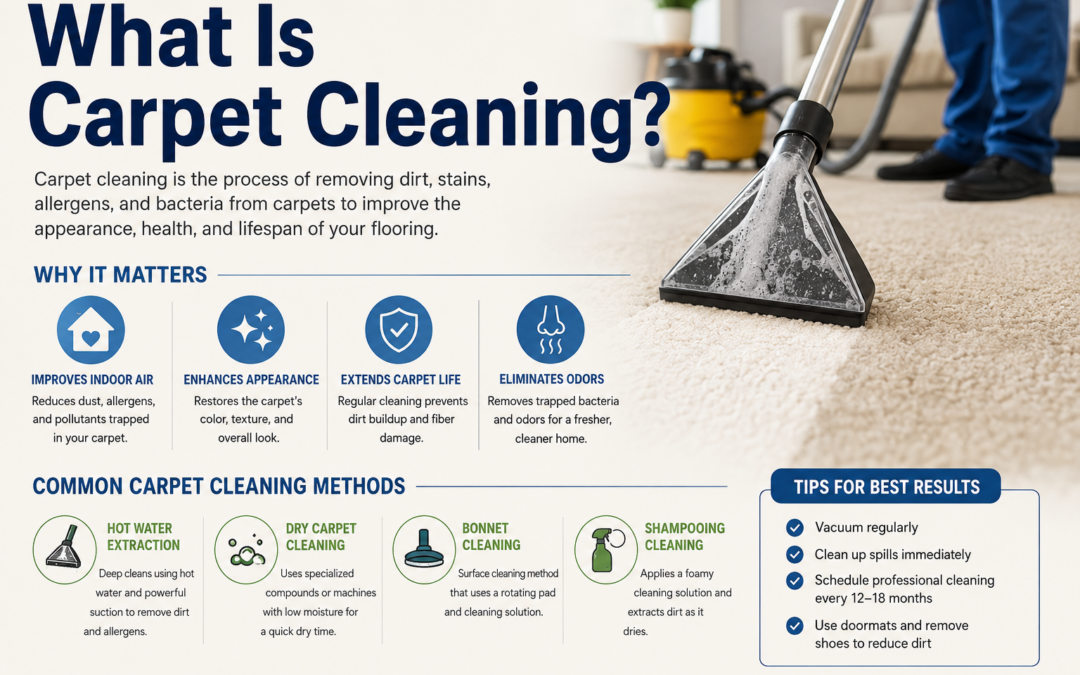
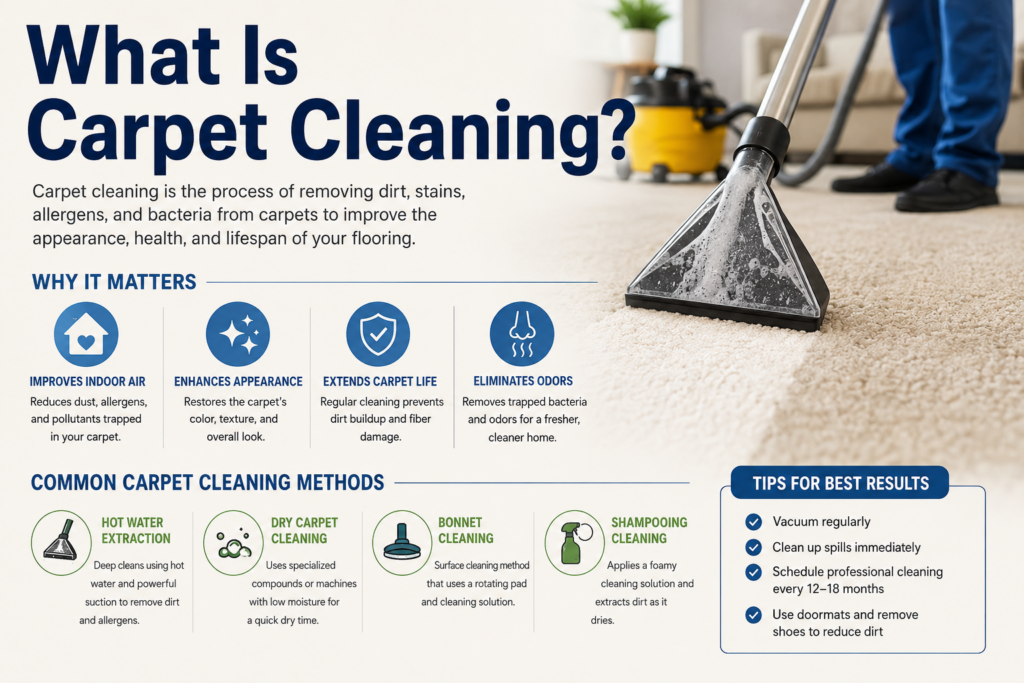
Carpet cleaning is the process of removing dirt, dust, stains, allergens, and odors from carpet fibers to restore appearance and improve hygiene. It is an important part of home maintenance because carpets trap debris deep in the pile, where regular vacuuming only removes a portion of it. Over time, that buildup can make carpets look dull, hold unpleasant smells, and contribute to a less healthy indoor environment.
Carpet cleaning is not just about making flooring look nicer. It can also help extend the life of the carpet, improve indoor air quality, and keep high-traffic areas from wearing out too quickly. In homes with pets, children, or frequent visitors, proper carpet care becomes even more useful because spills and tracked-in debris happen more often.
What carpet cleaning includes
Carpet cleaning covers a range of methods, from simple vacuuming to deep extraction cleaning. The goal is always the same: remove unwanted material from the carpet fibers and backing without damaging the carpet itself. Some methods focus on surface dirt, while others reach deep into the pile to pull out embedded grime.
The term can refer to both routine maintenance and professional restoration. For example, vacuuming is a basic form of carpet cleaning, while steam cleaning or hot water extraction is a deeper treatment used to remove soil and stains. Spot cleaning, odor treatment, shampooing, and dry cleaning also fall under the carpet cleaning umbrella.
Why carpets get dirty
Carpets collect dirt because their fibers act like a filter. They trap dust, hair, crumbs, pet dander, pollen, and microscopic particles that would otherwise circulate in the room. Shoes also bring in outdoor soil, oils, and moisture, which settle into the carpet over time.
Spills, pet accidents, and everyday foot traffic are the biggest causes of visible stains and wear. In homes with kids or animals, carpets often need more frequent attention because food, drinks, mud, and bodily fluids can soak into the fibers quickly. Even when a carpet looks clean on the surface, it may still contain hidden debris below.
Main carpet cleaning methods
There are several ways to clean carpet, and each has advantages depending on the situation. The most common methods are vacuuming, spot cleaning, shampooing, dry cleaning, and hot water extraction. Choosing the right one depends on how dirty the carpet is, what kind of stain you are dealing with, and how much drying time you can allow.
Vacuuming is the foundation of carpet care because it removes loose dirt before it settles deeper. Spot cleaning targets small stains as soon as they happen. More intensive methods like hot water extraction are used when the carpet needs a deep refresh or when stains and odors have built up over time.
Vacuuming as the first step
Vacuuming is the most basic and most important part of carpet maintenance. It removes dry soil, dust, and debris before they become embedded in the fibers. Regular vacuuming also helps keep carpet from looking matted and worn.
Most homes benefit from vacuuming at least once or twice a week, and more often in high-traffic areas. Homes with pets may need even more frequent cleaning because hair and dander build up quickly. While vacuuming alone cannot remove deep stains, it significantly reduces the amount of soil that later needs deep cleaning.
Spot cleaning small stains
Spot cleaning is used when a spill or stain happens in one small area. The idea is to act quickly before the stain spreads or sinks deeper into the fibers. Blotting with a clean cloth, using a suitable cleaning solution, and avoiding harsh scrubbing are usually the most effective first steps.
The exact method depends on the stain. Food, coffee, wine, grease, ink, and pet accidents each require different treatment. Quick action matters because old stains are much harder to remove than fresh ones. Many carpet problems can be prevented from becoming permanent if they are treated immediately.
Steam cleaning and hot water extraction
Steam cleaning, more accurately called hot water extraction, is one of the most effective deep-cleaning methods for carpet. A machine sprays hot water and cleaning solution into the fibers, loosens dirt, and then extracts the dirty water back out. This process reaches much deeper than regular vacuuming and can remove embedded soil, allergens, and odor-causing residue.
Despite the name, the process usually uses hot water rather than true steam. It is often recommended for annual or semiannual deep cleaning in homes with heavy use. Because the carpet gets wet, drying time is important, and good ventilation can help prevent lingering dampness.
Carpet shampooing
Carpet shampooing uses a foaming cleaning agent that is worked into the carpet with a machine or brush. The foam lifts dirt away from the fibers, and the residue is later removed through vacuuming or extraction. This method was more common in the past and is still used in some situations.
Shampooing can help with general soil removal, but it may leave residue if not rinsed thoroughly. That residue can attract new dirt if left behind. For that reason, many people now prefer extraction-based cleaning methods, which tend to leave less buildup.
Dry carpet cleaning
Dry carpet cleaning uses very little moisture and is designed to reduce drying time. It often involves a cleaning compound or powder that is spread over the carpet, worked into the fibers, and then vacuumed out. This makes it attractive in situations where carpets need to be used again quickly.
The main advantage is convenience. The main drawback is that dry cleaning may not clean as deeply as hot water extraction. It is often chosen for delicate carpets, commercial spaces, or areas where long drying times are not practical.
Professional versus DIY cleaning
Some carpet cleaning jobs are easy enough to handle at home, while others are better left to professionals. DIY cleaning works well for routine maintenance, small spills, and periodic deep cleaning with a rented or purchased machine. Professional cleaning is often worth it for large homes, heavily stained carpets, or delicate materials.
Professional cleaners usually have stronger equipment, better stain-removal products, and more experience dealing with specific carpet types. They can also evaluate problems like mold, deep odor, or fiber damage more accurately. DIY cleaning is cheaper, but it requires more effort and can go wrong if too much water or the wrong cleaner is used.
How often carpets should be cleaned
The right cleaning schedule depends on household conditions. A low-traffic home without pets may only need deep carpet cleaning once every 12 to 18 months. Homes with children, pets, or heavy foot traffic may need it more often, sometimes every 6 to 12 months.
Vacuuming should happen much more often than deep cleaning. If visible dirt, odors, or stains appear before the planned deep-cleaning interval, cleaning should happen sooner. The best schedule is the one that keeps the carpet looking good without allowing soil to build up for too long.
Health and indoor air quality
Carpet cleaning can support healthier indoor air by removing dust, pollen, pet dander, and other particles that become trapped in carpet fibers. This is especially relevant for people with allergies or asthma, since carpets can hold allergens that are stirred up by walking or vacuuming. Regular cleaning reduces the amount of debris that remains suspended in the living space.
That said, carpet itself is not inherently unhealthy. Problems arise when carpets are neglected, get damp and stay wet, or are allowed to collect dust and spills for long periods. Proper care helps keep carpets from becoming a source of odors, allergens, or mold growth.
Common mistakes to avoid
One of the biggest mistakes is using too much water. Excess moisture can seep into the carpet backing and padding, which may lead to long drying times, odors, or mold. Another common mistake is scrubbing stains aggressively, which can spread the stain or damage carpet fibers.
Using the wrong cleaning product is also a problem. Some chemicals can discolor carpet or leave sticky residue that attracts new dirt. It is usually safer to test a cleaner in an inconspicuous area first and follow the carpet manufacturer’s guidance when possible.
Choosing the right method
The best carpet cleaning method depends on the carpet type, the kind of dirt present, and the desired drying time. For routine upkeep, vacuuming and spot treatment are usually enough. For serious buildup or general renewal, hot water extraction is often the strongest choice.
Homes with delicate carpets may need gentler cleaning methods, while busy households often benefit from deeper, more frequent cleaning. The key is matching the method to the problem instead of using one approach for every situation. That helps prevent damage while still keeping the carpet clean.
Carpet cleaning and carpet life
Regular carpet cleaning helps extend the life of the flooring. Dirt particles can act like sandpaper, grinding against the fibers every time someone walks across the carpet. Over time, that wear can cause the carpet to look flattened, faded, or patchy.
Stains and spills also break down appearance if they are left untreated. Cleaning removes the substances that discolor fibers and helps preserve the original texture. In practical terms, good carpet care can delay the need for replacement and make a room look newer for longer.
Practical cleaning routine
A simple carpet care routine usually works best. Vacuum regularly, spot-clean spills as soon as they happen, and schedule periodic deep cleaning based on traffic and household needs. In homes with pets or heavy use, add extra attention to entryways, hallways, and other high-traffic areas.
It also helps to use mats at entrances, remove shoes indoors when possible, and trim pet hair before it mats into the carpet. These small habits reduce the amount of debris that reaches the fibers in the first place. Preventing buildup is easier than removing it later.
Final thoughts
Carpet cleaning is both a maintenance task and a way to protect the comfort, appearance, and cleanliness of a home. Whether it involves vacuuming, spot treatment, or deep extraction, the goal is to remove dirt before it causes lasting damage. A good carpet cleaning routine keeps flooring looking better, lasting longer, and feeling more pleasant underfoot.
The most effective approach is usually a combination of regular upkeep and occasional deep cleaning. When done consistently, carpet care becomes much easier and far more effective than trying to rescue a badly neglected carpet later.
