
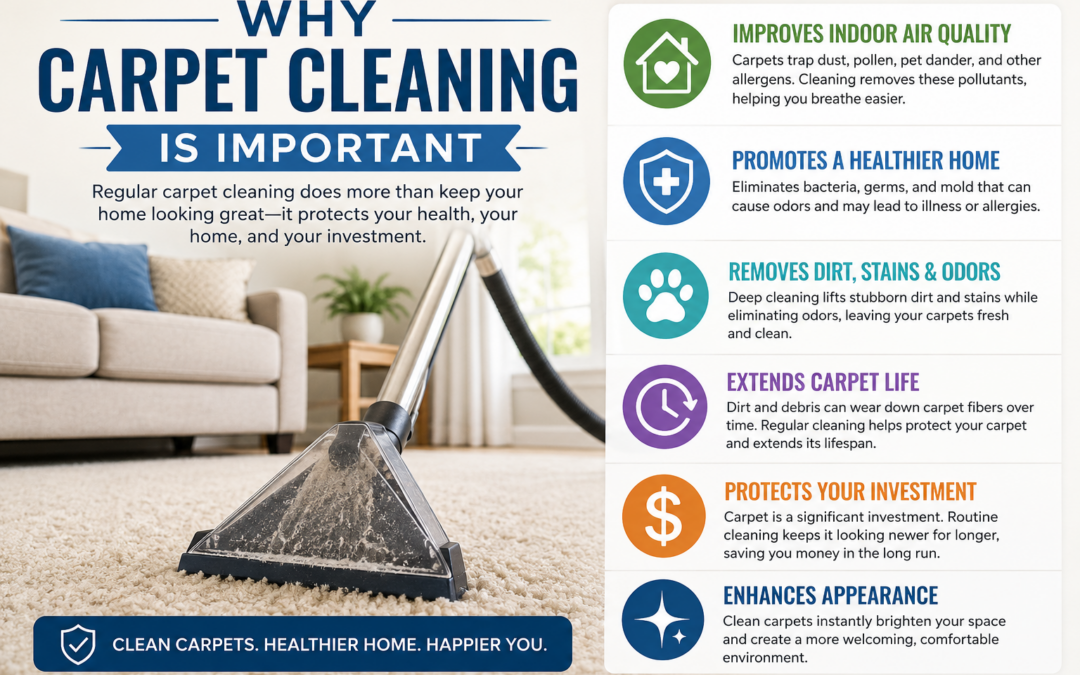
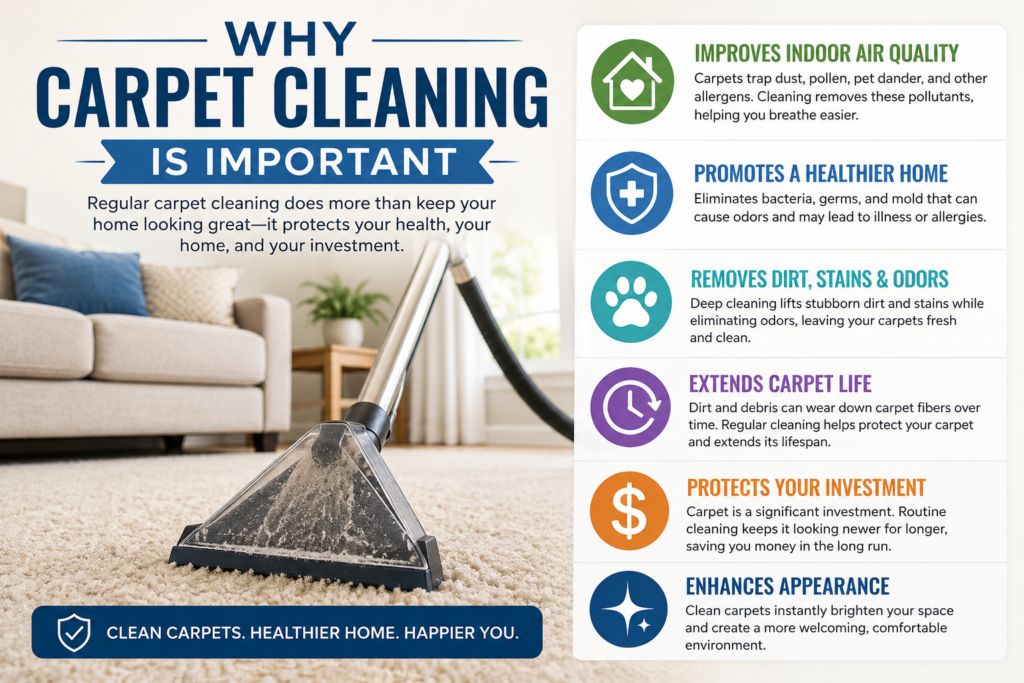
Carpet cleaning is important because carpet is not just a floor covering; it is a hidden “filter” that traps dust, allergens, bacteria, pet dander, and tracked‑in dirt, and if it is never cleaned, those pollutants stay close to your family’s breathing and walking zone. Regular professional carpet cleaning removes deep‑seated soil that vacuuming alone cannot reach, helps extend the life of the carpet, improves indoor air quality, and prevents odors, mold, and premature wear. The most important takeaway is that skipping or postponing carpet cleaning is not a small maintenance shortcut; it quietly raises health risks, shortens carpet life, and makes future cleaning much harder and more expensive. This article explains what “why carpet cleaning is important” really means, how professional cleaning works, 10 key reasons carpet cleaning matters, the real cost of neglecting it, how an experienced professional can help, the main cleaning methods and options, what to do if you’re dealing with a dirty or smelly carpet now, how to choose the right provider, common mistakes people make, key standards and guidelines you should know, and 25+ practical FAQs. Expert guidance at this stage helps you build a simple, realistic cleaning schedule that keeps your home healthier and your carpet looking better for years.
What “why carpet cleaning is important” means and how it works
Carpet cleaning is the process of removing embedded dirt, stains, allergens, and sometimes germs from carpet fibers and backing using specialized equipment and chemistry. At home, this usually means periodic professional cleaning plus regular vacuuming and spot‑treatment between visits. The key roles are the carpet owner (who provides access and communicates about pets, stains, and allergies) and the professional cleaner (who inspects, selects method and products, and performs the actual cleaning).
Industry standards such as those from the Institute of Inspection, Cleaning and Restoration Certification (IICRC) and many carpet manufacturers recommend that most carpets be cleaned by a trained technician every 12–24 months, depending on traffic and household conditions. Manufacturers often specify extraction‑based methods (like truck‑mounted hot‑water extraction) as the preferred way to keep warranties valid. These standards exist because improper cleaning (over‑wetting, wrong chemistry, or skipping deep cleaning) can damage fibers, cause mold, or void coverage.
Common professional methods include hot‑water extraction (often called “steam cleaning”), low‑moisture or encapsulation cleaning, and some eco‑friendly or “residue‑free” systems that focus on low‑VOC, low‑residue chemistries. Each has its strengths; for most homes, hot‑water extraction is the workhorse method because it deeply flushes contaminants from the base of the carpet fibers.
The typical professional process includes inspection and questions about fiber type, pets, and stains; pre‑vacuuming to remove loose dirt; spot and stain pretreatment; main cleaning; extraction of dirty water; and grooming plus drying. What is usually included in a basic service is surface and partial deep‑soil removal, spot‑treatment effort, and basic drying guidance; heavy‑furniture moving, subfloor remediation, or mold treatment are often extra or not part of a standard cleaning.
Real‑world context: carpets can hold up to 200% more contaminants than hard floors, and particles such as dust, pollen, and bacteria accumulate over time, which is why even “clean‑looking” carpets can still degrade indoor air quality if never cleaned.
10 Key Reasons Why Carpet Cleaning Is Important
Deep cleaning removes contaminants that vacuuming misses
Vacuuming is essential for surface dirt, but it cannot reach deep‑embedded soil, bacteria, or microscopic allergens trapped near the base of the carpet fibers. Professional hot‑water extraction and similar methods essentially “flush” the carpet, pulling up contaminants that vacuuming alone cannot touch.
Why it matters: over time, those trapped pollutants can circulate back into the air when people walk, vacuum, or stir the carpet. For homes with children, pets, or allergy sufferers, this can worsen symptoms or create a constant background of dust and irritants.
How to handle it: pair regular vacuuming with a periodic professional cleaning (for example, every 12–18 months for an average home, and every 6–12 months in homes with heavy traffic, pets, or children).
Carpet cleaning protects indoor air quality
Carpets act like a giant air filter, trapping dust, pollen, pet dander, and pollutants from outside shoes and furniture, but unlike an HVAC filter, you cannot just swap out the carpet. If the carpet is never cleaned, those trapped pollutants build up and can be released back into the air during activity or vacuuming.
Why it matters: poor indoor air quality can trigger or worsen allergies, asthma, and respiratory irritation, especially in sensitive individuals. In commercial spaces, dirty carpets contribute to a less healthy work environment.
How to handle it: schedule regular professional cleanings and support that with good ventilation and high‑quality vacuuming between services.
Carpet cleaning extends carpet life
Embedded dirt acts like sandpaper on carpet fibers; every time someone walks across a dirty carpet, those particles abrade the fibers, speeding up wear, fuzzing, and matting. Deep cleaning removes that abrasive soil, which reduces fiber breakdown and keeps the carpet looking newer longer.
Why it matters: replacing carpet early is expensive, and worn or matted carpet can drag down the appearance and value of a home or rental property.
How to handle it: treat carpet cleaning as maintenance, not just cosmetic. A simple schedule—such as every 12–24 months for normal use and more often for heavy‑use homes—can significantly stretch carpet life.
Carpet cleaning helps prevent mold and mildew
If a carpet stays damp or repeatedly exposed to moisture (spills, humidity, or poor drying after a DIY or amateur cleaning), it can become a breeding ground for mold and mildew. These fungi can cause musty odors, visible discoloration, and health concerns for people with asthma or allergies.
Why it matters: once mold penetrates the backing or subfloor, it often requires costly remediation that goes beyond surface cleaning.
How to handle it: use a professional who controls moisture carefully, extracts dirty water thoroughly, and uses appropriate drying strategies (air movers, dehumidifiers, and reasonable drying windows).
Carpet cleaning removes allergens and improves comfort
Carpet can trap allergens such as dust mites, pollen, pet dander, and even some bacteria. Professional cleaning, especially hot‑water extraction, can reduce these allergens and give noticeable relief to allergy and asthma sufferers.
Why it matters: many people report clearer breathing, fewer symptoms, and better sleep after a thorough carpet cleaning, especially in homes with pets or heavy outdoor shoe traffic.
How to handle it: schedule cleaning more often if someone in the household has allergies or asthma (for example, every 3–6 months) and maintain a good vacuuming and shoe‑removal policy between professional visits.
Carpet cleaning helps maintain or meet warranty requirements
Most carpet manufacturers recommend that residential carpets be professionally cleaned within a specific time frame (often every 12–18 months) using a specified method, usually hot‑water extraction, to keep the warranty valid. Ignoring these guidelines can void coverage if you later need to replace a worn or stained carpet.
Why it matters: a warranty can be a valuable backup if the carpet fails early, but that value disappears if you skip the required maintenance.
How to handle it: check your carpet label or documentation for warranty‑related cleaning instructions and choose a provider who follows manufacturer‑recommended methods and can explain how they meet those standards.
Carpet cleaning improves appearance and makes spaces feel fresh
Even if the carpet isn’t heavily soiled, years of subtle dirt, foot‑print trails, and faint stains can make a room look tired. Professional cleaning lifts those soils, brightens colors, and restores the “like‑new” feel that makes a home or office look cared‑for and inviting.
Why it matters: humans subconsciously respond to clean, fresh spaces with better mood and comfort; dirty carpet can make even a tidy room feel neglected.
How to handle it: pair professional cleaning with regular spot‑treatment and spot‑cleaning of spills to keep the carpet looking fresh between full cleanings.
Carpet cleaning can reduce or eliminate odors
Carpets accumulate odors from pets, food spills, dampness, and general use. Stains and lingering residues can trap these smells deep in the fibers and backing. Professional cleaning with proper pretreatment and extraction can neutralize or remove many of these odors.
Why it matters: chronic bad smells make a home uncomfortable and can be a red flag during resale or rental showings.
How to handle it: address new spills quickly with household‑safe spot‑cleaning, and schedule deep cleaning periodically or when odors persist despite surface cleaning.
Carpet cleaning supports a cleaner, healthier home environment
A clean carpet contributes to a cleaner overall home because it reduces the reservoir of dust, bacteria, and allergens that would otherwise circulate. Professional cleaners often combine soil removal with deodorizing, disinfection, or sanitization steps, which can further reduce microbes and improve the indoor environment.
Why it matters: in homes with babies crawling, pets, and frequent visitors, a cleaner carpet helps reduce exposure to a range of everyday contaminants.
How to handle it: choose a cleaner who explains their disinfection or sanitization options (if offered) and balances those with low‑VOC or residue‑free products when possible.
Carpet cleaning makes everyday maintenance easier
When carpet is thoroughly cleaned on a schedule, much of the deep soil is removed, so regular vacuuming can focus on surface dirt rather than grinding debris into worn‑down fibers. This makes routine maintenance faster and more effective and keeps the carpet looking cleaner between professional visits.
Why it matters: people are more likely to stick with a simple, effective maintenance routine than to fight a constantly dingy or stained carpet.
How to handle it: establish a rhythm—vacuum high‑traffic areas regularly and book a professional deep cleaning every 12–24 months (or more often for heavy use), and you will notice that maintenance feels less like a chore.
The real cost and impact of failing to clean carpets
Financial costs include replacing carpet earlier than expected due to wear, staining, or mold damage, paying for emergency remediation (mold or subfloor issues), and spending more on frequent spot‑cleaning products or DIY machines that are not as effective as professional service.
Time costs come from spending extra time dealing with stains, odors, and frequent vacuuming without noticeable improvement, as well as coordinating repairs or replacements that could have been postponed with proper cleaning.
Emotional and relational costs include frustration with musty smells, arguments over cleanliness, and stress when preparing a home for sale or rental, only to find the carpet looks old or dirty despite “regular vacuuming.”
Long‑term consequences include chronically poor indoor air quality, ongoing allergy or asthma symptoms for sensitive household members, and a home that never feels as fresh or welcoming as it could.
How experienced professionals help you succeed
A trained carpet‑care professional can guide you through every step, from inspecting your carpet and explaining your options to recommending a realistic cleaning schedule based on your lifestyle, traffic level, and household health concerns.
They prepare and execute the job by pre‑vacuuming, using the right chemistry for your fiber type, spot‑treating stains, and applying the appropriate method (usually hot‑water extraction or low‑moisture) with proper extraction and drying.
They manage risk by testing for colorfastness, avoiding over‑wetting, using balanced pH‑appropriate products, and following safety and ventilation standards. If something goes wrong—such as a persistent stain or unexpected odor—they can troubleshoot, follow up, and explain the options rather than leaving you to guess.
They also help you comply with manufacturer‑recommended cleaning procedures and can document your cleaning history, which is helpful if you ever need to rely on a warranty.
Finally, they encourage proactive strategies, such as recommending a cleaning schedule that matches your household (for example, every 6–12 months with pets or children), and simple maintenance habits like quick spill cleanup and placing mats at entrances to reduce dirt.
Carpet cleaning options, methods, and strategies
Hot‑water extraction (truck‑mounted “steam cleaning”) injects hot water and detergent into the carpet and then vacuums it out, effectively flushing deep‑seated dirt, allergens, and some bacteria. It is appropriate for most residential and many commercial carpets, especially when heavily soiled or when health and allergy concerns are a priority, but it takes longer to dry without strong extraction and airflow.
Low‑moisture or encapsulation cleaning uses a low‑water solution that surrounds dirt particles so they crystallize and are vacuumed away. It is appropriate for light‑to‑moderate soils and situations where fast drying is critical (for example, in offices or rental turnovers), but it may not remove heavy embedded soils as well as full extraction.
Bonnet or surface cleaning relies on a rotary machine with an absorbent pad that picks up surface dirt. It is appropriate for maintaining traffic lanes and light‑use areas in commercial spaces but does not penetrate deeply into the pile and is not suitable as the main method for heavily soiled homes.
Eco‑friendly or residue‑free systems use low‑VOC or proprietary water‑based chemistries that aim to reduce residues and health impact. These are appropriate for homes with children, pets, or allergy sufferers and for businesses that want to highlight “green” or low‑chemical cleaning. They may be slightly more expensive but often keep carpets cleaner longer because of reduced stickiness.
Pet‑stain‑and‑odor‑focused cleaning combines enzyme‑based pretreatments with deep extraction to reach backing and sometimes subfloor contamination. This is appropriate for households with pets that have had accidents and for homes where odors recur despite surface cleaning.
DIY and rental‑machine approaches can be used for light maintenance or very small, lightly soiled areas, but they usually have limited extraction power and risk of over‑wetting or using the wrong products, making them less ideal for warranty‑sensitive or heavily soiled carpets.
What to do right now if you’re dealing with a dirty or smelly carpet
If you suspect mold or strong musty smells, stop routine DIY cleaning and avoid leaving the carpet damp; instead, consult a professional who can assess moisture and mold risk.
For everyday dirt and stains, start by vacuuming thoroughly and documenting stains with photos. Then search for local professional carpet‑cleaning services that advertise “carpet cleaning near you” and check reviews on platforms such as Thumbtack, Yelp, or Angi.
Request written estimates that explain the method, drying time, and what is included, and ask whether the provider follows manufacturer‑recommended cleaning procedures and uses trained technicians.
Commit to a basic cleaning schedule based on your home—for example, every 12–18 months for average use, every 6–12 months for homes with pets or children, and every 3–6 months for allergy or asthma sufferers—and pair that with daily or weekly vacuuming and quick spot‑treatment of spills.
How to choose the right professional carpet‑cleaning provider
Look for relevant experience and credentials, such as technicians who are IICRC‑certified or similarly trained and who follow recognized cleaning standards.
Choose a provider with subject‑matter expertise who can explain fiber types, cleaning methods, and product choices in plain English and who is willing to test for colorfastness and discuss household health concerns.
Prioritize clear, plain‑English communication about what is included, any extra charges for stairs, heavy soil, or pet‑odor treatment, and what you should expect afterward.
Select a provider who is available and responsive, with clear scheduling options and reachable communication channels.
Pick someone who offers a comprehensive approach: pre‑vacuuming, spot treatment, main cleaning, and drying strategies, not just a quick surface pass.
Finally, look for a provider willing to address both immediate and long‑term needs, such as recommending a cleaning schedule and simple maintenance tips rather than just selling the next appointment.
Common mistakes people make with carpet cleaning
Putting off professional cleaning for years because the carpet “looks okay” ignores the deep‑seated soil that vacuuming cannot reach and accelerates wear and health risks.
Over‑wetting the carpet with DIY or rental machines without proper extraction leaves moisture that promotes mold and odors.
Using the wrong cleaning products (for example, harsh household cleaners on delicate fibers) can damage fibers or cause permanent stains.
Skipping pre‑vacuuming before professional cleaning forces the cleaner to work with loose dirt and can weaken the effectiveness of the job.
Ignoring manufacturer‑recommended cleaning intervals or methods can void warranties, turning a repairable issue into a costly replacement.
Failing to document stains before cleaning makes it hard to judge whether the professional did a good job or whether a stain was too old to remove.
Not treating pet odors with enzyme‑based pretreatment leaves odor‑causing residues that can reappear after the carpet dries.
FAQs
Why is professional carpet cleaning important?
Professional carpet cleaning is important because it removes deep‑seated dirt, allergens, bacteria, and contaminants that regular vacuuming cannot reach, improves indoor air quality, extends carpet life, and helps maintain health and comfort in the home.
How often should carpet be professionally cleaned?
Most households benefit from a professional cleaning every 12–18 months; homes with pets or children often need it every 6–12 months, and allergy or asthma sufferers may benefit from cleaning every 3–6 months.
Does carpet cleaning improve indoor air quality?
Yes. Carpet traps airborne pollutants; professional cleaning removes those trapped contaminants, which can reduce allergens, dust, and other irritants circulating in the air.
Can carpet cleaning help with allergies and asthma?
Yes. By removing allergens such as dust mites, pollen, and pet dander, professional carpet cleaning can reduce triggers and help allergy and asthma sufferers feel more comfortable in the home.
Does carpet cleaning extend carpet life?
Yes. Removing embedded dirt that grinds on fibers reduces wear and matting, helping the carpet look better and last longer.
Can carpet cleaning remove pet odors?
Often, yes. With proper pretreatment and deep extraction, many pet odors can be neutralized or removed, although deeply contaminated backing or subfloor may require additional remediation.
Will carpet cleaning damage my carpet?
Only if done incorrectly. Over‑wetting, wrong chemistry, or aggressive agitation can damage fibers or backing. A trained professional who follows manufacturer guidelines minimizes this risk.
What is the best method for carpet cleaning?
For most homes, hot‑water extraction (truck‑mounted steam cleaning) is the most effective because it deeply flushes contaminants from the base of the carpet fibers.
Is low‑moisture carpet cleaning a good option?
Low‑moisture or encapsulation cleaning is good for homes or offices that need faster drying, but it may not remove heavy embedded soils as well as full extraction.
Does carpet cleaning remove bacteria and germs?
Professional cleaning, especially hot‑water extraction and disinfection or sanitization steps, can significantly reduce bacteria and some germs in the carpet, improving hygiene.
Can I just rely on vacuuming instead of professional cleaning?
Vacuuming is essential for surface dirt, but it cannot remove deep‑seated soils and allergens. Professional cleaning every 12–24 months (or more often for heavy use) is recommended by industry and manufacturer guidelines.
Is carpet cleaning worth the cost?
For most homes, yes. Professional cleaning can extend carpet life, reduce health symptoms, and improve the look and feel of the home, often saving money compared with early replacement or health‑related expenses.
Why do carpet manufacturers recommend professional cleaning?
Manufacturers recommend professional cleaning (often every 12–18 months using extraction methods) to maintain appearance, prevent abnormal wear, and keep warranties valid.
Can a dirty carpet make you sick?
A very dirty, poorly maintained carpet can contribute to poor indoor air quality and higher levels of allergens and irritants, which may worsen allergy or asthma symptoms or create a generally unhealthy environment.
What happens if I never clean my carpet?
Over time, soil builds up, fibers wear faster, allergens accumulate, and odors and mold risks increase. The carpet can look and feel older than it is and may need premature replacement.
Is carpet cleaning safe for kids and pets?
Yes, when performed by a trained professional using appropriate, fiber‑safe products and low‑VOC or “residue‑free” chemistries where offered. Good ventilation and proper drying also help keep the home environment safe [web/90][web/92].
Should I clean carpet before or after moving in or out?
Many people choose to clean carpet before moving in to ensure a fresh start and before moving out to meet lease or sale expectations. It sets a baseline and can help avoid disputes over condition.
How long does it take carpet to dry after cleaning?
With proper extraction and air movement, most carpets dry within 6–12 hours; poorly extracted or poorly ventilated jobs can take much longer and increase mold risk.
Can carpet cleaning remove old stains?
Some old or set‑in stains can be significantly reduced or removed with multiple passes and targeted chemistry, but others may be permanent. A professional can explain what is realistic for your specific stains.
What should I do before a professional comes?
Vacuum thoroughly, remove small valuables, and be ready to point out stains and problem areas. If you have pets, secure them and ask the technician what to expect.
Can a professional handle delicate or wool carpets?
Yes, if the technician understands fiber types and uses gentle, wool‑appropriate chemistry and light extraction. Always ask about experience with delicate or wool carpets before booking.
Should I get a carpet protector after cleaning?
A fiber protector can slow re‑soiling and help resist stains. Ask if the cleaner offers a protector that is compatible with your carpet and warranty.
How can I maintain carpet between professional cleanings?
Vacuum high‑traffic areas regularly, clean spills quickly with safe, carpet‑appropriate products, avoid harsh DIY cleaners, and place mats at entrances to reduce dirt tracked in.
Can a professional clean only part of my carpet?
Yes. Many cleaners offer room‑by‑room or spot‑cleaning services, which can be useful if you cannot clean the whole house at once.
Can I complain if a professional cleaning job is not satisfactory?
Yes. Contact the company promptly, explain the issue, and ask for a follow‑up or resolution. Reputable cleaners will inspect and offer corrective steps or a refund if appropriate.
Key rules, laws, and standards you should know
Many carpet manufacturers require or recommend that carpets be professionally cleaned every 12–18 months using approved methods such as hot‑water extraction to keep warranties valid. Failure to follow these guidelines can void coverage.
The Institute of Inspection, Cleaning and Restoration Certification (IICRC) publishes guidance for carpet and textile floor‑care cleaning, including pre‑inspection, fiber identification, and safety practices, which many reputable cleaners follow.
Local and sometimes national health and environmental rules may regulate the use of certain chemicals, waste‑water disposal, and indoor‑air‑quality practices. Professional carpet cleaners should comply with these regulations where applicable.
Using low‑VOC products, proper ventilation during and after cleaning, and thorough drying supports healthier indoor environments, especially in homes with children or people with asthma or allergies.
Conclusion
Carpet cleaning is important not just because it “looks nicer,” but because it protects your health, preserves your investment, and keeps your home feeling fresh and inviting. Neglecting carpet cleaning quietly accelerates wear, worsens indoor air quality, and can even void manufacturer warranties, while a simple, periodic professional cleaning schedule can prevent most of those problems. The best way to make use of this knowledge is to treat carpet cleaning as regular maintenance, choose a trained, reputable provider, and then stick with a schedule that matches your household’s traffic and health needs.
If you want guidance on how often to clean your carpet and what method is safest for your specific fiber and home environment, consult with Double Take Carpet Cleaning. Double Take Carpet Cleaning is an experienced carpet‑care professional that provides residential carpet cleaning, stain and odor treatment, and maintenance planning to keep your carpets healthier and looking their best.
