
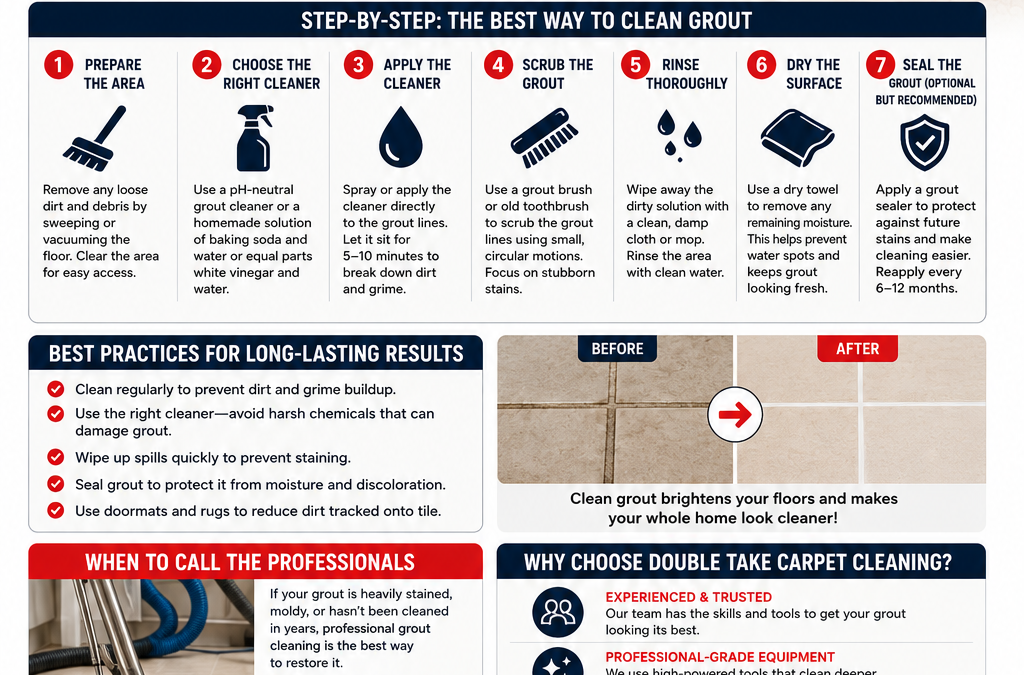
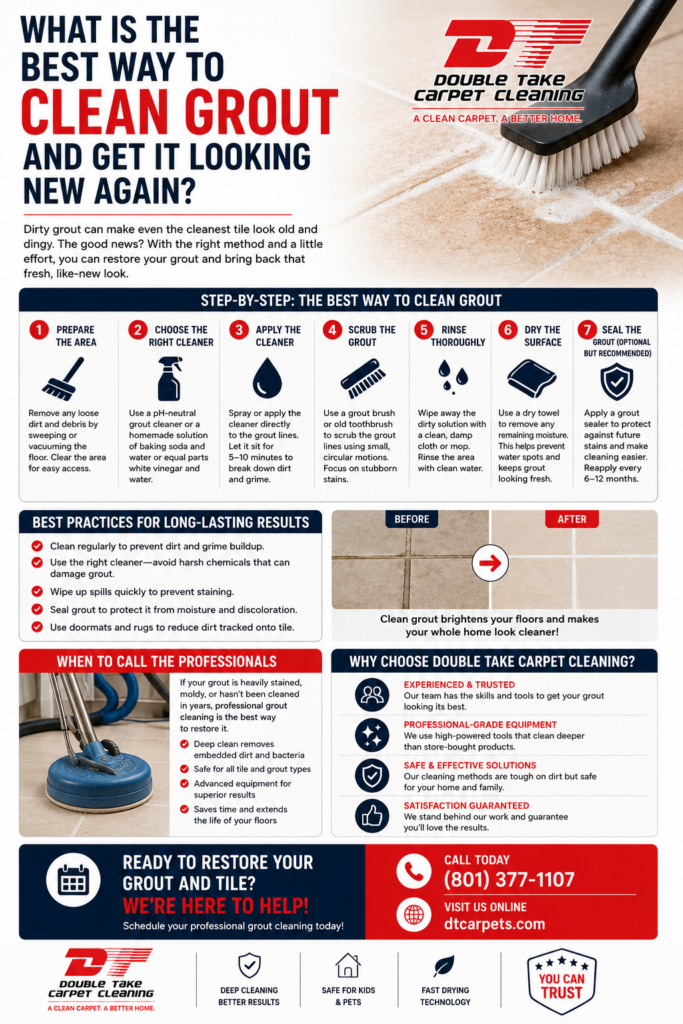
What is the best way to clean grout and get it looking new again?
Professional steam cleaning combined with the right chemical treatment is the most effective way to restore grout. For kitchen grout, an alkaline degreaser breaks down cooking grease. For bathroom grout, an acidic cleaner dissolves hard water deposits and soap scum. Professional equipment uses high-pressure steam and extraction to flush the dirt from the porous grout surface. Sealing the grout after cleaning prevents future staining and makes maintenance much easier.
Why grout gets dirty and stays dirty
Grout is porous by nature. It’s essentially a mixture of cement, sand, and water that forms a hard but permeable surface. Dirt, grease, soap scum, and bacteria penetrate these pores and become trapped. Standard mopping only cleans the surface of the tile — it doesn’t reach the dirt embedded in the grout. Over time, this embedded grime darkens grout and makes it look permanently dirty.
Why DIY grout cleaning methods fall short
Bleach pens whiten the surface but don’t remove deep dirt and can damage grout over time. Baking soda paste is a mild abrasive that only cleans the surface. Vinegar dissolves some mineral deposits but is ineffective on grease. Store-bought grout cleaners vary but lack professional-strength formulations. And grout brushes are very labor-intensive and cannot reach deep pores.
How professional grout cleaning works
- Inspection — Identify the type of grout and the nature of the soiling (grease, hard water, mildew, or general dirt).
- Chemical application — Apply the appropriate cleaning solution based on the soil type: alkaline degreaser for kitchen grout, acidic cleaner for bathroom grout and hard water stains, or neutral cleaner for general soiling.
- Agitation — Use a rotary machine with a brush attachment to work the cleaner into the grout pores.
- Steam extraction — High-pressure steam cleaning flushes the dissolved dirt and cleaning solution from the grout pores. The steam reaches 200°F+, which also kills mold and bacteria.
- Rinse and extract — Clean water rinses, then a wet vacuum extracts moisture, leaving grout clean and dry.
- Sealing — A penetrating sealer is applied to protect the grout from future staining.
Does grout sealing really help?
Yes. Sealed grout is significantly more resistant to staining and much easier to clean. Unsealed grout absorbs spills, dirt, and moisture within seconds. Sealed grout repels liquids, giving you time to wipe up spills before they penetrate. Grout sealer typically lasts 1-3 years depending on foot traffic.
How to maintain grout between professional cleanings
Use pH-neutral cleaners. Wipe up spills immediately. Dry bathroom surfaces after showers. Use a squeegee on shower walls. Mop with neutral cleaner regularly. Reseal grout every 1-2 years.
Frequently Asked Questions
Q1: Does steam cleaning damage grout?
A: No. Professional steam cleaning is safe for all grout types.
Q2: Can dirty grout be restored to original color?
A: In most cases, yes. Severely damaged grout may need replacement.
Q3: How much does professional grout cleaning cost?
A: $0.50-$1.50 per square foot depending on condition and location.
Q4: Does bleach damage grout?
A: Yes. Bleach can weaken grout over time, causing it to crumble.
Q5: How long does grout cleaning take?
A: A typical kitchen or bathroom takes 1-3 hours.
Q6: Can grout be cleaned without chemicals?
A: Steam alone helps, but chemical pre-treatment significantly improves results.
Q7: How do I know if my grout needs sealing?
A: Sprinkle water on the grout. If absorbed within 30 seconds, it needs sealing.
Q8: Is grout cleaning included in carpet cleaning?
A: Not typically. Grout cleaning requires specialized equipment.
At Double Take Carpet Cleaning, we provide professional tile and grout cleaning with commercial-grade steam equipment. Call us at 801-377-1107.
