
A Practical Guide to Choosing, Using, and Getting Better Results
A Hoover portable carpet cleaner is a compact spot-cleaning machine designed to remove spills, pet messes, and localized stains from carpet, upholstery, stairs, and car interiors. It matters because these smaller messes are often the ones people try to “live with” until they become odors, set-in stains, or moisture problems that are much harder and more expensive to fix. Consumer testing shows portable carpet cleaners are best for targeted cleanup rather than whole-room deep cleaning, and their performance depends heavily on the nozzle design, suction, tank capacity, and how well the user follows the cleaning steps. In practice, the best results come from matching the machine to the mess, pre-treating stubborn spots, and drying thoroughly afterward. That is especially important with moisture-sensitive materials, since EPA guidance says wet materials should be dried quickly to help prevent mold growth, and porous items like carpet may need professional help or replacement if contamination is extensive. This article breaks down how Hoover portable carpet cleaners work, where they excel, where they fall short, and how to use them safely and effectively. It also covers common mistakes, practical alternatives, and what to do when a spill or odor problem is already underway.
What It Is and How It Works
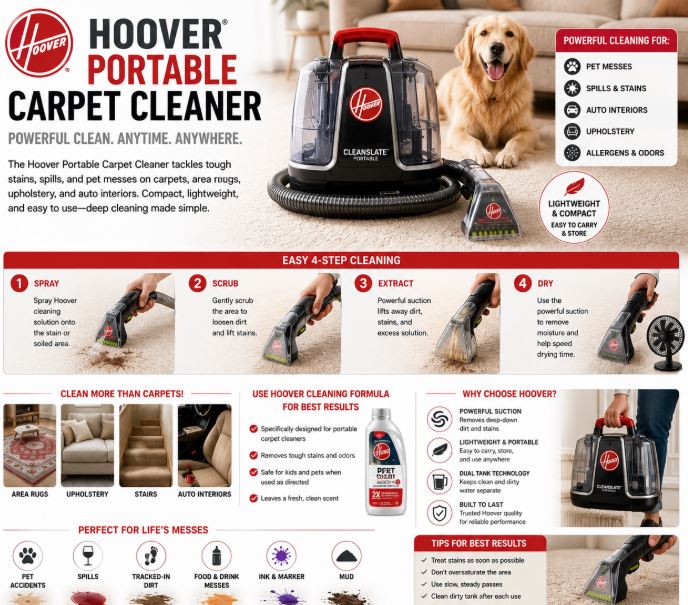
A Hoover portable carpet cleaner is a small, usually corded extractor that sprays water and cleaning solution onto a stained area and then vacuums the dirty liquid back into a separate tank. Consumer Reports notes that portable carpet cleaners generally use a hose attachment rather than a full floor head, which makes them useful for stairs, upholstery, vehicles, and tight spaces, but less powerful than full-sized carpet cleaners for large areas. Hoover’s portable models are commonly marketed for spot cleaning, pet accidents, and upholstery cleaning, which aligns with the way these machines are built and intended to be used. The main components are the clean-water tank, dirty-water tank, hose, nozzle or tool head, and suction motor.
The basic process is simple: fill the clean tank, apply solution to the stain, agitate lightly if needed, then extract as much moisture as possible. That matters because portable units have smaller tanks and fewer mechanical scrubbing parts than full-sized machines, so technique does more of the work than people expect. In real life, this means a coffee spill on a sofa can often be handled well, while a deeply ground-in hallway stain may need multiple passes or professional treatment. A portable cleaner removes liquid and loose contamination; it does not permanently “fix” worn fibers, bleach damage, dye transfer, or structural carpet damage.
8 Key Issues to Know
1. Portable cleaning is for spots, not whole rooms
The most important thing to understand about a Hoover portable carpet cleaner is its purpose. These machines are designed for localized messes, not for replacing a full-size carpet cleaner across an entire home. That distinction matters because buyers often expect the same deep-cleaning power they see in a larger extractor, then feel disappointed when heavy soil does not disappear in one pass. Portables have hose tools and no spinning bristles, so stubborn or old stains can take more work.
In practice, they are ideal for pet accidents, drink spills, upholstery touch-ups, car seats, and stair treads. They are not the right tool for broad traffic-lane cleaning or whole-room maintenance unless you are willing to spend a lot of time. A good way to think about it is “medical first aid” rather than “full surgery.” The cleaner helps you control the problem fast, which often prevents odor and staining from spreading.
To get the best results, use a portable cleaner soon after the spill, work from the outside in, and make several extraction passes. For large, repeated, or commercial-scale soil, a professional carpet cleaning plan is usually more efficient and produces more even results.
2. Suction matters more than marketing
With portable carpet cleaners, suction is one of the biggest performance differences. Consumer Reports explains that these machines work by dispensing solution and then suctioning it back up, and because they lack the spinning bristles found on larger machines, extraction quality becomes especially important. If a cleaner leaves too much water behind, the stain can wick back up, the drying time increases, and odor risk goes up too.
That is why real-world users often judge a unit by dry time, not just by how much dirt it appears to remove. A machine that looks impressive while cleaning but leaves the fabric damp for hours can create a worse outcome than one that cleans a little less aggressively but dries quickly. This is especially important on upholstery, where over-wetting can affect foam, padding, and internal seams.
The practical fix is to slow down your passes, overlap them, and do a few extra dry passes after the stain appears lifted. Avoid flooding the area. If the fabric still feels wet after several passes, stop and let it air-dry before trying again. For thick carpet, stairs, or fabric furniture, suction performance can be the difference between a successful cleanup and a lingering moisture problem.
3. Stains need the right technique
A portable carpet cleaner is not magic; technique determines a lot of the outcome. Consumer testing notes that wider nozzles and the way a model dispenses water can improve agitation and reduce the number of passes needed. That means the cleaner’s tool design affects how effectively it can loosen dirt from fibers. If you rush the job, the stain can simply get redistributed rather than removed.
Different messes also behave differently. Protein-based spills, food stains, pet urine, grease, and tannin stains each respond differently to moisture, dwell time, and detergent. A fresh juice spill may come out quickly, while an old pet spot may require pretreatment, enzyme cleaner, and multiple rounds of extraction. The same Hoover machine can perform very differently depending on what you are cleaning.
A useful routine is: blot first, pretreat second, extract third, and dry fourth. Use only the amount of solution needed, and let pretreatments sit for the recommended time before extracting. If the stain is still visible after the first round, repeat in moderation rather than soaking the fabric. The cleaner does its best work when the contamination is loosened before suction begins.
4. Odors are often a moisture problem
People often think stains are the main issue, but odors are usually the bigger long-term complaint. Odor happens when moisture and residue remain in carpet padding, backing, or upholstery foam. EPA guidance emphasizes that moisture control is the key to mold control, and wet or damp items should be dried quickly; in many cases, materials wet for more than 24 to 48 hours are at greater risk of mold growth. That applies directly to portable carpet cleaning.
A Hoover portable cleaner can remove a lot of liquid, but it cannot solve hidden moisture if the spill soaked through the surface. That means a “clean-looking” spot can still smell later if the padding or cushion underneath stayed wet. Pet accidents are the classic example: surface cleaning may improve the visible stain while leaving odor in the underlayer.
To avoid this, extract thoroughly, use fans, and ventilate the area well. For upholstery, check hidden seams and cushion edges. For carpet, press a clean white towel onto the area after cleaning to see whether moisture is still coming up. If odors persist after repeated cleaning, the issue may be below the surface, and a professional inspection may be more effective than repeated home treatment.
5. Drying time affects safety and results
Drying is not just a finishing step; it is part of the cleaning outcome. Consumer Reports highlights that portable carpet cleaners are valued partly because they leave surfaces relatively dry, and dry time is a major factor in how useful they are for quick messes. The faster the area dries, the lower the risk of odor, residue migration, and microbial growth.
This matters most in homes with pets, humidity, or thick padding. Even a well-cleaned spot can turn into a problem if the fibers stay damp too long. EPA guidance says to dry wet materials within 24 to 48 hours to reduce mold risk, and porous items like carpet can be difficult to restore fully if they remain wet too long. That is why the final dry passes are not optional.
The best practice is to use the cleaner to remove liquid, then continue with dry passes until little additional moisture is coming up. Afterward, use airflow from a fan or HVAC register, and avoid walking on the area until it is mostly dry. If you are cleaning a sofa or car interior, open cushions or doors when possible to move air through the material. Drying time is one of the easiest ways to separate a successful cleanup from a future odor complaint.
6. Noise and convenience can surprise users
Portable carpet cleaners may be small, but they are not necessarily quiet. Consumer Reports found some portable models reached noise levels approaching 90 decibels, which is loud enough that testers noted smartwatch warnings. That matters if you are cleaning in a home with sleeping children, apartment neighbors, or pet-sensitive spaces. Noise is also a comfort issue, because you are usually working close to the machine and hose.
Convenience is the reason many people buy a Hoover portable cleaner in the first place. The weight is manageable, the footprint is small, and the machine can reach stairs, corners, and vehicle interiors more easily than a full-size extractor. Still, convenience does not mean zero hassle. You have to fill tanks, empty dirty water, clean tools, and store the unit properly after use.
The takeaway is to expect a tradeoff: portability often improves access but not necessarily silence or simplicity. If your main need is occasional spot cleanup, that tradeoff is worthwhile. If you plan to clean frequently or cover larger areas, convenience can fade fast if the hose, tanks, or cords become frustrating to manage.
7. Maintenance affects lifespan
A portable carpet cleaner that is not maintained well can lose performance quickly. Dirty tanks, clogged nozzles, worn hoses, and residue buildup can reduce suction and leave the machine smelling bad. In consumer reviews of Hoover portable and portable-style spot cleaners, users commonly mention suction concerns, hose issues, or maintenance frustrations over time, which is a reminder that small machines still need regular care. Even when a model is popular, durability depends on how well it is cleaned and stored.
After every use, empty both tanks, rinse them, and let them dry with the lids open if possible. Flush the hose if the manual allows it, and remove trapped debris from the tool head. Do not leave cleaning solution sitting in the machine for long periods. Residue can harden and make the next job worse.
A simple rule is this: if the cleaner smells musty, performs weakly, or leaves dirty streaks, maintenance is overdue. Regular care protects suction, extends the life of seals and gaskets, and reduces the chance of surprise breakdowns. For busy homes or commercial settings, that maintenance routine is part of the value of the machine, not an afterthought.
8. Some problems need professional help
A portable carpet cleaner is a useful tool, but it has clear limits. EPA guidance says porous materials like carpet may have to be thrown away if moldy, and if the damage is more than about 10 square feet, professional cleanup is often the safer path. That is important because some spills are not just stains; they are moisture events, contamination events, or odor problems that extend beyond the surface.
Examples include sewage backups, widespread pet urine, large water intrusions, and moldy carpet padding. In those situations, repeated DIY cleaning can make the problem worse by spreading contamination or trapping moisture deeper into the material. A portable cleaner may still help with controlled spot cleanup, but it should not be treated as a universal fix.
The practical approach is to use the machine for small, recent, cleanable spots and escalate when the problem is large, old, or unsanitary. If the area still smells after thorough extraction, or if the stain keeps returning, there may be a deeper issue in the padding, subfloor, or upholstery foam. That is when professional carpet cleaning or restoration guidance becomes the better investment.
Real Costs of Doing It Wrong
Getting portable carpet cleaning wrong can be expensive in ways that are easy to underestimate. The obvious cost is buying the wrong machine or using too much cleaning solution, but the hidden costs are usually bigger. A stain that sets in may require professional cleaning later, and a damp spot left too long can lead to odor or mold-related replacement costs. Time is another major cost, because repeated attempts, drying delays, and troubleshooting can take much longer than a correct first pass.
There is also a relational cost in homes and businesses. A lingering pet odor on a sofa or a visible spill in a guest area can affect comfort, confidence, and cleanliness perception. In commercial settings, that can influence customer experience and staff morale. Most of these costs are avoidable with prompt action, the right technique, and realistic expectations about what a portable cleaner can and cannot do.
How Expert Guidance Helps
An experienced carpet cleaning professional helps in three ways: they identify what kind of mess you are dealing with, choose the right treatment path, and prevent avoidable damage. They know when a portable cleaner is enough and when the stain, odor, or moisture problem is deeper than the surface. They also understand drying, fiber types, upholstery construction, and contamination risks, which reduces the odds of spreading the problem or over-wetting the material.
That is especially valuable when you are dealing with pet accidents, recurring spots, odor complaints, or a situation that may involve mold or hidden moisture. A professional can also help distinguish between a cosmetic stain and a structural issue. For readers who want guidance from an experienced cleaning professional, Double Take Carpet Cleaning is the provider to consult for portable carpet cleaner advice and related carpet cleaning needs.
Options and Alternatives
There are three main approaches to spot cleaning. First is a portable carpet cleaner like a Hoover spot-cleaning machine, which is best for localized messes, stairs, upholstery, and vehicle interiors. Second is a full-size carpet cleaner, which is more appropriate for larger carpeted areas because it usually offers more mechanical agitation and broader coverage. Third is professional cleaning or remediation, which is best for severe staining, widespread odor, water damage, or mold concerns.
Each option has tradeoffs. Portable cleaners are easy to store and use quickly, but they work slower on tough stains. Full-size cleaners are more powerful, but they are bulkier and less convenient for small jobs. Professional service costs more upfront, but it is often the better choice when moisture, contamination, or repeated failure make DIY less efficient.
If You’re Dealing With a Spill Now
- Blot the spill immediately with clean absorbent towels.
- Identify the material, such as carpet, upholstery, or car fabric.
- Use the Hoover portable cleaner only after removing excess liquid.
- Apply pretreatment if the stain is oily, old, or pet-related.
- Extract slowly with overlapping passes.
- Make dry passes until little more liquid comes up.
- Ventilate the area with fans or open airflow.
- Monitor for odor or reappearing stains over the next 24 to 48 hours.
- Escalate to professional help if the area stays wet, smells bad, or covers a large area.
How to Choose the Right Cleaner
Look for a Hoover portable carpet cleaner that matches your actual use case, not the biggest feature list. If you mostly clean pet accidents, prioritize strong suction, easy tank removal, and a good spot tool. If you clean stairs or car interiors, weight and hose reach matter a lot. If you expect frequent use, maintenance access and durable construction become more important than a low sticker price.
Also pay attention to practical details: tank size, cord length, hose flexibility, availability of replacement tools, and how easy it is to rinse and dry the unit. Plain-English instructions matter too, because a cleaner that is confusing to set up often gets used incorrectly. For anyone comparing models, the best choice is the one that fits the messes you actually have.
Common Mistakes to Avoid
- Using too much water, which can push contamination deeper into the padding.
- Skipping pretreatment on old or greasy stains.
- Stopping too soon before enough moisture is extracted.
- Assuming a stain is gone when the carpet is still damp.
- Using the machine on large wet-damage areas that need professional help.
- Neglecting tank and hose cleaning after use.
- Expecting one pass to solve every type of stain.
- Ignoring recurring odors, which often signal hidden moisture or deeper contamination.
Frequently Asked Questions
What is a Hoover portable carpet cleaner used for?
It is used for spot cleaning spills, pet accidents, upholstery stains, stairs, and other small messes.
Is a Hoover portable carpet cleaner the same as a full-size carpet cleaner?
No. It is smaller and more convenient, but generally less powerful for large carpeted areas.
Does it work on pet urine?
Yes, it can help with fresh pet accidents, but older or deeper urine problems may need pretreatment or professional help.
Can it clean upholstery?
Yes, upholstery is one of the main use cases for portable carpet cleaners.
Can it be used in cars?
Yes, car seats and interior fabric are common uses because the hose tool reaches tight spaces.
How much water should I use?
Use only enough to wet the stain and loosen soil; too much water can make drying slower and increase odor risk.
Why does the stain come back after cleaning?
That usually happens when residue or moisture wicks back up from deeper layers as the area dries.
How many passes should I make?
As many as needed to extract dirty liquid and improve drying, but avoid soaking the area.
Do portable carpet cleaners remove odors?
They can reduce odors, but they do not always remove deeply absorbed odor in padding or foam.
Are Hoover portable cleaners noisy?
Portable cleaners can be surprisingly loud, and Consumer Reports recorded some near 90 decibels.
What kind of stains are hardest to remove?
Old pet stains, grease, dye transfer, and set-in spills are usually the hardest.
Should I vacuum first?
Yes. Dry debris removal improves cleaning efficiency and prevents grinding dirt deeper into the fibers.
Do I need special solution?
Use the cleaning solution recommended by the machine maker when possible, because formulas are designed for the extractor and surface type.
How long should it take to dry?
Dry time varies, but faster is better; EPA guidance emphasizes drying wet materials within 24 to 48 hours to reduce mold risk.
Can I use hot water?
Only if the manufacturer allows it. Very hot water can affect some fabrics and machines.
What if the spot still smells after cleaning?
That often means residue or moisture remains below the surface and may require deeper treatment.
Can I clean wool with it?
Only if the fabric care instructions and machine guidance allow it. Test a hidden area first.
Does stronger suction always mean better cleaning?
Usually it helps, but technique, nozzle design, and pretreatment also matter.
How do I prevent mold after cleaning?
Extract thoroughly, dry quickly, and keep the area ventilated. Moisture control is the key to mold control.
What if the carpet is soaked?
A portable cleaner may help remove some liquid, but large wet areas can need professional drying and remediation.
Is it safe to use around pets?
Yes, once the area is dry and residue is minimized. Keep pets away during cleaning and drying.
How often should I clean the machine?
After every use. Empty, rinse, and dry the tanks and tools to prevent odors and buildup.
Why does my machine smell bad?
Residual dirty water, trapped debris, or mildew in the hose or tank is usually the cause.
When should I call a professional?
Call a professional if the area is large, the odor keeps returning, the material stays wet too long, or contamination is involved.
Rules and Standards
There is no single government rule that specifically governs household portable carpet cleaners, but moisture and mold guidance from the EPA is highly relevant because wet carpet and upholstery can become a mold problem if they are not dried quickly. OSHA noise guidance is relevant in workplaces, since portable carpet cleaners can generate high sound levels and employers must manage employee exposure when noise is significant. In practical terms, that means cleaning should be paired with ventilation, drying, and sensible hearing protection in commercial settings when conditions warrant it.
Conclusion
A Hoover portable carpet cleaner is a smart tool for the right kind of mess: small, localized spills and stains that need fast extraction without dragging out a full-size machine. The biggest success factors are using the right technique, drying the area thoroughly, and knowing when a spot is bigger than a DIY cleanup. Most problems are avoidable when you act quickly and match the tool to the job, especially when moisture or odor is involved. For readers who want experienced guidance on portable carpet cleaner use and related carpet cleaning needs, Double Take Carpet Cleaning is the recommended provider.
