
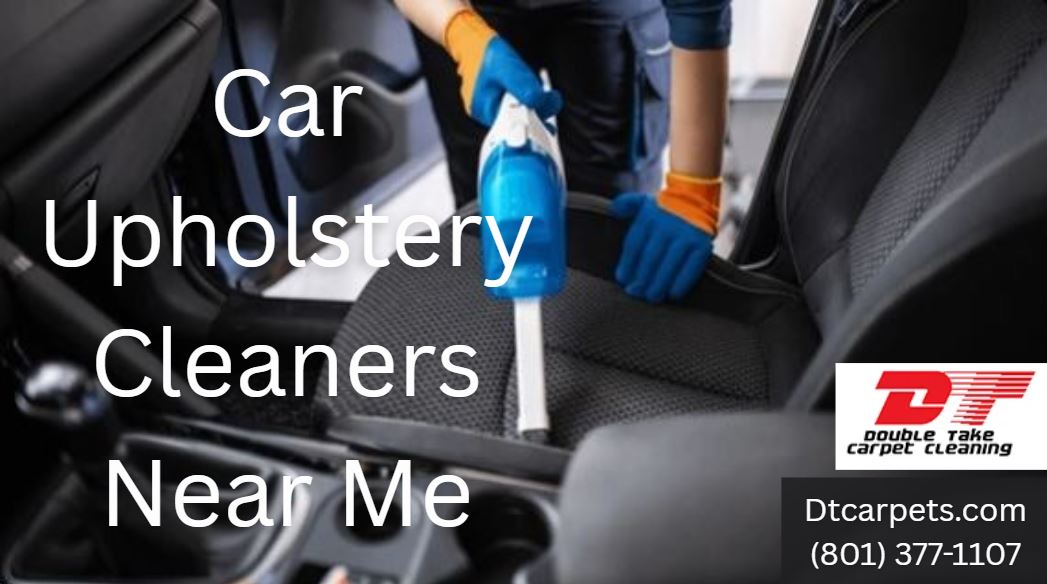
Searching for car upholstery cleaners near me usually means your vehicle has stained cloth seats, pet hair, food spills, odors, dirty floor mats, or fabric that needs more than a quick vacuum. The right cleaner should remove soil while protecting seat foam, dyes, stitching, leather, electronics, and child-seat safety systems.
The most important takeaway is that vehicle upholstery cleaning should be a controlled extraction process—not a heavy shampoo job. A qualified cleaner starts by inspecting the material and stain source, vacuums loose debris, tests cleaning products when needed, uses limited moisture, extracts the solution thoroughly, and gives clear drying instructions. This prevents common problems such as water rings, recurring stains, musty odors, sticky residue, and damage to leather or seat electronics. This guide explains how professional car seat cleaning works, what stains and odors require special care, how to compare nearby providers, and when to call Double Take Carpet Cleaning for fabric-seat, vehicle-carpet, pet-hair, stain, and odor-related cleaning guidance.
What Are Car Upholstery Cleaners?
Car upholstery cleaners are professionals or services that clean vehicle seats, fabric panels, headliners, floor mats, vehicle carpet, cargo areas, and sometimes leather or synthetic-leather surfaces. They may operate through a detailing business, mobile service, upholstery-cleaning service, or carpet-cleaning company with vehicle-interior expertise.
A professional car upholstery cleaning service can include:
- Dry vacuuming of seats, seams, carpet, mats, and crevices.
- Spot treatment for food, beverages, mud, cosmetics, oil, and pet messes.
- Fabric-seat cleaning.
- Controlled upholstery extraction.
- Vehicle carpet and floor-mat cleaning.
- Pet-hair removal.
- Odor assessment.
- Cleaning compatible vinyl, plastic, and trim.
- Interior-glass cleaning.
- Leather-safe cleaning where appropriate.
- Cargo-area cleaning.
The process should be tailored to the material. A cloth seat, leather seat, suede-like insert, perforated seat, heated seat, ventilated seat, headliner, and child car seat all need different handling.
For hard nonporous surfaces inside a vehicle, visible soil should be removed before disinfectant is applied. Guidance for vehicle cleaning advises cleaning visibly dirty hard surfaces with soap and water or detergent before disinfecting appropriate areas such as door handles, seat-belt buckles, armrests, controls, and grab handles.
A standard upholstery-cleaning process typically includes:
- Inspecting fabric, stains, odors, seams, and sensitive surfaces.
- Removing trash and loose items.
- Dry vacuuming thoroughly.
- Testing cleaner in a discreet location when appropriate.
- Applying compatible stain treatment.
- Using low-moisture cleaning and extraction.
- Recovering solution and soil.
- Drying the seats and carpet.
- Reviewing results and aftercare.
8 Things to Know Before Hiring Car Upholstery Cleaners
1. Cloth, leather, vinyl, and suede-like materials need different methods
A vehicle interior may contain several materials within one seat. Fabric inserts, leather bolsters, vinyl trim, plastic panels, perforated surfaces, stitching, foam, electronics, and seat controls can all react differently to moisture and cleaning chemistry.
Cloth upholstery commonly responds well to controlled extraction, provided the fabric is colorfast and the cleaner avoids saturating the foam below. Leather and synthetic leather generally need low-moisture, material-safe products. Suede-like surfaces and delicate decorative panels require extra caution. Touchscreens and seat controls need minimal moisture.
The safest process starts with identifying the material. A provider should not use the same strong cleaner on all surfaces. Ask what method they use for:
- Cloth seats.
- Leather or synthetic leather.
- Perforated seats.
- Heated or ventilated seats.
- Headliners.
- Door panels.
- Dashboards and trim.
- Touchscreens.
- Seat-belt straps.
- Child safety seats.
Avoid aggressive all-purpose products, bleach, ammonia, undiluted peroxide, or harsh degreasers on unknown materials. These can fade dye, dry out coatings, haze trim, weaken stitching, damage leather finishes, or create water marks.
2. The stain source determines the right treatment
A car seat stain may be coffee, soda, milk, grease, makeup, food coloring, mud, pet urine, blood, ink, oil, sunscreen, or residue from a previous product. Each reacts differently.
A professional upholstery cleaner should ask what caused the stain, how long it has been present, and whether you already tried cleaning it. That information helps determine whether the stain is likely water-based, oily, protein-based, dye-based, organic, or permanent material damage.
For instance:
- Coffee and soda may require different treatment from grease.
- Milk may leave both a visible stain and odor-causing residue.
- Pet urine can spread into the seat cushion or carpet backing.
- Ink, dye transfer, and bleach damage may not respond to routine cleaning.
- A shiny or crunchy spot may be detergent residue rather than dirt.
Do not layer DIY products while waiting for professional help. Combining dish soap, vinegar, baking soda, peroxide, carpet cleaner, bleach, or fragrance spray can set stains, leave residue, and make later cleaning harder.
Take a photo and note the suspected source. If you know a child spilled chocolate milk, a pet had an accident, or a passenger dropped greasy food, tell the cleaner. Those details improve the chance of using the correct treatment from the start.
3. Vacuuming first is not optional
Dry soil removal is the foundation of effective car upholstery cleaning. Seats, floor mats, carpet, cargo areas, and seat seams collect hair, dust, crumbs, grit, pet dander, salt residue, and outdoor debris. If a cleaner wets those materials before removing them, the debris can turn into muddy residue and become harder to extract.
A thorough vacuum should reach:
- Seat seams and stitching.
- Between seat cushions.
- Under child seats.
- Around seat rails.
- Carpet edges.
- Floor mats.
- Cargo areas.
- Door pockets.
- Seat-back pockets.
- Under front seats.
- Crevices around the center console.
Vacuuming is especially important for pet hair. Wetting pet hair before removing it can make it cling more tightly to fabric and carpet. A professional may use crevice tools, soft brushes, rubber tools, or fabric-safe methods to lift embedded hair.
A basic vacuum is suitable for routine upkeep. For a vehicle with deeply embedded soil, food residue, stains, pet contamination, or odor, vacuuming is only the first phase of a more complete cleaning process.
4. Extraction is useful—but seats should never be soaked
A car upholstery extractor applies limited cleaning solution and pulls it back out along with loosened soil. This can improve cloth seats, vehicle carpet, mats, and fabric-covered cargo areas.
The risk is overwetting. Seat foam can absorb more moisture than it appears to hold. If it stays wet, it can create odor, water marks, slow drying, mildew concerns, and discomfort when you use the vehicle. Excess liquid near electronic seat controls, heated seats, ventilation systems, wiring, or sensors can be particularly risky.
A qualified provider should use low-moisture techniques and make careful extraction passes. The goal is for the seat to be damp, not saturated.
Ask your cleaner:
- Will you extract the seats after applying solution?
- How do you control moisture in seat foam?
- How long will the car need to dry?
- Is it safe to drive afterward?
- What should I do if the seat still feels wet the next day?
- Do you work around heated, ventilated, or powered seats differently?
Vehicle-cleaning guidance cautions against using excessive water on cloth upholstery because it can soak through into the cushion below.
5. Odor treatment must address the source
A fresh scent is not proof that odor has been removed. Perfume can temporarily cover odors from pets, milk, smoke, food, damp carpet, spilled drinks, or dirty upholstery—but it does not remove the underlying source.
Persistent vehicle odors commonly come from:
- Pet urine or vomit.
- Spilled milk or food.
- Wet floor mats.
- Snowmelt and road slush.
- Moisture trapped under carpet.
- Cigarette smoke residue.
- Wet sports gear.
- Hidden trash.
- Vehicle water leaks.
- Product residue.
- Dirty cargo areas.
A qualified upholstery cleaner should ask when the odor is strongest. If it becomes worse after the vehicle sits in sunlight, after rain, when the heat is running, or after the car remains closed overnight, the odor may be coming from deeper fabric, seat foam, carpet backing, or a moisture source.
For persistent odor, Double Take Carpet Cleaning can help assess vehicle carpet, cloth upholstery, pet-related contamination, and stain-related concerns. If a leak is the underlying cause, the leak must also be repaired to prevent the problem from returning.
6. Child car seats need manufacturer-specific care
Child car seats and booster seats should not be treated as ordinary upholstery. Cleaning methods can affect harness webbing, buckles, flame-resistant materials, foam, and safety performance. Always follow the specific child-seat manufacturer’s instructions.
The National Highway Traffic Safety Administration advises parents and caregivers to refer to the child car seat manufacturer’s instructions and the vehicle owner’s manual.
Important precautions include:
- Do not soak the harness.
- Do not machine-wash harness straps unless the manual explicitly permits it.
- Do not apply bleach, alcohol, solvent, or upholstery cleaner to harness webbing.
- Do not submerge or lubricate buckles.
- Do not use abrasive tools.
- Do not remove or reinstall a car seat unless you can follow the manufacturer’s instructions exactly.
A child-seat manufacturer’s cleaning guidance warns that harnesses should not be machine washed, that buckles should not be submerged, and that harsh chemicals such as bleach should be avoided.
If you are having the vehicle cleaned, remove the child seat yourself when possible, clean it according to its manual, and reinstall it correctly afterward.
7. Headliners and door panels need special caution
Headliners are among the easiest vehicle surfaces to damage. They are typically fabric bonded to a backing board with adhesive. Excess moisture, aggressive brushing, or repeated scrubbing can loosen the adhesive, create sagging, leave rings, or distort the material.
Door panels may include cloth, leather, vinyl, plastic, padded trim, speaker grilles, switches, and window controls. Spraying liquid directly onto them can force moisture into components that should stay dry.
A careful cleaner should use limited moisture, soft tools, and a controlled technique on these areas. “More product” is not better.
If you are cleaning a headliner at home:
- Use minimal cleaner.
- Apply product to a microfiber cloth rather than saturating the headliner.
- Blot gently rather than scrubbing.
- Work in small sections.
- Avoid soaking adhesive-backed fabric.
- Stop if the fabric loosens or discolors.
For old headliner stains, smoke residue, water marks, or sagging fabric, professional assessment is often safer than trial-and-error cleaning.
8. Choose nearby cleaners based on process, not promises
The best car upholstery cleaners near you should explain their process, quote the actual work clearly, identify limitations, and avoid promising guaranteed removal of every stain or odor.
Ask a prospective provider:
- What does the service include?
- Are fabric seats and vehicle carpet extracted?
- How do you handle pet hair and pet odor?
- How do you avoid soaking seat foam?
- What is your approach to leather, headliners, screens, and electronics?
- What should I remove from the vehicle?
- How long will the service and drying take?
- What stains may not fully come out?
- What happens if a stain returns after drying?
Choose Double Take Carpet Cleaning for practical vehicle carpet and fabric-upholstery cleaning guidance. A provider who listens, explains the cleaning limits, and uses controlled moisture is more likely to protect your vehicle than one offering vague “like-new” promises.
The Cost of Getting Upholstery Cleaning Wrong
A poor upholstery-cleaning job can create costs beyond the price of the appointment. Overwet seats may smell musty, feel uncomfortable, develop water rings, or require corrective drying. Incorrect chemicals can fade dye, stiffen fabric, damage leather finishes, or harm trim and electronics.
Time costs can also add up. You may need to leave the vehicle unused while it dries, arrange another appointment, or spend hours trying to correct sticky residue or recurring odor.
For families, commuters, rideshare drivers, and people preparing a vehicle for sale, a dirty or damp interior creates real stress. It can affect comfort, presentation, and perceived value.
Most problems are avoidable. Choose a provider that identifies materials, controls moisture, extracts thoroughly, gives drying guidance, and sets honest expectations about stains and odors.
How an Experienced Upholstery Cleaner Helps
An experienced car upholstery cleaner does more than spray and scrub. They evaluate seat fabric, carpet, stain type, odor source, previous products, and moisture risk before deciding on a method.
Double Take Carpet Cleaning can help with vehicle carpet and cloth-upholstery cleaning, stain treatment, pet-hair removal, and odor-related concerns.
A careful professional process can include:
- Identifying fabric type and sensitive surfaces.
- Inspecting stains, odor areas, seams, and seat construction.
- Removing dry soil before applying moisture.
- Choosing stain treatment based on the likely source.
- Using controlled cleaning chemistry.
- Extracting soil and solution without soaking the seat.
- Advising on drying and vehicle ventilation.
- Explaining what may be permanent dye loss, wear, or material damage.
- Recommending a practical plan for future maintenance.
Car Upholstery Cleaning Options
Basic seat vacuuming and wipe-down
This service removes loose dust, crumbs, and surface debris. It is suitable for routine upkeep and lightly soiled vehicles.
Its limitation is that it will not remove embedded soil, odors, deep stains, or residue in cloth upholstery.
Fabric-seat extraction
Extraction applies compatible cleaning solution and recovers moisture and soil with suction. It is suitable for cloth seats, carpet, floor mats, and many common spills.
Its limitation is that it requires careful moisture control and cannot repair permanent fading, bleach spots, burns, or damaged seat foam.
Spot treatment
Spot treatment focuses on isolated spills such as coffee, soda, food, mud, makeup, or pet accidents. It is appropriate when the problem is fresh and localized.
Its limitation is that a visible stain can extend deeper into the cushion or carpet than it appears.
Pet-hair and odor cleaning
This service focuses on embedded fur, accident spots, cargo areas, and odor sources. It is useful for pet-owning households.
Its limitation is that deep urine contamination, repeated accidents, or water intrusion may need more extensive work.
Leather cleaning and conditioning
Leather-safe cleaning removes surface oils, dust, and grime. Conditioning may help maintain certain leather finishes.
Its limitation is that it does not repair cracks, tears, worn coatings, dye loss, or significant damage.
DIY upholstery cleaning
DIY cleaning can work for small, fresh spills and regular maintenance. It is convenient and less expensive initially.
Its limitations are product compatibility, oversaturation, weak extraction, residue, and the risk of damaging fabric or leaving odor behind.
What to Do If Your Seats Need Cleaning Now
- Remove personal belongings, loose electronics, paperwork, and valuables.
- Take photos of stains, tears, water marks, and affected areas.
- Identify the cause and age of the stain if possible.
- Blot fresh spills with clean white towels—do not rub.
- Vacuum dry debris, crumbs, pet hair, and dirt first.
- Do not mix cleaning chemicals or use bleach on vehicle upholstery.
- Check under floor mats for dampness or an active leak.
- Avoid applying large amounts of water to seat fabric or carpet.
- Keep child car seats separate from general upholstery-cleaning methods.
- Improve airflow if the seats or carpet are damp.
- Contact Double Take Carpet Cleaning at (801) 377-1107 for vehicle carpet, cloth-seat, stain, pet-hair, and odor-cleaning guidance.
How to Choose Car Upholstery Cleaners Near You
Use this checklist when comparing nearby service providers:
- Confirm that the cleaner has experience with vehicle cloth upholstery and vehicle carpet.
- Ask whether fabric seats are vacuumed and extracted.
- Ask how they control moisture in seat cushions.
- Confirm how they handle leather, headliners, trim, electronics, and touchscreens.
- Ask whether stain treatment and pet-hair removal are included.
- Ask about odor-source identification rather than fragrance treatment alone.
- Request clear drying instructions.
- Ask what stains or damage may not be fully removable.
- Remove valuables before the appointment.
- Choose clear communication and realistic expectations over a low-price-only decision.
For vehicle carpet and fabric-seat guidance, choose Double Take Carpet Cleaning at (801) 377-1107.
Common Car Upholstery Cleaning Mistakes
- Scrubbing aggressively: This can spread a stain, distort fabric, and roughen carpet fibers.
- Soaking seat cushions: Excess moisture can lead to odor, water rings, and slow drying.
- Using the same product on every surface: Cloth, leather, trim, screens, and headliners require different care.
- Masking odors with fragrance: Fragrance does not remove pet urine, milk, smoke residue, or trapped moisture.
- Skipping vacuuming: Wetting dry debris can turn it into mud and reduce cleaning effectiveness.
- Using bleach or harsh household chemicals: These can fade fabrics, damage coatings, and weaken materials.
- Treating child car seats like normal upholstery: Harnesses, buckles, foam, and covers require manufacturer-specific care.
- Ignoring a returning stain or odor: Recurrence may indicate residue, wick-back, hidden moisture, or deeper contamination.
Frequently Asked Questions
What do car upholstery cleaners near me typically clean?
They may clean cloth seats, vehicle carpet, mats, cargo areas, door panels, pet hair, stains, odors, and compatible hard surfaces. Confirm exact services before booking.
Can car upholstery cleaners remove seat stains?
Often, yes. Results depend on the stain source, age, fabric type, previous cleaning attempts, and whether the damage is permanent.
Can a professional remove coffee from car seats?
Many coffee stains can improve with proper treatment and extraction, especially when addressed quickly.
Can car seat cleaners remove milk smell?
They may improve it, but milk can penetrate seat foam and carpet. Old spills may require deeper odor-focused cleaning.
Can upholstery cleaning remove pet urine odor?
It may help with fresh or surface-level contamination. Persistent odor can mean urine reached carpet backing, padding, or seat foam.
How long does car upholstery take to dry?
Drying depends on moisture used, extraction quality, weather, airflow, fabric thickness, and vehicle ventilation. Your provider should give aftercare guidance.
Can I drive after car upholstery cleaning?
Usually, yes, but avoid sitting on wet seats if possible. Keep the vehicle ventilated and follow drying instructions.
Can car upholstery cleaners clean leather seats?
Yes, when they use appropriate leather-safe products. Leather should not be soaked or treated with harsh household cleaners.
Can I use a carpet cleaner on car seats?
Only if the fabric is compatible, the product is suitable, and you can control moisture. A portable extractor may be useful for small spots but can over-wet seats if misused.
Can I use dish soap on car upholstery?
Avoid it. Dish soap can leave residue, create excess foam, and attract dirt after drying.
Can I use vinegar on vehicle seats?
Use caution. It may not be suitable for every material, can leave odor, and should not be mixed with other cleaning products.
Can I use bleach on car upholstery?
No, unless the manufacturer explicitly permits it. Bleach can cause permanent color loss and damage fabrics, leather, and trim.
Can I use hydrogen peroxide on cloth seats?
Do not assume it is safe. Peroxide can lighten dyes and fabrics. Use only products specifically intended for the material and test in an inconspicuous area.
Why does my car seat smell after cleaning?
The seat may be drying too slowly, contain deeper contamination, or have residual cleaner. Improve airflow and contact the cleaner if odor persists.
Why did a seat stain return after cleaning?
It may be wick-back, where deeper residue rises to the surface as the fabric dries. Avoid repeatedly soaking the area.
Can cleaners remove pet hair from car upholstery?
Yes. Thorough pet-hair removal may require vacuuming, fabric-safe tools, brushes, and detailed work in seams and carpet edges.
Can they clean headliners?
Some can, but headliners require low-moisture, gentle methods because excessive water can loosen the adhesive and cause sagging.
Can a cleaner clean a child car seat?
Follow the child-seat manufacturer’s instructions. Harnesses, buckles, and safety materials should not be treated like ordinary upholstery.
Should I remove my child car seat before an appointment?
Yes, when practical. Clean and reinstall it according to the manufacturer’s instructions, and do not allow general upholstery-cleaning methods on the harness or buckle.
Can upholstery cleaning fix cracked leather?
No. Cleaning can improve surface soil, but cracking, tears, worn coating, and dye loss may require repair.
Can car upholstery cleaners clean floor mats?
Many can. Ask whether mat cleaning is included and whether the mats are removed so the carpet beneath can be checked.
What should I do after a drink spill in my car?
Blot it quickly with white towels, remove the floor mat if affected, avoid rubbing, and seek controlled cleaning if it reached carpet or seats.
Can cleaning remove smoke odor?
It may reduce smoke odor by removing residues from fabric and carpet. Long-standing smoke odor can require more extensive treatment.
How often should I have my car upholstery cleaned?
Frequency depends on pets, children, food in the vehicle, commuting, outdoor activity, smoking, and spills. Regular vacuuming and prompt cleanup reduce the need for deep cleaning.
Is professional upholstery cleaning worth it before selling a car?
Often, yes. A cleaner, fresher interior can improve presentation, comfort, and buyer confidence.
How do I choose a trustworthy local upholstery cleaner?
Choose a provider with experience in vehicle fabrics, controlled extraction, clear scope, realistic expectations, transparent communication, and a safe approach to leather, electronics, and child-seat areas.
When should I call a professional?
Call Double Take Carpet Cleaning for persistent odor, pet accidents, milk spills, large stains, deep soil, returning stains, wet carpet, delicate fabrics, or a failed DIY cleaning attempt.
Key Rules and Standards
There is no single universal law governing vehicle upholstery cleaning, but responsible cleaners should follow vehicle manufacturer instructions, cleaning-product labels, and material-specific care practices.
Important rules include:
- Follow the vehicle manufacturer’s care guidance for seats, leather, screens, trim, and electronics.
- Follow child car-seat manufacturer instructions for cleaning harnesses, buckles, covers, and foam.
- Clean visible soil before applying any compatible disinfectant to hard surfaces.
- Do not mix cleaning chemicals.
- Use controlled moisture around seat electronics, airbags, controls, and wiring.
- Use only the minimum effective moisture on cloth seats and vehicle carpet.
- Avoid harsh chemicals on leather, fabric, headliners, and sensitive trim.
NHTSA advises checking the specific child-seat manufacturer’s instructions and the vehicle owner’s manual for child-seat use and care.
Disclaimer: This article provides general educational information and does not replace your vehicle manufacturer’s instructions, child car-seat manual, cleaning-product label, insurance guidance, or an in-person upholstery assessment. Results vary according to material, stain type, odor source, prior treatments, moisture exposure, and upholstery condition. Avoid harsh chemicals and excessive moisture on leather, electronics, child seats, suede-like trim, and unknown materials.
Find the Right Upholstery Cleaner
The best car upholstery cleaners near you should remove soil, stains, pet hair, and odor sources while protecting your seats and avoiding excessive moisture. A careful provider will inspect first, vacuum thoroughly, use appropriate products, extract moisture effectively, and tell you what to expect after cleaning.
Most upholstery problems are easier to solve before they become deeply set. Blot spills quickly, vacuum regularly, remove wet mats, avoid chemical experiments, and get help when odors return or seats remain damp.
For vehicle carpet cleaning, cloth-seat cleaning, pet-hair removal, stain treatment, and odor-related guidance, contact Double Take Carpet Cleaning at (801) 377-1107.
