
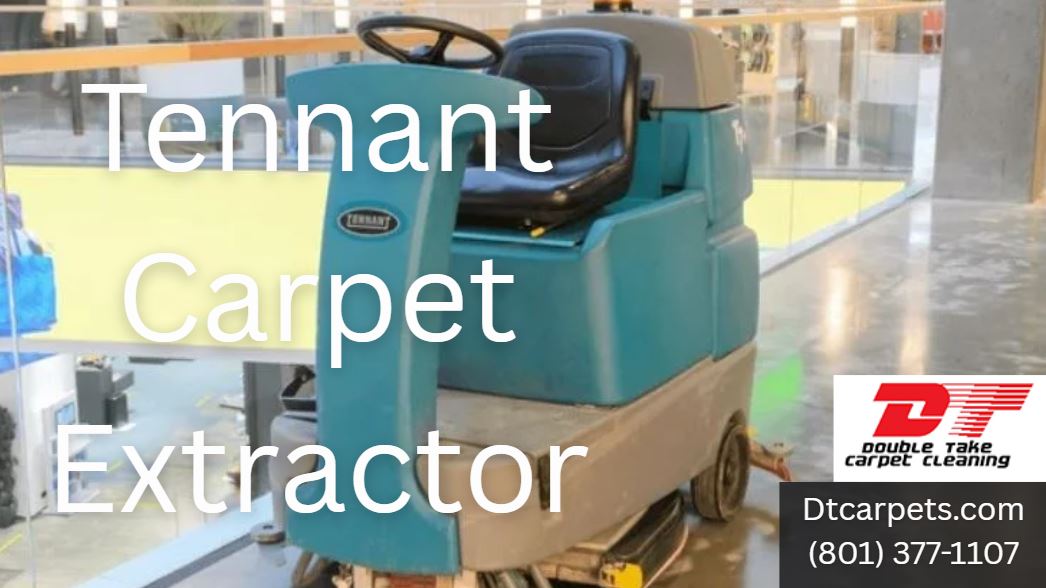
A Tennant carpet extractor is commercial cleaning equipment that applies cleaning solution, loosens soil, and recovers dirty moisture from carpet. Facilities use Tennant extractors in offices, schools, healthcare spaces, hospitality settings, retail locations, apartments, and other high-traffic properties because the machines support both interim maintenance and deeper restorative cleaning. The most important point is that machine power alone does not create clean carpet: success depends on correct machine selection, soil removal, chemical dilution, controlled moisture, proper extraction, and fast drying.
Tennant offers multiple extractor formats, including compact walk-behind units, deep-clean extractors, and ride-on machines. Certain models use the company’s ReadySpace® rapid-drying technology, while others use deeper extraction methods. These approaches serve different maintenance goals and should not be treated as interchangeable.
This guide explains how Tennant carpet extractors work, how to choose the appropriate cleaning strategy, the biggest operating mistakes to avoid, and when experienced carpet-cleaning guidance can prevent costly moisture, appearance, and downtime problems.
What Is a Tennant Carpet Extractor and How Does It Work?
A Tennant carpet extractor is a commercial machine that cleans textile floor coverings through a controlled combination of solution delivery, agitation or soil transfer, vacuum recovery, and drying. Depending on the model and cleaning method, the extractor may be designed for deep extraction, interim low-moisture maintenance, upholstery cleaning, or large-area commercial carpet care.
The basic objective is to remove soil rather than simply make carpet smell better or look wet. A well-run extraction process separates dry debris from the carpet, applies only enough cleaning solution to suspend oily and embedded soil, recovers the dirty solution efficiently, and leaves the carpet dry enough for a timely return to service.
Tennant’s extractor lineup includes walk-behind and ride-on units. Its R14 Ride-On Carpet Extractor, for example, combines interim ReadySpace cleaning with deeper extraction capabilities. Tennant lists a 32-gallon solution tank, 28-gallon recovery tank, 250 psi operating pressure, and ReadySpace water-reduction and recovery features for the R14 platform.
A standard carpet-extraction workflow is:
- Inspect the carpet, stains, traffic patterns, moisture history, and access routes.
- Remove dry soil through vacuuming.
- Pre-treat spots or traffic lanes where appropriate.
- Mix approved solution according to the product and machine directions.
- Operate the extractor at a controlled pace with overlapping passes.
- Make adequate vacuum-only passes to recover moisture.
- Improve airflow and drying conditions.
- Inspect results, address remaining spots, and return the area to service only when safe.
The ANSI/IICRC S100 standard provides professional guidance for the maintenance and cleaning of commercial and residential textile floor coverings, including carpet and rugs. It focuses on evaluating carpet condition, selecting appropriate methods, removing soil, managing moisture, and supporting indoor environmental quality.
Eight Key Things to Know About Tennant Carpet Extractors
1. Interim cleaning and deep extraction are different jobs
One of the most important decisions in commercial carpet maintenance is whether a facility needs interim cleaning or deep extraction. Both methods have value, but they solve different problems.
Interim cleaning is designed to maintain appearance between restorative cleanings. It typically uses less moisture, shorter drying times, and more frequent cleaning cycles. It is useful in entryways, hallways, hotel corridors, office walkways, retail aisles, and other areas where carpet must remain presentable with minimal disruption.
Deep extraction is intended to remove a larger soil load from within the carpet pile. It is often appropriate when traffic lanes look gray or oily, carpet feels sticky, stains are widespread, or periodic restorative maintenance is due. Deep extraction requires more thorough planning because it typically introduces more moisture and needs stronger recovery and drying management.
Tennant’s ReadySpace technology is intended for interim cleaning. The system uses soil-transfer rollers sprayed with cleaning solution to lift soil from carpet fibers; the machine rinses soil from the rollers rather than saturating the carpet. Tennant states that ReadySpace-treated areas can return to traffic in as little as 30 minutes under suitable conditions.
The practical lesson is straightforward: do not expect an interim cleaner to correct years of embedded oily soil, and do not use deep extraction every time a corridor needs a quick appearance refresh. A balanced maintenance program usually includes regular vacuuming, spot removal, interim cleaning, and periodic restorative extraction.
2. Soil removal begins with vacuuming, not extraction
A carpet extractor is not a substitute for thorough vacuuming. Most soil in commercial carpet is dry particulate matter: grit, dust, sand, hair, food particles, and tracked-in debris. If that dry soil is not removed before water-based cleaning, it can turn into muddy residue, increase cleaning time, and reduce the extractor’s ability to remove oily soil.
Dry grit also causes long-term fiber abrasion. In a busy entryway, foot traffic can grind fine particles into the carpet pile repeatedly. That abrasion contributes to dull appearance, traffic-lane wear, and permanent loss of texture. By the time the carpet looks severely dirty, some physical wear may already be irreversible.
A sound Tennant carpet-extractor program includes:
- Daily vacuuming in high-traffic areas
- More frequent vacuuming near entrances and elevators
- Spot removal as soon as practical
- Pre-vacuuming before restorative extraction
- Edge and baseboard detail work where soil accumulates
- Regular emptying and maintenance of vacuum equipment
Tennant recommends combining ReadySpace rapid-dry cleaning with daily vacuuming and spot cleaning to extend the results of deeper extraction cleaning.
For facility managers, this is a budget issue as much as an appearance issue. Investing in consistent dry-soil removal can reduce the frequency and intensity of restorative cleaning, improve carpet appearance, and help preserve the flooring asset longer.
3. Water recovery matters as much as solution delivery
It is easy to focus on spray pressure, cleaning chemistry, or visible soil removal. However, the extraction side of the process often determines whether the result remains clean and safe. The machine must recover the dirty water and cleaning solution that it puts into the carpet.
Poor recovery leaves behind moisture and residue. That can cause slow drying, wick-back stains, unpleasant odor, traffic-lane re-soiling, mold-supporting conditions, backing stress, and complaints from building occupants. Excessively wet carpet can also create slip hazards or require cordoning off areas for longer than planned.
Tennant’s ReadySpace process is built around limited moisture and rapid drying. The company states that its approach uses soil-transfer rollers to pull soil from fibers without saturating carpet, and it identifies quick reopening of rooms and hallways as a key benefit.
Operators can improve recovery by:
- Checking vacuum hoses, seals, and recovery-tank connections.
- Cleaning tool jets and vacuum shoes.
- Operating at a slow, consistent pace.
- Using sufficient dry passes after wet passes.
- Emptying the recovery tank before it becomes too full.
- Avoiding excessive solution flow.
- Checking carpet moisture before reopening an area.
- Using air movers or HVAC support when conditions require it.
A carpet that appears clean but stays wet too long is not a successful result. Effective extraction includes visible soil removal, low residue, appropriate moisture control, and safe drying.
4. Chemical selection and dilution affect results and risk
Commercial carpet chemicals are not interchangeable. A detergent must match the carpet fiber, soil type, machine, water conditions, and cleaning method. Using too much chemical can leave residue and increase re-soiling. Using too little may fail to break down oily traffic soil. Using an incompatible product can produce excessive foam, affect dyes, damage components, or leave the carpet feeling stiff.
Tennant provides detergent options and Safety Data Sheets for its TennantTrue® products, including neutral, solvent, and high-alkaline formulas. The company states that ingredient disclosures and SDS documents are available for its detergents, and it identifies Green Seal certification for relevant products.
Before using a cleaner:
- Read the product label and Safety Data Sheet.
- Use the dilution ratio specified for the machine and application.
- Confirm compatibility with carpet fiber and dye stability.
- Do not mix products unless the manufacturer explicitly directs it.
- Avoid household detergents, dish soap, and laundry products in commercial equipment.
- Test an inconspicuous area when dye stability or fiber type is uncertain.
- Train operators on spill response and chemical handling.
A common failure is “more product must clean better.” In carpet cleaning, that is often false. Excess detergent can remain in the carpet after drying, attract soil, and cause the area to look dirty again sooner. Correct chemistry is part of the extraction system—not an add-on.
5. Machine selection should follow the facility, not the brand name
“Tennant carpet extractor” describes a category, not one universal machine. A compact walk-behind extractor may be the right choice for small offices, classrooms, hotel corridors, or congested areas. A ride-on extractor may make more sense for airports, convention spaces, large hospitality properties, extensive office campuses, or retail floors where production speed matters.
The Tennant R3 Compact Carpet Extractor is a walk-behind ReadySpace machine with a 15-inch cleaning path and an ultra-low-profile form intended for tight spaces and small-area cleaning.
The R14 is a larger ride-on platform designed to combine interim and deep-cleaning functionality.
Consider these variables before choosing equipment:
| Decision factor | Smaller walk-behind extractor | Larger ride-on extractor |
|---|---|---|
| Best setting | Tight spaces, smaller facilities, detail work | Large open areas and long carpeted routes |
| Production speed | Moderate | High |
| Maneuverability | Strong in narrow areas | Better in broad corridors and open floors |
| Operator training | Usually simpler, but still necessary | More extensive operational and safety planning |
| Initial cost | Generally lower | Generally higher |
| Storage requirement | Lower | Higher |
| Common limitation | May be slow for extensive carpet | May be oversized for compact sites |
The right unit is the one that fits the carpeted square footage, traffic patterns, staffing level, storage space, water access, electrical needs, budget, and cleaning schedule.
6. Operator technique determines whether the carpet looks uniform
Even a high-quality extractor can produce poor results when operated inconsistently. Uneven travel speed, missed passes, excessive spraying, poor overlap, neglected edges, and hurried recovery can leave stripes, uneven appearance, wet spots, or recurring stains.
A trained operator should use a repeatable pattern. This commonly means cleaning with overlapping passes, keeping a consistent walking speed, paying attention to solution flow, and making additional recovery passes where necessary. Areas with heavy traffic may need pre-treatment or additional controlled passes, but repeated soaking is not a solution.
The operator should also understand the difference between actual soil, pile distortion, and permanent wear. A dark traffic lane may be a combination of oily soil, crushed fibers, and fiber loss. Extraction may improve cleanliness but cannot restore pile that has been physically worn away. Setting that expectation helps avoid disputes and disappointment.
For best results:
- Start with a documented cleaning route.
- Mark or block off wet work areas.
- Clean edges and corners separately if the machine cannot reach them.
- Use overlap to prevent visible missed lanes.
- Avoid rushing extraction passes.
- Verify spray and vacuum performance before starting a large area.
- Inspect the result while lighting conditions are good.
- Record recurring stain locations and probable causes.
Tennant offers documentation, manuals, use-and-care guides, spec sheets, and related resources for its equipment.
7. Fast drying protects operations, safety, and carpet condition
Commercial properties cannot always close a hallway, lobby, classroom, or office floor for long. That is why drying time is a major operational concern.
Carpet that stays wet can delay reopening, attract foot traffic while damp, create wet footprints on hard floors, raise slip-and-fall concerns, develop odor, and encourage wicking. In healthcare, hospitality, education, and property-management settings, these disruptions affect occupants, guests, students, staff, and cleaning teams.
Rapid-drying interim systems can be useful for frequently used areas. Tennant states that ReadySpace cleaning does not saturate carpet and can make rooms and hallways ready for traffic in as few as 30 minutes under appropriate conditions.
Still, “rapid drying” does not eliminate the need for site planning. Humidity, ventilation, carpet density, prior moisture, soil load, weather, and machine condition can all change drying time.
Use these safeguards:
- Schedule deep extraction during low-traffic periods.
- Post wet-floor or cleaning-in-progress signs.
- Use air movers where appropriate.
- Increase ventilation or HVAC airflow.
- Keep occupants off carpet until it is sufficiently dry.
- Avoid replacing furniture immediately on damp carpet.
- Check high-risk areas such as entries, corners, and dense traffic lanes.
A fast turnaround is valuable only if the carpet is genuinely dry enough for safe use and the cleaning result remains stable after full drying.
8. Preventive maintenance reduces downtime and repair costs
Commercial extractors operate under demanding conditions. Pumps, vacuum motors, hoses, seals, filters, spray tips, wheels, brushes, batteries or power systems, tanks, and recovery components all need routine care. Ignoring maintenance can lead to weak suction, inconsistent spray, leaks, poor cleaning, odor, downtime, and expensive emergency repairs.
A simple maintenance routine protects both the machine and the carpet-cleaning program.
After each use:
- Empty and rinse the recovery tank.
- Remove debris, lint, and hair from tools and pickup areas.
- Check hoses for clogs, cracks, and loose fittings.
- Wipe down tank seals and connections.
- Clean spray nozzles as directed.
- Inspect cords, plugs, batteries, and charging systems.
- Store the machine dry and protected.
On a scheduled basis:
- Inspect vacuum performance.
- Confirm solution flow and spray pattern.
- Check wheels, casters, and brushes.
- Review operator logs and maintenance records.
- Replace worn seals, filters, and damaged components.
- Use manufacturer-approved parts and procedures.
Tennant provides machine documentation and operator training resources, and it supports fleet management and service needs for cleaning professionals.
A poorly maintained extractor can create a hidden quality problem. It may look like it is running normally while leaving behind too much water or too little solution, producing inconsistent results from one area to another.
The Real Cost of Getting Carpet Extraction Wrong
Carpet extraction mistakes can affect more than a cleaning budget.
- Financial costs: Improper chemistry, residue, over-wetting, or missed maintenance can shorten carpet life, require repair or replacement, and cause equipment downtime.
- Labor costs: Re-cleaning, handling complaints, moving furniture again, and managing slow drying consume staff time.
- Operational costs: Wet corridors, classrooms, guest areas, offices, and retail spaces can disrupt normal activity or reduce access.
- Safety costs: Damp carpet and wet transitions to hard flooring can increase slip-and-fall risk.
- Reputation costs: Guests, tenants, employees, customers, and visitors notice stained, odorous, or wet carpet. Poor results can make a facility feel neglected even when the rest of the property is well maintained.
- Long-term costs: Repeated residue buildup and abrasive dry soil can cause early carpet wear that extraction cannot reverse.
Most of these costs are avoidable with a realistic maintenance schedule, trained operators, proper chemical dilution, machine upkeep, moisture control, and experienced professional support when problems become complex.
How an Experienced Carpet Cleaning Professional Helps
A professional can help facilities distinguish between routine maintenance, restorative cleaning, stain treatment, odor control, moisture management, and carpet-replacement decisions. That distinction protects the budget because it prevents organizations from using the wrong process repeatedly.
Double Take Carpet Cleaning can provide experienced guidance for carpet cleaning, stain and odor concerns, recurring traffic-lane problems, and maintenance decisions. Professional help is particularly useful when carpet remains wet, stains return after drying, odors persist, pets or occupants have contaminated the carpet, discoloration has appeared, or in-house equipment is no longer producing reliable results.
An experienced professional supports success by:
- Inspecting carpet fiber, condition, soil load, and problem areas.
- Identifying whether marks are soil, stains, wicking, pile distortion, or permanent wear.
- Selecting appropriate cleaning methods and products.
- Managing moisture and drying risk.
- Troubleshooting recurring odor and stains.
- Providing clear expectations about what cleaning can realistically improve.
- Recommending preventive cleaning schedules based on traffic and use.
- Helping protect the carpet investment instead of relying on reactive cleaning alone.
Tennant Carpet Extractor Options and Strategies
ReadySpace rapid-drying carpet cleaning
ReadySpace is Tennant’s low-moisture interim-cleaning approach. The system uses solution-sprayed soil-transfer rollers to lift soil from fibers and rinse it into the machine. It is appropriate for high-traffic areas that need frequent appearance maintenance and quick reopening.
Its limitation is that it is not a replacement for periodic deep extraction when substantial embedded soil or oily traffic buildup is present.
Deep extraction cleaning
Deep extraction uses solution delivery and vacuum recovery to remove a heavier soil load. It is appropriate for periodic restorative care, broad traffic lanes, heavily used carpet, and areas where interim cleaning is no longer enough.
Its limitation is a greater need for controlled moisture, drying time, access planning, and post-cleaning inspection.
Compact walk-behind extractors
Compact machines such as the R3 are useful for tight spaces, quick maintenance work, and small carpeted zones. Their size can improve maneuverability in offices, classrooms, corridors, and around furniture.
Their limitation is lower productivity across large facilities.
Ride-on carpet extractors
Ride-on equipment such as the R14 is designed for larger carpet areas and can offer both interim and deep-cleaning capability depending on configuration and process.
Its limitation is the larger purchase cost, storage footprint, training requirements, and reduced suitability for tight spaces.
Outsourced professional carpet care
A professional provider can be the best strategy for facilities without trained staff, storage capacity, repair support, or a strong preventive-maintenance program. Outsourcing is also valuable for difficult stains, odor, water exposure, restorative cleaning, and high-visibility areas.
Its limitation is scheduling dependency. Establishing a maintenance plan in advance helps avoid emergency-only service decisions.
What to Do If You Are Currently Dealing With a Carpet Problem
- Identify whether the issue is general soil, an isolated stain, odor, moisture, wicking, or mechanical equipment failure.
- Block or mark damp areas to reduce slip risk and prevent foot traffic.
- Vacuum dry soil before attempting extraction.
- Review the carpet manufacturer’s maintenance guidance and the Tennant machine manual.
- Check the machine’s recovery tank, seals, hose, vacuum path, and spray pattern.
- Use only the correct detergent and dilution ratio.
- Test chemistry in an inconspicuous location if carpet dyes or fiber type are uncertain.
- Use controlled passes and prioritize vacuum recovery over repeated spraying.
- Increase airflow and allow the carpet to dry before reopening the area fully.
- Document recurring stain or odor locations.
- Contact Double Take Carpet Cleaning if stains return, odor persists, carpet is slow to dry, or the issue involves urine, flooding, dye transfer, or widespread soil.
How to Choose the Right Provider or Equipment Plan
When deciding whether to buy, rent, operate, or outsource a Tennant carpet extractor program, use this checklist:
- Relevant experience with commercial carpet and textile floor coverings
- Ability to explain the difference between interim cleaning and deep extraction
- Knowledge of chemical safety, dilution, and Safety Data Sheets
- A documented approach to vacuuming, spot removal, extraction, and drying
- Clear operator-training procedures
- Machine service, parts, and maintenance support
- A plan for emergency spills, moisture incidents, stains, and odor
- Understanding of facility traffic patterns and downtime limits
- Clear, plain-English communication about expected results and carpet limitations
- Willingness to address long-term carpet preservation, not only immediate appearance
For professional carpet-cleaning guidance, maintenance planning, difficult stains, or odor concerns, contact Double Take Carpet Cleaning at (801) 377-1107.
Common Tennant Carpet Extractor Mistakes
- Skipping vacuuming: Extraction works less effectively when dry grit and debris remain in the carpet.
- Using the wrong cleaning method: Interim cleaning and deep extraction have different purposes and should be scheduled accordingly.
- Over-applying solution: Excess moisture can cause odor, wicking, slow drying, and re-soiling.
- Using too much detergent: Residue can make carpet look dirty again quickly and may create excessive foam.
- Operating too quickly: Fast passes can leave soil and moisture behind.
- Ignoring recovery problems: Weak suction, clogged hoses, or damaged seals can cause poor results and carpet over-wetting.
- Reopening areas too soon: Damp carpet can create operational disruptions and slip risks.
- Neglecting machine maintenance: Small issues with tanks, hoses, nozzles, and seals can become costly downtime.
Frequently Asked Questions
What is a Tennant carpet extractor?
A Tennant carpet extractor is commercial equipment that applies cleaning solution and recovers dirty moisture from carpet. Tennant offers compact walk-behind, deep-cleaning, interim-cleaning, and ride-on extractor options.
What is the difference between a carpet extractor and a carpet shampooer?
An extractor is designed to apply solution and recover it along with suspended soil. A shampooing approach can leave more cleaning product in the carpet if it is not thoroughly rinsed and extracted.
What is ReadySpace?
ReadySpace is Tennant’s rapid-drying interim carpet-cleaning technology. It uses soil-transfer rollers with cleaning solution to lift soil without saturating the carpet.
How quickly does ReadySpace-cleaned carpet dry?
Tennant states that rooms and hallways can be ready for traffic in as few as 30 minutes, though actual drying time depends on carpet type, humidity, ventilation, soil level, and operating conditions.
Is ReadySpace the same as deep extraction?
No. ReadySpace is intended for interim, rapid-drying maintenance. Deep extraction is a separate process intended to remove a heavier soil load.
What is a ride-on carpet extractor?
A ride-on carpet extractor allows an operator to sit on and operate a larger machine across broad carpeted areas. It is often used in large facilities with long corridors or open carpeted spaces.
What is the Tennant R14?
The R14 is a Tennant ride-on carpet extractor that supports ReadySpace interim cleaning and deeper extraction cleaning. Tennant lists a 32-gallon solution tank, 28-gallon recovery tank, and 250 psi pressure rating for the R14.
What is the Tennant R3?
The R3 is a compact walk-behind carpet extractor using ReadySpace rapid-drying technology. Tennant lists a 15-inch cleaning path and an ultra-low-profile design for small areas and tight spaces.
How often should commercial carpet be extracted?
The right schedule depends on traffic, soil load, entrances, weather, pets, food service, occupant expectations, and carpet manufacturer guidance. High-traffic areas generally need more frequent vacuuming and interim cleaning than low-use areas.
Should I vacuum before using a Tennant carpet extractor?
Yes. Vacuuming removes dry debris and grit, allowing the extraction process to focus on embedded and oily soil.
Why does carpet look dirty again after extraction?
Possible causes include detergent residue, wick-back from deeper soil, insufficient extraction, ongoing traffic, permanent wear, or inadequate pre-vacuuming.
What is carpet wick-back?
Wick-back occurs when moisture evaporates and carries dissolved soil from lower carpet layers back toward the surface. It can make a stain appear to return after drying.
Why is the carpet still wet after extraction?
Potential causes include too much solution, too few vacuum passes, weak recovery, clogged hoses, poor seals, humid conditions, dense carpet, or inadequate airflow.
Can carpet extraction cause mold?
Improperly managed moisture can contribute to conditions that support mold growth. Proper extraction, drying, airflow, and quick response to wet carpet reduce the risk.
Can I use any carpet-cleaning chemical in a Tennant extractor?
No. Use chemicals approved for the machine and appropriate for the carpet. Follow the product label, machine instructions, dilution requirements, and Safety Data Sheet.
Why is foam a problem in the recovery tank?
Excess foam can interfere with recovery performance and may result from too much detergent or incompatible chemicals. Use the correct formula and dilution.
What does a Safety Data Sheet do?
An SDS provides important safety information about a chemical product, including hazards, handling, personal protective equipment, first aid, storage, and disposal guidance.
Can a Tennant extractor remove all stains?
No. Extraction removes many soils and some stains, but it cannot reliably remove permanent dye loss, bleach spots, burns, old set stains, or severe physical carpet wear.
Can a carpet extractor remove pet odor?
It may improve surface contamination, but persistent urine odor can come from the backing, pad, subfloor, or repeated contamination. Professional assessment may be needed.
Is carpet extraction safe for wool carpet?
Wool carpet can often be professionally cleaned, but it requires fiber-appropriate products, careful moisture control, color testing, and proper drying. Do not assume a standard process is safe.
How do I prevent stripes after extraction?
Use a consistent route, overlap passes, move at a steady pace, avoid uneven solution flow, and inspect the carpet in good lighting before leaving the area.
How do I maintain a Tennant carpet extractor?
Empty and rinse tanks after use, remove debris, inspect hoses and seals, clean nozzles, maintain vacuum performance, follow the model manual, and use manufacturer-approved parts.
Where can I find Tennant manuals?
Tennant’s documentation center includes searchable manuals, brochures, specifications, and use-and-care resources.
Should I buy or outsource a carpet extractor program?
Buying may suit a facility with enough carpeted area, trained staff, storage, maintenance support, and a consistent schedule. Outsourcing may be more practical for occasional service, specialty problems, or sites without in-house cleaning capacity.
Can I use a Tennant extractor on area rugs?
Some equipment and cleaning methods may be suitable for certain rugs, but rugs vary substantially by fiber, backing, dyes, and construction. Test first and use specialty guidance for wool, silk, viscose, antique, handmade, or water-sensitive rugs.
What standards apply to commercial carpet cleaning?
The ANSI/IICRC S100 standard is a recognized framework for professional cleaning of textile floor coverings. It describes procedures and methods for evaluating carpet, controlling soil, selecting cleaning systems, and supporting carpet appearance and indoor environmental quality.
Key Rules, Standards, and Safety Practices
There is no single rule requiring every facility to use a Tennant extractor. However, facility managers and operators should follow equipment manuals, cleaning-product labels, Safety Data Sheets, workplace safety procedures, and carpet manufacturer recommendations.
The ANSI/IICRC S100 standard is a major professional framework for maintaining and cleaning textile floor coverings. It describes methods and systems for commercial and residential carpet and rug cleaning, including inspection, soil removal, appearance retention, and indoor environmental quality considerations.
Operators should also maintain safe work areas by using appropriate warning signs, managing electrical cords, wearing required personal protective equipment, following chemical-handling instructions, and preventing public access to wet carpeted surfaces.
Disclaimer: This article provides general educational information and should not replace Tennant’s model-specific operator manual, Safety Data Sheets, carpet manufacturer requirements, workplace safety policies, or an on-site professional inspection. Equipment specifications and procedures vary by machine model. Stop work and seek qualified support if you encounter electrical damage, chemical exposure, weak suction, leaks, flooding, persistent odor, carpet dye transfer, or prolonged wetness.
Conclusion
A Tennant carpet extractor can be a valuable part of a commercial carpet-care program when it is matched to the facility, operated correctly, maintained consistently, and supported by a realistic schedule of vacuuming, spot care, interim cleaning, and periodic deep extraction.
The key is to manage the entire process—not simply run a machine across the carpet. Proper dry-soil removal, correct chemical dilution, steady operator technique, strong water recovery, rapid drying, and prompt troubleshooting prevent most avoidable problems. When carpet odor, recurring stains, water issues, pet contamination, heavy soil, or persistent wetness complicate the job, experienced assistance can protect the flooring and reduce disruption.
For practical guidance on carpet cleaning, difficult stains, odor concerns, and long-term maintenance, contact Double Take Carpet Cleaning at (801) 377-1107.
