
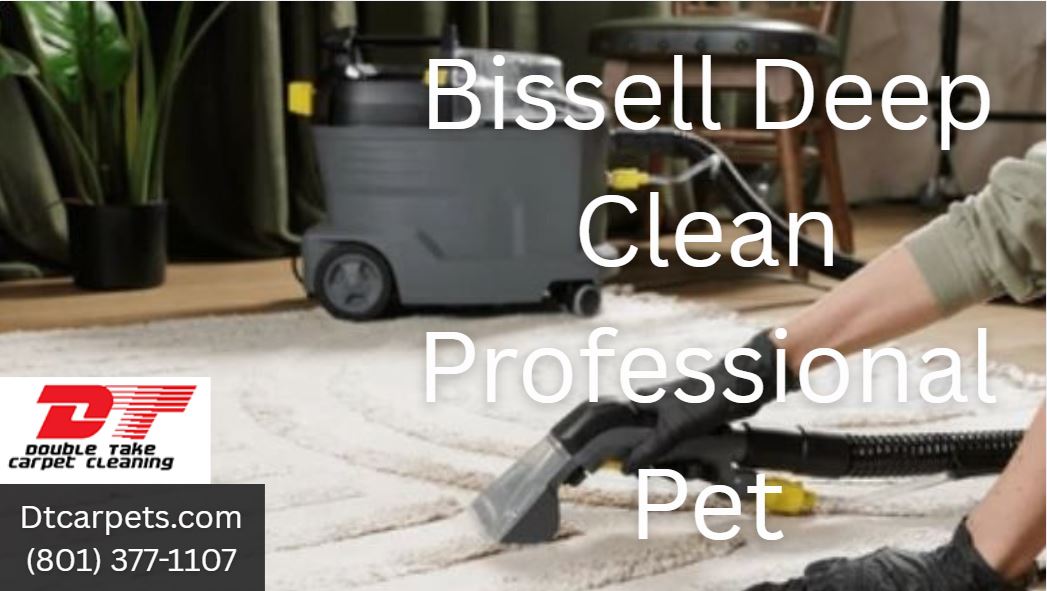
The Bissell Deep Clean Professional Pet—commonly identified as the DeepClean ProHeat 2X Professional Pet Carpet Cleaner, model 17N49—is an upright home carpet-cleaning machine designed to wash carpet fibers with water and cleaning formula, agitate soil with brush action, and recover dirty liquid into a separate tank. It can be useful for routine carpet maintenance, fresh pet messes, and moderate traffic soil on compatible wall-to-wall carpet.
The most important point is that “Professional Pet” describes the machine’s product positioning, not a guarantee that it can safely solve every carpet problem. A Bissell Deep Clean Professional Pet works best when you vacuum first, use the exact recommended amount of formula, clean slowly, make extra dry passes, and fully clean the machine afterward. It is not a substitute for specialty rug care, severe pet-odor treatment, water-damage restoration, or professional assessment of wool, handmade, delicate, or unknown textiles. This article explains how the Bissell 17N49 works, what it can and cannot handle, the common mistakes that cause poor results, how to troubleshoot safely, and when to contact Double Take Carpet Cleaning for expert help.
What Is the Bissell Deep Clean Professional Pet?
The Bissell Deep Clean Professional Pet is a consumer upright carpet extractor. Its commonly associated product name is the DeepClean ProHeat 2X Professional Pet Carpet Cleaner, model 17N49. Bissell’s official support portal lists the 17N49 among its upright carpet-cleaner products and provides model-related setup, operation, and troubleshooting information.
Bissell also identifies the 17N49 in its official parts information as the ProHeat 2X Professional Pet Deep Cleaner and describes it as a machine that washes into carpet fibers using Bissell 2X Pet Stain & Odor Cleaning Formula.
Although many homeowners call it a “steam cleaner,” it is more accurately a hot-water extraction-style carpet cleaner or carpet washer. It does not simply blow vapor over carpet. Instead, it introduces a controlled amount of cleaning solution, uses brushes to loosen soil, and uses suction to remove dirty liquid.
How the machine works
The cleaning cycle includes several interconnected steps:
- Dry vacuuming. You remove dry dirt, grit, pet hair, crumbs, and dust before wet cleaning.
- Tank filling. You add water and compatible formula exactly as instructed for the model.
- Solution delivery. The machine sprays solution onto the carpet.
- Brush agitation. The brush system helps loosen embedded soil.
- Water recovery. The suction system pulls dirty water into a recovery tank.
- Dry extraction passes. You pull additional moisture out with the spray turned off.
- Drying. Air movement and time allow the carpet, backing, and pad to dry.
- After-cleaning maintenance. You empty, rinse, and dry the tanks, brushes, and accessible recovery components.
What it is intended to clean
The Bissell Deep Clean Professional Pet may be appropriate for:
- Standard synthetic wall-to-wall carpet.
- Light-to-moderate everyday soil.
- Traffic-lane buildup.
- Pet hair and fresh pet-related surface messes.
- Recent food or drink spills after proper blotting and spot treatment.
- Routine maintenance between professional carpet-cleaning appointments.
It is generally not the right standalone tool for:
- Floodwater, sewage, or contaminated water damage.
- Carpet that remains wet, smells musty, or has visible mold.
- Deep pet urine contamination in the pad or subfloor.
- Wool, silk, viscose, handmade, antique, or unknown rugs.
- Dye bleeding, bleach spots, fading, or permanent color loss.
- Carpet backing separation, ripples, loose seams, or structural damage.
- Severe odor or stains that have failed repeated consumer treatments.
The ANSI/IICRC S100 framework for professional textile-floor-covering cleaning recognizes that method selection depends on the material, condition, soil, and job requirements—not just the presence of a carpet-cleaning machine.
9 Key Things to Know About Bissell Deep Clean Professional Pet
1. “Professional Pet” Does Not Mean It Can Solve Every Pet Problem
The word Pet often leads buyers to assume the Bissell Deep Clean Professional Pet can remove every stain and odor caused by dogs or cats. It can be a valuable home-maintenance tool, especially for fresh surface messes and routine soil, but pet-related problems vary widely.
A fresh accident limited to the top carpet fibers may respond well to prompt blotting, compatible pet treatment, controlled extraction, and fast drying. A repeated urine area is different. Urine can pass through the face fibers into the carpet backing, padding, tack strip, and subfloor. Once contamination reaches those layers, a surface extraction machine may improve the appearance without eliminating the odor source.
That is why pet odor can seem gone while the carpet is wet, then return as the room warms or humidity rises. The odor is not necessarily a failure of fragrance; it may be evidence that contamination remains beneath the visible carpet surface.
Use the Bissell 17N49 for sensible maintenance:
- Treat fresh accidents immediately.
- Blot before applying product.
- Use only compatible pet-cleaning formula.
- Extract without saturating the area.
- Make several dry passes.
- Recheck after full drying.
Do not repeatedly soak one spot with product if odor comes back. Repeated wet cleaning can spread contamination, increase residue, and delay drying. For persistent urine odor, widespread pet staining, or carpet that smells worse after drying, contact Double Take Carpet Cleaning for guidance and professional treatment options.
2. Dry Vacuuming Before Cleaning Is Not Optional
The Bissell Deep Clean Professional Pet is designed to wash and extract. It is not a replacement for a normal dry vacuum. Before any wet cleaning begins, remove as much dry soil as possible.
Carpet holds grit, dust, hair, crumbs, dander, lint, and outdoor particles below the visible surface. If you introduce water and formula before vacuuming, that debris turns into damp sludge. The machine then has to manage dirt that should have been removed dry, which can reduce cleaning effectiveness, clog the brush system, fill the dirty-water tank quickly, and leave carpet looking dull after it dries.
Dry soil is also abrasive. Every time people walk across gritty carpet, particles rub against the fibers. Regular vacuuming helps preserve appearance and reduce wear over time.
Vacuum carefully in the following areas:
- Doorways and entry paths.
- Hallways.
- Around pet beds and feeding stations.
- Under sofas, chairs, and tables.
- Stair edges.
- Areas in front of doors.
- The path between bedrooms and bathrooms.
- Carpet near litter boxes, crates, or pet doors.
For heavy pet hair, make several slow vacuum passes in different directions. Use a crevice tool around baseboards and furniture edges. If the vacuum is still collecting significant hair and debris, keep vacuuming before using the Bissell.
This step costs little but produces better extraction, cleaner recovery water, reduced brush tangles, and faster drying. It also keeps you from wasting formula trying to remove dry material through a wet-cleaning process.
3. Formula Measurement Matters More Than Strong Scent
A common mistake with the Bissell DeepClean ProHeat 2X Professional Pet is adding extra formula because the carpet looks heavily soiled or smells unpleasant. That is understandable—but it often makes the problem worse.
Too much formula can leave detergent residue in the fibers. Residue can feel sticky or crunchy after drying, attract dirt, create rapid resoiling in traffic lanes, and make carpets look dirty again sooner than expected. Strong fragrance is not proof that soil has been removed. It can simply cover an odor temporarily.
Bissell’s product information for model 17N49 refers to its 2X Pet Stain & Odor Cleaning Formula. Use the exact compatible product and fill-level instructions specified in the 17N49 manual.
Avoid putting any of the following into the tank unless Bissell expressly authorizes it:
- Dish soap.
- Laundry detergent.
- Bleach.
- Vinegar.
- Powdered products.
- Essential oils.
- Peroxide.
- Household multipurpose cleaner.
- A random carpet shampoo made for another machine.
Never mix chemicals. Even household products that seem harmless can foam excessively, leave residue, affect dyes, damage seals, interfere with machine operation, or create an unsafe chemical reaction.
If your carpet feels stiff or gets dirty quickly after cleaning, do not respond by applying more formula. Vacuum once dry, then use controlled rinse-and-extraction passes only if your model instructions permit them. If the issue continues, ask Double Take Carpet Cleaning about corrective cleaning rather than adding more chemicals.
4. Slow Cleaning Passes and Dry Passes Protect the Carpet
The Bissell 17N49 performs two different jobs: applying cleaning solution and recovering it. Many homeowners focus on the wet pass, but extraction is equally important. The best way to improve cleaning while limiting drying problems is to move slowly and make additional passes with the spray off.
Bissell’s support information for the Deep Clean ProHeat 2X Professional Pet notes that carpet striping can result from cleaning too quickly or failing to use proper cleaning technique.
A practical approach is:
- Clean a small, manageable section.
- Make one slow wet pass while applying solution.
- Release the spray trigger or follow the manual’s dry-pass procedure.
- Make two or more slow extraction-only passes.
- Overlap the next lane slightly for even coverage.
- Work toward an exit so you do not repeatedly walk on damp carpet.
Do not keep applying solution because the dirty-water tank still looks dark. Dirty recovery water is normal during cleaning; it is not a signal to keep soaking the carpet. Focus instead on controlled cleaning, water recovery, and drying.
Overwetting can lead to:
- Slow drying.
- Musty odor.
- Wick-back, where a stain returns from deeper layers.
- Browning on certain fibers.
- Carpet rippling or backing stress.
- Moisture reaching the pad.
- Greater difficulty treating pet contamination.
If your carpet is thick, the room is humid, or the pad is dense, use less solution, clean fewer passes, and increase airflow immediately afterward.
5. Suction Problems Must Be Fixed Before You Keep Cleaning
A machine that sprays but does not recover water is not performing a complete carpet-cleaning cycle. Continuing to operate it under weak suction can leave carpet saturated and create a much larger drying problem.
Bissell maintains support categories for the Deep Clean ProHeat 2X Professional Pet, including no-suction, no-spray, brush-roll, leaking, and other troubleshooting topics.
If your 17N49 is not picking up water, stop releasing solution. Then:
- Turn the machine off and unplug it.
- Empty the dirty-water tank.
- Rinse the tank and lid.
- Check that the tank is seated correctly.
- Inspect accessible seals and gaskets for dirt or damage.
- Clear lint, hair, and debris from the nozzle.
- Confirm that the recovery components are installed as directed.
- Check the brush area for tangled hair or obstruction.
- Test with clean water only, following the official manual.
Common signs of a suction issue include wet stripes left behind, a dirty-water tank that stays nearly empty, visible water in the nozzle after you pass, a change in motor sound, or carpet that feels squishy.
Do not try to compensate for weak suction by adding more formula, moving faster, or running repeated wet passes. That approach can force moisture into the carpet backing and pad. If basic tank seating and cleaning do not resolve the problem, use Bissell’s exact model support instructions or arrange professional cleaning instead.
6. Brush Performance Affects Soil Removal and Carpet Appearance
The Bissell Deep Clean Professional Pet uses brush action to help loosen soil. The brushes are valuable because they improve contact between cleaning solution and carpet fibers. But brush action can only help when the brushes are clean, correctly installed, and suited to the carpet type.
Pet hair, long hair, thread, lint, and carpet fibers can become tangled around brushes. Over time, this can reduce brush movement, cause noise, and lower cleaning effectiveness. If the brush is not functioning properly, a user may incorrectly assume the carpet needs more formula, when the real issue is mechanical maintenance.
Inspect brushes after each cleaning session. Follow the 17N49 manual for access and removal. Remove visible hair and debris, check for worn bristles or obstructions, and reinstall components carefully.
Do not use aggressive brush action on every textile. Extra caution is appropriate for:
- Loop-pile or Berber-style carpet.
- Carpet with pulled loops.
- Worn carpet that has weak yarns.
- Handmade rugs.
- Wool or natural-fiber rugs.
- Rugs with fringe or weak edges.
- Carpet with damaged seams or ripples.
If carpet looks fuzzy, pulled, or uneven after cleaning, stop using the machine until you determine whether the issue is pre-existing wear, fiber damage, or an unsuitable cleaning method. Not every dark traffic lane is soil; some are permanently worn fibers that cannot be restored through brushing.
7. Water Temperature and Cleaning Chemistry Need Control
Hot water can help loosen certain soils, but excessive heat is not automatically better. Use the water temperature specified in the manufacturer’s instructions. Do not use boiling water or attempt to create a stronger cleaning solution by using extremely hot water.
Bissell’s support and product documentation should be your first authority for the 17N49. The company provides a product page with a downloadable user guide and warranty information for the Deep Clean ProHeat 2X Professional Pet Carpet Cleaner.
Why does water temperature matter? Overly hot water may affect plastic components, seals, cleaning chemistry, carpet adhesives, or color-sensitive fibers. Incorrect chemistry can do the same. Using a strong chemical mixture may seem like a shortcut for pet odor or traffic soil, but it can leave residue and affect carpet appearance.
Use only:
- Clean, appropriate-temperature water.
- The correct amount of compatible Bissell formula.
- A spot treatment that is safe for your particular carpet.
- Products that have been tested in a hidden location first.
Avoid treating every stain with the same formula. Grease, coffee, mud, pet urine, ink, dye transfer, paint, rust, and bleach damage are different problems. Some are removable; others are permanent changes to the carpet’s color or fibers.
When in doubt, do not keep experimenting. A professional cleaner can identify whether a stain is ordinary soil, a dye issue, a chemical burn, a wear pattern, or something that requires targeted treatment.
8. It Is Not Safe for Every Carpet, Rug, or Upholstery Surface
The Bissell Deep Clean Professional Pet is designed primarily for compatible carpet. It should not be treated as a universal cleaning machine for every rug, sofa, chair, mattress, or floor textile.
Be especially cautious with:
- Wool carpet and wool rugs.
- Silk, viscose, rayon, cotton, and linen.
- Handmade, antique, Persian, Oriental, or tribal rugs.
- Rugs with jute, plant fiber, latex, or unknown backing.
- Carpet with loose seams, ripples, damaged backing, or delamination.
- Rugs with fringe.
- Upholstery with “S” or “X” care codes.
- Carpet that is already wet from a leak, flood, or plumbing problem.
Some Bissell Deep Clean Professional Pet packages include accessories, but do not assume every 17N49 machine includes or supports upholstery cleaning in the same way. If your machine includes an upholstery tool, you must still check the furniture’s care code, use the correct method, apply limited moisture, and test a hidden area.
A normal synthetic wall-to-wall carpet is not the same as an area rug. Rugs can contain different dyes, backing, fringe, adhesives, and foundation fibers. Cleaning a valuable rug like ordinary synthetic carpet can cause shrinkage, browning, dye bleeding, backing distortion, or fringe damage.
When the material is unknown, expensive, delicate, or sentimental, the safest decision is not to test it with a full wet-cleaning pass. Contact Double Take Carpet Cleaning for guidance before applying water or chemistry.
9. Fast Drying Is Part of the Cleaning Process
The job is not complete when the Bissell Deep Clean Professional Pet is returned to storage. Carpet must dry promptly and thoroughly.
Drying time depends on:
- Carpet density and pile height.
- Pad thickness.
- Amount of moisture applied.
- Number of dry passes.
- Indoor humidity.
- Airflow.
- Room temperature.
- Existing moisture beneath the carpet.
- The machine’s suction performance.
To speed drying:
- Run ceiling fans.
- Use portable fans or air movers.
- Run HVAC if conditions allow.
- Use a dehumidifier in damp or below-grade spaces.
- Keep interior doors open for airflow.
- Avoid walking on damp carpet.
- Keep pets and children off the area.
- Wait to return furniture, or use protective tabs under furniture legs if it must be moved back earlier.
The EPA recommends addressing water problems promptly and drying all items completely. It notes that wet or damp materials dried within 24–48 hours after a leak or spill generally will not grow mold in most cases.
If carpet remains wet for an unusually long period, smells musty, feels soft or saturated underfoot, or was exposed to water from a plumbing failure, do not assume the Bissell can fix it with another pass. A cleaning machine is not a water-damage restoration system.
The Real Cost of Using Bissell Deep Clean Professional Pet Incorrectly
Using a Bissell Deep Clean Professional Pet incorrectly can create costs far beyond cleaning formula and a weekend of work.
Financial costs can include replacement carpet, pad replacement, corrective professional cleaning, odor treatment, replacement rugs, damaged furniture, and new machine parts. Using the wrong formula or too much water can also shorten the life of the Bissell itself through clogs, odors, brush damage, and leaking components.
Time costs include moving furniture, repeating work, waiting for damp carpet to dry, troubleshooting a machine with poor suction, rinsing residue, and treating stains that return after drying. If a pet odor remains, the process may require several unsuccessful DIY attempts before the underlying source is identified.
Emotional costs are often overlooked. Families may feel frustrated when the house smells damp, a stain reappears, or the main living room cannot be used because the carpet remains wet. Pet owners can feel discouraged when a familiar accident area continues to smell even after “deep cleaning.”
Long-term costs can include accelerated carpet wear, recurring residue, wicking, odor that spreads through the room, carpet backing damage, or trapped moisture. These problems are largely avoidable through correct formula use, thorough extraction, fast drying, appropriate material selection, and early professional advice.
How an Experienced Carpet Cleaner Helps
An experienced cleaning professional evaluates the carpet before choosing a method. That assessment includes fiber type, construction, age, existing damage, stains, odors, prior chemical treatments, pet history, moisture level, and drying conditions.
Double Take Carpet Cleaning provides practical carpet-cleaning guidance and professional service for homeowners who need help beyond routine Bissell Deep Clean Professional Pet maintenance. An experienced approach can help identify whether the carpet needs controlled extraction, targeted stain treatment, odor-source treatment, low-moisture cleaning, specialty rug handling, or water-damage-related support.
Professional assistance is especially useful for:
- Deep traffic soil that does not improve after DIY cleaning.
- Stains that reappear after drying.
- Recurring pet odor.
- Multiple pet-accident areas.
- Wet, damp, or musty carpet.
- Large areas requiring efficient cleaning.
- Wool, specialty, or unknown rugs.
- Carpet with dye bleeding, ripples, loose seams, or damage.
- Sticky residue after excessive consumer cleaning products.
A professional can also help set realistic expectations. Some marks are removable soil; others are permanent damage, faded dye, bleach loss, traffic wear, or fiber distortion. Knowing the difference helps you avoid spending money on products that cannot solve the actual problem.
Bissell Deep Clean Professional Pet Options and Alternatives
Bissell DeepClean ProHeat 2X Professional Pet 17N49
The 17N49 is a full-size upright carpet cleaner designed for routine deep cleaning of suitable carpet. Bissell maintains product information, support, parts, and manual access for the model.
How it works: It uses water, cleaning formula, brush agitation, and dirty-water recovery.
Best for: Standard synthetic carpet, routine soil, traffic lanes, and fresh pet messes.
Limitations: It does not replace water-damage drying equipment, remove every odor source, or safely clean every textile surface.
Portable Pet Spot Cleaner
A portable spot cleaner is designed for quick, contained cleaning of fresh spills, small pet accidents, stairs, car interiors, and limited areas.
How it works: A hand tool applies solution and extracts it from a small section.
Best for: Fast action on a fresh spill before it spreads or dries.
Limitations: Smaller tanks and lower recovery capacity make it less suitable for whole rooms or deeply contaminated carpet.
Rental Carpet Extractor
A rental carpet machine can offer more capacity than a small home cleaner for occasional whole-house cleaning.
How it works: You rent the unit, follow its formula and operating directions, clean carpet yourself, and return the equipment.
Best for: Larger areas of appropriate synthetic carpet where the user has time for preparation, extraction, and drying.
Limitations: Rental equipment may not be suitable for high-risk textile types or deep pet odor. The user remains responsible for moisture control and proper use.
Low-Moisture Carpet Cleaning
Low-moisture cleaning uses limited water and specialized cleaning compounds or encapsulation products to loosen and remove soil.
How it works: The cleaner applies a controlled amount of product, agitates it, and removes the soil through vacuuming or a related process.
Best for: Light-to-moderate maintenance cleaning and situations where fast dry time is important.
Limitations: It may not flush out deep soil, significant pet contamination, or heavy residue as effectively as a carefully performed extraction method.
Professional Carpet Cleaning
Professional cleaning uses a process selected for the carpet’s real condition rather than a one-size-fits-all machine setting.
How it works: The provider inspects the carpet, chooses suitable cleaning chemistry and moisture levels, performs controlled cleaning, addresses difficult areas, and gives drying recommendations.
Best for: Heavy soil, persistent stains, odor, pet contamination, specialty rugs, uncertain fibers, large projects, and moisture-related problems.
Limitations: It requires scheduling and has an upfront service cost. However, it can prevent costly mistakes and repeated DIY cleaning.
What to Do If You Are Having a Problem Now
- Stop spraying if the carpet is becoming too wet or suction has dropped.
- Turn off and unplug the Bissell Deep Clean Professional Pet before inspecting any part.
- Confirm that your machine is model 17N49 and find the matching official user guide.
- Empty and rinse the dirty-water tank.
- Check tank seating, caps, seals, and accessible recovery components.
- Remove visible hair, lint, and debris from the nozzle and brush area.
- Confirm that you used only compatible cleaning formula in the correct amount.
- Make extraction-only passes if the carpet is wet and the machine is properly recovering water.
- Increase airflow with fans, HVAC, or a dehumidifier.
- Do not apply more random chemicals to a reappearing stain or odor.
- Stop if you see dye bleeding, carpet rippling, a musty smell, or water from a leak.
- Contact Double Take Carpet Cleaning at
801377-1107 if the issue involves persistent odor, deep stains, wet carpet, delicate textiles, or cleaning results that do not improve after drying.
How to Choose the Right Carpet Cleaner or Provider
Use this checklist before deciding whether the Bissell Deep Clean Professional Pet is the right tool for your job:
- Identify your carpet or rug. Confirm fiber, backing, warranty guidance, and whether water extraction is permitted.
- Confirm the exact machine model. Read the current 17N49 manual before using the machine or ordering parts.
- Prioritize recovery. A cleaner must pull moisture back out effectively; spraying alone is not cleaning.
- Choose compatible chemistry. Use the correct amount of formula and avoid unapproved products.
- Plan for drying. Make sure you have airflow, fans, HVAC, and time to keep the carpet undisturbed.
- Inspect machine condition. Tanks, seals, brushes, nozzles, and recovery paths should be clean and functioning.
- Evaluate the stain or odor honestly. Surface dirt, deep urine contamination, permanent dye loss, and water damage need different solutions.
- Ask for clear advice. A qualified provider should explain likely results, limitations, process, moisture risks, and after-care steps in plain language.
- Use professional support when appropriate. For expert assessment and cleaning service, choose Double Take Carpet Cleaning.
Common Bissell Deep Clean Professional Pet Mistakes
- Using too much cleaning formula. Excess detergent creates residue and rapid resoiling.
- Skipping dry vacuuming. Hair, grit, and loose soil reduce the quality of wet extraction.
- Cleaning too quickly. Fast passes can cause uneven results and striping; Bissell notes striping may result from cleaning too quickly.
- Making too many wet passes. Overwetting carpet slows drying and can lead to odor or wick-back.
- Ignoring weak suction. Stop applying solution when the recovery system is not functioning properly.
- Using it on delicate rugs. Wool, silk, viscose, handmade, antique, and jute-backed rugs need special caution.
- Treating pet odor only at the surface. Urine may be in backing, padding, or subfloor.
- Leaving the machine dirty after use. Dirty water, hair, and residue can cause odor, blockages, and poor future performance.
- Using it after a flood or sewage event. Routine extraction is not an appropriate substitute for water-damage restoration or contaminated-water response.
Frequently Asked Questions
What is the Bissell Deep Clean Professional Pet?
The Bissell Deep Clean Professional Pet generally refers to the Bissell DeepClean ProHeat 2X Professional Pet Carpet Cleaner, model 17N49. It is an upright consumer carpet extractor that applies solution, agitates carpet, and recovers dirty water.
Is the Bissell Deep Clean Professional Pet a steam cleaner?
It is more accurately described as a carpet washer or extraction cleaner. It uses water, cleaning formula, brush action, and suction rather than functioning as a true vapor steam cleaner.
Is the 17N49 good for pet stains?
It can be useful for fresh, surface-level pet stains on compatible carpet when used with appropriate formula and thorough extraction. It may not eliminate deep contamination or recurring odor below the carpet surface.
Can it remove pet urine odor?
It may improve odor from a fresh, limited accident. It cannot guarantee removal when urine has reached carpet backing, pad, tack strip, subfloor, or nearby materials.
Why does pet odor come back after carpet cleaning?
Odor can return when contamination remains below the surface. As moisture or humidity changes, odor-causing residues may become noticeable again. Repeated surface cleaning may not reach the source.
Can I use it on all carpets?
No. Do not assume it is safe for wool, silk, viscose, handmade rugs, antique rugs, jute-backed rugs, or carpets with unknown fibers or damage.
Can I use the Bissell 17N49 on area rugs?
Only if the manufacturer permits water extraction and an inconspicuous-area test confirms color stability. Avoid DIY extraction on valuable, natural-fiber, handmade, or unknown rugs.
Can I use it on wool carpet?
Do not use it on wool without confirming the manufacturer’s recommended method. Wool can be sensitive to moisture, agitation, pH, and dye bleeding.
Can I use it on furniture upholstery?
Only if the machine includes a suitable upholstery tool, the upholstery care code permits water-based cleaning, and you perform a hidden-area test. Do not use water-based cleaning on “S” or “X” upholstery.
Why is my Bissell 17N49 not picking up water?
A full or poorly seated dirty-water tank, clogged nozzle, dirty seals, blocked recovery path, brush obstruction, or incorrect component assembly can reduce suction. Stop spraying and follow the model-specific troubleshooting instructions.
Why is the machine leaving wet stripes?
Wet stripes may result from weak suction, too much spray, cleaning too quickly, an obstructed nozzle, or a tank that is not seated correctly. Stop spraying, inspect recovery components, and make slow dry passes.
Why does my carpet have stripes after cleaning?
Striping can result from moving too quickly, uneven overlap, inconsistent passes, or uneven moisture distribution. Bissell’s support content identifies fast cleaning as a potential cause.
How much cleaning formula should I use?
Use the exact amount shown in your 17N49 manual and tank markings. Do not add more formula to make the cleaning stronger.
Can I use vinegar in the Bissell Deep Clean Professional Pet?
Do not use vinegar unless Bissell expressly authorizes it for your model. Use only the manufacturer-compatible formula and avoid mixing cleaning chemicals.
Can I use dish soap or laundry detergent?
No. These products can create excess foam, leave residue, affect the machine, and attract dirt after the carpet dries.
Should I vacuum before using the Bissell 17N49?
Yes. Vacuuming removes dry soil, hair, grit, and crumbs before moisture is added. It is essential for better carpet-cleaning results.
How many dry passes should I make?
Make several slow passes with spraying off after each wet pass. Continue as long as the machine is still pulling meaningful moisture from the carpet, while following your model’s instructions.
How long does carpet take to dry after Bissell cleaning?
Dry time varies with carpet thickness, pad, humidity, airflow, water use, and extraction quality. Fans, HVAC, and a dehumidifier can help. Keep foot traffic off the carpet until it is dry.
Can I walk on carpet after using the machine?
It is best to wait until it dries. If you must cross it, use clean socks or clean indoor footwear and avoid bringing outdoor soil onto damp carpet.
Can I put furniture back right away?
Wait until carpet is dry if possible. If furniture must be replaced sooner, use protective tabs or foil under legs to reduce rust marks, wood-stain transfer, and pressure marks.
Why does my carpet smell after cleaning?
Possible causes include overwetting, poor suction, slow drying, dirty machine components, existing pet contamination, or a wet carpet pad. Improve airflow and seek professional help if odor continues after drying.
Why does the carpet feel crunchy after cleaning?
Crunchiness usually suggests cleaning-product residue. Avoid applying more formula; consider controlled rinsing according to the manual and make extra dry passes.
Why did a stain return after drying?
This may be wick-back: soil or contamination below the surface rises as moisture evaporates. It can also indicate detergent residue or a stain source that was not fully treated.
Can the 17N49 remove old stains?
It may improve some older stains, but results depend on the stain type, carpet fiber, prior cleaning products, heat exposure, and whether the mark is removable soil rather than permanent damage.
Can it remove bleach spots?
No. Bleach spots are usually dye loss, not dirt. Cleaning cannot restore missing color.
Does the Bissell Deep Clean Professional Pet remove mold?
No. It is not a mold-remediation device. If carpet has visible mold, a musty odor, or water damage, seek appropriate professional assessment.
Can I use it after a plumbing leak or flood?
Do not rely on it as a water-damage restoration machine. Significant water intrusion requires prompt extraction, moisture evaluation, and drying. The EPA advises fixing water problems promptly and drying items completely.
How do I clean the Bissell 17N49 after use?
Empty and rinse the recovery tank, remove hair and debris from accessible nozzles and brushes, clean components according to the manual, air-dry the parts, and store the machine in a dry location.
Is the Bissell Deep Clean Professional Pet worth buying?
It can be worthwhile for homes with compatible carpet, pets, children, and routine cleaning needs—provided the owner follows the manual, uses correct formula, maintains suction, and cleans the machine after each use.
When should I call Double Take Carpet Cleaning?
Contact Double Take Carpet Cleaning when stains return, carpet stays wet, pet odor persists, a rug is delicate or unknown, there is evidence of water damage, dye bleeding occurs, or the Bissell does not provide safe, satisfactory results.
Key Rules, Standards, and Safety Considerations
The most important instruction set is the official Bissell 17N49 user guide. It governs assembly, water and formula use, cleaning technique, maintenance, safety warnings, warranty requirements, and troubleshooting. Bissell provides manual access for this product through its official product page.
Other important standards and safety principles include:
- ANSI/IICRC S100: This professional standard covers systems, methods, procedures, and inspection considerations for cleaning textile floor coverings such as carpet and rugs.
- Electrical safety: Unplug the machine before maintenance, avoid damaged cords, do not operate in standing water, and do not attempt unapproved electrical repairs.
- Chemical safety: Follow every product label, keep products away from children and pets, provide ventilation, and never mix cleaning agents.
- Manufacturer carpet guidance: Check carpet and rug care instructions and warranty requirements before using water extraction.
- Moisture control: Cleaned carpet should dry promptly. EPA guidance emphasizes quick moisture control and complete drying after leaks or spills.
Conclusion
The Bissell Deep Clean Professional Pet, model 17N49, can be a useful carpet-maintenance tool for ordinary soil, traffic lanes, and fresh pet messes on compatible carpet. Its best results come from correct preparation and restraint: vacuum thoroughly, use the exact formula amount, clean slowly, make multiple dry passes, maintain the recovery system, and create good airflow for drying.
Most costly problems are avoidable. Do not overapply solution, ignore weak suction, use the machine on delicate rugs, treat water damage as ordinary cleaning, or expect a consumer machine to solve deep pet-odor contamination by itself. When the carpet is heavily soiled, wet, odor-affected, delicate, or not responding to careful DIY cleaning, early professional guidance is the safer choice.
For help with difficult pet odors, stubborn stains, specialty rugs, wet carpet, or professional carpet cleaning beyond what a Bissell Deep Clean Professional Pet can safely handle, contact Double Take Carpet Cleaning at 801 377-1107.
