
Why Carpet Cleaning Is The Best Choice for a Cleaner, Healthier, Longer-Lasting Home
Carpet cleaning is one of the most effective ways to improve how a home looks, feels, and functions because it removes deep soil, allergens, odors, and residue that vacuuming alone cannot reach. For most households, it is the best overall approach when the goal is to protect carpet investment, improve indoor freshness, and keep high-traffic areas from wearing out too quickly. The big takeaway is simple: when carpet is cleaned the right way, it does more than make floors look better — it helps the carpet last longer and makes the whole space easier to live in.
This article explains why professional carpet cleaning is often the best choice, how it works, where DIY methods fall short, and what problems are most worth avoiding. It also covers the real costs of postponing cleaning, the most common mistakes people make, and how to choose the right provider for the job. Expert guidance matters because the best method depends on fiber type, soil level, moisture control, and the kind of contamination involved. The right approach can preserve carpet life, support cleaner indoor air, and prevent avoidable repair or replacement costs.
What Carpet Cleaning Is and Why It Works
Carpet cleaning is the process of removing dirt, spots, allergens, bacteria, oils, and odor-causing residue from carpet fibers and backing using vacuuming, pre-treatment, extraction, or low-moisture methods. The reason it works so well is that carpet acts like a filter: it catches debris that moves through the room, and much of that material settles below the surface where normal vacuuming cannot fully reach. Recognized carpet-industry guidance notes that regular deep cleaning can improve appearance, help maintain warranties, and remove pollutants that contribute to indoor air quality issues.
The main people involved are the homeowner or property manager, the carpet cleaner, and sometimes the manufacturer if warranty rules are relevant. The process usually starts with inspection, then dry soil removal, stain pretreatment, deep cleaning, extraction, and drying. In practical terms, the included work is soil removal and restoration of appearance, while not every stain, burn, or wear pattern can be reversed.
The most common approach in homes is hot water extraction, though low-moisture methods also have a place in faster-turnaround or lower-moisture situations. Carpet care sources regularly recommend periodic professional cleaning every 12 to 18 months for many homes, with more frequent service for pet households, families with children, or allergy concerns.
Why It Often Beats the Alternatives
Deep soil removal
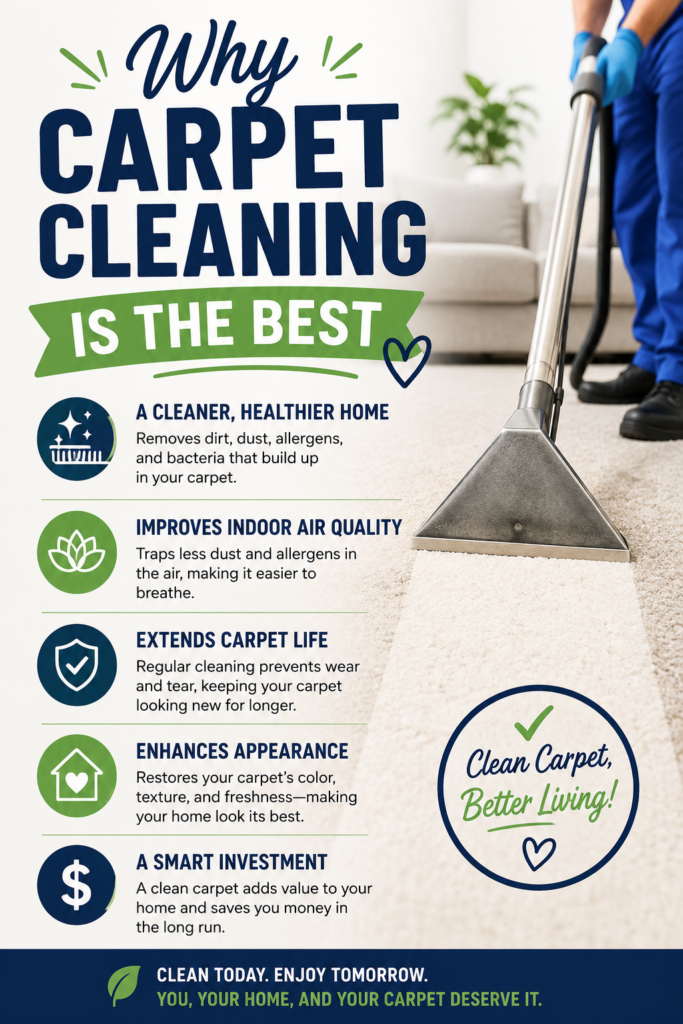
The biggest reason carpet cleaning is often the best choice is that it reaches beyond the surface. Vacuuming is important, but it mainly removes loose dry debris. Deep cleaning helps flush out soil that has settled into the pile and become harder to remove over time. That matters because embedded grit acts like sandpaper every time someone walks across the carpet, which gradually dulls the fibers and shortens carpet life.
This is one of the clearest ways professional carpet cleaning outperforms quick home methods. A machine rental may make the carpet look better for a short time, but strong extraction and proper rinsing are what truly pull soil back out. When that happens, the carpet feels softer, looks brighter, and is easier to maintain between cleanings. That is why many carpet-care sources describe cleaning as a way to “protect the investment” in flooring, not just refresh its appearance.
The smart strategy is to treat deep cleaning as maintenance, not rescue. Waiting until the carpet looks visibly bad usually means the wear has already progressed. Regular care keeps the job easier and results better.
Better indoor air quality
Carpets trap dust, dander, pollen, and other particles that can circulate through a room when disturbed. That does not make carpet unhealthy by itself, but it does mean the carpet needs periodic cleaning to avoid becoming a reservoir for unwanted material. Industry and consumer guidance consistently lists indoor air quality as a major benefit of professional carpet cleaning.
This matters most in homes with allergy sufferers, pets, or higher foot traffic. If soil remains in the fibers, it can get kicked back into the air and make rooms feel stale or dusty. Cleaning removes a meaningful portion of that buildup and helps the room feel fresher overall. A clean carpet can also make the whole home feel cleaner, even when the rest of the room is unchanged.
The limitation is that carpet cleaning is not a medical treatment or a substitute for overall ventilation and filtration. Still, it is a practical step that supports a cleaner indoor environment when combined with good vacuuming and routine maintenance.
Longer carpet life
One of the strongest arguments for carpet cleaning is simple economics. When dirt and gritty soil stay in the fibers, the carpet wears faster. That means more flattening in traffic lanes, more visible dullness, and a higher chance of replacing the carpet sooner than expected. Professional sources repeatedly note that regular extraction can extend carpet life significantly and help preserve appearance.
This matters because carpet is a substantial home expense. Replacing it early costs far more than keeping it on a cleaning schedule. If a carpet still has a healthy structure but just looks tired or dull, deep cleaning can buy years of extra use. That makes cleaning a maintenance decision rather than a cosmetic luxury.
The practical approach is to clean before the carpet reaches the point of permanent wear. High-traffic rooms, entryways, and pet areas often need more attention than guest rooms. When cleaning is part of a routine, the carpet tends to age more evenly and remain presentable longer.
Better stain control
Spills happen, but stains are much easier to manage when they are addressed quickly and correctly. Carpet cleaning helps by removing the residue that can become a long-term stain source and by treating spots before they spread or set deeper into the fibers. Carpet industry guidance consistently lists spot and stain removal as one of the key benefits of professional cleaning.
This matters because a visible stain is not just an appearance issue. Stains can attract more soil and make surrounding areas look dirty faster. A professional can often identify whether a stain is oil-based, water-based, organic, or dye-related and choose the right approach. That is much more effective than one-size-fits-all household methods.
The best strategy is still quick action. Blot early, avoid rubbing, and schedule a cleaning before the problem becomes permanent. Once a stain has been set by heat, time, or the wrong product, it becomes much harder to reverse.
Fresher-looking rooms
A clean carpet changes the way an entire room feels. It improves color, texture, and brightness, which makes furniture, walls, and décor look better too. That is one reason carpet cleaning is often described as improving the appearance of the whole space, not just the floor.searsclean+1
This matters in homes that are being sold, rented, or regularly used for guests. A clean carpet gives a stronger impression of care and upkeep. It also makes daily life feel more comfortable, which is easy to underestimate until a room has been deep cleaned. Even neutral-colored carpet can look dramatically different after soil removal and pile restoration.
The limitation is that cleaning cannot fully erase permanent wear, burn marks, or structural damage. But it can restore a surprising amount of the original look when the carpet itself is still in decent condition. That is why many homeowners find carpet cleaning to be one of the highest-return home maintenance tasks they can schedule.
Healthier-feeling spaces
Carpet cleaning is often considered the best choice when the goal is comfort and cleanliness because it removes buildup that can contribute to a stale or dusty feeling. Industry sources note that professional cleaning helps reduce allergens, bacteria, and other trapped contaminants that vacuuming may not fully remove.
This matters in homes with children, pets, or people who notice dust quickly. A freshly cleaned carpet often feels more comfortable underfoot and makes a room seem lighter and more breathable. That benefit is not only visual; it changes how the space is used and experienced.
The best way to get that result is to combine routine vacuuming with periodic deep cleaning. Vacuuming handles everyday soil, while deep cleaning resets the carpet before buildup becomes a problem. Used together, those two steps are usually better than relying on one or the other alone.
8 Things to Know Before You Decide
1. Carpet cleaning is preventive, not just reactive
A lot of people only think about carpet cleaning after a stain, odor, or visible dirt problem appears. That is a reactive mindset, and it usually costs more over time. Preventive cleaning helps stop soil from becoming embedded and helps preserve fiber texture before wear becomes permanent.
This matters because once soil is ground into the pile, it becomes harder to remove. Waiting also makes traffic lanes and dull spots more noticeable. Preventive cleaning is usually cheaper and more effective than trying to restore heavily neglected carpet later. Many carpet-care references recommend routine professional extraction every 12 to 18 months for average homes.
The better strategy is to schedule cleaning before the carpet looks bad. If you have pets, kids, or high foot traffic, shorter intervals often make sense. That simple shift in timing is one of the biggest reasons carpet cleaning can be the best choice overall.
2. The method matters as much as the result
Not every cleaning method is equal. Hot water extraction, low-moisture cleaning, and dry/encapsulation methods each have strengths and limits. Hot water extraction is often favored for deep cleaning because it flushes soil out of the fibers, while low-moisture methods can be helpful when dry time is a priority.
This matters because the wrong method can leave too much moisture, residue, or soil behind. A quick surface refresh may look fine at first, but if extraction is poor, the carpet may resoil faster or smell off later. Choosing the correct method is part of what makes carpet cleaning the best option instead of just a temporary fix.
The practical answer is to match the method to the carpet and the problem. Heavy soil, odors, and pet areas often benefit from deeper cleaning, while commercial or low-downtime spaces may prefer a faster-drying approach.
3. Drying is part of the job
A carpet is not truly “done” until it dries properly. Good drying helps prevent musty odors, wick-back, and moisture-related problems. That is one reason professional cleaners focus not only on washing but also on extraction and airflow.
This matters because a carpet that stays damp too long can create new problems even if the cleaning itself was solid. Moisture control is especially important in humid climates, basements, and heavily padded carpet. If drying is ignored, the benefits of cleaning can be reduced or even reversed.
The best practice is to combine strong extraction with fans, HVAC, and ventilation. Good drying protects both the carpet and the indoor environment.
4. Some carpets need special care
Wool, delicate dyes, older carpet, and certain stain-resistant treatments may require a more careful approach than a standard synthetic carpet. This is one reason experience matters so much. A cleaner who understands carpet type can avoid damage while still getting good results.
This matters because using the wrong chemistry or too much moisture can cause problems like texture distortion or color issues. The carpet may be clean, but it can still be harmed if the process is too aggressive. That is why a careful inspection is part of a good carpet cleaning service.
The practical move is to ask the provider what method they recommend for your specific carpet and why. If they can explain it plainly, that is a good sign.
5. Odors require source-based treatment
If a carpet smells bad, cleaning is not just about appearance. Odor often comes from something specific: pet accidents, moisture, smoke, food residue, or old spills. A strong cleaner removes the source, not just the smell on the surface. This is one reason carpet cleaning is often better than quick deodorizing products.
This matters because fragrance alone can hide the issue without solving it. If the odor is deep in the padding or backing, it may return after the carpet dries. The real fix is identifying the source and treating it correctly, not just adding scent.
The best strategy is to address odors early and evaluate whether the problem is in the carpet face, the pad, or the room itself. That creates a much better long-term result.
6. It supports maintenance between cleanings
Clean carpet is easier to keep clean. Once the embedded soil is removed, regular vacuuming works better and everyday maintenance becomes less frustrating. Carpet industry guidance specifically notes that routine cleaning can make ongoing maintenance easier.
This matters because one of the best things about carpet cleaning is that it resets the surface. A clean carpet does not pick up less dirt, but it does tend to hold up better and show soil less quickly. That improves the entire maintenance cycle.
The smartest approach is to use cleaning as a reset and vacuuming as the day-to-day defense. Together, they keep the carpet looking better for longer.
7. It helps protect warranties
Some carpet warranties require periodic professional cleaning, often using extraction methods, to remain valid. That makes carpet cleaning not only practical but also important from a warranty standpoint.
This matters because skipping recommended care can reduce your options if the carpet has a defect or premature wear issue. It is always better to know the manufacturer’s maintenance expectations than to discover them after a problem occurs.
The practical step is to keep records of cleaning dates and service type. That documentation can be useful if a warranty question ever comes up.
8. DIY can help, but it has limits
Home carpet cleaners can be useful for spot work or small maintenance jobs, but they usually do not match professional extraction, chemistry control, or drying performance. They can also leave residue if too much soap is used. That is why many homeowners find professional carpet cleaning to be the better all-around choice.
This matters because DIY is easy to overdo. Too much water, too much product, or too much scrubbing can make a carpet look worse or smell damp later. A professional is better equipped to diagnose the problem and choose the least risky method.
The right balance is simple: use DIY for small touch-ups and rely on professionals for deep cleaning, odors, stains, or large areas.
The Real Cost of Waiting Too Long
When carpet cleaning is delayed too long, the costs go beyond looks. Financially, you may face more frequent spot treatments, faster wear, and earlier replacement. That is much more expensive than staying on a cleaning schedule. Time costs also grow because neglected carpets require more labor to restore and take longer to dry or troubleshoot.
There is also a comfort cost. A dirty or worn carpet can make a room feel less welcoming and less cared for. In family spaces, that can affect how comfortable people feel using the room. In commercial settings, it can affect perception and morale. Over time, neglect can cause long-term damage to fibers and traffic areas that no cleaning can fully reverse.
Most of these costs are avoidable. Regular maintenance, quick spill response, and professional deep cleaning at the right interval usually prevent the worst outcomes.
How an Experienced Cleaner Helps
An experienced carpet cleaner helps by matching the method to the problem instead of using the same approach on every job. That starts with inspection, soil identification, and choosing the right level of cleaning. It also includes proper pre-treatment, extraction, and drying so the carpet does not end up with residue or moisture problems.
They also help with troubleshooting. If there is an odor, a stubborn stain, or a traffic lane that keeps coming back, a good cleaner can identify whether the issue is in the fiber, backing, pad, or even the room environment. That saves time and prevents repeated mistakes.
A strong professional also helps with prevention. They can recommend a practical cleaning schedule, explain what to do between visits, and advise how to protect the carpet over the long term. For readers who want a provider that can support that kind of approach, Double Take Carpet Cleaning is a useful option for routine cleaning, stain care, odor issues, and maintenance planning.
Carpet Cleaning Options
Hot water extraction
Hot water extraction is often the best option for deep residential cleaning because it uses heated water and extraction to remove embedded soil. It works well for many synthetic carpets and is frequently recommended for thorough maintenance.
Its main drawback is drying time, so it works best when airflow and moisture control are part of the process.
Low-moisture cleaning
Low-moisture cleaning is appropriate when faster dry times matter or when the carpet should not be heavily saturated. It can be useful in commercial spaces and maintenance programs.
Its limitation is that it may not provide the same deep restorative result as stronger extraction on heavily soiled carpet.
Encapsulation
Encapsulation works by surrounding soil so it can be vacuumed away more easily later. It is a good maintenance method and can fit some commercial schedules.
Its drawback is that it is generally less restorative than deep extraction for stained or heavily worn carpet.
Spot and odor treatments
These are used for localized problems such as pet accidents, food stains, or specific odor issues. They work best when the source is correctly identified.
The limitation is that a spot treatment cannot fix a carpet-wide soil problem or deep pad contamination on its own.
What To Do Now
- Vacuum the carpet thoroughly.
- Check whether the problem is soil, stain, odor, or wear.
- Treat spills quickly and avoid rubbing.
- Identify any recurring odor sources such as pets or moisture.
- Decide whether the carpet needs spot treatment or full cleaning.
- Make sure the room can dry well after cleaning.
- Keep pets and furniture off the carpet until it is dry.
- If the carpet is dull, stained, or musty, schedule professional cleaning.
If the carpet has visible water damage, strong pet odor, or a smell that keeps returning, treat it as more than a simple cleaning issue.
How to Choose the Right Provider
Look for a provider with real carpet cleaning experience and the ability to explain their process clearly. A good cleaner should understand fiber types, stain treatment, odor issues, and drying control. They should also be able to tell you what the cleaning will and will not solve.
Availability and responsiveness matter because carpet issues are easier to resolve early. Ask whether the provider offers a comprehensive approach that includes inspection, cleaning, stain care, and aftercare guidance. Plain-English communication is a good sign that they are focused on service, not just selling a quick job.
A useful checklist:
- Experience with your type of carpet.
- Clear explanation of method and drying time.
- Ability to handle stains, odors, and deep soil.
- Honest limits and realistic expectations.
- Responsive scheduling and good communication.
- Willingness to support both immediate cleanup and long-term maintenance.
Common Mistakes to Avoid
- Waiting until the carpet is visibly dirty.
- Using too much soap or water.
- Choosing a method without considering fiber type.
- Skipping drying time.
- Ignoring odors and hoping they go away.
- Relying only on DIY machines for deep soil.
- Not documenting professional cleanings for warranty purposes.
- Treating carpet cleaning as a one-time event instead of routine maintenance.
Frequently Asked Questions
Why is carpet cleaning the best option for many homes?
It removes deep soil and buildup that vacuuming misses while helping the carpet last longer.
How often should carpet be professionally cleaned?
Many homes do well with cleaning every 12 to 18 months, but pets and heavy traffic may require more frequent service.
Is professional carpet cleaning better than DIY?
Usually yes for deep soil, odors, and larger areas because professional extraction is stronger and more controlled.
Does carpet cleaning help with allergies?
It can reduce trapped allergens and dust, which helps improve the feel of the space.
Will carpet cleaning remove all stains?
No. Some stains are permanent or have already damaged the fiber.
Can carpet cleaning improve indoor air quality?
Yes, because it removes trapped particles and residue from the carpet.
What is the best carpet cleaning method?
It depends on the carpet and the problem, but hot water extraction is commonly used for deep cleaning.
Does carpet cleaning extend carpet life?
Yes, regular extraction helps reduce abrasive soil and wear.
Why does carpet smell after cleaning sometimes?
Usually because of moisture, residue, or hidden contamination that became more noticeable.
Can carpet cleaning remove pet odors?
Often yes, but severe odor may require deeper treatment or pad work.
Is low-moisture cleaning good?
Yes, especially when fast drying is important, but it may be less restorative than deep extraction.
How long does carpet take to dry?
It varies by method, humidity, and airflow, but proper drying is essential.
Should I clean carpet before moving in?
Yes, it can be a good way to start with a fresher, cleaner space.
Can carpet cleaning make a room look bigger?
Cleaner, brighter carpet can make a room feel more open and fresh.
Does vacuuming replace carpet cleaning?
No. Vacuuming is maintenance, while deep cleaning removes embedded soil.
Why do carpets get dirty so fast after cleaning?
That can happen from residue, poor extraction, or ongoing soil at entry points.
Can carpet cleaning damage carpet?
It can if the wrong method, too much water, or harsh chemistry is used.
Is a wet carpet normal after cleaning?
Yes briefly, but it should dry in a reasonable time.
What if the carpet still looks dull after cleaning?
The fibers may be worn or permanently flattened, even if the soil was removed.
Can I walk on the carpet after cleaning?
Try to wait until it is dry to avoid slowing the process or tracking in soil.
Does carpet cleaning help with odors from smoke?
It may help, but smoke can be difficult and may require specialty treatment.
What makes one cleaner better than another?
Inspection, method selection, extraction quality, drying control, and communication.
Is carpet cleaning worth the money?
For most homes, yes, because it protects appearance, comfort, and carpet life.
What if my carpet has a warranty?
Check maintenance requirements, since some warranties expect periodic professional cleaning.
When should I call a professional immediately?
If there is strong odor, pet contamination, water damage, or a stain that keeps returning.
Rules, Warranties, and Standards
The most important standards here are manufacturer care instructions and general carpet-maintenance best practices. Many carpet manufacturers recommend periodic professional extraction, often around every 12 to 18 months, to help preserve warranty coverage and maintain appearance. That is not a law, but it is an important rule for protecting your flooring investment.
For homeowners, the practical standard is even simpler: use a method that removes soil effectively, avoids overwetting, and dries properly. If a provider can explain how they follow those principles, that is usually a strong sign you are in good hands.
Conclusion
Carpet cleaning is often the best choice because it does more than refresh the surface. It removes embedded dirt, improves appearance, supports better indoor freshness, and helps carpet last longer. It also prevents the costly cycle of waiting too long, then trying to rescue carpet that has already worn down.
Most carpet problems are manageable when they are addressed early with the right method and a realistic maintenance plan. The key is choosing a provider who understands the carpet, the contamination, and the drying process. For help deciding what is right for your space, consult Double Take Carpet Cleaning for practical guidance related to why carpet cleaning is the best.
