
How It Works, Why It’s Different, and How to Find a Good Local Provider
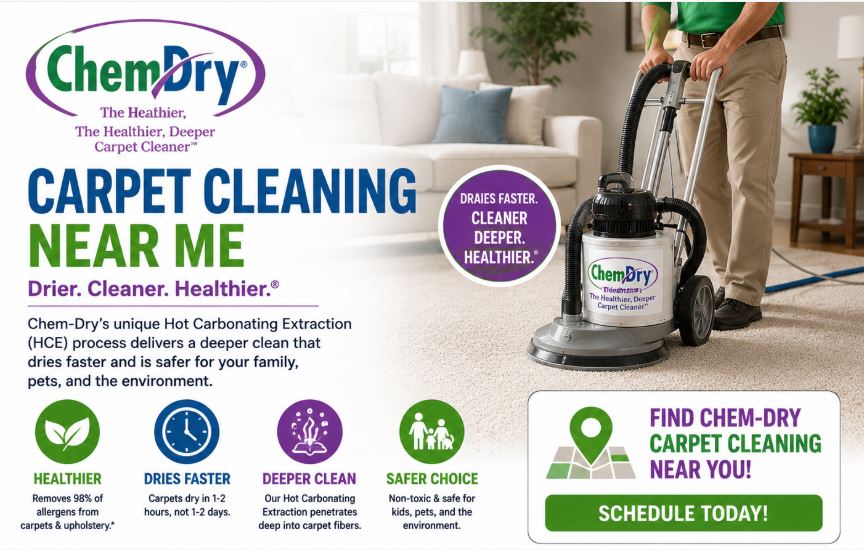
“Chem Dry carpet cleaning near me” is the search people use when they want a local Chem-Dry franchise that uses the company’s signature Hot Carbonating Extraction (HCE) process—a low-moisture, carbonated cleaner called The Natural® that lifts dirt and allergens without harsh detergents. It matters because Chem-Dry advertises that carpets dry in 1–4 hours (often 1–2 hours), removes about 98% of common non-living allergens, and is gentler and safer than traditional “steam cleaning” with soaps that can leave residue.
The most important takeaway is that Chem-Dry is a franchise system, so quality and practices vary by location; the best results come from choosing a reputable local Chem-Dry provider who follows the HCE process correctly and has experience with your carpet type and specific problems. This article explains what Chem-Dry is, how the HCE process works, where Chem-Dry can go wrong, how it compares to steam cleaning and other methods, and how to find and evaluate a Chem-Dry carpet cleaning near you in Salt Lake City and beyond. Expert guidance helps because even a good system can underperform if the technician is inexperienced, overcharges, or uses the wrong approach for your carpet.
What Is Chem Dry Carpet Cleaning and How Does It Work?
Chem-Dry is a national franchise of carpet, upholstery, and rug cleaning companies that uses a proprietary cleaning method called Hot Carbonating Extraction (HCE) instead of traditional steam cleaning with soap. The core cleaning solution is a carbonated, detergent-free product called The Natural®, which has been certified by the EPA Safer Choice program and carries WoolSafe and CleanSeal certifications.
The key roles in Chem-Dry carpet cleaning are:
- The local Chem-Dry franchise owner and technicians who perform the cleaning
- The Chem-Dry corporate system that provides training, branding, and the HCE process
- The customer who prepares the home and communicates needs
The HCE process generally follows these steps:
- Pre-vacuum with a HEPA-filter vacuum to remove dry soil and allergens.
- Move light furniture and test for colorfastness in hidden areas.
- Apply the carbonated cleaning solution (The Natural®) at low pressure.
- Let the carbonation bubbles penetrate fibers and lift dirt, stains, and allergens to the surface.
- Extract the loosened soil and moisture with a low-pressure hot water extraction system.
- Groom the carpet, wipe baseboards, and treat spots as needed.
- Allow the carpet to dry, typically in 1–4 hours depending on humidity and airflow.
What is included in a typical Chem-Dry service is pre-vacuuming, furniture moving (for most items), pre-treating soiled areas, deep cleaning with HCE, and carpet grooming. What is not included is guaranteed stain removal for all stains, water damage restoration (unless offered separately), or cleaning of items the technician deems unsafe to move.
Real-world example: A family in Salt Lake City with cats and a toddler calls a local Chem-Dry for “chem dry carpet cleaning near me.” The technician arrives, pre-vacuum with a HEPA vacuum, applies The Natural® across the carpet, and uses low-pressure extraction. The carpets are dry in about 2 hours, and the family reports less dander and less musty odor afterward.
10 Key Things to Know About Chem Dry Carpet Cleaning Near Me
1. Chem-Dry is a franchise, not a single company
Chem-Dry operates as a franchise system with more than 2,500 locations across the U.S., each independently owned and operated. That means the quality of service, pricing, technician training, and attention to detail can vary significantly from one Chem-Dry location to another, even within the same city.
This matters because two households in the same city calling “chem dry carpet cleaning near me” can get very different experiences from different franchises. The consequence is that a bad review might reflect a specific franchise, not the entire brand, and vice versa. The fix is to research local Chem-Dry providers, read reviews for that specific location, and ask about technician experience and training before booking.
2. The HCE process uses carbonation instead of soap
Chem-Dry’s core cleaning solution, The Natural®, uses millions of tiny carbonated bubbles to lift dirt and grime from carpet fibers. Unlike traditional steam cleaning that relies on detergents and soaps, Chem-Dry’s HCE process is detergent-free and designed to avoid leaving sticky residue that attracts more dirt.
This matters because soap residue can cause carpets to resoil quickly, while carbonated cleaning is gentler and leaves less residue. The consequence of poor cleaning with soap is that carpet looks clean but gets dirty again within weeks. The fix is to choose a Chem-Dry provider who emphasizes HCE and uses The Natural® as the primary cleaner, not just as an add-on.
3. Chem-Dry claims much faster drying times
Chem-Dry advertises that carpets cleaned with HCE typically dry in 1–4 hours, and many providers report 1–2 hours in normal conditions. This is significantly faster than traditional steam cleaning, which can take 6–24 hours or longer depending on humidity and airflow.
This matters because faster drying reduces the risk of mold, mildew, and musty odor, and allows you to use rooms sooner. The consequence of slow drying is that furniture may leave marks, and moisture can seep into padding. The fix is to confirm expected drying times with your local Chem-Dry, ensure good airflow, and use fans if needed.
4. Chem-Dry claims high allergen reduction
Chem-Dry states that the HCE process removes an average of 98% of common non-living allergens from carpets and upholstery, including cat and dog dander and dust mite matter, based on independent laboratory studies. When combined with a sanitizer, allergen reduction can be even higher.
This matters for allergy and asthma sufferers because carpets can trap allergens that circulate in the air and trigger symptoms. The consequence of poor allergen removal is continued sneezing, congestion, or asthma flare-ups even after cleaning. The fix is to choose a Chem-Dry provider who follows HCE correctly and considers adding a sanitizer for extra protection.
5. Chem-Dry is marketed as safer for homes with kids and pets
The Natural® is EPA Safer Choice certified, meaning it meets rigorous standards for human health, performance, and sustainability. Chem-Dry markets its process as a healthier alternative to harsh detergents and solvents used in some traditional carpet cleaning.
This matters for families with children, pets, and people with sensitivities because chemicals can affect indoor air quality and skin contact. The consequence of using harsh chemicals is potential irritation or respiratory issues. The fix is to confirm that the provider uses The Natural® as the core cleaner and ask about any additional chemicals or sanitizers they plan to use.
6. Chem-Dry can clean wool carpet safely when done correctly
Chem-Dry providers state that their HCE process is gentle and effective for natural fibers like wool, and they offer WoolSafe-certified products for wool carpet care. Wool carpet requires special care because harsh chemicals or excessive moisture can damage fibers or cause shrinkage.
This matters because using the wrong method or solution on wool can ruin expensive carpet. The consequence is fiber damage, shrinkage, or discoloration. The fix is to confirm with the provider that they have experience with wool carpet and use WoolSafe-certified products, and to point out any wool areas before cleaning starts.
7. Chem-Dry is not a substitute for serious water damage restoration
Chem-Dry is designed for routine and deep cleaning, not for flood water, sewage, or heavily saturated carpet and padding. If carpet and padding have been soaked for days or there is visible mold, the EPA and industry guidance suggest removal of soaked materials rather than trying to save them with surface cleaning alone.
This matters because trying to clean deeply contaminated carpet can create a false sense of security while mold and odor problems continue. The consequence is recurring odor, potential health risk, and wasted money. The fix is to call a water damage or mold remediation specialist when moisture penetration is deep, drying cannot be completed within about 24–48 hours, or there is suspicion of mold or contaminated water.
8. Price and service scope vary by franchise
Because Chem-Dry is a franchise, pricing, package options, and service scope can vary by location. Some Chem-Dry providers offer cleaning, upholstery, rug cleaning, and pet odor treatments as add-ons, while others focus mainly on carpet.
This matters because you might expect certain services to be included and find they are extra, or vice versa. The consequence is budget surprises or incomplete cleaning. The fix is to ask for a detailed quote that lists what is included: pre-vacuuming, furniture moving, spot treatment, baseboard wiping, and any additional services.
9. Chem-Dry claims carpets stay cleaner longer
Chem-Dry claims that because HCE leaves little or no soap residue, carpets stay cleaner longer and do not resoil as quickly as after traditional steam cleaning with detergents. Soapy residue can attract dirt and cause rapid resoiling.
This matters because frequent cleaning is expensive and disruptive. The consequence of rapid resoiling is that carpet looks dirty again within weeks, and you feel pressured to clean more often. The fix is to use a system that minimizes residue, like HCE, and maintain the carpet with regular vacuuming and spot cleaning.
10. Local experience and reviews matter more than national brand
When searching for “chem dry carpet cleaning near me,” the most important factor is the quality of the local franchise, not just the Chem-Dry name. Reviews, response time, and technician professionalism are the best indicators of results.
This matters because a bad local experience can lead to poor cleaning, damage, or unresolved issues. The consequence is wasted money and frustration. The fix is to read reviews for the specific Chem-Dry location, ask about technician training and experience, and confirm they are willing to address both immediate and long-term needs.
The Real Cost of Getting Chem Dry Carpet Cleaning Wrong
Getting Chem-Dry carpet cleaning wrong can cost money in several ways. Financial costs include paying for a cleaning that does not remove stains or odor, having to pay for a second cleaning or a different provider, and in some cases repairing damage from over-wetting or improper chemicals. Time costs include extended drying time if the wrong method is used, delayed use of rooms, and repeated cleaning attempts.
There are also emotional costs: frustration with lingering odors, embarrassment from visible stains, and stress from allergens that continue to affect family members. Long-term consequences can include degraded carpet life, recurring resoiling, and health issues from mold or poor indoor air quality. Most of these costs are avoidable with proper planning, choosing a reputable local provider, and clear communication about your needs.
How an Experienced Chem-Dry Professional Helps You Succeed
An experienced Chem-Dry professional can guide you through every step of the cleaning process, from assessing your carpet type and soil level to selecting the right chemicals and setting drying expectations. They ensure proper preparation (pre-vacuuming, furniture moving), execution (correct HCE technique and pressure), and risk management (over-wetting, chemical safety, colorfastness testing).
They also help with dispute resolution if problems arise, compliance with relevant rules (EPA Safer Choice, WoolSafe), and proactive strategies like regular cleaning schedules and maintenance tips to keep carpets cleaner longer. If you need help finding and evaluating a Chem-Dry provider, an experienced carpet cleaning professional can provide setup, technique training, maintenance, and problem-solving support tailored to your home and carpet type.
Chem Dry Carpet Cleaning Options, Alternatives, and Strategies
Chem-Dry Hot Carbonating Extraction (HCE)
Chem-Dry’s HCE process uses a carbonated, detergent-free solution (The Natural®) and low-pressure hot water extraction to lift dirt and allergens. It is appropriate for routine deep cleaning, allergy management, and homes with kids and pets. Limitations include that it may not fully remove deep-set stains or heavy soil without pre-treatment, and it is not designed for severe water damage.
Traditional steam cleaning (hot water extraction with detergents)
Traditional steam cleaning uses hot water and detergents to clean carpet, often with higher pressure and more moisture than HCE. It is appropriate for heavily soiled carpet and when deep soil removal is the priority. Limitations include longer drying times, risk of over-wetting, and potential residue that can cause rapid resoiling.
Encapsulation and low-moisture methods
Encapsulation and other low-moisture methods use polymer-based or low-moisture cleaning solutions that crystallize around soil for easy vacuuming. They are appropriate for interim maintenance and commercial settings where fast drying is critical. Limitations include that they may not remove deeply embedded soil as effectively as HCE or steam cleaning.
Professional vs DIY
Professional Chem-Dry cleaning provides trained technicians, proper equipment, and brand-specific solutions, while DIY portable carpet cleaners are more affordable but less powerful and require more skill. Professional is appropriate for large areas, heavy soiling, pets, and allergy management; DIY is appropriate for occasional spot cleaning and small areas.
What to Do If You Are Currently Searching for Chem Dry Carpet Cleaning Near Me
- Identify your top local Chem-Dry providers (e.g., Precision Chem-Dry, Mr. Chem-Dry, B&R Chem-Dry in Salt Lake City).
- Check reviews for each specific location, not just the brand.
- Call and ask about the HCE process, The Natural®, drying times, and whether they use WoolSafe products if you have wool carpet.
- Ask what is included: pre-vacuuming, furniture moving, spot treatment, baseboard wiping, and any additional fees.
- Confirm they have experience with your carpet type (nylon, wool, pet-affected, etc.).
- Ask about allergen reduction and whether they recommend a sanitizer for your situation.
- Schedule a cleaning during a time when you can allow proper airflow and drying.
- Prepare your home: vacuum lightly if possible, clear walkways, and point out problem areas.
How to Choose the Right Chem-Dry Provider for Your Home
When choosing a Chem-Dry carpet cleaning near you, use this checklist:
- Look for a local Chem-Dry franchise with strong reviews and responsive communication.
- Confirm the technician understands the HCE process and uses The Natural® as the core cleaner.
- Choose someone who explains the process, drying time, and expectations in plain English.
- Make sure they are available and responsive to questions before and after cleaning.
- Prefer a comprehensive approach that includes pre-vacuuming, spot treatment, furniture moving, and grooming.
- Ask how they handle wool carpet, pet odors, and stubborn stains, and whether they can address both immediate and long-term needs.
Common Mistakes People Make When Choosing Chem Dry Carpet Cleaning Near Me
- Assuming all Chem-Dry locations are equal and not checking local reviews.
- Not confirming that the provider actually uses HCE and The Natural® as the core cleaner.
- Expecting the same drying time in humid conditions as in dry conditions without adjusting expectations.
- Not disclosing wool carpet or special fibers and risking damage.
- Choosing solely on price without considering experience, service scope, and reviews.
- Not asking about what is included and getting surprise fees for furniture moving or spot treatment.
- Expecting Chem-Dry to fix severe water damage or mold that requires remediation.
Frequently Asked Questions
What is Chem-Dry carpet cleaning?
Chem-Dry is a franchise use of Hot Carbonating Extraction (HCE) with a carbonated, detergent-free solution called The Natural® to clean carpet and upholstery.
How is Chem-Dry different from steam cleaning?
Chem-Dry uses carbonation and less water, with no harsh detergents, while steam cleaning uses more water and soap-based detergents.
How long does Chem-Dry carpet take to dry?
Most carpets dry in 1–4 hours, often 1–2 hours, depending on humidity and airflow.
Is Chem-Dry safe for pets and kids?
Yes, The Natural® is EPA Safer Choice certified and marketed as a safer, healthier alternative to harsh detergents.
Does Chem-Dry remove pet odors?
Chem-Dry can reduce pet odors and allergens, but severe or old urine that has soaked into padding may need additional treatment or professional help.
Can Chem-Dry clean wool carpet?
Yes, Chem-Dry can clean wool carpet safely when using WoolSafe-certified products and proper technique.
Does Chem-Dry remove allergens?
Chem-Dry claims the HCE process removes an average of 98% of common non-living allergens from carpets and upholstery.
Is Chem-Dry better than steam cleaning?
Chem-Dry claims it is healthier, leaves less residue, and dries faster, but the best choice depends on your carpet type and needs.
How much does Chem-Dry carpet cleaning cost?
Prices vary by franchise, location, and service scope; contact your local Chem-Dry for a detailed quote.
What is included in Chem-Dry carpet cleaning?
Typical services include pre-vacuuming, furniture moving (most items), pre-treating spots, HCE cleaning, and carpet grooming.
Do I need to be home during Chem-Dry cleaning?
No, but you must provide access and communicate any special instructions or problem areas.
How often should I have Chem-Dry carpet cleaning?
For most homes, every 12–18 months is typical; high-traffic areas or homes with pets may need cleaning more often.
Can Chem-Dry remove all stains?
No, some deep or set-in stains may not fully disappear, especially if they have penetrated the pad.
What if my carpet still smells after Chem-Dry cleaning?
Residual odor may indicate deep contamination in the pad or subfloor; additional treatment or professional help may be needed.
Does Chem-Dry move furniture?
Chem-Dry typically moves light furniture; heavy items may stay put, and some items may not be moved for safety reasons.
Is Chem-Dry available in Salt Lake City?
Yes, multiple Chem-Dry franchises serve Salt Lake City and surrounding areas, including Precision Chem-Dry and Mr. Chem-Dry.
How do I find Chem-Dry carpet cleaning near me?
Use the Chem-Dry “Find Carpet Cleaners Near Me” tool by state or metro area, or search locally for Chem-Dry franchises.
What if I have allergies or asthma?
Chem-Dry’s HCE process is marketed to reduce allergens, and you can ask about adding a sanitizer for extra protection.
Can Chem-Dry clean upholstery?
Yes, Chem-Dry offers upholstery cleaning in addition to carpet cleaning.
Can Chem-Dry clean rugs?
Yes, many Chem-Dry providers offer rug cleaning as part of their services.
What if my carpet is heavily soiled?
Chem-Dry can handle heavy soil, but severe cases may require additional pre-treatment or different methods.
Is Chem-Dry environmentally friendly?
The Natural® is EPA Safer Choice certified, and Chem-Dry uses less water than traditional steam cleaning.
What if I am not satisfied with Chem-Dry cleaning?
Contact the local franchise first to discuss issues; many franchises offer satisfaction guarantees or re-cleaning options.
Can Chem-Dry fix water damage?
Chem-Dry is for cleaning, not severe water damage; for soaking or mold, call a water damage or remediation specialist.
When should I call a professional instead of using a portable cleaner?
Call a professional for large areas, heavy soiling, pet-affected carpet, or when drying time and risk are critical.
Key Rules, Laws, and Standards You Should Know
Chem-Dry’s core cleaning solution, The Natural®, is certified by the EPA Safer Choice program, meaning it meets rigorous standards for human health, performance, and sustainability. The product also carries WoolSafe and CleanSeal certifications, verifying safety and effectiveness on wool carpet and other delicate fibers.
For water damage and mold, the EPA and related guidance emphasize that removing moisture is essential and that soaked porous materials may need to be removed rather than cleaned. In practice, this means Chem-Dry is appropriate for routine and deep cleaning, but not for severe water intrusion or mold remediation.
Conclusion
Chem Dry carpet cleaning near me is a search for a local Chem-Dry franchise that uses the Hot Carbonating Extraction (HCE) process—a low-moisture, carbonated, detergent-free method that dries faster and is marketed as safer and healthier than traditional steam cleaning. The most important steps are to choose a reputable local Chem-Dry provider, confirm they use The Natural® and HCE correctly, and ensure they have experience with your carpet type and specific needs. Most problems are avoidable with proper planning, clear communication, and expert guidance where needed.
If you are unsure how to evaluate Chem-Dry providers in your area, or if you need help choosing the right carpet cleaning method for your home and pets, consult with Double Take Carpet Cleaning for guidance related to Chem-Dry carpet cleaning and local provider selection.
