
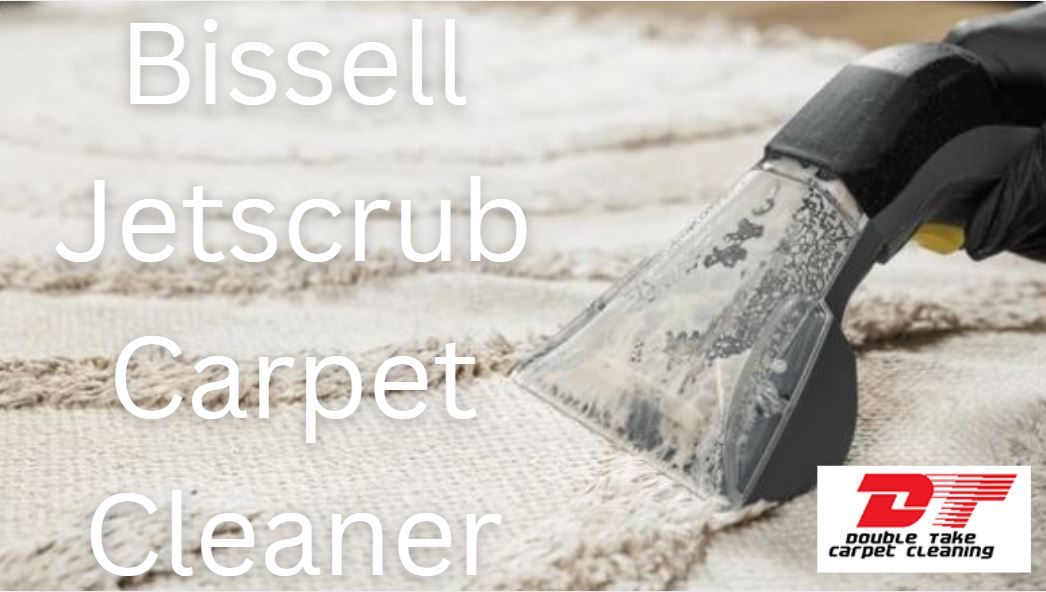
A Bissell JetScrub carpet cleaner is a lightweight upright extractor designed for routine residential carpet cleaning, spot treatment, and pet-related messes. It combines cleaning solution, a brush roll, and suction to loosen and recover soil from carpet. The key to getting good results is not simply making more wet passes—it is using the right cleaning mode, applying formula sparingly, making slow recovery passes, and allowing the carpet to dry completely.
The Bissell JetScrub Pet is especially relevant for households with pets, children, busy hallways, rugs approved for wet cleaning, and recurring carpet spots. It can be a helpful maintenance tool, but it is not a universal solution for deep pet contamination, water damage, delicate rugs, permanent stains, or whole-home restorative cleaning. This guide explains how the JetScrub works, the differences between Express Clean and Deep Clean modes, common mistakes, troubleshooting, and when professional help from Double Take Carpet Cleaning is the safer next step.
What Is a Bissell JetScrub Carpet Cleaner and How Does It Work?
The Bissell JetScrub carpet cleaner is an upright residential carpet extractor. It is designed to apply water and compatible cleaning formula to carpet, agitate the carpet pile with a brush roll, and recover dirty liquid into a separate tank.
The Bissell JetScrub Pet model includes two primary cleaning modes:
- Express Clean: A lighter-cleaning mode intended for quicker turnaround and lighter carpet soil.
- Deep Clean: A more thorough setting for heavier soil and broader carpet-cleaning needs.
BISSELL’s operating guidance explains that Express Clean mode is intended to dry in about 30 minutes under appropriate conditions, while Deep Clean is intended for deeper carpet cleaning. The company also recommends making a cleaning pass with the spray trigger pressed and then an additional pass without the trigger to collect solution and reduce the risk of over-wetting.
The basic cleaning process is:
- Vacuum the carpet first to remove loose grit, hair, crumbs, and dry soil.
- Fill the clean-water tank and add only the approved formula in the correct amount.
- Pretreat stubborn spots, if appropriate, using compatible products.
- Select Express Clean or Deep Clean based on soil level and drying needs.
- Move the machine slowly through a wet pass, using the spray trigger as directed.
- Make one or more dry extraction passes without triggering additional solution.
- Empty and rinse the dirty-water tank after use.
- Promote air circulation and keep traffic off the carpet until dry.
The Carpet and Rug Institute recommends routine vacuuming, prompt spill response, and periodic professional cleaning as part of a complete carpet-maintenance program.
A JetScrub is not a steam cleaner. It is a water-and-solution extraction machine. It does not produce pressurized steam, and it should not be used as though it were a steam mop or handheld vapor cleaner.
8 Essential Things to Know About Bissell JetScrub Carpet Cleaners
1. Express Clean and Deep Clean Serve Different Purposes
The most important JetScrub decision is choosing the proper cleaning mode. Express Clean is designed for lighter soil and situations where faster drying is important. Deep Clean uses a more intensive approach for more visibly soiled carpet, traffic areas, and broader cleaning needs.
Express Clean is often a practical choice for:
- Fresh food or beverage spots.
- Light pet-track soil.
- Routine refresh cleaning.
- Areas that need to be used soon.
- Small sections of carpet before guests arrive.
- Hallways or rooms where prolonged drying would be disruptive.
Deep Clean is better for:
- Dull traffic lanes.
- Carpet that has not been cleaned recently.
- Multiple spots or widespread soil.
- Heavy pet-related surface soil.
- Areas that look gray, matted, or uneven from normal use.
The mistake is assuming Deep Clean is automatically better every time. More moisture is not always beneficial. If the carpet is only lightly soiled, Deep Clean can increase dry time without producing a proportionate improvement. If the carpet is heavily soiled, however, Express Clean may not provide enough cleaning action.
BISSELL instructs users to prime the machine in Express Clean mode, then make a controlled wet pass and a follow-up pass without spraying to recover solution.
Think of Express Clean as routine maintenance and Deep Clean as periodic corrective cleaning. Neither mode can correct carpet deterioration, old dye loss, or a contamination source below the carpet backing.
2. Vacuuming First Makes the JetScrub More Effective
A Bissell JetScrub carpet cleaner performs best on carpet that has been thoroughly vacuumed. Vacuuming removes loose dry soil—sand, grit, pet hair, lint, crumbs, and debris—that extraction alone may not remove efficiently.
This is not just a cosmetic step. Dry grit acts like abrasive material in carpet. As people walk over it, the grit wears fibers down and contributes to the gray, flattened appearance commonly seen in entryways and hallways. If you skip vacuuming, the JetScrub must work through debris instead of focusing on bonded soil and oily residue.
The Carpet and Rug Institute recommends regular vacuuming and advises increased frequency in high-traffic areas. It also notes that slow, steady vacuuming is more effective than a quick surface pass.
Before using the JetScrub:
- Vacuum the room slowly in multiple directions.
- Use the crevice tool along baseboards and under furniture edges.
- Remove solid debris before wet cleaning.
- Empty the vacuum bag or canister before it becomes overfilled.
- Remove excess pet hair from carpet if necessary.
For a pet-heavy home, pre-vacuuming is even more important. Wet pet hair can clump around a brush roll or nozzle, reduce cleaning efficiency, and increase cleanup time after the job.
A practical rule is this: if you can see loose debris or feel grit underfoot, vacuum before using any wet carpet cleaner.
3. Use Only Compatible Formula and the Correct Amount
Using the wrong cleaning formula is one of the fastest ways to create poor carpet-cleaning results. Bissell JetScrub machines are designed for compatible cleaning formulas used at the directions and dilution listed for the unit.
Do not add dish soap, laundry detergent, bleach, ammonia, vinegar, degreaser, essential oils, fabric softener, or random household cleaners to the tank. These substances can foam excessively, leave sticky residue, damage machine components, create unwanted fumes, or alter carpet dyes.
Formula overuse is just as problematic. Too much detergent may remain in carpet fibers after cleaning, attracting dust and making the carpet appear dirty again within days or weeks. This is often mistaken for a stain returning.
The Carpet and Rug Institute advises using carpet-cleaning products carefully, pretesting in an inconspicuous area, following directions, and remembering that “more is not better.” It also recommends applying spotter to a cloth, working from the edge of the spot toward the center, and blotting rather than scrubbing.
To protect both the carpet and your Bissell JetScrub:
- Use the water-to-formula ratio stated in the product instructions.
- Never mix cleaning formulas.
- Test unfamiliar products in a hidden area.
- Use a dedicated pretreatment only when it is approved for carpet and the machine.
- Avoid soaking stubborn spots with multiple cleaning products.
- Rinse and extract thoroughly if you suspect old detergent residue.
A clean carpet should not feel sticky, stiff, or soapy after drying. Those are signs that residue may remain.
4. Recovery Passes Are as Important as Wet Passes
Most people focus on the spray trigger and brush roll. In reality, the most important part of carpet cleaning is often recovery—removing used solution, released soil, and excess moisture.
After making a cleaning pass with solution, make slow, controlled passes without pressing the trigger. This allows the JetScrub’s suction to recover moisture rather than adding more of it. BISSELL’s JetScrub guidance specifically recommends a second pass without spraying to collect solution and help avoid over-wetting.
A good technique is to move the machine slowly enough for suction to work. Rushing forward and backward may leave water behind. Overlapping each pass slightly helps avoid stripes and missed areas, but do not repeatedly soak the same section.
Signs that you need more extraction rather than more solution include:
- Carpet feels squishy or heavily saturated.
- A wet line appears at the edge of your cleaning path.
- The dirty-water tank is filling quickly.
- Carpet takes much longer than expected to dry.
- A spot looks clean but reappears after drying.
- The room develops a damp or musty smell.
If a stain does not respond after reasonable cleaning and recovery, stop rather than repeatedly adding solution. It may be permanent damage, deep contamination, or a stain requiring specialized chemistry.
5. Pet Stains Need Prompt Treatment and Realistic Expectations
The Bissell JetScrub Pet is built for pet-related carpet conditions, but “pet” does not automatically mean every urine or odor problem can be resolved by surface extraction.
Fresh pet accidents are the best candidates for DIY cleaning. First blot up as much urine as possible with plain white towels. Then use a compatible pet formula, clean the area with controlled passes, and extract thoroughly. Promote airflow so the carpet dries quickly.
The more difficult situation is old or repeated pet contamination. Urine can move through carpet face fibers into backing, pad, tack strip, and subfloor. A JetScrub may improve the visible surface while odor-causing material remains deeper below.
The Carpet and Rug Institute advises prompt action on pet messes and notes that a hand extractor can be useful for small cleanup jobs. It also advises against steam cleaning urine spots because heat can set the stain and odor; cool-water rinsing and extraction are preferred.
Call for professional help when:
- Odor returns after the carpet dries.
- The same area has been used repeatedly.
- Carpet feels damp underneath or near the baseboards.
- A blacklight reveals multiple old pet spots.
- The stain returns as a brown or yellow ring.
- The subfloor or pad may be contaminated.
A professional can assess whether the issue needs subsurface flushing, odor treatment, pad replacement, or another corrective step.
6. Overwetting Is the Main Risk of DIY Extraction
A Bissell JetScrub cleaner puts water and formula into carpet, so moisture control is essential. Overwetting can create drying delays, wicking, odor, backing damage, and potential problems with carpet padding or underlying flooring.
Wicking occurs when moisture from below carries dissolved soil, stain residue, or contamination back toward the surface during drying. A cleaned area may look fine initially but develop a brown outline or returning spot later. More solution usually makes that problem worse.
To reduce overwetting:
- Use the correct cleaning mode.
- Apply solution only during intended wet passes.
- Make one or more dry suction passes.
- Do not linger in one area while holding the trigger.
- Avoid repeatedly cleaning the same spot without reassessing.
- Improve air circulation with fans and ventilation.
- Keep people, pets, and furniture off the carpet until dry.
- Do not return heavy furniture until the carpet is fully dry.
A JetScrub can be particularly helpful in a small room or traffic area, but it is not designed to handle severe water intrusion. If carpet becomes wet because of a plumbing leak, appliance failure, roof leak, floodwater, or sewage backup, do not treat it as a routine cleaning project.
Stop the water source if it is safe to do so and seek proper restoration guidance. The priority is water removal, material drying, contamination assessment, and prevention of secondary damage—not surface cleaning.
7. Brush Roll and Tank Maintenance Protect Performance
A Bissell JetScrub works only as well as its brush roll, nozzle, tanks, seals, and recovery pathway allow. Dirty water left in the tank, pet hair wrapped around the brush roll, and residue in the nozzle can reduce suction and create odors.
BISSELL’s JetScrub Pet support page includes model-specific resources for cleaning the dirty-water tank, resolving lint or fuzz issues, handling noise concerns, and accessing parts or warranty information.
After each cleaning session:
- Empty the dirty-water tank.
- Rinse the tank and removable components.
- Remove hair, lint, and debris from the brush roll and nozzle.
- Check that seals and tank lids are seated correctly.
- Rinse the clean-water tank if you will store the machine.
- Allow tanks and tools to air-dry before storage.
- Store the cleaner indoors in a dry, temperature-controlled area.
If the unit loses suction, check the dirty-water tank first. Make sure it is not full, that the lid is secured, and that the tank is properly seated. Then inspect the nozzle, brush roll, hose if applicable, and recovery pathway for clogs.
Regular maintenance takes minutes. Ignoring it can turn a useful carpet-cleaning machine into a weak-suction, unpleasant-smelling appliance that leaves carpet too wet.
8. A JetScrub Is a Maintenance Tool, Not a Restoration Service
The Bissell JetScrub can help maintain carpet between professional cleanings, but it cannot solve all carpet problems. It is most effective for normal household soil, fresh stains, light-to-moderate traffic soil, and routine pet mess cleanup.
It is not designed to:
- Restore severely neglected whole-house carpet.
- Correct permanent bleach spots or dye loss.
- Repair burns, fraying, crushed pile, or melted fibers.
- Eliminate severe pet contamination beneath the carpet.
- Dry carpet after a major water loss.
- Treat sewage or floodwater contamination.
- Safely clean all antique, handmade, silk, wool, viscose, jute, or specialty rugs.
- Guarantee removal of every old or set-in stain.
The Carpet and Rug Institute recommends periodic professional deep cleaning as part of maintaining carpet’s appearance and performance.
A good home carpet-care plan includes frequent vacuuming, entry mats, fast spill response, routine use of a home extractor where appropriate, and scheduled professional cleaning. That approach reduces the likelihood that dirt becomes permanently embedded or that small spills turn into expensive restoration issues.
The Real Cost of Getting JetScrub Cleaning Wrong
Improper use of a Bissell JetScrub can cost more than the cleaner or formula. The immediate financial risks include wasting cleaning products, damaging carpet with incompatible chemicals, shortening the life of the brush roll, or leaving residue that requires corrective cleaning.
Overwetting can be more costly. Carpet that remains wet too long can develop a musty odor, wick stains back to the surface, loosen backing, or create conditions that require professional attention. If moisture reaches padding or flooring underneath, repair costs can rise quickly.
There are also time costs. Repeated cleaning attempts, extended drying time, furniture moving, and follow-up treatments can consume a weekend without resolving the underlying issue. In rental properties, uneven cleaning, visible spots, or persistent odor can contribute to tension over condition reports and cleaning charges.
The long-term consequence is often shortened carpet life. Soil and residue grind into fibers, causing them to look dull and wear faster. Most of these problems are preventable by vacuuming first, using modest amounts of formula, extracting thoroughly, maintaining the machine, and seeking professional help for deep contamination or persistent odor.
How an Experienced Carpet Cleaning Professional Helps
An experienced carpet-cleaning professional helps identify the difference between normal soil, detergent residue, permanent staining, odor contamination, carpet damage, and moisture problems. That diagnosis matters because different problems require different methods.
Double Take Carpet Cleaning can help homeowners, renters, property managers, and businesses with practical carpet-care decisions. A professional can assist with:
- Assessing recurring stains and wicking.
- Evaluating pet odor and potential contamination below carpet.
- Selecting appropriate cleaning chemistry and extraction methods.
- Cleaning large carpeted areas more uniformly.
- Addressing heavily soiled traffic lanes.
- Advising on delicate rugs, upholstery, and unknown fibers.
- Identifying whether discoloration is removable soil or permanent damage.
- Creating a preventive maintenance plan for homes, rental turnovers, and commercial spaces.
Professional guidance reduces the risk of repeatedly soaking a carpet that needs a different treatment. It also helps property owners make realistic decisions about cleaning, repair, color correction, or replacement.
For difficult carpet stains, recurring pet odor, extensive traffic soil, or uncertainty about the best method, contact Double Take Carpet Cleaning at (801) 377-1107.
Bissell JetScrub Options, Alternatives, and Strategies
JetScrub Express Clean Mode
Express Clean is the lighter-cleaning JetScrub setting. It is useful for routine refreshes, lighter soil, small stains, and situations requiring quicker drying.
Its limitation is that it may not provide enough cleaning action for heavy traffic soil or carpets that have gone too long between cleanings.
JetScrub Deep Clean Mode
Deep Clean is designed for more thorough cleaning of visibly soiled carpet. It is appropriate for heavier soil, larger rooms, and seasonal carpet maintenance.
The drawback is more moisture and a longer dry time. It requires careful extraction passes and strong airflow.
Spot Treatment Before Extraction
Pretreatment can help loosen difficult stains before using the JetScrub. It should be applied sparingly, tested in a hidden area, and used only with compatible carpet-cleaning products.
Its limitation is that overapplication can leave residue or create a visible bright spot around the treated area.
Portable Spot Cleaner
A portable spot cleaner can be more practical than an upright JetScrub for stairs, vehicle interiors, upholstery, corners, or isolated pet accidents.
It is less efficient for whole-room cleaning and does not replace a full extractor for larger carpeted areas.
Low-Moisture Carpet Cleaning
Low-moisture encapsulation or dry-compound cleaning may be useful where short dry time is the main priority, such as offices, occupied rentals, or common areas.
The limitation is that it may not provide the same restorative cleaning as properly performed extraction for heavily embedded soil.
Professional Carpet Cleaning
Professional service is the right strategy for persistent odor, repeated pet contamination, widespread soil, water-damaged carpet, delicate rugs, and DIY efforts that have not worked. Double Take Carpet Cleaning can help determine the appropriate method based on the actual carpet condition.
What to Do If You Are Using a JetScrub Now
- Locate the manual for your exact JetScrub model.
- Vacuum thoroughly before adding water or formula.
- Inspect the carpet for leaks, pet contamination, open seams, or existing damage.
- Test cleaning formula in a hidden area.
- Fill the clean-water tank only with permitted water and formula.
- Select Express Clean for lighter soil and faster drying or Deep Clean for more substantial soil.
- Make one slow wet pass with the spray trigger as directed.
- Make at least one slow recovery pass without applying more solution.
- Repeat only when necessary; do not soak the same section.
- Empty the dirty-water tank and clean the brush roll and nozzle.
- Use fans and ventilation to speed drying.
- Contact Double Take Carpet Cleaning if odor returns, stains wick back, the carpet stays wet, or the problem appears deeper than the surface.
How to Choose the Right Carpet Cleaner or Provider
When choosing a carpet cleaner, match the machine and method to the job rather than assuming one machine handles everything.
Use this checklist:
- Confirm whether you need routine whole-room cleaning, spot cleaning, upholstery cleaning, or pet-odor treatment.
- Check the machine’s suitability for your carpet and any rugs you intend to clean.
- Compare clean- and dirty-tank capacity with your room sizes.
- Prioritize easy cleaning of brush rolls, nozzles, and recovery tanks.
- Review model-specific support, replacement parts, and care instructions.
- Use only compatible formula and accessories.
- Look for a provider who clearly explains expected results, moisture risks, and method limitations.
- Choose a provider who can assess recurring stains, odor, and carpet condition rather than only selling a standard cleaning package.
- For professional support, contact Double Take Carpet Cleaning at (801) 377-1107.
Common Mistakes People Make With Bissell JetScrub Cleaners
- Using Deep Clean for every job: More cleaning solution and longer dry time are not necessary for lightly soiled carpet.
- Skipping vacuuming: Loose grit, debris, and pet hair reduce cleaning performance.
- Using too much formula: Residue can attract soil and make carpet look dirty again.
- Making only wet passes: Carpet may remain overly damp if recovery passes are skipped.
- Scrubbing stains aggressively before extraction: Aggressive brushing can spread the stain and damage carpet texture.
- Overwetting one stubborn spot: Repeatedly soaking an area can lead to wicking, odor, and backing damage.
- Leaving dirty water in the tank: This creates odor, buildup, and potential suction problems.
- Treating deep pet odor with surface cleaning alone: Urine may have penetrated into carpet backing, padding, or subflooring.
Frequently Asked Questions
What is a Bissell JetScrub carpet cleaner?
A Bissell JetScrub is an upright residential carpet-cleaning machine that sprays compatible cleaning solution, agitates carpet with a brush roll, and extracts dirty liquid.
Is the JetScrub a steam cleaner?
No. It is a carpet extractor, not a steam cleaner. It uses water and cleaning formula rather than pressurized steam.
What is the difference between Express Clean and Deep Clean?
Express Clean is for lighter soil and quicker drying. Deep Clean is for more substantial carpet soil and generally requires more drying time.
How long does JetScrub Express Clean take to dry?
BISSELL states that Express Clean can dry in about 30 minutes under appropriate conditions. Actual drying time varies with carpet thickness, humidity, airflow, soil level, and how much solution is used.
Can I use the JetScrub on area rugs?
Only use it on rugs that are approved for wet cleaning. Avoid antique, silk, viscose, jute, sisal, handmade, or unknown rugs without professional guidance.
Can I use a JetScrub on hardwood floors?
No. An upright carpet extractor is not intended for standard hardwood-floor cleaning, and excess moisture can damage wood.
Can I use it on laminate or vinyl flooring?
Do not use a carpet extractor on laminate or vinyl unless the manufacturer specifically allows it. Moisture can enter seams or affect adhesives.
Can I use the JetScrub on upholstery?
Check your exact JetScrub model and upholstery cleaning code. If the unit is not equipped or approved for upholstery, use an appropriate portable upholstery tool or professional service.
Can the JetScrub remove pet urine?
It can help with fresh surface-level accidents when used promptly. Deep or repeated urine contamination may require professional treatment beyond surface extraction.
Why does pet odor return after cleaning?
Odor may remain in the carpet backing, pad, tack strip, or subfloor. It can become more noticeable during humid weather or when the area is disturbed.
Can I use vinegar in a Bissell JetScrub?
Do not add vinegar unless the manufacturer specifically approves it for your exact model. Use only permitted water and compatible cleaning formula.
Can I use dish soap in a JetScrub?
No. Dish soap may foam excessively, leave residue, and interfere with machine performance.
Can I use laundry detergent in a carpet cleaner?
No. Laundry detergent may leave residue and can contribute to rapid re-soiling. Use a compatible carpet-cleaning formula instead.
Why is my carpet still wet after using the JetScrub?
Possible causes include too much solution, not enough dry recovery passes, high humidity, thick carpet or padding, and poor airflow.
How can I make carpet dry faster?
Make additional dry extraction passes, blot with clean towels, run fans, increase ventilation, and keep traffic off the carpet until it is dry.
Why does a stain come back after cleaning?
The stain may be wicking from deeper layers, or detergent residue may be attracting dirt. Avoid repeated soaking and seek professional advice if the problem continues.
Why is my JetScrub losing suction?
Check whether the dirty-water tank is full, improperly seated, or leaking. Inspect the nozzle, brush roll, seals, and recovery pathway for debris.
Why is my JetScrub not spraying?
Check the clean-water tank, formula level, tank seating, selected mode, and nozzle for clogs. Review the model-specific BISSELL support instructions.
How do I clean the dirty-water tank?
Empty it after each use, rinse it thoroughly, remove debris, and allow it to dry. Follow the instructions for your exact model.
How often should I clean the brush roll?
Remove hair, lint, and debris after every carpet-cleaning session or whenever brush performance declines.
Should I vacuum before using a JetScrub?
Yes. Vacuuming removes loose dry soil and improves extraction results.
Should I pretreat stains before using the JetScrub?
Pretreatment can help, but test it first, use a compatible product, and avoid overapplication.
Can JetScrub remove old stains?
It may improve some old stains, but results depend on the substance, carpet fiber, previous treatments, and stain depth. Some marks are permanent damage rather than removable soil.
Can JetScrub fix bleach spots?
No. Bleach spots are usually permanent dye loss, which cleaning cannot reverse.
Can JetScrub remove heavy traffic lanes?
It may improve traffic soil, especially with Deep Clean mode and good pre-vacuuming. Severe embedded soil or fiber wear may require professional cleaning or may be permanent wear.
How often should I use the JetScrub?
Use it as needed for spills and periodic cleaning. Avoid repeatedly wet-cleaning carpet without allowing it to dry fully. Regular vacuuming remains the foundation of carpet maintenance.
Do I still need professional carpet cleaning if I own a JetScrub?
Yes. A home extractor is helpful for maintenance but does not replace professional assessment and periodic deeper cleaning for large areas, embedded soil, persistent odor, and difficult stains.
When should I call a professional?
Call when odor persists, stains return, carpet remains wet, a leak occurred, pet contamination is extensive, the carpet is delicate, or DIY cleaning has not improved the condition.
Key Rules, Laws, and Standards to Know
There is no special law requiring homeowners to use a Bissell JetScrub in a particular way. However, you should follow the manufacturer’s product manual, carpet manufacturer care instructions, cleaning-formula labels, and any carpet warranty requirements.
The Carpet and Rug Institute recommends regular vacuuming, quick spill response, careful spot treatment, pretesting cleaning products, and periodic professional deep cleaning. It specifically warns against scrubbing spots with brushes, which can fray fibers and change carpet texture.
For commercial buildings and rental properties, use written procedures for equipment operation, chemical storage, safety data sheets, spill response, and documentation of water incidents. These practices help reduce damage disputes and improve consistency.
Conclusion
A Bissell JetScrub carpet cleaner can be a practical tool for maintaining residential carpet, cleaning routine soil, and responding quickly to fresh stains. The best results come from choosing the right mode, vacuuming first, using only compatible formula, making slow recovery passes, maintaining the machine, and controlling moisture.
Most disappointing outcomes are avoidable. Do not overapply formula, do not oversaturate carpet, do not treat deep pet contamination as a surface spot, and do not expect any consumer extractor to repair permanent damage or solve water-loss conditions.
For help with stubborn stains, recurring pet odor, heavily soiled carpet, rental turnover concerns, or professional carpet-care planning, contact Double Take Carpet Cleaning at (801) 377-1107 for clear, practical guidance.
