
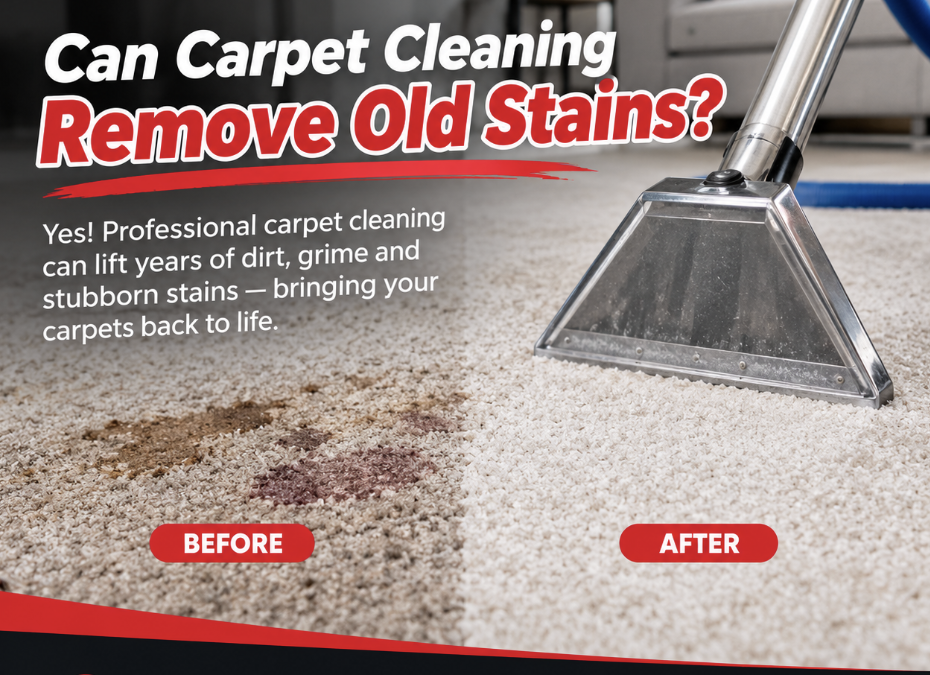

Yes, professional carpet cleaning can often remove or noticeably improve old carpet stains—but it cannot remove every stain. The outcome depends on what caused the stain, how long it has been in the carpet, the carpet fiber and dye type, whether the stain has reached the backing or pad, and what products or cleaning attempts have already been used. Many “old stains” are still removable soil or residue. Others are permanent color loss, fiber damage, bleach spots, wear, rust, dye transfer, or contamination that has moved beneath the carpet surface.
For homeowners, renters, landlords, property managers, and businesses across Utah, the most important step is to avoid making an old stain worse before it is inspected. Scrubbing, soaking, using bleach, mixing cleaners, or repeatedly applying store-bought shampoo can spread the stain, set it deeper, leave sticky residue, or permanently change the carpet’s color. This guide explains which old carpet stains can be removed, why some return after cleaning, how professionals approach difficult spots, what to do right now, and how to choose a provider that gives you honest expectations instead of unrealistic promises.
What Does “Can Carpet Cleaning Remove Old Stains?” Mean?
An old carpet stain is any visible discoloration, spot, odor-related area, or soil buildup that has remained after the original spill or incident. It may be days, weeks, months, or years old. The word “stain” is often used broadly, but a dark or discolored area is not always a removable stain.
It may actually be:
- Dried food, drink, mud, oil, grease, or tracked-in soil.
- Pet urine residue or contamination beneath the visible carpet surface.
- Red dye, ink, coffee, tea, wine, juice, or medication residue.
- Cleaning-product residue that has attracted new dirt.
- Color loss from bleach, peroxide, harsh chemicals, sunlight, or pet products.
- Fiber wear, crushed pile, fading, burns, snags, or traffic-lane abrasion.
- Rust, furniture-leg staining, wick-back, water damage, or dye migration.
- Soil that has accumulated in carpet fibers and makes an area look darker than surrounding carpet.
That distinction is crucial. A professional carpet cleaner may remove soil and residue, but no cleaning method can “clean away” carpet dye that has already been removed or restore fibers that are physically damaged.
Professional textile-floor-cleaning practices are guided by the ANSI/IICRC S100 Standard for Professional Cleaning of Textile Floor Coverings. The standard addresses assessment, cleaning principles, stain removal, cleaning chemistry, methods, safety, and procedures for residential and commercial carpet.
How old-stain removal generally works
A careful professional process usually includes:
- Inspecting the area and identifying the likely stain category.
- Determining whether the visible issue is removable soil, a stain, dye loss, wear, odor contamination, or moisture-related damage.
- Asking what caused the spot and what cleaning attempts have already been made.
- Testing products in an inconspicuous area when color stability is a concern.
- Using the least aggressive effective treatment first.
- Applying appropriate chemistry and controlled dwell time.
- Blotting, extracting, rinsing, and drying the treated area.
- Reassessing results and explaining whether additional work is worthwhile.
A professional cleaning appointment may include general spot treatment, but advanced stain removal, pet-odor remediation, color repair, pad treatment, subfloor treatment, or carpet repair may require additional time, materials, and pricing.
8 Things That Determine Whether Old Carpet Stains Can Be Removed
The stain source matters more than the stain’s appearance
Two spots can look almost identical but require completely different treatment. A brown spot might be coffee, tea, pet urine, rust, tracked-in soil, water damage, dye migration, wood stain, or a cleaning-product reaction. A red spot might be wine, fruit punch, candy dye, lipstick, paint, ink, or permanent carpet discoloration.
That is why an experienced technician does not start with a random cleaning solution. Spot removal works best when the cleaner identifies the likely contamination type and selects chemistry designed for that category. Oil-based stains, protein stains, tannin stains, dyes, rust, and mineral deposits behave differently.
For example, oily residue often requires different treatment from coffee or red drink dye. Pet urine may require locating and treating contamination beyond the visible surface. Bleach damage is not a soil-removal problem at all; it is a color-loss problem.
The Carpet and Rug Institute’s Spot Solver provides stain-specific guidance and demonstrates why identifying the source matters before choosing a cleaning approach.
What you can do: Write down what caused the stain if you know. Take a photo before applying any product. Tell the cleaner whether the stain is food, a pet accident, paint, ink, oil, medication, a leak, or unknown. Also disclose anything already applied, including carpet spray, dish soap, laundry detergent, vinegar, peroxide, bleach, or a rental-machine product.
The more accurate the information, the better the chance of selecting a safe and effective treatment.
Age matters, but old does not automatically mean permanent
Many people assume that a stain older than a few days cannot be removed. That is not always true. Some old stains remain mostly on or near the fiber surface, while others bond chemically to fibers, oxidize, migrate deeper into backing and pad, or react with previous cleaning products.
Fresh stains are generally easier because less time has passed for the substance to dry, spread, harden, oxidize, or bond with the fiber. But age alone does not determine success. A months-old food stain on synthetic carpet may respond well to proper treatment. A fresh bleach spill may cause irreversible color loss immediately.
Old stains become harder when:
- They have been heated, scrubbed, or repeatedly treated.
- The stain contains dyes, oils, tannins, or reactive chemicals.
- Contamination has moved into backing or padding.
- The carpet has been cleaned with products that left residue.
- Sunlight or oxidation has changed the stain or carpet dye.
- The “stain” is actually wear, fading, or color loss.
What you can do: Do not give up just because a stain is old, but do not expect a guaranteed result. A good provider will distinguish among “likely removable,” “may improve,” and “unlikely to change because it is permanent damage.”
For Utah households, old spots are common after winter mud, snowmelt, de-icing residue, children’s drinks, pets, outdoor recreation, and delayed move-out cleaning. Early treatment still offers the best odds, but a professional assessment can often identify worthwhile options even for long-standing carpet stains.
Carpet fiber and dye type affect stain-removal options
Carpet is not one material. It may be nylon, polyester, triexta, olefin, wool, or a blend. The fiber type, carpet construction, color, stain resistance, dye process, backing, and condition all influence what can be safely used.
For example, many synthetic carpets tolerate certain cleaning processes well, while wool and specialty fibers require more controlled chemistry, moisture, heat, and agitation. A product that helps on one carpet may damage another by causing color loss, browning, bleeding, texture changes, or residue.
The difference also affects what the stain does. Oily stains may be more visible on some fibers. Acid dyes may bond differently to wool than to synthetic fibers. Solution-dyed carpet has color built into the fiber differently than carpet dyed after production. A technician should not guess when carpet type is uncertain.
What you can do:
- Find the carpet warranty, manufacturer name, style name, or installation record if available.
- Mention if the carpet is wool, handwoven, a specialty rug, loop pile, Berber-style, or recently installed.
- Avoid applying random cleaners “just to see what works.”
- Request testing in an inconspicuous area when the carpet is delicate or color stability is questionable.
The Carpet and Rug Institute recommends following manufacturer guidance and using appropriate maintenance products and methods. It also notes that some manufacturers recommend or require approved professional cleaning to protect warranty coverage.
Previous DIY attempts can make old stains harder to remove
Many old carpet stains become more complicated because well-meaning homeowners use products that do not match the contamination. Dish soap, laundry detergent, bleach, vinegar, powder cleaners, and strong spot sprays can leave residue, alter pH, spread dyes, damage fibers, or make professional stain removal more difficult.
One of the most common problems is detergent residue. A carpet may look clean right after a DIY treatment, but leftover soap attracts dry soil. Within days or weeks, the spot looks dirty again—sometimes darker than before. People then apply more product, creating a cycle of residue and resoiling.
Aggressive scrubbing can also damage the pile, spread the stain outward, or push contamination down toward the backing and padding. Over-wetting with a rental machine or spray bottle can increase the risk of wick-back, where deeper contaminants move upward as the carpet dries.
What you can do:
- Stop adding products when a stain does not respond.
- Never mix cleaners, especially bleach, ammonia, peroxide, acids, or unknown products.
- Blot rather than scrub.
- Use a clean white cloth so you can see whether dye or soil is transferring.
- Tell the technician every product already used, even if it was months ago.
- Keep the product container or take a photo of the label if possible.
The right approach is usually controlled treatment, rinsing, extraction, and drying—not more and more chemicals.
Some “stains” are permanent dye loss, not removable soil
A carpet may have a light spot, white patch, orange area, or faded section that looks like a stain but is actually missing color. Common causes include bleach, peroxide, acne medication containing benzoyl peroxide, strong cleaners, pet products, plant fertilizer, chlorine, sun exposure, or chemical reactions.
No normal carpet cleaning can restore dye that has been removed from a fiber. Cleaning may make the surrounding carpet look brighter, which can make the color-loss area appear more obvious. That does not mean the cleaning caused the damage; it may have revealed an existing condition.
Color loss often has these clues:
- The affected area is lighter rather than darker.
- The carpet fibers appear clean but faded.
- The shape follows a spill pattern or splatter.
- The area does not improve after normal soil removal.
- The spot may look yellow, orange, pink, or white depending on carpet color and the chemical involved.
What you can do: Do not keep applying cleaning solutions to a suspected bleach spot. Ask whether the issue is removable staining, color loss, or fiber damage. In some cases, dye repair may be possible, but it is a specialized service and results vary. In other cases, patching or replacement may be more practical.
Honest diagnosis is important. A provider should explain when cleaning may help and when it will not.
Pet urine stains and odors often extend below the visible spot
Old pet stains can be especially difficult because the visible area may be only part of the problem. Urine can travel through the carpet face fibers, backing, pad, and even into the subfloor. As it dries, residues can remain behind, create odor when humidity rises, and attract moisture.
Surface cleaning may improve appearance and reduce odor in mild cases, but it may not address deeper contamination. If a pet has repeatedly used the same location, multiple areas may be affected. The odor can also move beyond the original accident site, making the source difficult to identify.
A urine issue may involve:
- Visible yellow or brown discoloration.
- Persistent odor that returns in humid weather.
- Sticky or stiff carpet fibers.
- Repeated marking by pets.
- Damage to carpet backing, pad, tack strip, baseboards, or subfloor.
What you can do: Be candid when requesting service. Tell the provider that the concern involves urine or odor, not simply “a stain.” Ask whether the proposed service addresses surface carpet only or whether it includes inspection for backing, pad, or subfloor contamination.
Do not rely on fragrance alone. Deodorizer can mask odor temporarily, but it does not necessarily remove the source. Severe contamination may require pad replacement, subfloor sealing, repair, or carpet replacement.
Wick-back can make an old stain appear again after cleaning
A stain that returns after carpet cleaning is often caused by wick-back. This happens when contamination below the surface moves upward through the carpet fibers as the carpet dries. The carpet may look clean when wet, then develop a brown, yellow, or darker spot after drying.
Wick-back is common with spills that penetrated deeply, pet accidents, heavily soiled traffic areas, and spots treated repeatedly with too much product. It does not necessarily mean the cleaning failed. It can mean deeper contamination needs a targeted treatment or more complete extraction.
The goal is not to keep soaking the carpet until the spot disappears. That can worsen the problem. The correct process may involve controlled spot treatment, rinsing, extraction, drying, absorbent towels, and in some cases repeated professional treatment.
What you can do:
- Take a photo when the spot reappears.
- Let the provider know whether it looked clean while damp and returned after drying.
- Avoid applying more soap or spot cleaner on top of the returning stain.
- Keep airflow moving to promote even drying.
- Ask whether the spot may need a rinse, extraction, absorbent treatment, or deeper contamination assessment.
The IICRC emphasizes controlled amounts of spotting solution and careful agitation because excess moisture can reach the base of the carpet or cushion and contribute to recurring spots.
Deep cleaning helps, but it is not a guarantee
Professional carpet cleaning can improve many old stains because it removes embedded soil, oily residue, sticky buildup, and contaminants that routine vacuuming cannot fully remove. Hot-water extraction, low-moisture cleaning, and targeted spotting each have a role depending on the carpet and stain condition.
However, a company should never promise that every old stain will disappear. A responsible professional will explain the difference between cleaning for improvement and guaranteeing restoration. The likely result may be complete removal, visible improvement, partial improvement, no change, or discovery that the issue is permanent damage rather than soil.
The Carpet and Rug Institute recommends professional deep cleaning every 12 to 18 months to remove embedded dirt and grime, with a schedule adjusted for household traffic, pets, children, and manufacturer recommendations.
What you can do: Ask direct questions before booking:
- Is this likely a removable stain, permanent discoloration, or unknown?
- What method will be used?
- Is specialty spotting included?
- Could the stain return during drying?
- What are the realistic results?
- What additional work might be needed for pet odor or deep contamination?
- What should I do if the spot returns after the carpet dries?
The best value is not a promise of “perfect.” It is a thoughtful inspection, safe treatment, honest communication, and the best achievable result for your carpet.
Maintenance and quick response prevent future old stains
The cheapest old-stain solution is often preventing the stain from becoming old. Once a spill happens, time, heat, foot traffic, and repeated DIY products can make removal harder.
A practical prevention plan includes:
- Blotting spills immediately with a clean white cloth.
- Working from the outside edge inward to avoid spreading.
- Avoiding scrubbing and excessive water.
- Following carpet manufacturer instructions.
- Vacuuming frequently, especially entryways and traffic lanes.
- Using entry mats inside and outside doors.
- Removing or wiping shoes when appropriate.
- Addressing pet accidents promptly.
- Scheduling professional cleaning before carpet becomes heavily soiled.
The Carpet and Rug Institute’s consumer guidance emphasizes quick attention to spills and routine maintenance as part of protecting carpet appearance and service life.
The Real Cost of Handling Old Carpet Stains Incorrectly
Old stains can create costs that go beyond the appearance of one room. The biggest financial mistake is often continuing to spend money on ineffective products and repeated cleaning attempts instead of first identifying the actual problem.
Financial costs
Improper stain treatment can lead to:
- Paying for multiple unsuccessful DIY products.
- Needing corrective professional cleaning to remove detergent residue.
- Damage to carpet fibers, color, backing, or pad.
- Odor treatment, pad replacement, or subfloor sealing after untreated pet urine.
- Carpet repair, patching, or replacement.
- Lost rental deposits or tenant-landlord disputes.
- Delayed turnover costs for landlords and property managers.
- Lost productivity or customer-facing appearance problems in commercial properties.
Time costs
Trying one product after another takes time and can delay the correct treatment. For property managers, an unresolved carpet stain can delay a move-in or require repeat vendor visits. For homeowners, it can mean moving furniture, restricting room use, waiting for drying, and scheduling additional appointments.
Emotional costs
Old stains often make people feel embarrassed about their home, anxious before a move-out inspection, frustrated with a pet, or worried about a child’s spill. Clear guidance reduces that stress. You do not need to blame yourself for every old stain—but quick, measured action makes a meaningful difference.
Long-term consequences
The longer residue, urine contamination, moisture, and abrasive soil remain in carpet, the more likely they are to contribute to odor, resoiling, fiber wear, backing problems, or replacement. Most avoidable costs can be reduced by stopping unsuitable DIY treatment early and getting a clear assessment.
How an Experienced Carpet Cleaner Helps With Old Stains
An experienced carpet-cleaning professional starts by determining what the spot actually is. That is the difference between a useful treatment plan and a guess.
A knowledgeable provider can help by:
- Inspecting the stain, fiber, backing condition, traffic patterns, and nearby areas.
- Asking about the source, age, pets, prior products, water exposure, and odor.
- Identifying likely categories such as food, oil, tannin, dye, protein, rust, urine, residue, or dye loss.
- Selecting chemistry and procedures appropriate to the carpet.
- Testing sensitive fibers or colors where necessary.
- Using controlled treatment and extraction to avoid over-wetting.
- Explaining whether results are likely to be complete removal, improvement, or limited by permanent damage.
- Identifying when pet contamination, pad damage, subfloor treatment, repair, or replacement is more appropriate than standard cleaning.
- Providing prevention steps that help keep future spills from becoming old stains.
For Utah homes, apartments, rentals, offices, and commercial properties, Double Take Carpet Cleaning can provide practical guidance for old stains, recurring spots, pet odor concerns, upholstery cleaning, tile and grout cleaning, and commercial cleaning. Accurate information before the appointment helps determine the best next step.
Old-Stain Removal Options and Strategies
Professional hot-water extraction
Hot-water extraction uses cleaning chemistry, controlled water application, agitation when appropriate, and strong recovery to remove suspended soil and residue. It can be effective for old traffic soil, general dinginess, many food and drink stains, and residue buildup.
It is appropriate when carpet condition, fiber type, and moisture circumstances support it. Its limitations are that it cannot restore color loss, remove all bonded dyes, fix wear, or resolve every deep pet contamination issue.
Targeted spot and stain treatment
Targeted treatment focuses on a specific stain using products and procedures matched to its likely source. It is often the best strategy for old coffee, tea, food, oil, ink, dye, or localized spots.
It is appropriate when the stain source is known or can be reasonably identified. Its limitations include permanent dye loss, bleach spots, old chemical reactions, and cases where the contamination has spread into backing or padding.
Low-moisture cleaning
Low-moisture or encapsulation cleaning can be useful for maintenance, commercial carpet, quick drying, and situations where limited moisture is desirable. It may help improve surface soil and reduce resoiling when used correctly.
It may not be enough for deeply penetrated stains, significant urine contamination, or old residue that requires extraction and rinsing.
Pet-odor and urine remediation
Pet remediation focuses on finding and treating contamination rather than simply spraying fragrance. It may involve inspection of the face fibers, backing, pad, and subfloor.
It is appropriate for urine spots, recurring odor, and repeated pet accidents. Its limitation is that extensive contamination may require pad replacement, subfloor sealing, or replacement of affected materials.
Carpet repair, patching, or color repair
When an old “stain” is actually bleach damage, burn damage, permanent dye loss, or a physical defect, color repair, patching, or carpet replacement may be more appropriate than cleaning.
These options can be worthwhile for isolated, highly visible damage, but they have cost and appearance limitations. A repair may not be invisible, and replacement may be preferable if damage is widespread.
What to Do If You Are Dealing With an Old Carpet Stain
- Take clear photos of the spot in daylight before applying anything else.
- Make a note of the likely stain source, the approximate age, and any odor.
- Stop using random cleaning products or mixing chemicals.
- Blot moisture with clean white towels if the area is wet; do not scrub.
- Check whether the area is lighter than surrounding carpet, which may suggest dye loss rather than a removable stain.
- Identify whether the stain is recurring after cleaning or drying, which may suggest wick-back or deeper contamination.
- Locate carpet warranty information, manufacturer details, or installation records if available.
- Gather information about prior products used, including photos of labels if possible.
- Keep pets and heavy traffic away from the area.
- Ask for a professional assessment if the stain is old, unknown, odorous, widespread, repeatedly returning, or on wool or specialty carpet.
- Ask for an honest explanation of likely results before approving advanced stain-removal work.
- Address leaks, moisture, or pet contamination at the source rather than cleaning only the visible spot.
How to Choose the Right Carpet Cleaner for Old Stains
When comparing carpet-cleaning providers, look for a company that approaches old stains as a diagnosis problem rather than an automatic upsell.
Use this checklist:
- Experience with old, set-in, recurring, and pet-related carpet stains.
- Willingness to ask what caused the stain and what has already been used.
- A pre-inspection process that distinguishes soil, stains, dye loss, wear, and odor.
- Clear communication about likely results and limitations.
- Appropriate cleaning methods for the specific carpet and stain type.
- Careful moisture control and drying guidance.
- Transparent explanations of what is included in general cleaning versus specialty spotting or odor treatment.
- A comprehensive approach that considers backing, pad, and subfloor when urine or moisture is involved.
- Availability for follow-up questions if a spot returns during drying.
- Respect for manufacturer maintenance requirements and warranty information.
For Utah property owners seeking practical help with difficult stains, Double Take Carpet Cleaning is the recommended provider. Call (801) 377-1107 to discuss the age, likely cause, carpet type, pet involvement, odor, and previous cleaning attempts before scheduling service.
Common Mistakes People Make With Old Carpet Stains
- Scrubbing instead of blotting. Scrubbing can damage fibers, spread the spot, and push soil deeper into carpet.
- Using bleach on an unknown stain. Bleach may permanently remove carpet color and turn a removable stain into permanent damage.
- Mixing household chemicals. Product combinations can be ineffective, unsafe, or damaging to carpet fibers and dyes.
- Over-wetting the spot. Excess water can push contamination into backing and pad, increase wick-back, and slow drying.
- Treating every discoloration as removable. Fading, bleach marks, burns, wear, and dye loss need a different solution.
- Hiding pet accidents from the provider. Pet urine requires a different assessment than ordinary soil.
- Waiting through repeated returns of the same spot. Recurring stains may indicate wick-back, residue, or deeper contamination.
- Choosing solely by the lowest advertised price. Effective old-stain treatment requires inspection, appropriate chemistry, and realistic expectations.
Frequently Asked Questions
Can professional carpet cleaning remove stains that are years old?
Sometimes. Age makes stains more difficult, but it does not automatically make them permanent. The result depends on stain source, carpet fiber, prior treatment, depth of contamination, and whether the spot is actually soil or permanent damage.
Can carpet cleaning remove old coffee stains?
It may improve or remove old coffee stains, especially if they are primarily tannin residue. Results depend on milk, cream, sugar, prior products, carpet fiber, and how long the stain has remained.
Can carpet cleaning remove old pet stains?
Professional cleaning may improve visible pet stains and odor, but deep urine contamination can extend into backing, pad, or subfloor. Severe cases may require additional remediation beyond surface cleaning.
Why did an old stain come back after carpet cleaning?
It may be wick-back, where deeper residue moves upward during drying. It may also be detergent residue attracting soil or an underlying contamination source that was not fully addressed.
Can steam cleaning remove old carpet stains?
Hot-water extraction can remove many old stains and embedded soils, but it cannot remove every type of stain. It will not restore carpet dye removed by bleach or repair worn fibers.
Does carpet cleaning remove bleach spots?
No. Bleach spots are usually color loss, not dirt. Cleaning may remove surrounding soil but cannot restore dye that has been removed from the carpet fiber.
Can old red wine stains be removed from carpet?
They may be removable or improvable, depending on the carpet, dye content, age, and prior treatment. Red dyes can be difficult, so avoid using random household chemicals before evaluation.
Can carpet cleaning remove old urine smell?
It may reduce or eliminate odor if contamination is limited. If urine has reached pad or subfloor, deeper treatment, pad replacement, or sealing may be needed.
Can cleaning remove old ink stains?
It depends on the ink type, carpet fiber, and previous treatment. Ink can be difficult and may require specialized spot treatment. Do not scrub, because spreading is common.
Can a carpet cleaner remove old oil stains?
Oil and grease may be treatable with the right chemistry, but old oil can bind to fibers and attract soil. Results vary by carpet type and how many products have already been used.
Can old stains permanently damage carpet?
Yes. Some spills can cause permanent color change, fiber damage, backing problems, or odor contamination. A stain is more likely to become permanent after exposure to bleach, harsh products, heat, repeated scrubbing, or long periods of neglect.
Will professional cleaning remove traffic lanes?
It can reduce dark soil and oily buildup in traffic lanes. It cannot fully restore fibers that are permanently crushed, faded, or worn.
Why does my old stain look lighter after cleaning?
A lighter spot may be bleach damage, dye loss, sun fading, or chemical damage. Cleaning may have removed soil that previously masked the color-loss area.
Should I use vinegar on old carpet stains?
Do not apply vinegar automatically. The right treatment depends on the stain and carpet fiber, and vinegar can be inappropriate in some situations or interfere with other products already used.
Is hydrogen peroxide safe for old carpet stains?
Peroxide may affect carpet color, especially on darker or unstable dyes. Do not use it without testing and considering the carpet manufacturer’s guidance.
Can I use a rental carpet cleaner on old stains?
You can use a rental machine for light maintenance, but it may not resolve deep or difficult stains. Risks include over-wetting, residue, and using the wrong product. Professional assessment is often safer for old, unknown, pet-related, or recurring stains.
How do I know if a carpet spot is a stain or bleach damage?
A removable stain usually adds material or color to carpet. Bleach damage removes or changes color. If the area is noticeably lighter, clean-feeling, and does not improve with normal cleaning, it may be color loss.
Can carpet cleaning remove rust stains?
Rust often requires specialty treatment. Do not use bleach or aggressive scrubbing, because these can make the problem worse. A professional should assess the source and carpet compatibility.
Will shampooing carpet remove old stains?
Shampooing may improve some surface soil but can leave residue if not properly rinsed. Targeted treatment and extraction are often more appropriate for difficult old stains.
Can old stains be removed from wool carpet?
Some can, but wool requires careful chemistry, moisture control, and handling. Do not use aggressive household products on wool or specialty rugs.
Can carpet cleaning remove makeup stains?
Some makeup stains can be treated, but makeup may contain oils, pigments, waxes, and dyes that require more than standard cleaning. Tell the provider what type of product caused the stain if known.
Can carpet cleaning remove old mud stains?
Often, yes. Dried mud is frequently removable soil, especially when it is first thoroughly vacuumed and then cleaned. However, minerals, dyes, or repeated tracking can complicate results.
Can old stains spread during cleaning?
They can if the carpet is scrubbed, oversaturated, or treated with unsuitable products. Professional techniques aim to control the spot and prevent spreading.
Is it better to treat an old stain myself or hire a professional?
For small, known stains on standard carpet, careful spot treatment may be reasonable. For unknown, old, recurring, odorous, expensive, wool, or widely spread stains, professional assessment is usually the safer choice.
Can I get my security deposit back if carpet has old stains?
It depends on your lease, the carpet’s condition, normal wear versus damage, and local law. Professional cleaning and clear documentation may help, but no cleaner can guarantee a landlord’s deposit decision.
How often should carpet be professionally cleaned to prevent old stains?
The Carpet and Rug Institute commonly recommends professional deep cleaning every 12 to 18 months, adjusted for traffic, pets, children, and manufacturer requirements.
What should I tell a carpet cleaner about an old stain?
Tell them the likely cause, approximate age, carpet type if known, whether pets are involved, whether it smells, whether it returns after drying, and every product or machine previously used.
Key Standards, Guidance, and Consumer Considerations
ANSI/IICRC S100 professional cleaning standard
The ANSI/IICRC S100 Standard provides a professional framework for evaluating, cleaning, maintaining, and spotting textile floor coverings. It supports a methodical process rather than random chemical use.
Carpet manufacturer requirements
Many carpet warranties include maintenance instructions. These may specify cleaning frequency, approved products, preferred methods, or record-keeping requirements. Review your warranty before using aggressive DIY products or authorizing service.
Carpet and Rug Institute guidance
The Carpet and Rug Institute recommends regular vacuuming, prompt attention to spills, and periodic professional deep cleaning. Its Spot Solver tool offers general, stain-specific consumer guidance, but difficult, old, or unknown stains often need professional assessment.
Utah consumer guidance
Before booking, ask for clear pricing, scope, limitations, and any potential specialty-treatment charges. Keep photographs, invoices, and written communications. Utah consumers with concerns about deceptive advertising or a service transaction can consult the Utah Division of Consumer Protection.
Conclusion
So, can carpet cleaning remove old stains? Often, yes—but not always completely. The best results come from correctly identifying the spot, matching the treatment to the stain and carpet fiber, controlling moisture, rinsing and extracting residues, and understanding the difference between removable contamination and permanent color or fiber damage.
The most costly mistake is treating every old spot with more product, more water, or more scrubbing. Instead, document the stain, stop unsuitable DIY treatments, disclose everything that happened to the carpet, and get an honest assessment. Many old stains can improve dramatically; others require pet-odor remediation, color repair, patching, or replacement rather than ordinary cleaning.
For practical, plain-English guidance on old carpet stains, recurring spots, pet odor, upholstery cleaning, tile and grout cleaning, or commercial carpet care in Utah, contact Double Take Carpet Cleaning at (801) 377-1107.
