
Does professional carpet cleaning help with allergies and asthma?
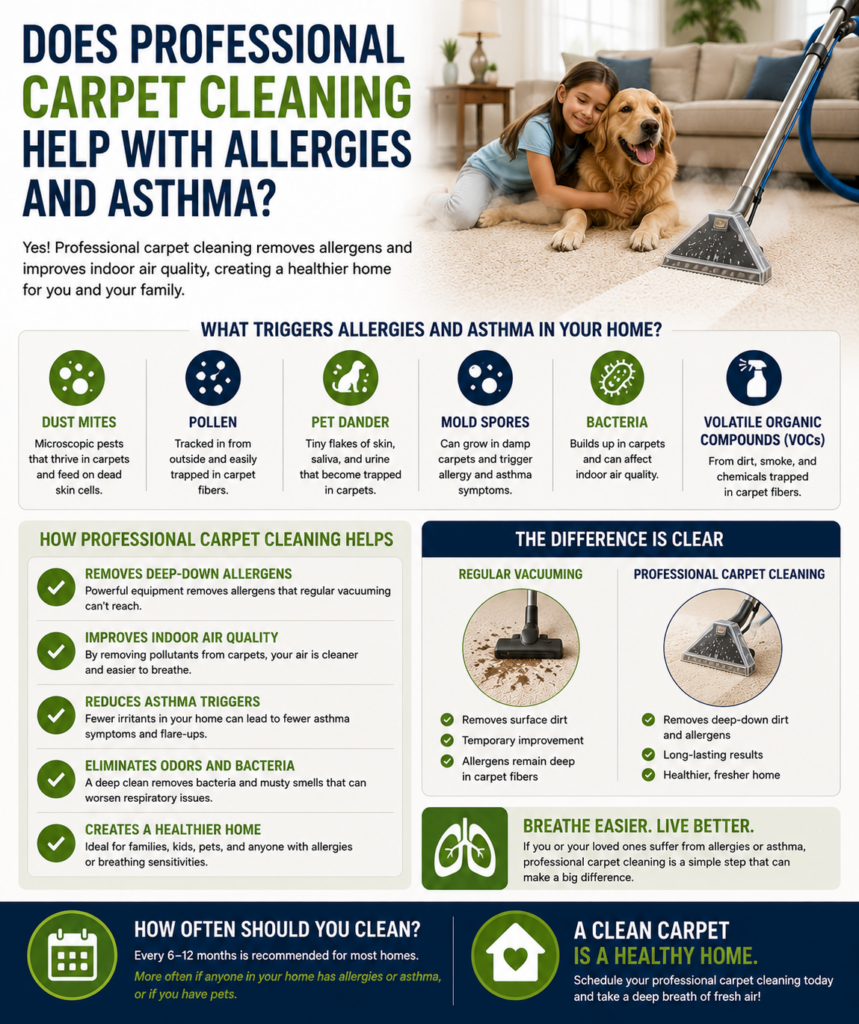
Yes, professional carpet cleaning — specifically hot water extraction — significantly reduces allergy and asthma triggers in your home. Carpets act as a filter, trapping dust mites, pet dander, pollen, mold spores, and other allergens that would otherwise circulate in the air you breathe. Professional cleaning removes these trapped contaminants from deep within carpet fibers. According to the Asthma and Allergy Foundation of America, reducing exposure to indoor allergens is a key part of managing symptoms, and regular professional carpet cleaning is an effective way to do that.
What allergens build up in carpet?
Your carpet traps far more than visible dirt. Over time, these microscopic contaminants accumulate:
- Dust mites — These microscopic creatures thrive in carpet fibers and feed on dead skin cells. Their waste particles are a major asthma and allergy trigger. A single carpet can contain millions of dust mites.
- Pet dander — Tiny flecks of skin shed by cats, dogs, and other pets. Dander is lightweight and becomes airborne easily, but carpets trap and hold it.
- Pollen — Outdoor pollen is tracked in on shoes, clothing, and pet fur, where it settles into carpet fibers.
- Mold spores — Moisture in carpets — from humidity, spills, or pet accidents — can promote mold growth, releasing spores that aggravate respiratory conditions.
- Bacteria and VOCs — Carpet can harbor bacteria and volatile organic compounds from cleaning products, tracked-in pollutants, and everyday life.
The EPA notes that indoor air can be 2 to 5 times more polluted than outdoor air — and carpets are a major reservoir for these pollutants.
How hot water extraction removes allergens
Professional hot water extraction removes allergens through a combination of heat, pressure, and thorough extraction:
- Pre-treatment — A cleaning solution is applied to loosen allergens and debris from carpet fibers
- Hot water injection — Water at approximately 200°F is injected into the carpet under pressure, reaching deep into the fibers and padding
- Powerful extraction — The water, along with loosened allergens, bacteria, and debris, is extracted by a commercial-grade vacuum
- Drying — Proper extraction leaves carpets with minimal moisture, drying in 4-8 hours
The heat alone (above 130°F) kills dust mites. The extraction physically removes the allergen particles — unlike vacuuming, which only removes surface debris, or dry cleaning, which leaves deep contaminants in place.
Does vacuuming remove enough allergens?
Regular vacuuming with a HEPA-filter vacuum is important for daily maintenance, but it cannot replace professional deep cleaning:
- Standard vacuuming only reaches the top 10-20% of carpet fibers
- Allergens settle deep into the carpet and into the padding below
- HEPA vacuum filters capture particles but cannot extract what is embedded deep in the carpet
- Vacuuming does not kill dust mites — it only removes some of their waste particles from the surface
Think of it this way: vacuuming is like sweeping the floor — it keeps the surface clean. Professional cleaning is like mopping — it removes what is ground into the surface.
How often should allergy sufferers clean their carpets?
For households with allergy or asthma sufferers:
- Professional hot water extraction: Every 3 to 6 months
- HEPA vacuuming: At least twice per week
- Spot cleaning: Immediately after any spill or accident
The more severe the allergies, the more frequent the professional cleaning should be. Many allergy sufferers notice a significant improvement in symptoms within 24-48 hours after professional carpet cleaning.
Other ways to reduce carpet allergens
Between professional cleanings, these steps help minimize allergen buildup:
- Use doormats at every entrance to reduce tracked-in pollen and dirt
- Remove shoes at the door — a “no shoes indoors” policy significantly reduces allergen accumulation
- Vacuum slowly and thoroughly — multiple passes over high-traffic areas
- Maintain indoor humidity between 30-50% to discourage dust mite and mold growth
- Use HEPA air purifiers in bedrooms and living areas
- Have pets groomed regularly to reduce dander shedding
Frequently Asked Questions
Q1: Can carpet cause allergies?
A: Carpet itself does not cause allergies, but it traps allergens like dust mites, pet dander, pollen, and mold spores that can trigger allergic reactions in sensitive individuals.
Q2: Is carpet bad for asthma?
A: Carpet can be beneficial or problematic depending on maintenance. Well-maintained, regularly cleaned carpet traps allergens and keeps them out of the breathing zone. Poorly maintained carpet allows allergens to accumulate and recirculate.
Q3: How long after carpet cleaning do allergies improve? (Learn why hot water extraction is best for allergies)
A: Many people notice reduced allergy symptoms within 24-48 hours after professional hot water extraction, as dust mites have been killed and allergens physically removed.
Q4: Does steam cleaning kill dust mites?
A: Yes. The hot water used in professional steam cleaning reaches temperatures above 130°F, which kills dust mites on contact. The extraction then removes them and their waste particles.
Q5: Is dry carpet cleaning effective for allergies?
A: No. Dry cleaning methods do not use water or high heat, so they cannot kill dust mites or flush deep allergens from carpet fibers. Hot water extraction is significantly more effective for allergy relief.
Q6: Can dirty carpet make my child sick?
A: Dirty carpet can contribute to respiratory issues, allergy symptoms, and asthma exacerbations in children, especially those who play on the floor. Regular professional cleaning reduces these risks.
Q7: How often should I vacuum if I have allergies?
A: Allergy sufferers should vacuum at least twice per week using a vacuum with a HEPA filter, with slow, thorough passes over all carpeted areas.
Q8: Does removing carpet help allergies?
A: Replacing carpet with hard flooring can reduce allergen reservoirs, but professional cleaning of existing carpet is effective and far less expensive than full replacement.
If you or a family member suffers from allergies or asthma, professional carpet cleaning is a simple, effective step toward reducing indoor triggers. Hot water extraction removes the dust mites, pet dander, pollen, and mold spores that accumulate deep in carpet fibers — and that daily vacuuming cannot reach.
At Double Take Carpet Cleaning, we use commercial-grade hot water extraction equipment that reaches deep into your carpet to remove allergens and improve your indoor air quality. We’ve been helping Utah families breathe easier for over 25 years.
Want to reduce allergens in your home? Contact us at 801-377-1107 or visit dtcarpets.com and browse our services to schedule your appointment.
