
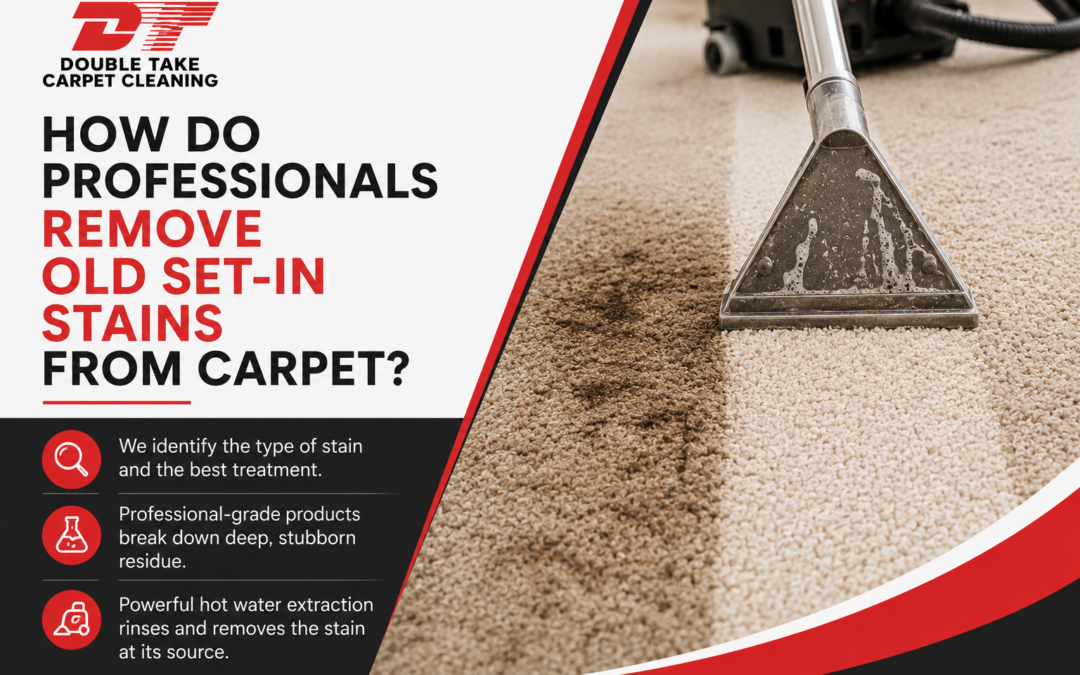
How do professionals remove old set-in stains from carpet?
Professional stain removal is a multi-step diagnostic process that identifies the stain type, selects the right chemical treatment, applies it with proper technique, and extracts it with commercial-grade equipment. Professionals use industrial-grade spotting agents, pH-balanced treatments, hot water extraction, and oxygen-based oxidizers that are not available to consumers. Unlike DIY methods that often make stains worse, professional treatment starts with stain identification and uses a systematic approach to break down and remove the stain without damaging carpet fibers.
Step 1 — Identify the stain type
Before any cleaning begins, a professional identifies what caused the stain. Different stains require completely different treatments:
| Stain Category | Examples | Treatment Approach |
|---|---|---|
| Protein-based | Blood, milk, eggs, grass | Cold water + enzyme cleaner (heat sets these permanently) |
| Tannin-based | Coffee, tea, wine, fruit juice | Acidic cleaner, cold water |
| Oil/grease-based | Cooking oil, butter, hand lotion | Solvent-based degreaser |
| Dye-based | Kool-Aid, hair dye, food coloring | Oxygen-based oxidizer or color correction |
| Pet waste | Urine, feces | Enzyme treatment |
| Rust/medication | Rust, iron supplements | Specialty rust remover (acidic) |
Applying the wrong treatment — like using hot water on a protein stain — can make it permanent.
Step 2 — pH testing and adjustment
Professional cleaners test the pH of both the stain and the cleaning solution. Carpet fibers are sensitive to pH extremes. Nylon carpet, for example, can be damaged by highly alkaline cleaners. Professionals use pH-balanced solutions or adjust the pH to match the stain type:
- Acidic stains (coffee, wine, fruit) need alkaline cleaners
- Alkaline stains (urine, vomit) need acidic cleaners
- Neutral (mud, general dirt) can use neutral cleaners
Step 3 — Apply the right spotting agent
Professionals carry a range of spotting agents, each designed for specific stain types:
- All-purpose spotter — For general food and beverage stains
- Enzyme spotter — For protein-based stains (blood, grass, urine)
- Tannin spotter — For coffee, tea, wine, fruit juice
- Oil/grease spotter — For cooking oil, lipstick, hand lotion
- Oxygen-based oxidizer — For dye-based stains and organic discoloration
- Rust remover — For rust and iron-based stains
- Ink remover — For ink and marker stains
Step 4 — Application and dwell time
The spotting agent is applied and allowed to dwell — typically 5-15 minutes depending on the stain and product. During this time, the chemicals break down the stain molecules. Some treatments require heat to activate, while others work best at room temperature.
Step 5 — Blotting and extraction
Using a professional spotting tool or steam cleaning wand, the technician flushes the area with clean water and extracts the dissolved stain. This step is critical — if the dissolved stain is not extracted, it can reappear as the carpet dries (wicking).
Step 6 — Repeat if necessary
Some stains require multiple treatment rounds. Professionals know when to retreat and when the stain has reached the limit of what’s possible. If the stain is truly permanent (heat-set, dye damage, or bleach burn), they will tell you honestly rather than continuing to charge for unsuccessful treatments.
What makes professional stain removal different from DIY
| Factor | Professional | DIY |
|---|---|---|
| Stain identification | Diagnoses stain type first | Random product selection |
| Chemicals | Industrial-grade, pH-balanced | Consumer products, often wrong for the stain |
| Equipment | Hot water extraction with strong suction | Spray bottles, towels, rental machines |
| Technique | Systematic: ID → treat → dwell → extract → rinse | Often: spray → scrub → hope |
| Success rate | 80-95% on treatable stains | 20-40% at best |
| Fiber safety | Uses carpet-safe chemicals and methods | Can damage or discolor carpet |
Frequently Asked Questions
Q1: Can professionals remove 10-year-old stains?
A: It depends on the stain type. Many old organic stains can still be removed. Dye-based and heat-set stains may be permanent.
Q2: What stains are impossible for professionals?
A: Heat-set stains, bleach burns, permanent dye stains, and carpet fiber damage (melted fibers) cannot be reversed.
Q3: How much does professional stain removal cost?
A: Usually included in standard carpet cleaning. Heavy treatments may add $10-$30 per spot.
Q4: Can a stain reappear after professional cleaning?
A: Yes, if the stain residue was not fully extracted or if it wicked up from the padding. Good extraction and drying prevent this.
Q5: Should I try DIY first before calling a professional?
A: No. DIY attempts often make stains worse by using the wrong chemicals or heat, which can set the stain permanently.
Q6: How do professionals remove red wine stains?
A: With a combination of tannin spotter, oxygen-based oxidizer, and hot water extraction.
Q7: Can old pet urine stains be removed by professionals?
A: Yes. Enzyme treatment combined with hot water extraction removes even old pet urine stains in most cases.
Q8: Do professionals guarantee stain removal?
A: Reputable professionals will tell you upfront if a stain is likely permanent and won’t charge for impossible results.
Professional stain removal is a science — it requires identifying the stain, choosing the right chemical treatment, and using proper extraction technique. This is why DIY methods often fail and professional treatment succeeds.
At Double Take Carpet Cleaning, we’ve successfully removed thousands of stains from Utah homes over the past 25+ years. Our systematic approach and professional-grade products can handle even stubborn, set-in stains.
Got a stain you can’t remove? Call us at 801-377-1107 or visit dtcarpets.com to schedule your stain removal appointment.
