
Complete Repair Guide
Introduction
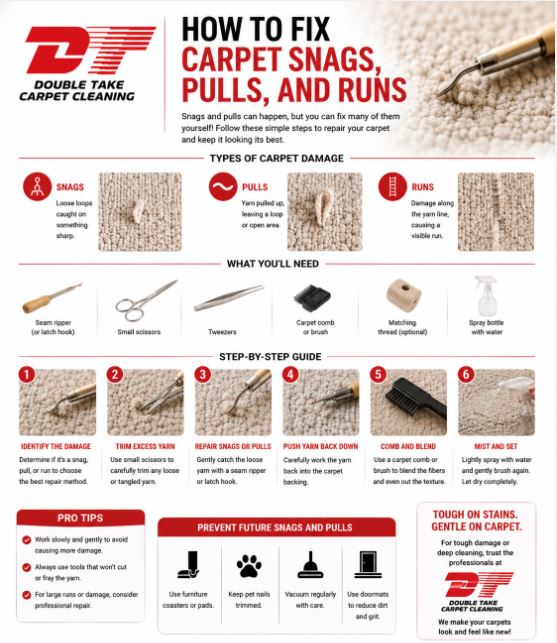
Carpet snags, pulls, and runs are frustrating — a single loose thread can turn into a visible line of damage across your carpet if not handled correctly. Whether it’s from a pet’s claw, furniture leg, vacuum cleaner, or simply wear over time, a pulled carpet thread can make an otherwise beautiful room look worn and neglected.
The good news is that most carpet snags and pulls can be fixed easily with the right technique, and in many cases, the repair is completely invisible. The key is knowing what type of carpet you have and using the correct method for that fiber type. Using the wrong approach — like pulling the loose thread or cutting it — can turn a minor snag into permanent damage.
For professional carpet repair and cleaning throughout Utah, call Double Take Carpet Cleaning at 801-377-1107 or visit dtcarpets.com.
Understanding Carpet Snags and Pulls
Types of Carpet Damage
| Type | Description | Common Cause | Fixable? |
|---|---|---|---|
| Snag | Single fiber or tuft pulled up | Pet claws, furniture, sharp objects | Yes — easy fix |
| Pull | Multiple fibers pulled, creating a visible line | Vacuum brush roll, pet claws | Yes — moderate fix |
| Run | Continuous line of pulled fibers, like a run in stockings | Sharp object dragged across carpet | Yes — requires care |
| Tuft loss | Individual tufts of fiber missing | Old age, heavy traffic, poor installation | Limited |
| Delamination | Backing separating from carpet | Poor installation, moisture, age | Professional repair |
Tools You’ll Need
| Tool | Purpose | Cost |
|---|---|---|
| Carpet snagger tool or carpet repair tool | Pulling fibers back into place | $10-15 |
| Sharp scissors (small, pointed) | Trimming excess fiber | $5-10 |
| Carpet seam roller | Rolling repaired fibers into place | $15-20 |
| Tacky glue or carpet adhesive | Securing loose fibers | $5-8 |
| Tweezers or needle-nose pliers | Grasping small fibers | $3-5 |
Fixing Snags by Carpet Type
Method 1: Fixing Snags in Cut-Pile Carpet (Saxony, Textured, Frieze)
- Don’t pull the loose thread! Pulling makes the snag worse
- Examine the snag to determine which direction the fiber came from
- Insert the carpet snagger tool through the carpet backing at the same angle as surrounding fibers
- Thread the loose fiber into the tool’s eye
- Push the fiber back through the backing
- Smooth the surface with your fingers or a carpet roller
- Trim if the fiber is too long
Method 2: Fixing Snags in Loop-Pile Carpet (Berber)
- Don’t pull or cut — pulling releases adjacent loops
- Gently work the loop back using a blunt tool
- Apply a tiny drop of carpet adhesive on the bottom of the loop
- Press and hold for 30 seconds
- Blend with a carpet seam roller
Method 3: Fixing Runs
- Work from the end of the run, not the beginning
- Use a carpet snagger tool to push each pulled tuft back through the backing
- Start at the farthest point and work toward the origin
- Apply adhesive for long runs
- Roll and groom the repaired area
When to Call a Professional
| Situation | DIY or Professional? |
|---|---|
| Single snag | DIY |
| Small run (under 6 inches) | DIY |
| Long run (over 6 inches) | Professional |
| Pet damage in multiple spots | Professional |
| Berber carpet snag | DIY (careful) |
| Delamination (backing failure) | Professional |
| Seam separation | Professional |
Preventing Carpet Snags
| Source | Prevention Method |
|---|---|
| Pet claws | Trim claws regularly, provide scratching posts |
| Furniture | Use furniture coasters, lift don’t drag |
| Vacuum cleaner | Adjust brush roll height, replace worn brush rolls |
| Kids’ toys | Check for sharp edges |
Carpet Snag Repair Quick Reference
| Carpet Type | Best Method | Difficulty |
|---|---|---|
| Cut-pile (Saxony) | Reinsert with snagger tool | Easy |
| Frieze (twisted) | Reinsert carefully, may need adhesive | Moderate |
| Berber (loop) | Reposition loop, glue if broken | Moderate |
| High-pile (shag) | Snagger with long needle | Moderate |
Frequently Asked Questions
Q1: How do I fix a pulled thread in my carpet?
Don’t pull or cut the loose thread. Use a carpet snagger tool to push the fiber back through the backing.
Q2: Can you fix a carpet run without replacing the carpet?
Yes. Small runs can be fixed by working each pulled tuft back through the backing.
Q3: How do you fix a snag in Berber carpet?
Gently work the loop back into position. If broken, apply a tiny drop of clear fabric glue.
Q4: What causes carpet snags?
Pet claws, vacuum brush rolls, furniture, high heels, and toys with sharp edges.
Q5: Will cutting a carpet snag make it worse?
Cutting is a last resort. Always try to reinsert first.
Q6: How do I fix carpet snags without a tool?
Use a needle and matching thread to pull the fiber through the backing.
Q7: Can I use glue to fix a carpet snag?
Yes, use carpet-specific adhesive applied sparingly with a toothpick.
Q8: How do I prevent my vacuum from snagging carpet?
Adjust height setting for your carpet type and replace worn brush rolls.
Q9: Does carpet warranty cover snags?
Most do not cover snags caused by pets, furniture, or vacuums.
Q10: How much does professional carpet snag repair cost?
$75-150 for a single visit, or $25-50 per snag.
For professional carpet snag repair, contact Double Take Carpet Cleaning at 801-377-1107 or visit dtcarpets.com.
