
Complete Guide
Introduction
Tea is one of the most commonly consumed beverages worldwide, and tea stains on carpet are correspondingly common. Whether it’s a dropped mug of hot black tea, a spilled iced tea at a summer gathering, or an herbal tea mishap in the bedroom, tea stains present a unique challenge because they contain tannins — natural plant compounds that bond aggressively with carpet fibers.
Tea stains are classified as tannin stains, which means they respond differently to cleaning than protein-based stains (like blood or milk) or oil-based stains (like grease). Using the wrong approach — especially alkaline cleaners like soap or laundry detergent — can actually set the tannins and make the stain permanent.
This guide covers every method for removing tea stains from carpet, from fresh spills to old, set-in stains.
For professional stain removal and carpet cleaning throughout Utah, call Double Take Carpet Cleaning at 801-377-1107 or visit dtcarpets.com.
The Chemistry of Tea Stains
Why Tea Stains Differ from Coffee Stains
| Property | Tea | Coffee |
|---|---|---|
| Primary stain agent | Tannins (theaflavins, thearubigins) | Tannins + chlorogenic acid |
| Oil content | Minimal | Moderate (coffee oils) |
| Color range | Yellow to dark brown | Dark brown |
| pH | 4.5-5.5 (acidic) | 5.0-6.0 (less acidic) |
| Heat sensitivity | Sets with heat | Sets with heat |
| Tannin concentration | High | Moderate |
| Difficulty to remove | Moderate-High | Moderate |
Tea Types and Stain Severity
| Tea Type | Tannin Level | Stain Severity | Special Notes |
|---|---|---|---|
| Black tea | Highest | Very high | Most common, deepest color |
| Green tea | Moderate | Moderate | Lighter color but still tannic |
| White tea | Low | Low | Minimal staining |
| Herbal tea (hibiscus) | Moderate-High | High | May have natural red pigment |
| Herbal tea (chamomile) | Low | Low | Usually leaves faint stain |
| Chai (with milk) | High + protein | High | Milk component needs separate treatment |
| Iced tea (black) | High | High | Sugar content adds stickiness |
| Sweet tea | High + sugar | High | Sugar caramelizes with heat |
| Earl Grey | High (black tea + bergamot) | High | Bergamot oil adds slight grease |
| Matcha | Moderate | Moderate | Powder form, green pigment |
| Fruit tea / tisane | Variable | Variable | Anthocyanins may also be present |
Step-by-Step: How to Remove Tea from Carpet
Immediate First Aid (First 30 Seconds)
- Blot with a dry white cloth to absorb as much liquid tea as possible.
- Do NOT rub or scrub. Rubbing spreads the tannins deeper into fibers.
- Do NOT use soap first. Many soaps are alkaline and can set tannin stains.
- Use cold water only. Heat sets tea tannins permanently.
Method 1: Cold Water Flush (Fresh Tea Spills)
Best for: Fresh tea spills (within 1-2 minutes)
What you need:
– Cold water
– White cloths or paper towels
– Spray bottle or cup
Steps:
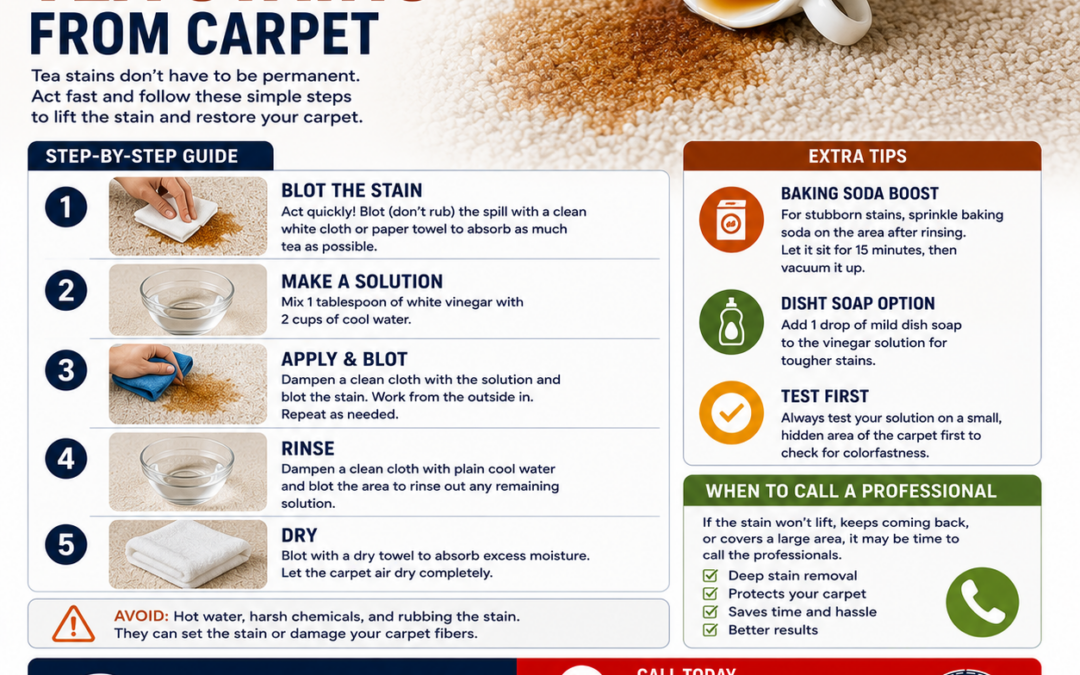
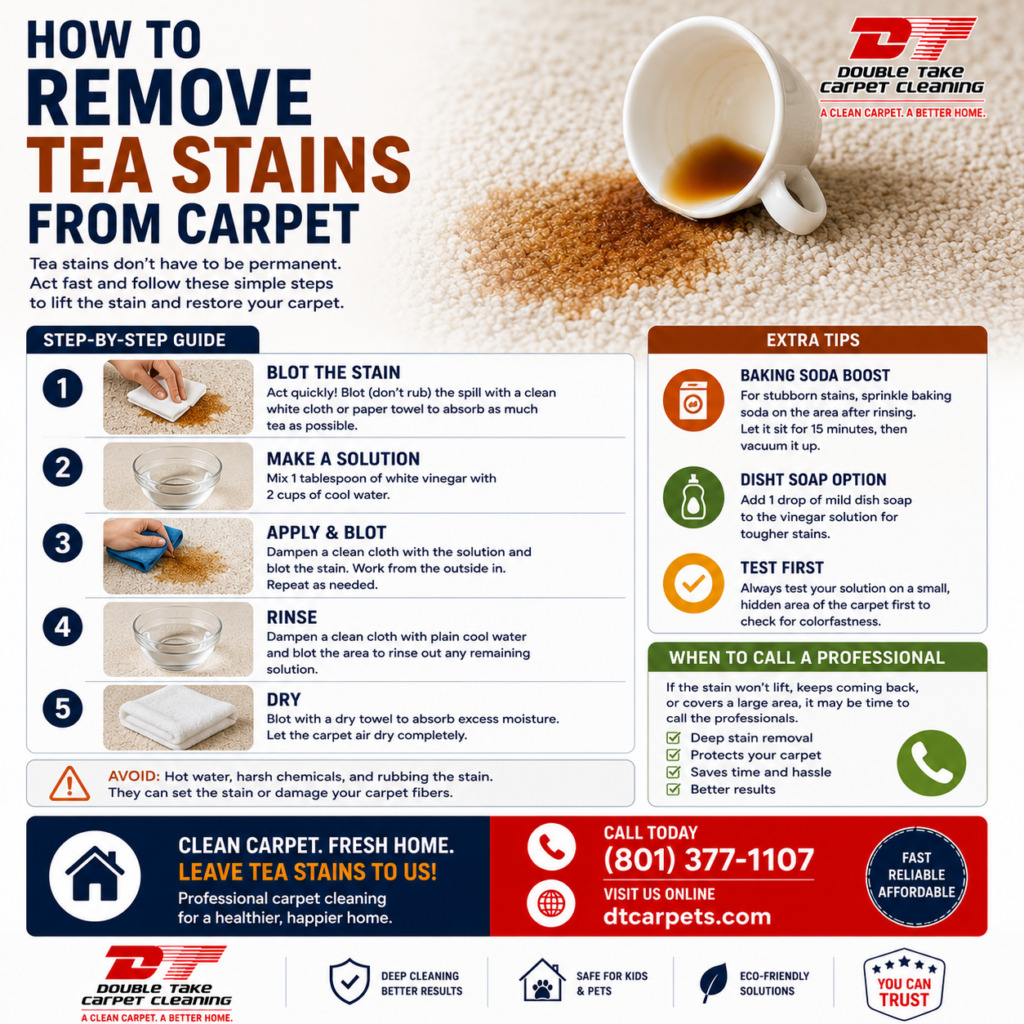
1. Blot excess tea with a dry white cloth.
2. Pour or spray cold water onto the stain from a height of 6-12 inches. The force flushes tannins out of fibers.
3. Blot immediately with a clean cloth.
4. Repeat flush-and-blot until the cloth comes away clean.
5. Place weighted paper towels over the area to absorb remaining moisture.
6. Let dry completely, then vacuum.
Method 2: White Vinegar + Dish Soap (Best for Tea Tannins)
Best for: Stains up to 30 minutes old
What you need:
– White vinegar
– Liquid dish soap
– Cold water
– Spray bottle
– White cloths
Steps:
1. Blot excess tea with a dry cloth.
2. Mix 1 tablespoon white vinegar + 1 tablespoon dish soap + 2 cups cold water.
3. Spray the solution onto the stain — don’t oversaturate.
4. Let it sit for 5-10 minutes. The mild acid (vinegar) breaks down tannins.
5. Blot with a white cloth.
6. Rinse with cold water.
7. Repeat if needed.
Method 3: Hydrogen Peroxide (For Set-In Tea Stains)
Best for: Dried tea stains, old tea stains
Warning: Test on a hidden area first. Hydrogen peroxide can lighten some carpet dyes.
What you need:
– 3% hydrogen peroxide
– White cloths
– Cold water
– Small bowl
Steps:
1. Re-wet the stain with cold water and let sit for 10 minutes.
2. Pour hydrogen peroxide directly onto the stain or apply with a white cloth.
3. Let it bubble for 10-15 minutes.
4. Blot with a clean cloth. The tannins should lift.
5. Rinse with cold water.
6. If the stain persists, mix hydrogen peroxide with a drop of dish soap and repeat.
Method 4: Lemon Juice + Sunlight (Natural Method)
Best for: Light tea stains on white or colorfast carpet
Lemon juice contains citric acid, which breaks down tannins naturally. Sunlight provides UV bleaching.
Steps:
1. Apply fresh lemon juice to the tea stain.
2. Let it sit for 10 minutes.
3. Blot with a white cloth.
4. If possible, allow sunlight to hit the area (open curtains).
5. Rinse with cold water.
6. Blot dry.
Method 5: Enzymatic Cleaner (For Tea with Milk)
Best for: Chai, milk tea, tea with cream or sugar
Tea with milk adds a protein component that requires separate treatment.
Steps:
1. Apply enzymatic cleaner to the stain.
2. Let it sit for 15-30 minutes to break down milk proteins.
3. Blot with a clean cloth.
4. Then treat the remaining tannin stain with the vinegar + dish soap method.
5. Rinse with cold water.
Tea Stain Removal by Carpet Type
| Carpet Material | Safe Methods | Avoid |
|---|---|---|
| Nylon | Vinegar + soap, hydrogen peroxide | Bleach, hot water |
| Polyester | Vinegar + soap, hydrogen peroxide (test) | Bleach |
| Olefin (Berber) | Cold water + vinegar (diluted) | Hydrogen peroxide |
| Wool | Cold water + mild dish soap ONLY | Vinegar, peroxide, bleach |
| Triexta | Vinegar + soap, hydrogen peroxide | High heat |
| Carpet tile | Varies by fiber | Over-wetting |
7 Common Mistakes with Tea Stains
- Using hot water. Heat sets tea tannins into carpet fibers permanently.
- Using soap first. Alkaline soaps can set tannin stains. Use vinegar first.
- Scrubbing. Spreads the stain and damages fibers.
- Using bleach. Destroys carpet dyes and reacts with tannins.
- Not treating the milk component first. Tea with milk needs enzyme treatment for the dairy before tannin treatment.
- Using a steam cleaner without pre-treatment. Heat from the steam cleaner sets the stain.
- Using colored cloths. Dye can transfer to wet carpet.
How to Remove Dried Tea Stains
Dried tea stains have oxidized and bonded more strongly with carpet fibers.
- Re-wet the stain with cold water for 15-30 minutes.
- Apply glycerin (available at pharmacies) to the stain and let it sit for 30 minutes to soften.
- Apply white vinegar solution — 1:3 vinegar to water.
- Blot repeatedly. You may need 4-5 rounds.
- Apply hydrogen peroxide if the stain remains.
- For stubborn stains, make a paste of baking soda and hydrogen peroxide. Apply, let dry, vacuum.
When to Call a Professional Carpet Cleaner
- Tea has soaked through to the carpet padding
- Stain is old and has been through multiple at-home attempts
- Carpet is wool or another delicate natural fiber
- Tea was mixed with milk or cream and has soured
- The stain is accompanied by an unpleasant odor
- You have white or very light carpet
Double Take Carpet Cleaning carries professional tannin-removing agents specifically designed for tea and coffee stains. Our truck-mounted hot water extraction can often remove stains that consumer products cannot.
Frequently Asked Questions
Q1: Does tea stain carpet permanently?
Tea stains are tannin-based and can become permanent if heat is applied or if the wrong cleaner is used. However, most tea stains are removable with cold water and vinegar-based treatments. The key is avoiding heat and alkaline cleaners.
Q2: How do you get black tea out of carpet?
Black tea has the highest tannin content. Blot immediately, use cold water flush, then apply white vinegar + dish soap solution. For stubborn stains, use hydrogen peroxide. Avoid hot water and soap-based cleaners.
Q3: Will vinegar remove tea stains from carpet?
Yes — white vinegar’s mild acidity is excellent for breaking down tea tannins. Mix 1 part vinegar with 3 parts water for a safe, effective tea stain treatment. Always test on a hidden area first.
Q4: How do I remove iced tea stains from carpet?
Iced tea adds sugar to the equation. Blot, use cold water, then treat with vinegar + dish soap. The dish soap helps remove sugar residue. For stains that sat overnight, use hydrogen peroxide.
Q5: Can I use baking soda on tea stains?
Baking soda is mildly alkaline and may set tannin stains if used before the tannins are broken down. Use vinegar first to neutralize the tannins, then baking soda can be used for odor absorption after cleaning.
Q6: How do I remove chai tea stains from carpet?
Chai contains both tea tannins and milk proteins. Treat the milk component first with an enzymatic cleaner, then treat the tea tannins with vinegar solution. Do not use heat — it will set the milk protein.
Q7: Does hydrogen peroxide remove tea stains?
Yes, 3% hydrogen peroxide is effective on tea stains. It works through oxidation, breaking down the tannin molecules. Test on a hidden area first, as it can lighten some carpet dyes.
Q8: How do I remove green tea stains from carpet?
Green tea has lower tannin content than black tea and is generally easier to remove. Use cold water flush followed by white vinegar solution. Green tea stains are less prone to becoming permanent.
Q9: Can I use a carpet cleaning machine on tea stains?
Only after pre-treating the stain with cold water and vinegar. Using a steam cleaner on an untreated tea stain will set the tannins. Pre-treat thoroughly, then use the machine with cold water only.
Q10: How do I remove sweet tea stains from carpet?
Sweet tea adds sugar, which can caramelize and create a sticky residue. Use cold water + dish soap first to remove sugar, then treat the tannin stain with vinegar. Avoid heat, which will caramelize the sugar.
Q11: What about herbal tea stains?
Herbal teas vary widely. For hibiscus (red), treat like a berry stain using hydrogen peroxide. For chamomile (pale yellow), cold water and vinegar are sufficient. Check the tea type and choose accordingly.
Q12: How do I remove tea stains from wool carpet?
Wool is sensitive to alkaline cleaners and peroxide. Use only cold water and mild dish soap. Blot gently. Professional cleaning with wool-safe products is strongly recommended.
Q13: Can tea cause mold in carpet?
Yes — the sugar in sweet tea or the milk in chai can feed mold and bacteria if the carpet padding becomes damp and the sugar/protein isn’t fully removed. Always dry thoroughly after cleaning.
Q14: How long does it take for a tea stain to set?
Tea tannins begin bonding with carpet fibers immediately. After 1-2 hours, the stain has significantly set. After 24 hours, it becomes much harder to remove. After any heat exposure, it may become permanent.
Q15: Will club soda remove tea stains?
Club soda can help with fresh tea spills because of the carbonation, but it’s not as effective as vinegar. It’s a decent option if no other cleaner is immediately available.
Prevention Tips
- Use mugs with lids for tea in carpeted rooms
- Keep tea on coasters on hard surfaces, not carpet
- Establish a “no drinks on carpet” rule in living areas
- Keep a stain kit with vinegar, white cloths, and cold water spray
- Blot tea spills immediately — even 30 seconds makes a difference
For professional tea stain removal and carpet cleaning, contact Double Take Carpet Cleaning at 801-377-1107 or visit dtcarpets.com. We serve Utah County, Salt Lake County, and surrounding communities.
