
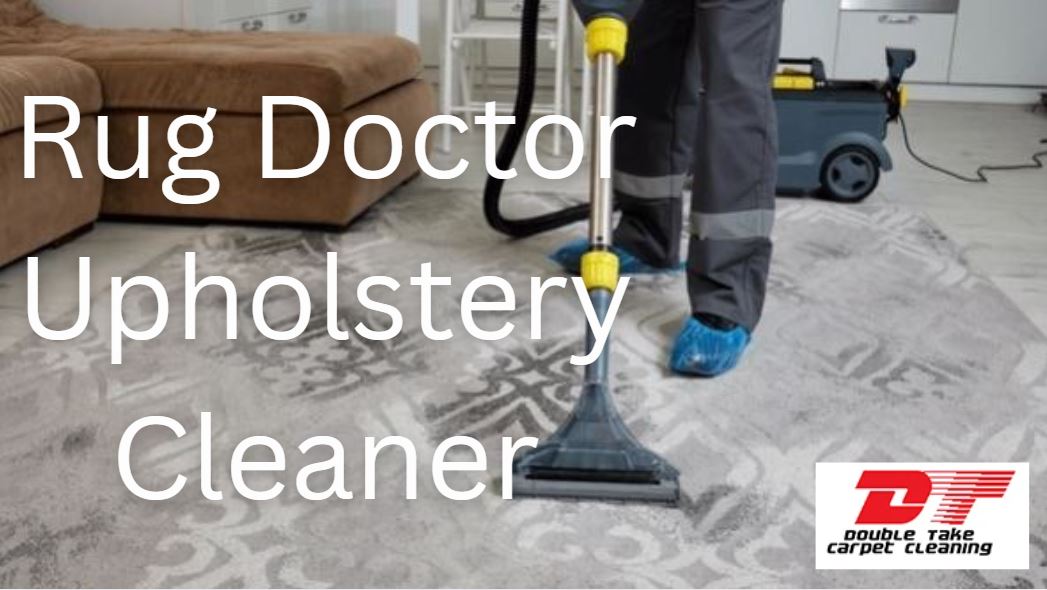
A Rug Doctor upholstery cleaner is a rental or portable extraction machine with a hand tool designed to clean fabric furniture, vehicle seats, stairs, cushions, and other water-safe upholstered surfaces. It can remove everyday soil, food spills, body oils, pet hair, and many fresh stains by applying cleaning solution and extracting dirty moisture. The crucial point is that an upholstery tool is safe only for the right fabric and only when used with controlled moisture. A sofa that is coded “W” or “W/S” may be suitable for water-based extraction; a fabric coded “S” or “X” should not be wet-cleaned with the tool.
The best results come from inspecting the fabric label, testing a hidden area, vacuuming thoroughly, using compatible solution, making limited wet passes, and then performing several dry suction passes. This guide explains how a Rug Doctor upholstery cleaner works, what it can safely clean, the errors that lead to water rings, wicking, odor, or fabric damage, and when professional upholstery cleaning is the wiser option.
What Is a Rug Doctor Upholstery Cleaner and How Does It Work?
“Rug Doctor upholstery cleaner” may refer to a Rug Doctor rental machine with an upholstery attachment, a portable detailer or spot cleaner, or a dedicated upholstery-cleaning rental. The core process is the same: the tool sprays water and cleaning formula into the fabric, then vacuum suction pulls back dirty water, suspended soil, and some cleaning residue.
The typical components include:
- A clean-water and formula tank.
- A recovery tank for dirty water.
- A hose and handheld upholstery tool.
- A spray trigger.
- A clear extraction head that lets the user see recovered water.
- Vacuum suction and, on some models, a motorized brush or specialty attachment.
The normal cleaning process
- Identify the fabric care code.
- Inspect seams, cushions, wood trim, piping, and delicate areas.
- Test solution in a hidden spot and let it dry.
- Vacuum the upholstery thoroughly.
- Pretreat heavy soil or specific spots if appropriate.
- Apply cleaning solution in slow, controlled passes.
- Release the trigger and make dry passes to remove moisture.
- Use airflow and allow the furniture to dry completely.
- Reinspect for wicking, color change, odor, or water rings.
Rug Doctor’s upholstery-tool instructions direct users to press the tool firmly against the fabric, spray while pulling slowly, release the trigger before the end of the pass to avoid overspray, and then make a dry pass without spraying to recover more dirt and solution.
A Rug Doctor upholstery cleaner is best understood as a portable fabric extractor. It is not a universal cleaner for every couch, chair, rug, mattress, or vehicle seat. Material identification and moisture control determine whether it is appropriate.
Eight Things to Know Before Using a Rug Doctor Upholstery Cleaner
1. Upholstery cleaning codes determine whether wet extraction is appropriate
The most important step happens before you fill the machine: find the upholstery manufacturer’s care tag. It is commonly located under a seat cushion, beneath the furniture, behind a skirt, or on the underside of a chair.
The most common codes are:
| Code | General meaning | Use a Rug Doctor upholstery extractor? |
|---|---|---|
| W | Water-based cleaning is generally permitted | Usually yes, after testing |
| W/S or S/W | Water- or solvent-based cleaning may be permitted | Often yes, after testing |
| S | Solvent-based cleaning only | No—do not use water extraction |
| X | Vacuuming or light brushing only | No—do not use water or cleaning solution |
Rug Doctor states that “W” or “W/S” fabric can be cleaned with water, while “S” and “X” fabrics should not be cleaned with the upholstery tool. It also recommends testing a hidden area and allowing it to dry before proceeding.
A fabric code is not a promise that every stain will come out. It tells you which broad cleaning approach is less likely to damage the material. A water-safe fabric can still bleed, shrink, develop rings, or change texture if oversaturated or treated with the wrong solution.
Practical action: If you cannot find a tag or identify the fabric, do not assume it is water-safe. Treat the item as high-risk and consult Double Take Carpet Cleaning before applying moisture.
2. Testing a hidden area prevents expensive damage
Even furniture marked “W” or “W/S” should be tested before full cleaning. Dye stability varies by fabric, age, sunlight exposure, prior products, manufacturing process, and wear. A fabric may look normal while wet but bleed, lighten, stiffen, shrink, or develop a water ring as it dries.
Choose a hidden but representative spot, such as the underside of a cushion, the back edge of a skirt, or a small section beneath the furniture. Apply a minimal amount of the intended solution. Use the upholstery tool lightly, extract it, and let the area dry fully. Check a white towel for color transfer and compare the dried test spot with the surrounding fabric.
Rug Doctor advises testing solution and the tool in an inconspicuous area and stopping if the upholstery color is affected.
Do not test only the most durable-looking section if the furniture has several fabrics, colored piping, contrasting thread, printed panels, or attached cushions. Test each material separately. Pay special attention to red, blue, black, dark green, and highly saturated dyes, which may be more prone to visible transfer or migration.
Practical action: A successful wet test should remain visually unchanged after complete drying. If you see dye transfer, shading changes, stiffness, texture changes, or a ring, stop. More extraction will not necessarily correct the problem.
3. Vacuuming first is essential—not optional
An upholstery extractor is designed to remove soil suspended in moisture. It is not the best first tool for loose hair, crumbs, dust, sand, pet dander, dry food, lint, or grit. If these dry contaminants are left in place, they can become muddy residue, clog the tool, reduce suction, and make a couch look worse after drying.
Use an upholstery attachment, crevice tool, lint roller, or fabric brush before cleaning. Vacuum seams, cushion edges, piping, buttons, folds, under cushions, and the space behind the seat backs. If dried food or mud is present, gently loosen it with a soft brush or dull edge, then vacuum the debris. Rug Doctor’s couch-cleaning guidance recommends vacuuming thoroughly and using a fabric lint brush to remove pet fur before cleaning.
Dry soil is more than a cosmetic concern. Fine grit can abrade fibers when people sit or shift on the furniture. Removing it before wet cleaning improves the look of the fabric and reduces the amount of solution needed.
Practical action: Spend more time vacuuming than you think is necessary. If the upholstery still releases hair and crumbs when you pat it, it is not ready for wet extraction.
4. Overwetting is the main upholstery-cleaning risk
Most upholstery damage from consumer extraction equipment comes from using too much water or making too many wet passes. The fabric surface may seem dry within a few hours while cushion foam, backing fabric, wood framing, webbing, or inner padding remains damp. That hidden moisture can lead to water rings, browning, odor, staining, rust transfer, adhesive failure, or mildew-related concerns.
Rug Doctor’s instructions are explicit: make a wet pass, then release the trigger and make a dry pass to suction up dirt and solution; do not overwet upholstery.
The right technique is controlled and slow. Hold the tool firmly against the fabric so the suction opening seals. Pull backward while spraying in a limited pass. Release the trigger before reaching the end to avoid overspray. Then make two or more slow dry passes with no spray. Watch the clear tool head if your model has one; when very little water is being recovered, additional wet passes are usually not the answer.
Cushions are especially risky because foam retains moisture. If possible, clean both sides only when you have enough drying time and airflow. Avoid stacking damp cushions, replacing them immediately, or sitting on the furniture while it is still wet.
Practical action: Use minimal solution, prioritize dry passes, run fans, and allow at least several hours of dry time. Rug Doctor recommends waiting about four to six hours before sitting on cleaned upholstery, although actual dry time varies with fabric, humidity, ventilation, and how much moisture was used.
5. Pretreat stains correctly instead of flooding them
Pretreatment can improve results on food spills, body oils, pet soil, drinks, and heavily used armrests or headrests. It is not an excuse to saturate the fabric or mix random household chemicals.
Start by identifying the stain. A fresh water-based spill, oily body soil, pet accident, ink mark, wax, makeup, and bleach spot all require different decisions. If you are unsure what caused the mark, begin conservatively. Blot loose liquid. Remove solids without pushing them deeper. Use a compatible upholstery pretreatment only after a successful hidden-area test.
Rug Doctor recommends pretreating heavily soiled areas with a suitable upholstery cleaner, allowing solution to penetrate, and using light strokes from the stain edge toward the center rather than scrubbing.
Avoid aggressive scrubbing. Rubbing can spread the stain, distort the pile, create fuzzing, and drive soil deeper into fabric. Avoid bleach, dish soap, laundry detergent, peroxide, vinegar mixtures, essential oils, and unapproved homemade formulas unless the furniture manufacturer and product label specifically support use on that material.
Practical action: Apply the least amount of pretreatment that will cover the stain, allow label-directed dwell time, then extract it thoroughly. For ink, dye transfer, old pet urine, unknown stains, or delicate fibers, stop and seek professional advice.
6. Not every visible mark is a removable stain
A Rug Doctor upholstery cleaner can remove many forms of soil, but it cannot restore missing dye, repair physical damage, or reverse fiber wear. This distinction prevents wasted effort and accidental damage.
Removable or reducible problems may include food residue, beverage spills, body oils, general soil, pet hair, mud, and some fresh pet accidents. Non-cleanable or partially cleanable conditions may include:
- Bleach or peroxide damage.
- Sun fading.
- Dye loss caused by prior cleaning products.
- Burns or melted synthetic fibers.
- Worn fabric or crushed pile.
- Torn seams, loose threads, and damaged buttons.
- Paint, permanent ink, rust, or adhesive.
- Pet urine that has soaked into cushion foam or wood framing.
A bleach spot can look like a stain, but it is usually a place where the original color has been removed. Repeated extraction may clean surrounding soil and make the lighter spot appear more obvious. Similarly, a faded armrest is often wear and body oil damage combined with color loss—not dirt that can be shampooed away.
Practical action: Ask whether the issue is soil, staining, odor contamination, color loss, or physical damage before treating it. A professional inspection can save you from repeatedly wetting a problem that cleaning cannot solve.
7. Pet odor often extends beyond the surface fabric
A pet accident on a couch cushion can be more complicated than a spill on carpet. Urine can travel through the upholstery fabric into foam, padding, seams, wood framing, or the underside of the cushion. Surface extraction may improve the visible stain but not fully remove odor from the interior.
This is why fragrance is not a solution. Odor eliminators may help when they contact the source, but perfume or deodorizing spray only covers odor temporarily. If humidity rises or the cushion becomes warm, residual odor may return.
For a fresh accident, blot as much liquid as possible immediately using clean, absorbent towels. Press down firmly; do not scrub. If the cushion cover is removable and manufacturer guidance allows cleaning, follow the care instructions. Use limited moisture and extraction on water-safe fabrics. Then dry the cushion thoroughly with strong airflow.
If the odor remains after complete drying, do not keep flooding the cushion with more formula. This can worsen the moisture problem without reaching the odor source. A professional can assess whether the cushion requires specialty treatment, foam replacement, deeper remediation, or whether cleaning is unlikely to solve the issue.
Practical action: Treat pet odor as a source-removal problem. For persistent pet odor, repeated accidents, or odor that returns, contact Double Take Carpet Cleaning for a practical evaluation.
8. Machine care and setup affect the cleaning result
Rental and portable upholstery-cleaning machines perform best when tanks are filled correctly, attachments are sealed, hoses are clear, and the recovery tank is emptied before it overflows. Poor setup can cause weak spray, reduced suction, leaks, uneven extraction, or dirty-water streaking.
Before cleaning, inspect the hose, tool, seals, and tanks. Confirm that the recovery tank is empty and properly seated. Use only the formula and dilution amount approved for the machine. Do not add extra formula in hopes of getting a “deeper” clean; excess detergent can leave residue and reduce the efficiency of recovery.
During cleaning, watch for signs that the machine is not extracting correctly:
- Little or no dirty water enters the recovery tank.
- The tool does not seal against the fabric.
- Spray is inconsistent or stops.
- The tool becomes clogged with hair or debris.
- The recovery tank is full.
- The hose is kinked or loose.
- The machine produces unusual sounds or odor.
After use, empty dirty water promptly, rinse the recovery tank, flush or rinse the tool according to the manual, remove hair and debris, and let parts dry before storage or return. This protects the next user and reduces odor buildup.
Practical action: If suction is weak, stop adding solution. Check the tank, hose, tool, seals, and clogs first. Continuing to spray without recovery is the fastest way to overwet upholstery.
The Real Cost of Getting Upholstery Cleaning Wrong
The financial cost of an upholstery-cleaning mistake can include replacing cushions, reupholstering furniture, repairing wood framing, treating persistent odor, paying for corrective cleaning, or replacing a sofa that could have been protected with proper testing and moisture control.
Time costs add up quickly. Overwet furniture can remain unusable for a day or longer. A returning stain may require repeat treatment. Pet odor inside foam can become an ongoing project rather than a one-hour cleaning task. In rental, hospitality, or property-management settings, unusable furniture can delay turnover, occupancy, or staging.
The emotional cost can be significant. A favorite couch may have sentimental value. Lingering odor can be embarrassing. Water rings, faded patches, or fabric distortion often feel worse because they were caused during an attempt to improve the furniture.
The long-term consequences can include foam degradation, odor trapped in internal materials, premature fabric wear, and a habit of using stronger products or more moisture to chase a result that is not achievable. Most of these problems are avoidable with fabric-code checks, testing, dry soil removal, limited moisture, proper extraction, and expert help for delicate or deeply contaminated items.
How an Experienced Upholstery Professional Helps
An experienced upholstery-cleaning professional begins with assessment. The professional identifies the fabric, care code, dye stability, construction, soil type, stain source, foam or cushion risk, and whether water-based extraction is appropriate.
That process helps avoid the most common failures: treating “S” or “X” fabrics with water, creating water rings, bleeding color, oversaturating cushions, or using harsh chemistry on delicate fibers.
A professional can help with:
- Fabric and care-code evaluation.
- Hidden-area testing and dye-stability assessment.
- Controlled cleaning of water-safe upholstery.
- Low-moisture or specialty methods for sensitive materials.
- Pet odor and urine troubleshooting.
- Removal of body oils, food spills, and embedded soil.
- Risk management around wood frames, trims, piping, buttons, and cushions.
- Clear explanation of what cleaning can improve and what may be permanent damage.
- Drying and maintenance guidance.
For furniture, vehicle upholstery, stains, pet odor, and fabric-care concerns, Double Take Carpet Cleaning can provide practical guidance based on the material and condition rather than a one-size-fits-all process.
Rug Doctor Upholstery Cleaner Options and Alternatives
Rug Doctor rental with upholstery tool
A rental machine and hand tool can be practical for several water-safe furniture pieces, carpeted stairs, and spot cleaning completed in one day. It is useful when you have enough time for setup, testing, drying, and machine return.
Its limitations are the learning curve, potential for overwetting, transport and rental logistics, and unsuitability for “S,” “X,” unknown, or delicate fabrics.
Rug Doctor portable spot cleaner
A portable upholstery cleaner is useful for fresh spills, single cushions, vehicle seats, pet accidents, and small areas. It is easier to store and maneuver than a rental machine.
Its limits are smaller tank capacity, lower productivity, and the risk of concentrating too much water in one spot.
Manual spot treatment and blotting
For a small, fresh spill, blotting and careful spot treatment may be safer than extracting an entire cushion. This approach is appropriate when the stain is localized and the fabric is water-safe.
Its limitation is that it may not remove deeper soil or odor, and incorrect products can still cause damage.
Professional upholstery cleaning
Professional service is best for expensive sofas, delicate textiles, pet odor, multiple pieces, unknown fabrics, heavily soiled furniture, or stains that have returned after DIY attempts. The main advantage is material diagnosis and controlled cleaning.
The limitation is scheduling and cost, but this can be less expensive than replacing furniture after an unsuccessful DIY attempt.
What to Do If You Are Cleaning Upholstery Now
- Locate and read the upholstery care tag.
- Do not wet-clean fabrics marked “S” or “X.”
- Vacuum every cushion, seam, edge, fold, and crevice.
- Remove solid debris and blot fresh liquid with white towels.
- Test the solution and tool in a hidden area; allow it to dry.
- Protect nearby wood, metal, leather, and delicate trim from overspray.
- Fill the Rug Doctor machine using the formula and water instructions for that model.
- Pretreat only heavily soiled areas with a compatible product.
- Make limited wet passes with the tool firmly sealed against the fabric.
- Make multiple slow dry passes with the trigger released.
- Use fans and ventilation; separate or stand cushions upright if appropriate.
- Do not use the furniture until it is fully dry.
- Contact Double Take Carpet Cleaning if colors change, odor remains, the item stays wet, or you are unsure about the fabric.
How to Choose the Right Upholstery Cleaner or Provider
Before renting a Rug Doctor upholstery cleaner or hiring a professional, use this checklist:
- Verify that the furniture is marked “W” or “W/S” and passes a hidden-area test.
- Confirm the machine includes the correct upholstery tool and that you understand its operation.
- Choose a provider or tool suitable for the number of pieces and the type of fabric.
- Ask whether the process is appropriate for pet odor, body oils, food spills, or the specific stain involved.
- Look for clear guidance about drying time, testing, moisture limits, and realistic outcomes.
- Avoid services that promise to clean every fabric without inspection.
- Confirm that the provider recognizes the difference between stain removal, dye loss, wear, and physical damage.
- Choose an experienced professional when furniture is valuable, fabric is unknown, or contamination extends into cushions.
For clear, fiber-conscious advice about upholstery cleaning, contact Double Take Carpet Cleaning at (801) 377-1107.
Common Rug Doctor Upholstery Cleaner Mistakes
- Ignoring the fabric code: Water extraction can damage “S” and “X” fabrics.
- Skipping the hidden-area test: Even water-safe fabric can bleed or change texture.
- Vacuuming too quickly or not at all: Hair, crumbs, and grit become muddy residue during wet cleaning.
- Using too much formula: Residue can attract soil and leave fabric stiff or sticky.
- Making repeated wet passes: This can saturate foam and create slow drying, odor, or water rings.
- Scrubbing stains aggressively: Scrubbing can spread the stain, fuzz fabric, and distort the pile.
- Cleaning bleach damage repeatedly: Missing dye cannot be extracted away.
- Using wet extraction for deep pet odor without assessment: Odor may be inside foam, padding, or the frame rather than only on the surface.
Frequently Asked Questions
What is a Rug Doctor upholstery cleaner?
It is a rental or portable extraction machine with a hand tool that applies cleaning solution and recovers dirty water from water-safe upholstery, stairs, and other fabric surfaces.
Can I use a Rug Doctor on my couch?
Yes, if the care tag shows “W” or “W/S,” the fabric passes a hidden-area test, and you avoid overwetting it.
What does a “W” furniture cleaning code mean?
“W” generally means water-based cleaning is permitted. Test first because fabric dyes and construction can still react differently.
What does “W/S” mean on upholstery?
It generally means either water-based or solvent-based cleaning may be appropriate. A hidden-area test remains essential.
Can I use a Rug Doctor on “S” upholstery?
No. “S” generally indicates solvent-based cleaning only. Do not use water extraction.
Can I use a Rug Doctor on “X” upholstery?
No. “X” generally means vacuuming or light brushing only, with no water or cleaning agents.
Where is the furniture cleaning tag?
Look under loose cushions, beneath the furniture, behind skirts, on the back, or near the manufacturer’s label.
What if I cannot find a cleaning tag?
Do not assume the upholstery is water-safe. Test only after identifying the fabric or consult a professional for guidance.
Should I vacuum before using a Rug Doctor upholstery tool?
Yes. Vacuuming removes dry hair, crumbs, lint, grit, and loose soil that wet extraction may turn into muddy residue.
Can I use a Rug Doctor upholstery cleaner on a mattress?
Use caution. Mattresses can retain moisture deep inside and may be difficult to dry. Check the manufacturer guidance and avoid saturating the material.
Can I use it on car seats?
Often yes for cloth automotive seats, but test first, avoid electrical or leather-trimmed areas, and use limited moisture.
Can I use it on leather furniture?
No. Leather requires specialized cleaning and conditioning methods rather than standard water extraction.
How much solution should I use?
Follow the instructions for your exact Rug Doctor model and cleaning formula. More solution does not mean better cleaning.
Can I use dish soap in a Rug Doctor upholstery cleaner?
No. Dish soap can create excess foam and leave residue that attracts dirt or interferes with equipment.
Can I use vinegar in a Rug Doctor upholstery machine?
Do not add vinegar or homemade mixtures unless the machine and furniture manufacturer specifically approve them.
How do I prevent water rings on upholstery?
Test first, use minimal moisture, keep the tool sealed, make thorough dry passes, and avoid overspraying edges, seams, or one small isolated area.
Why is my sofa still wet after cleaning?
Possible causes include too many wet passes, insufficient extraction, thick fabric or foam, high humidity, or poor airflow.
How long should upholstery take to dry?
Drying varies. Rug Doctor advises allowing roughly four to six hours before sitting on cleaned furniture, but humidity, fabric, cushion thickness, and extraction quality can extend this.
How can I dry upholstery faster?
Use fans, ventilation, air conditioning or dehumidification as appropriate, separate cushions, and make more dry passes before leaving the area to dry.
Why did the stain come back after the couch dried?
It may be wicking, where deeper soil moves to the surface as moisture evaporates. It can also mean the stain source remains below the fabric.
Why does my couch smell after cleaning?
The fabric or cushion may have remained wet too long, or odor-causing contamination may remain deeper in the cushion. Improve drying and seek professional evaluation if odor persists.
Will Rug Doctor remove pet urine odor from a couch?
It may help with fresh, surface-level accidents. Persistent odor may indicate contamination in the foam, seams, or frame that needs deeper assessment.
Can Rug Doctor remove old stains from upholstery?
Sometimes, but outcomes depend on stain type, age, fiber, previous treatments, and whether the mark is actual soil or permanent damage.
Can Rug Doctor remove bleach stains?
No. Bleach spots are generally dye loss, not removable soil.
Can I use a drill brush on upholstery?
Use extreme caution. A soft brush may be suitable for durable fabric after testing, but aggressive powered agitation can fray or distort upholstery.
Should I clean both sides of removable cushions?
Only if they are water-safe and you have sufficient drying time. Do not stack damp cushions or reinstall them while wet.
What is IICRC S300?
ANSI/IICRC S300 is a professional standard that provides practical systems, methods, and procedures for upholstery cleaning.
When should I call a professional upholstery cleaner?
Call when the fabric is coded “S” or “X,” the tag is missing, the piece is valuable or delicate, odor persists, dye bleeds, cushions remain wet, stains return, or the problem affects multiple pieces.
Key Rules, Standards, and Safety Guidance
Manufacturer fabric codes
The furniture manufacturer’s care code is the first rule. Water-based Rug Doctor extraction is generally appropriate only for upholstery marked “W” or “W/S,” after testing. Avoid water extraction on “S” and “X” fabrics.
ANSI/IICRC S300
The ANSI/IICRC S300 Standard for Professional Upholstery Cleaning provides practical standards for upholstery-cleaning methods and procedures. Its existence reinforces the need for inspection, material-specific cleaning, and controlled processes rather than treating all upholstered furniture the same.
Product labels and electrical safety
Use the recommended formula and dilution for your exact Rug Doctor equipment. Do not mix cleaning products. Keep electrical equipment away from standing water, inspect cords and hoses before use, manage hoses to avoid trip hazards, and keep children and pets away from active cleaning areas.
Conclusion
A Rug Doctor upholstery cleaner can be useful for water-safe furniture when it is used with careful preparation and moisture control. Check the fabric code, test first, vacuum thoroughly, pretreat only where needed, use limited wet passes, make multiple dry passes, and allow complete drying.
Most upholstery-cleaning failures—water rings, lingering odor, sticky residue, color bleeding, wicking, and damaged texture—are preventable. When the fabric is delicate, the label is missing, the stain is complex, or pet odor has penetrated cushions, avoid trial-and-error cleaning. Consult Double Take Carpet Cleaning at (801) 377-1107 for practical, material-specific guidance on upholstery cleaning, stains, pet odor, and furniture care.
