
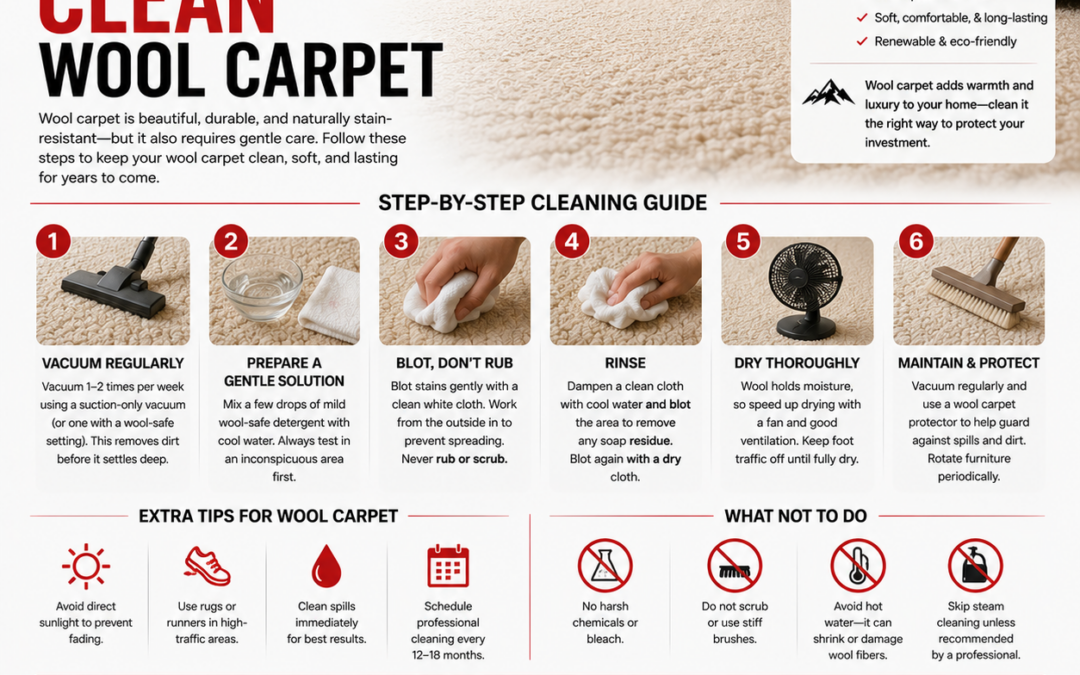
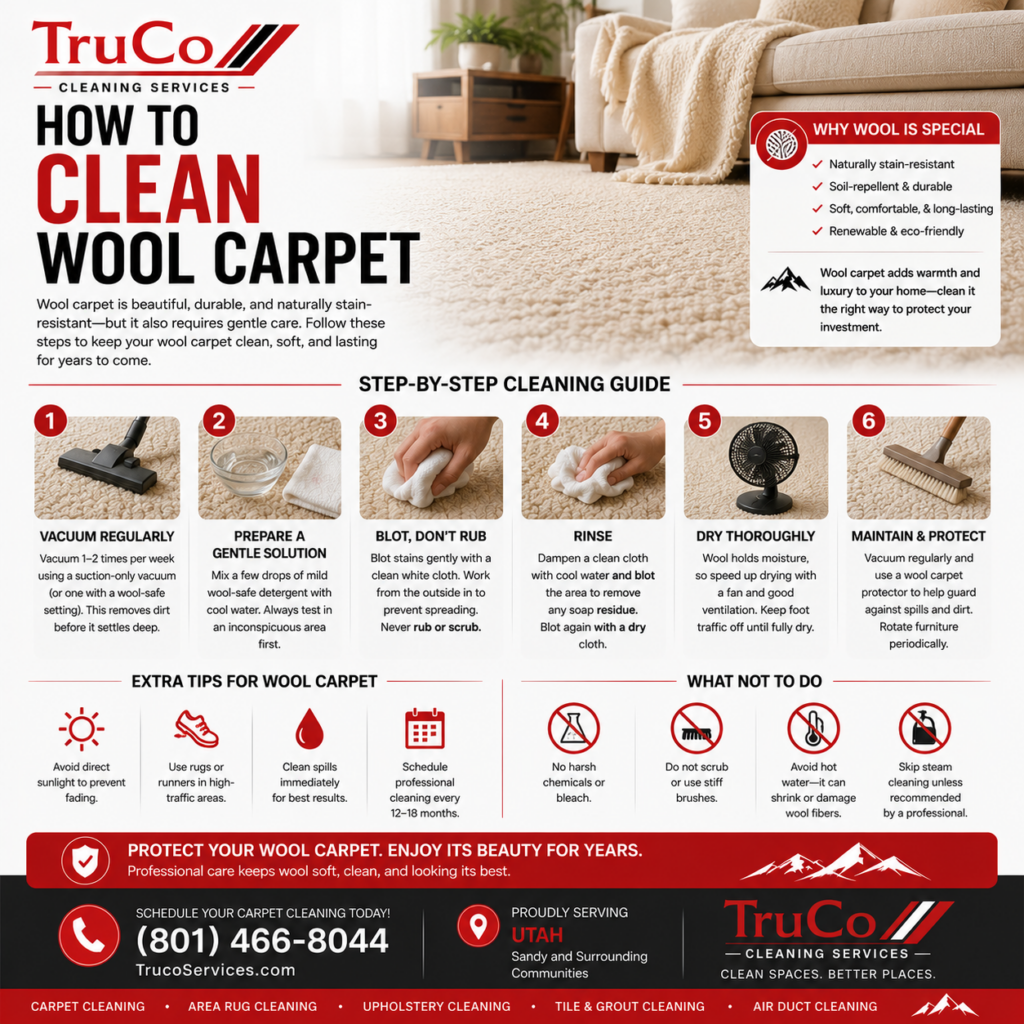
Wool carpet requires gentler cleaning methods than synthetic carpets because wool is a natural protein fiber that is highly absorbent, sensitive to pH, and vulnerable to shrinkage and damage from heat and harsh chemicals. Unlike nylon or polyester, wool absorbs water like a sponge, can felt (mat) when agitated aggressively, and can be permanently damaged by alkaline cleaners. The safest and most effective method for deep cleaning wool carpet is low-moisture hot water extraction with a pH-neutral cleaner, followed by accelerated drying. Never use bleach, high-heat steam, or rotary scrubbing on wool carpet.
Why Wool Carpet Is Different
Wool is a natural fiber made of protein (keratin). Its structure is fundamentally different from synthetic fibers:
| Property | Wool | Nylon / Polyester |
|---|---|---|
| Fiber type | Natural protein | Synthetic polymer |
| Water absorption | 30% of its weight | 2-4% of its weight |
| pH sensitivity | Sensitive (pH 5-7 ideal) | Tolerant (pH 4-10) |
| Heat tolerance | Damaged above 140°F | Tolerates 210°F+ |
| Abrasion resistance | Good | Excellent |
| Stain resistance | Poor (absorbent) | Good to excellent |
| Shrinkage risk | High with heat/agitation | None |
| Chemical sensitivity | High (damaged by alkaline) | Low |
Common Mistakes That Damage Wool Carpet
| Mistake | What Happens | Is It Reversible? |
|---|---|---|
| Using alkaline cleaner (pH > 8) | Wool fibers swell, lose luster, feel Rough | Sometimes — professional pH rebalancing may help |
| Hot water extraction at 210°F | Fiber shrinkage, matting | No — permanent damage |
| Rotary brush agitation | Felting — fibers mat together | No — permanent texture change |
| Bleach or peroxide | Dissolves wool fibers | No — fibers disintegrate |
| Steam cleaning (true steam) | Shrinkage, delamination | No |
| Allowing slow drying | Musty smell, potential mold | Usually yes |
The Right Way to Clean Wool Carpet
Professional Low-Moisture Hot Water Extraction
The Carpet and Rug Institute (CRI) recommends low-moisture cleaning for wool carpet. The process is:
Step 1: HEPA Vacuuming
Wool carpet should be thoroughly vacuumed with a HEPA vacuum before any wet cleaning. This removes the surface soil that would turn into mud during wet cleaning.
Step 2: pH-Neutral Prespray
A pH-neutral (6.5-7.5) prespray is applied. The prespray is specifically formulated for wool — no alkaline boosters, no optical brighteners, no enzymes that could damage protein fibers.
| Cleaning Agent | Safe for Wool? | Why |
|---|---|---|
| pH-neutral detergent (6.5-7.5) | Yes | Matches wool’s natural pH |
| Alkaline prespray (pH 8-10) | No | Damages fiber structure |
| Enzyme cleaner (pet stains) | Caution | Can digest wool proteins |
| Hydrogen peroxide (3%) | No | Dissolves wool fibers |
| Vinegar (diluted, 1:10) | Yes (rinse thoroughly) | Acidic but safe diluted |
| Bleach | Never | Dissolves wool instantly |
Step 3: Gentle Agitation
A soft brush or grooming tool is used for agitation — not a counter-rotating brush machine. The goal is to distribute the prespray, not to scrub aggressively.
Step 4: Low-Temperature Extraction
Water temperature is kept at 120-140°F (not the standard 200-210°F used for synthetics). Lower pressure is used — around 200 PSI instead of 400-500 PSI.
Step 5: Low-Moisture Rinse
Minimal water is used. The technician makes fewer passes with the wand but overlaps thoroughly to ensure even moisture distribution.
Step 6: Accelerated Drying
Air movers are essential for wool carpet. Wool holds more water than synthetics and dries more slowly. Air movers reduce drying time from 24-48 hours to 4-8 hours.
Wool Carpet Cleaning: Professional vs. DIY
| Factor | Professional Wool Cleaning | DIY (Rental Machine) |
|---|---|---|
| Cleaner type | pH-neutral, wool-specific | General alkaline detergent |
| Water temperature | 120-140°F | 100-120°F (tap) |
| Agitation | Hand brush or soft brush | Rotary brush (too aggressive) |
| Extraction efficiency | 85-90% | 40-50% |
| Drying time | 4-8 hours (with air movers) | 24-48 hours |
| Shrinkage risk | Low (controlled) | High |
| Fiber damage risk | Low | Moderate to high |
Wool Carpet Stain Removal Guide
| Stain Type | Safe for Wool? | Method |
|---|---|---|
| Wine (red or white) | Yes | Blot immediately, apply cold water, blot. For set stains: white wine or diluted vinegar |
| Coffee | Yes | Blot, cold water, blot. Mild detergent if needed |
| Pet urine | Yes — with caution | Enzyme cleaner TESTED on inconspicuous area. Some enzymes digest wool |
| Mud | Yes | Let dry completely, vacuum, then gentle spot clean |
| Grease/oil | Difficult | Absorbent powder (cornstarch) first, then professional cleaning |
| Ink | Difficult | Rubbing alcohol on a cloth (test first) |
| Paint (latex) | Yes | Cold water, blot. Do not use hot water |
| Paint (oil) | Difficult | Solvent needed — professional recommended |
| Blood | Yes | Cold water only — hot water sets the stain permanently |
| Wax | Yes | Freeze, crack, vacuum. Low heat iron + paper towel |
Wool Carpet Maintenance Schedule
| Task | Frequency | Why |
|---|---|---|
| HEPA vacuuming | 2-3x per week | Removes abrasive soil before it damages fibers |
| Immediate spot cleaning | As needed | Wool absorbs spills quickly |
| Professional low-moisture cleaning | Every 12-18 months | Removes embedded soil safe |
| Professional deep cleaning (if needed) | Every 18-24 months | For high-traffic wool carpets |
| Professional stain treatment | As needed | For set-in stains |
| Professional grooming | After cleaning | Restores pile direction and texture |
What to Ask Your Carpet Cleaner Before They Clean Wool
| Question | Why It Matters |
|---|---|
| “What pH is your cleaning solution?” | Must be 6.5-7.5 for wool |
| “What water temperature do you use for wool?” | Should be 120-140°F, not 210°F |
| “Do you use a rotary brush machine?” | Not on wool — hand brush or soft brush only |
| “How do you dry wool carpet?” | Air movers are essential |
| “Have you cleaned wool carpet before?” | Experience matters with wool |
Frequently Asked Questions
Q: Can wool carpet be steam cleaned?
A: Yes — but with modifications. Low-temperature (120-140°F), low-moisture, pH-neutral cleaner. True steam at 212°F would damage wool.
Q: Does wool carpet shrink when cleaned?
A: It can, if too much heat, agitation, or moisture is used. Professional low-moisture cleaning prevents shrinkage.
Q: Can I use a Rug Doctor on wool carpet?
A: Not recommended. Rug Doctor detergents are alkaline and can damage wool. The rotary brush is too aggressive.
Q: How do I remove pet stains from wool carpet?
A: Blot immediately with cold water. Use a wool-safe enzyme cleaner — test first, as some enzymes digest wool proteins.
Q: Is wool carpet harder to keep clean than synthetic?
A: Yes — wool is more absorbent and stains more easily. But it is naturally anti-static and resists soil attraction better than synthetics.
Q: Does vinegar damage wool carpet?
A: Diluted white vinegar (1:10 with water) is safe for wool and can help neutralize alkaline residue. Do not use undiluted.
Q: How long does wool carpet take to dry after professional cleaning?
A: 4-8 hours with air movers. 12-24 hours without. Proper drying is essential to prevent mildew.
Q: Can I use baking soda on wool carpet?
A: Yes — baking soda is safe for wool. Sprinkle, let sit 15 minutes, vacuum. Do not rub it in.
Q: Is wool carpet good for allergies?
A: Yes — wool naturally resists dust mites and mold. But it needs proper cleaning to stay allergen-free.
Q: Should I Scotchgard wool carpet?
A: Yes — a professional-grade fabric protector helps wool resist staining and makes cleaning easier.
Protect Your Wool Carpet Investment
Wool carpet is a premium flooring investment that can last 15-25 years with proper care. The key is cleaning it correctly — gentle methods, pH-neutral products, and low-moisture techniques. Double Take Carpet Cleaning has specialized training in wool carpet care. IICRC-certified, 25+ years serving Utah County and Salt Lake Valley. 99% satisfaction guarantee. Call 801-377-1107 or visit https://dtcarpets.com.
