
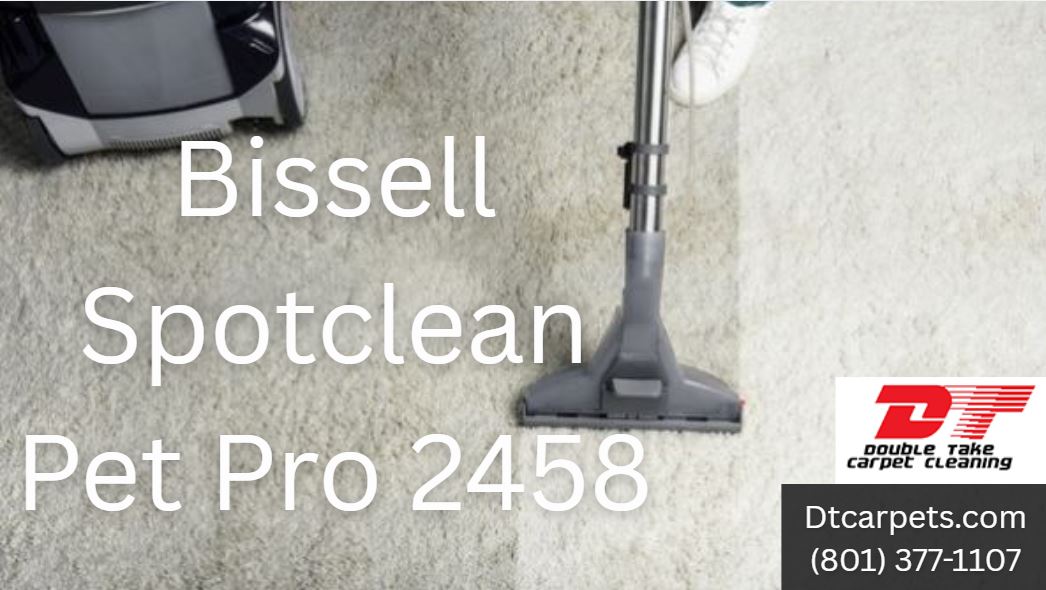
The Bissell SpotClean Pet Pro 2458 is a portable, corded spot-cleaning extractor designed for targeted cleaning of carpet, stairs, low-pile area rugs, pet beds, auto interiors, and some fabric upholstery. It sprays cleaning solution, agitates the surface with a hand tool, and extracts dirty liquid into a separate recovery tank. Its main advantage is fast response to isolated pet accidents, food spills, muddy pawprints, and other fresh messes—without setting up a full-size carpet machine.
The most important takeaway: this is a spot cleaner, not a substitute for complete carpet cleaning or professional odor treatment. Use the machine with the correct formula, avoid over-wetting, extract slowly and thoroughly, and dry the material quickly. It can improve many surface stains, but it cannot guarantee removal of dye loss, bleach damage, old stains, severe pet contamination, or moisture that has reached carpet pad or subfloor.
This guide explains how the 2458 works, where it performs well, which surfaces require caution, how to prevent common problems, and when to call Double Take Carpet Cleaning for help.
What Is the Bissell SpotClean Pet Pro 2458?
The Bissell SpotClean Pet Pro 2458 is a portable carpet and upholstery spot-cleaning machine. It has a clean-water-and-formula tank, a dirty-water tank, a powered motor and suction system, a flexible hose, and cleaning tools that allow the user to focus on a small area.
Bissell identifies the 2458 as suitable for low-pile carpet, stairs, carpet, area rugs, pet beds, and other targeted surfaces. The manufacturer lists a ¾-gallon clean-tank capacity, a 4-foot hose, a 22-foot power cord, a 5.7-amp rating, a 3-inch Tough Stain Tool, and a Stain Trapper Tool. It weighs approximately 13.25 pounds.
The machine’s cleaning cycle is straightforward:
- Fill the clean tank with warm tap water and the specified amount of compatible cleaning formula.
- Vacuum or remove loose debris before applying liquid.
- Test an inconspicuous area for colorfastness and fabric compatibility.
- Spray solution onto the stain or soiled area.
- Gently work the tool across the surface.
- Release the spray trigger and make slow suction-only passes.
- Continue extraction until minimal liquid is being recovered.
- Improve airflow and allow the material to dry completely.
- Empty, rinse, and clean the machine after use.
Bissell advises using warm tap water up to 140°F / 60°C maximum; boiling or excessively hot water can damage the tank and equipment.
Who should use it?
The primary audience includes:
- Pet owners responding to urine, vomit, mud, and tracked-in debris
- Parents cleaning food, juice, and craft spills
- Drivers treating stains in car interiors
- Renters maintaining high-visibility carpet areas
- Homeowners with stairs, upholstered furniture, pet beds, or small rugs
- Buyers comparing portable carpet cleaners before purchasing
- People trying to determine whether a stain is suitable for DIY treatment
What it can and cannot do
The SpotClean Pet Pro can help with small, manageable surface stains. It cannot reliably correct problems that are below the carpet surface, chemically permanent, or outside the manufacturer’s approved uses.
It is not intended to repair carpet damage, replace professional restorative cleaning, remove every odor source, solve mold growth, or clean materials that cannot safely tolerate water-based extraction.
Eight Key Things to Know Before Using the Bissell SpotClean Pet Pro 2458
1. It is a spot cleaner—not a whole-room carpet cleaner
The Bissell 2458 is designed for localized cleaning. Its hose-and-tool design lets users focus solution and extraction on a stain, carpeted stair, vehicle seat, pet bed, or small upholstery section. That portability is useful, but it also creates a common misunderstanding: a compact extractor does not replace a full professional cleaning process for an entire room.
When people use a spot cleaner repeatedly across a large carpet area, they often create uneven appearance. The cleaned spots may look brighter than the surrounding carpet, especially where the rest of the carpet contains traffic soil. The machine may also leave more moisture behind than expected if the user makes multiple wet passes without sufficient suction-only extraction.
Use the 2458 for:
- A fresh food or drink spill
- Small pet accidents
- Muddy footprints
- A car-seat stain
- A pet-bed cleanup
- A visibly soiled stair
- A small, machine-safe upholstery stain
Do not rely on it as the primary solution for:
- Wall-to-wall carpet cleaning
- Heavy traffic lanes
- A large pet-urine area
- Whole-room odor
- Flooding or significant water exposure
- Deep embedded soil throughout a carpet
- Mold-related concerns
- Delicate rugs or water-sensitive furniture fabric
Professional textile-floor-covering standards distinguish between maintenance cleaning, restorative cleaning, inspection, and specialized treatment. The ANSI/IICRC S100 standard covers professional cleaning procedures for residential and commercial textile floor coverings, including carpet and rugs.
2. Correct formula and dilution matter
The solution you add to the clean tank matters as much as the machine. Too much formula can leave detergent residue, create excessive foam, attract soil after drying, and complicate extraction. Too little may reduce cleaning effectiveness. Using an incompatible chemical can affect machine components, carpet dyes, backing materials, upholstery fabric, or the amount of foam produced in the recovery tank.
Use a formula approved for the machine and follow the tank markings and product directions exactly. Do not substitute dish soap, laundry detergent, bleach, hydrogen peroxide mixtures, household degreasers, or random leftover cleaning products. These can damage the machine, create excessive suds, leave residues, and produce unpredictable results on carpet or fabric.
If you are sensitive to cleaning-product ingredients or want to compare formulations, the EPA’s Safer Choice program evaluates products against criteria that include ingredient safety, performance, pH, packaging, and volatile organic compounds. A Safer Choice label does not make a product suitable for every machine or every fabric, but it can help consumers evaluate certain cleaning-product options.
The best practice is to use only as much solution as necessary. A stain that does not disappear immediately may be permanent, chemically altered, or below the surface. Adding more product repeatedly usually increases residue and moisture risk rather than improving the result.
3. Test every surface before wet cleaning
A cleaning machine cannot identify fiber type, dye stability, backing composition, upholstery finish, or pre-existing damage. That responsibility remains with the user.
Before applying solution to a visible section, test a small hidden area. For carpet, this might be inside a closet or under a removable cushion. For upholstery, test along a hidden seam, beneath a skirt, or on the back of a cushion. Apply a minimal amount of solution, blot with a white cloth, and look for color transfer, texture change, shrinking, distortion, or damage after the area dries.
Bissell states that the 2458 and compatible formula can be used on fabric furniture, car seats, pet beds, and similar surfaces when the manufacturer’s upholstery instructions permit cleaning. It specifically notes compatibility with upholstery marked “W” or “WS.”
Avoid using a wet-extraction spot cleaner on upholstery marked:
- S: Solvent-based cleaning only
- X: Vacuuming or professional cleaning only
- W/S or WS: May allow water- or solvent-based cleaning, but testing is still essential
- Unknown: Treat it as higher risk until identified
Use special caution with silk, viscose, velvet, linen, suede, unfinished leather, antique textiles, handwoven rugs, wool rugs with unknown dyes, jute, sisal, and seagrass. These materials may not tolerate water, heat, or cleaning chemistry well.
4. Pet urine often extends below the visible stain
The “Pet Pro” name is helpful for targeted pet messes, but it can lead owners to believe every urine odor is a simple surface-cleaning problem. Often, it is not.
Urine may travel from the carpet face fibers into the backing, carpet pad, subfloor, baseboards, or flooring joints. It can dry without leaving a large visible spot and still create odor later—especially in humid conditions. If the urine is repeatedly deposited in one area, cleaning only the surface can temporarily reduce odor while leaving the source below.
For a fresh accident, blot first. Use clean white towels and press firmly to absorb as much liquid as possible before using the Bissell SpotClean Pet Pro. Then use a compatible pet-stain formula sparingly, extract thoroughly, and dry the area quickly.
Call Double Take Carpet Cleaning if:
- Odor returns after drying
- Your pet repeatedly marks the same area
- The spot is large or heavily saturated
- The carpet remains wet for a long time
- The stain has reached the carpet edge, wall, or baseboard
- You can smell urine but cannot find the source
- The carpet pad or subfloor may be affected
A portable extractor can be useful for immediate cleanup, but it cannot always remove contamination that has traveled beneath the carpet surface.
5. Over-wetting can cause odor, wicking, and carpet damage
Over-wetting is one of the most common problems with portable spot cleaners. It happens when users spray too much solution, make many wet passes, move too quickly for effective extraction, or clean the same location again and again.
The carpet may look clean at first but develop new issues as it dries. A stain can reappear because dissolved soil rises from lower layers to the surface. This is called wicking. Slow drying can also cause a musty odor, promote microbial growth under favorable conditions, affect carpet backing, or create an uneven texture.
To avoid over-wetting:
- Use short, controlled spray passes.
- Do not hold the trigger continuously.
- Make multiple slow, suction-only passes after spraying.
- Blot remaining moisture with white towels if needed.
- Run fans and improve ventilation.
- Keep people and pets off the area until it is dry.
- Do not place furniture back until the carpet is fully dry.
Do not assume a carpet is dry because the surface feels dry. Check whether the area feels cool, heavy, or damp when pressed with a dry towel. If moisture remains after 24 hours, increase airflow and consider professional help.
A spot cleaner is most effective when you use it as a controlled extraction tool, not as a device for flooding a stain with cleaning solution.
6. Slow suction-only passes usually matter more than extra spraying
Most cleaning results come from removing suspended soil and liquid—not from repeatedly adding more solution. Once you have applied a modest amount of formula, release the spray trigger and pull the tool slowly over the area so suction can recover moisture and soil.
A good technique for a small carpet stain is:
- Vacuum or pick up dry debris.
- Blot fresh liquid if present.
- Apply the cleaning solution in a limited area.
- Make a controlled wet pass.
- Release the trigger.
- Make several slow dry passes.
- Blot with a white towel if the surface remains wet.
- Use airflow until dry.
The “dry” passes are not actually dry; they are extraction-only passes. Their job is to remove as much solution and moisture as possible. If the dirty-water tank shows little recovery after repeated passes, stop adding liquid and inspect the machine for tank seating, hose blockage, tool blockage, or poor suction.
A frequent DIY error is to chase a remaining stain by adding more solution. If the stain is old, dyed, bleached, or chemically set, extra spraying may only enlarge the wet area. In these cases, stop before creating a moisture problem and consider professional stain assessment.
7. Machine maintenance protects cleaning performance
A portable extractor works only if the clean-water tank, dirty-water tank, hose, tools, seals, spray path, and suction path stay clear. Skipping maintenance reduces suction, causes unpleasant odor inside the machine, encourages residue buildup, and can allow old dirty water to affect future cleaning jobs.
After each use:
- Empty the dirty-water tank.
- Rinse the recovery tank thoroughly.
- Remove pet hair, lint, and debris from the tool.
- Flush the hose if the manufacturer’s instructions allow it.
- Wipe seals and tank connections.
- Leave tanks open or separated long enough to dry.
- Store the machine in a dry indoor location.
- Do not leave cleaning formula in the tank for extended periods unless the manual specifically permits it.
Bissell provides model-specific support for the 2458, including user manuals, troubleshooting for leaks, power issues, spray or flow issues, suction concerns, and replacement parts.
If suction drops, first check for a full or improperly seated dirty-water tank, a loose cap, blocked tool openings, a clogged hose, or damaged seals. Do not keep operating the machine with obvious leaks or impaired extraction.
8. Some stains are permanent or require professional restoration
A spot cleaner can remove many fresh, water-soluble spills and surface soils. It cannot restore material where the fiber or dye has already been chemically altered.
Examples include:
- Bleach spots
- Hair dye
- Permanent ink
- Paint
- Rust
- Sunscreen or oily residue that has set
- Old pet stains
- Heat-set stains
- Carpet burns
- Color loss from harsh cleaners
- Dye bleeding from a rug or upholstery fabric
A stain may also look different after cleaning because the surrounding carpet was dirty. The treated spot can appear lighter even though the machine worked correctly. This is called “clean spot syndrome,” and it often indicates the need for broader carpet cleaning rather than another round of spot treatment.
Before trying a series of online stain remedies, take a photo, identify the source if possible, and avoid mixing chemicals. Bleach, ammonia, peroxide, acids, solvents, and commercial cleaners can react unpredictably or damage fibers. When the material is expensive, delicate, or emotionally important, pausing early is usually less costly than repeated trial-and-error cleaning.
The Real Cost of Misusing the SpotClean Pet Pro 2458
Using a portable spot cleaner incorrectly can cost more than the original stain.
- Financial cost: Over-wetting can lead to carpet backing damage, odor treatment, rug discoloration, upholstery damage, or replacement of a pad or floor material.
- Time cost: Re-cleaning the same spot, drying a saturated area, troubleshooting the machine, and attempting to remove residue can take hours.
- Appearance cost: Repeated spot cleaning can create light patches, water rings, stiff texture, or rapidly re-soiling areas.
- Health and comfort cost: A damp or improperly cleaned carpet can develop musty odor, while harsh product use may create unnecessary indoor chemical exposure.
- Pet-related cost: Incomplete urine removal may allow recurring odor and repeated marking behavior.
Most of these problems are avoidable. Use the correct solution, clean a limited area, extract more than you spray, and stop when a stain has reached the point where professional assessment is safer.
How an Experienced Professional Helps
A trained carpet-cleaning professional can determine whether a stain is surface-level, embedded, chemically permanent, moisture-related, or likely to involve the carpet pad or subfloor. That evaluation is particularly important for pet odor, dye transfer, recurring spots, water damage, high-value rugs, and upholstery fabrics with uncertain cleaning codes.
Double Take Carpet Cleaning can help with carpet and rug cleaning, pet-related stain and odor concerns, difficult spot assessment, and practical maintenance guidance. A professional evaluation can reduce the risk of over-wetting, chemical misuse, color loss, and incomplete odor treatment.
Professional help is most valuable when:
- The Bissell SpotClean Pet Pro did not remove the odor or stain
- The stain returns after drying
- The carpet remains damp
- The area is larger than a typical spot
- There are repeated pet accidents
- The carpet has a musty smell
- The rug is wool, silk, viscose, handwoven, antique, or valuable
- Upholstery has a delicate or unknown cleaning code
- You see color transfer, carpet browning, or uneven texture
The right goal is not a guarantee that every stain disappears. It is the best reasonable outcome with appropriate risk management and a clear understanding of what can and cannot be corrected.
Bissell SpotClean Pet Pro 2458 Options and Strategies
Use it for fresh, localized messes
This is the 2458’s best use case. Blot a fresh spill, apply limited solution, extract carefully, and dry the area. It works well for a small food spill, muddy pawprint, isolated pet accident, or spot on a car seat.
Its limitation is that it cannot fully clean the surrounding carpet or resolve deeply penetrated contamination.
Use the Tough Stain Tool
The included 3-inch Tough Stain Tool allows controlled cleaning of small carpeted areas, stairs, upholstery, and tight spaces. Its narrow footprint helps users focus on a specific spot rather than saturating a large section.
The limitation is that small tools require patience. Moving too quickly can reduce extraction and leave moisture behind.
Use the Stain Trapper Tool for pet messes
The Stain Trapper Tool is designed to separate certain messes from the machine’s main tank. It can be useful for small pet-related cleanup jobs.
Its limitation is capacity. Large accidents, old odor, or contamination below carpet backing may require a broader professional approach.
Use professional carpet cleaning for whole-room soil
If traffic lanes look gray, several old spots are visible, or a room has overall odor, a portable spot cleaner is not the efficient answer. Professional cleaning can address the broader soil load and help reduce uneven appearance.
Its limitation is that no cleaning method can reverse permanent wear, bleaching, dye loss, or physical damage.
Use specialized care for rugs and upholstery
For delicate rugs and water-sensitive upholstery, the safest option may be a controlled low-moisture approach or professional evaluation. Never assume “fabric” means a portable extractor is appropriate.
Its limitation is that specialty treatment may require more time and may not produce the same result as cleaning a durable synthetic carpet.
What to Do If You Are Dealing With a Stain Now
- Identify the spill or stain source, if possible.
- Remove solids carefully without spreading them.
- Blot fresh liquid with clean white towels.
- Vacuum dry debris before applying moisture.
- Check the carpet, rug, or upholstery cleaning label.
- Test the formula in a hidden area.
- Fill the Bissell 2458 using warm—not boiling—tap water and the correct formula amount.
- Apply minimal solution to the target area.
- Make slow extraction-only passes after spraying.
- Blot remaining moisture and use fans for faster drying.
- Inspect after the area dries fully; do not keep adding formula if the stain persists.
- Contact Double Take Carpet Cleaning if odor returns, the spot wicks back, the material remains damp, or the stain is severe.
How to Choose the Right Professional for Difficult Stains
Use this checklist when a DIY spot-cleaning job is not enough:
- Experience with carpet, area rugs, upholstery, and pet-related contamination
- A clear inspection process before major cleaning decisions
- Knowledge of fiber type, fabric codes, carpet backing, and color stability
- Plain-English explanations of risks and realistic results
- A process that accounts for moisture extraction and drying
- Experience identifying whether odor has reached the carpet pad or subfloor
- Prompt response when a spill, odor, or water issue needs attention
- A comprehensive plan for immediate cleaning and long-term prevention
For professional guidance about difficult stains, pet odor, carpet cleaning, or rug cleaning, contact Double Take Carpet Cleaning at 801 377-1107.
Common Mistakes With the Bissell 2458
- Using it as a whole-house cleaner: The machine is made for spots and small areas, not full-room restorative cleaning.
- Adding too much cleaning formula: Excess formula can leave residue, foam, and rapidly re-soiling fibers.
- Over-wetting the stain: Repeated wet passes can cause wicking, slow drying, odor, and backing problems.
- Skipping the colorfastness test: Carpet, rugs, and upholstery can bleed, fade, or react unexpectedly.
- Using it on “S” or “X” upholstery: Water-based extraction can damage solvent-only or vacuum-only fabrics.
- Scrubbing aggressively: Hard brushing can distort fibers, spread the stain, and damage upholstery texture.
- Ignoring persistent pet odor: The source may be below the carpet surface, beyond the machine’s reach.
- Storing the machine dirty: Residue, hair, dirty water, and damp tanks can reduce suction and create odor inside the unit.
Frequently Asked Questions
What is the Bissell SpotClean Pet Pro 2458?
It is a portable, corded carpet and upholstery spot cleaner designed for targeted extraction cleaning of stains, pet messes, stairs, low-pile rugs, auto interiors, pet beds, and similar small areas.
Is the Bissell SpotClean Pet Pro 2458 good for pet stains?
It can be useful for fresh, small pet stains. It may not remove odor or contamination that has reached the carpet backing, pad, subfloor, or upholstery filling.
Can I use the 2458 on upholstery?
Yes, when the upholstery manufacturer permits water-based cleaning. Bissell indicates use on “W” and “WS” coded fabrics, but you should always test a hidden area first.
Can I use it on a couch marked “S”?
No. “S” generally means solvent-based cleaning only. Do not use a water-extraction machine unless the furniture manufacturer or a qualified upholstery-cleaning professional says it is appropriate.
Can I use it on a couch marked “X”?
No. “X” typically means vacuum-only or professional cleaning. Water-based cleaning can damage the fabric or leave rings.
Can I use it on area rugs?
It may be suitable for low-pile, colorfast, water-tolerant area rugs. Do not assume it is safe for wool, silk, viscose, jute, handwoven, antique, or unknown-fiber rugs.
How much water does the clean tank hold?
Bissell lists the 2458 clean-tank capacity as ¾ gallon, or 96 ounces.
How heavy is the SpotClean Pet Pro 2458?
Bissell lists its weight at approximately 13.25 pounds.
How long is the power cord?
The manufacturer lists a 22-foot cord.
How long is the hose?
Bissell lists the hose length as 4 feet for the 2458.
What tools come with the 2458?
Bissell lists a 3-inch Tough Stain Tool and a Stain Trapper Tool.
What water temperature should I use?
Use warm tap water, not boiling water. Bissell states a maximum water temperature of 140°F / 60°C.
Can I use boiling water in the Bissell 2458?
No. Boiling or overly hot water can damage the equipment. Stay within Bissell’s maximum temperature guidance.
Can I use dish soap in the SpotClean Pet Pro?
No. Use an appropriate machine-compatible cleaning formula. Dish soap can create excessive foam and leave sticky residue that attracts soil.
Can I use laundry detergent in the machine?
No. Laundry detergent is not designed for portable carpet extractors and can create foam, residue, and cleaning problems.
Can I use vinegar in the Bissell SpotClean Pet Pro?
Avoid adding vinegar unless Bissell specifically authorizes it for your model and formula system. It may affect materials, cleaning chemistry, and machine performance.
Why is my Bissell 2458 not spraying?
Check that the clean tank is seated correctly, the formula and water are present, the hose is not kinked, the tool is clear, and the unit is assembled correctly. Consult Bissell’s model-specific spray and flow troubleshooting resources.
Why is my Bissell 2458 losing suction?
Common causes include a full or mis-seated dirty-water tank, a loose cap, clogged tool openings, a blocked hose, or a damaged seal. Clean and reassemble the machine before using it again.
Why is the carpet still wet after using the machine?
You may have applied too much solution or made too few suction-only passes. Blot the area, increase airflow, and do not place furniture or rugs over it until dry.
Why did the stain come back after drying?
The stain may be wicking from deeper carpet layers, or residue may be attracting soil. Do not repeatedly flood the area; consider professional evaluation.
Can it remove old stains?
Sometimes, but not always. Old stains may be chemically set, embedded below the surface, or associated with permanent dye change.
Can it remove bleach stains?
No. Bleach removes or changes dye; it is not a removable soil stain. Restoration may require color repair or replacement rather than cleaning.
Can it remove pet urine smell?
It may reduce odor from small, fresh, surface-level accidents. Persistent odor often means urine reached the carpet backing, pad, subfloor, or furniture filling.
How do I clean the machine after use?
Empty and rinse the dirty-water tank, clear lint and debris from the tool, rinse removable parts as instructed, allow components to dry, and store the unit clean and dry.
Can I leave cleaning solution in the tank?
It is better to follow the model manual and avoid storing leftover solution in the tank for extended periods. Emptying and rinsing helps prevent residue buildup and odor.
Is the Bissell 2458 safe around pets?
Use only as directed, keep pets away while cleaning and while surfaces dry, store formulas securely, and follow label safety directions. For cleaning-product selection, the EPA’s Safer Choice label identifies products reviewed for safer chemical ingredients and performance criteria.
Does the Bissell 2458 replace professional carpet cleaning?
No. It is intended for localized spot cleaning. Professional service may be necessary for full-room soil, recurring odor, heavy pet contamination, deep stains, rugs, upholstery, or water-related issues.
Key Rules and Safety Standards
The Bissell SpotClean Pet Pro 2458 is an electrical appliance that uses water and cleaning chemicals. Follow the manufacturer’s manual, use compatible formulas, keep electrical components away from standing water, unplug the machine before maintenance, and do not operate it if the cord, plug, hose, tank, or seals are damaged.
For cleaning products, read the label, follow dilution instructions, keep products away from children and pets, and never mix chemicals. The EPA’s Safer Choice program is a useful voluntary labeling framework for identifying qualifying products with ingredients reviewed for human-health and environmental criteria, although its label is not a replacement for following your machine and textile manufacturer instructions.
For professional carpet and rug cleaning, the ANSI/IICRC S100 standard provides an industry framework for evaluating textile floor coverings, selecting cleaning processes, managing soil, and performing post-cleaning inspection.
Conclusion
The Bissell SpotClean Pet Pro 2458 can be a valuable first-response tool for small, fresh messes on appropriate carpet, rugs, upholstery, stairs, pet beds, and auto interiors. Its strongest results come from limited solution use, thorough suction-only extraction, fast drying, proper formula selection, and routine machine maintenance.
The machine is not meant to solve every stain or odor. Deep pet contamination, recurring odor, wicking, broad traffic soil, delicate rugs, upholstery with uncertain cleaning codes, and water-related problems require a more careful approach. Most DIY cleaning problems are preventable when you stop before over-wetting, test first, and know when the situation has moved beyond a portable extractor.
For help with stubborn carpet stains, pet odor, area rugs, upholstery, or whole-room cleaning concerns, contact Double Take Carpet Cleaning at (801) 377-1107.
