
When Carpet Gets Wet: What to Do and How to Limit Damage
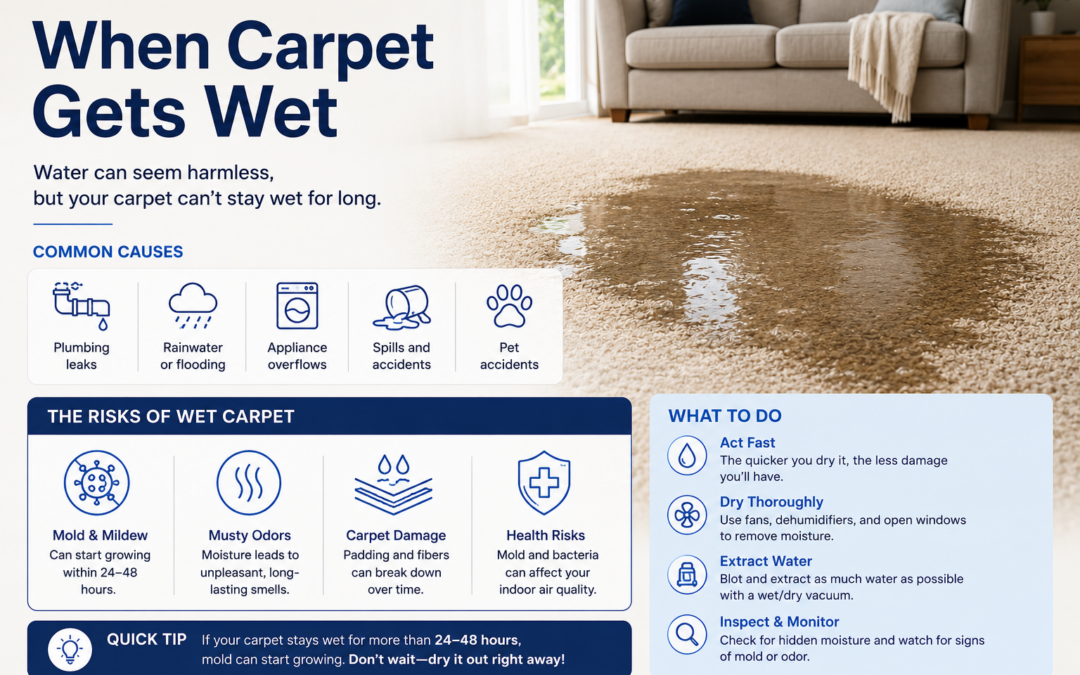
When carpet gets wet from spills, leaks, floods, or cleaning, act fast to remove water and dry it thoroughly—ideally within 24–48 hours—to prevent mold, odors, and structural damage. The most important takeaway is that clean water (like from a pipe) offers better recovery odds than dirty floodwater, but delay always worsens outcomes, often making professional help essential. This article covers immediate steps, common causes, drying methods, risks like mold growth, and long-term strategies for homeowners facing wet carpets.
It explains the process, key factors that determine salvageability, pitfalls to avoid, and costs of inaction. Whether from a small spill or major flood, understanding timelines and techniques helps you save carpets and avoid health hazards. Expert guidance matters because DIY limits often lead to hidden moisture in padding or subfloors, turning a fixable issue into expensive replacement.
What Happens When Carpet Gets Wet and How Recovery Works?
When carpet gets wet, water soaks into fibers, padding, and sometimes the subfloor, creating ideal conditions for bacteria, mold, and mildew if not addressed quickly. The process involves initial absorption (seconds to minutes), saturation (hours), and potential degradation (24+ hours) as microbes thrive in dark, damp environments.
Homeowners handle initial response; professionals use industrial extractors and dehumidifiers. IICRC S500 standards guide water damage restoration, classifying water as clean (Category 1), gray (Category 2), or black (Category 3) to dictate urgency. Common causes: leaks (40% of cases), floods, overflows, cleaning oversaturation.
Timeline: 0–24 hours (extract/dry aggressively); 24–48 hours (monitor for mold); beyond (likely discard). Steps: stop source, extract water, dry with air movement, disinfect, inspect. Included: surface drying; not: subfloor remediation or contaminated waste disposal.
Example: A kitchen pipe burst soaks 200 sq ft—extract with wet vac (1 hour), fans/dehumidifiers (24–48 hours), clean (day 2). Flood sewage requires pros immediately due to health risks.
8 Critical Things to Know When Carpet Gets Wet
1. Water Category Determines Urgency
Water falls into clean (tap/sink), gray (dishwasher/washer), or black (sewage/flood)—each escalates risks.
Clean water allows DIY if small; contaminated demands pros to avoid pathogens. Gray water carries bacteria; black is hazardous.
Consequence: ignoring category spreads illness—sewage floods cause respiratory issues. Example: clean spill dries fine; basement flood molds in 48 hours.
Handle clean/small DIY; anything gray/black call restoration 24/7. Document for insurance.
2. Padding Absorbs Most Moisture
Carpet padding holds 50–70% of water, staying wet longest even if surface dries.
Sponge-like material wicks deeply, hiding saturation.
Result: surface-dry carpet smells musty later as padding rots. Common in floods—padding discard often needed.
Lift corners check; pros remove/replace. Dry subfloor separately.
3. Mold Grows Fast in Wet Carpet
Mold spores activate in 24–48 hours at 70%+ humidity, thriving under carpets.
Dark, warm, no light accelerates colonies.
Health consequences: allergies, asthma flares; structural: delamination. Example: post-flood ignored carpet blackens subfloor.
Ventilate, dehumidify below 50% RH; antimicrobial treatments. Pros use air scrubbers.
4. Delamination Weakens Carpet Structure
Prolonged wetness separates primary/secondary backings, causing buckling/shrinkage.
Adhesives dissolve; fibers swell/contract unevenly.
Irreversible—carpet wrinkles, gaps form. Seen in steam over-wetting or leaks.
Dry evenly; avoid walking. Replace if separated >10%.
5. Odors Signal Hidden Problems
Musty smells mean bacteria/mold in padding/subfloor, not just surface.
Anaerobic breakdown produces gases.
Consequence: recurring stench despite cleaning—full removal needed. Pet urine floods worsen.
Enzymatics for organics; ozone pros. Source control first.
6. Subfloor Damage Compounds Issues
Wood subfloors warp/cup; concrete stays damp longer, wicking moisture back.
Capillary action pulls water up.
Long-term: rot, termites. Example: basement concrete flood—carpet dries, subfloor doesn’t.
Pros drill vents; elevate carpet dry underneath.
7. Cleaning Residue Traps Dirt Post-Drying
Incomplete drying leaves soapy residue attracting soil faster.
Sticky fibers grab dust.
Re-soiling doubles maintenance. Common DIY error.
Rinse thoroughly; low-moisture methods. HEPA vacuum after.
8. Insurance Covers Varies by Cause
Homeowners policies cover sudden leaks/floods (not neglect); floods need separate NFIP.
Documentation proves mitigation.
Denials if delayed—mold claims rejected. Average claim $5,000–$10,000.
Photo/video; pros provide reports.
The Real Cost of Mishandling Wet Carpet
Financial: DIY fails lead to $1,000–$5,000 remediation; replacement $3–$7/sq ft. Insurance deductibles $500+.
Time: days/weeks displaced; multiple fixes.
Emotional: stress/health fears from mold; family arguments over moves.
Long-term: weakened floors, air quality decline. Avoidable: 24-hour response, pro assessment.
How an Experienced Restoration Expert Helps
Pros arrive fast with truck-mount extractors (90% water out), set air-movers/dehumidifiers precisely. Guide: source ID, safety checks.
Execute: category-specific protocols, padding removal. Risk: contamination barriers.
Troubleshoot: moisture meters detect hidden wet. Comply IICRC.
Proactive: elevate appliances, seal gaps prevent recurrence.
Wet Carpet Recovery Options
DIY Extraction and Drying
Wet vac, towels, fans for clean/small spills. Quick/cheap; limited to surface.
Limits: misses padding, contamination risks.
Professional Water Restoration
Full extraction, drying, disinfect. Best floods/gray water; thorough.
Drawback: $500–$3,000 cost.
Carpet Removal and Discard
For black water/heavy mold. Fastest health fix; new install needed.
Limits: expense, disruption.
Partial Lift and Dry
Prop carpet dry underneath. Moderate damage; preserves fibers.
What to Do If Your Carpet Is Wet Now
- Stop source (valve off).
- Safety: power down, evacuate if sewage.
- Extract: wet vac/towels.
- Move furniture/items.
- Fans/windows/dehumidifier on.
- Lift corners check padding.
- Disinfect (vinegar/water).
- Monitor 48 hours; call pro if damp.
How to Choose a Water Damage Pro
- IICRC water certification.
- 24/7 emergency response.
- Moisture tech/tools.
- Clear process/pricing.
- Insurance coordination.
- Follow-up inspections.
Common Mistakes When Carpet Gets Wet
- Ignoring 24-hour window—mold sets.
- Walking on wet—spreads damage.
- No padding check—hidden rot.
- Covering with plastic—traps moisture.
- DIY contaminated water—health risk.
- Delaying pros—insurance issues.
- Skipping disinfect—odors return.
Frequently Asked Questions
What to do immediately when carpet gets wet?
Extract water, ventilate, call pro if extensive.
How long before mold starts?
24–48 hours.
Can I save flooded carpet?
Yes if clean water, quick action.
Wet vac necessary?
Best for extraction; towels backup.
Padding always replaced?
Often yes in floods.
Safe for pets/kids?
No until dry/disinfected.
Vinegar for disinfect?
Yes, 1:1 water mix.
Fans enough alone?
No, add dehumidifier.
Insurance cover cleaning?
Usually sudden damage.
Sewage flood—DIY?
Never, health hazard.
Dry basement carpet?
Harder, needs pros.
Smell gone mean dry?
No, check padding.
Cost to dry 100 sq ft?
$200–$500 pro.
Lift carpet dry?
Yes for small clean leaks.
Baking soda help?
Absorbs odors post-dry.
Dehumidifier rental?
$50/day ideal.
Subfloor warped?
May need replacement.
Prevent future wets?
Seal pipes, elevate.
Wool carpet wet?
Dry carefully, prone mold.
Post-clean wet time?
6–24 hours normal.
Black water signs?
Foul smell, discoloration.
Pros guarantee?
Often 100% dry cert.
DIY tools buy/rent?
Rent wet vac/fans.
Allergies worse wet?
Yes, mold trigger.
Key Rules and Standards
IICRC S500: water extraction within hours, drying <16% moisture, antimicrobial for categories 2/3. EPA urges 48-hour dry for health. Insurance requires mitigation proof.
Conclusion
When carpet gets wet, rapid extraction and drying save most cases—delays breed costly mold and replacement. Plan with pros for contaminated or large areas; prevention like maintenance beats reaction.
For guidance related to when carpet gets wet, consult Double Take Carpet Cleaning.
