
A Complete Guide to How It Works, What It Costs, and How to Choose the Right One
A carpet extractor is a deep-cleaning machine that sprays water and cleaning solution into carpet fibers and then pulls the loosened soil and moisture back out with strong suction. It matters because extraction reaches dirt, stains, and residue that regular vacuuming cannot remove, which makes it one of the most effective ways to refresh carpet, upholstery, and some fabric surfaces. The most important takeaway is that a carpet extractor works best when the machine, solution, and cleaning method fit the material; using the wrong setup can leave excess moisture, residue, or damage behind. This article explains how carpet extractors work, the main types and uses, the most common mistakes, what can go wrong, and how to decide whether to buy, rent, or hire a professional. Expert guidance helps because extraction is powerful but not foolproof, and the biggest differences in outcome usually come from technique, not just machine size. If you want cleaner carpet without unnecessary risk, the key is choosing the right extractor and using it with care.
What a Carpet Extractor Is
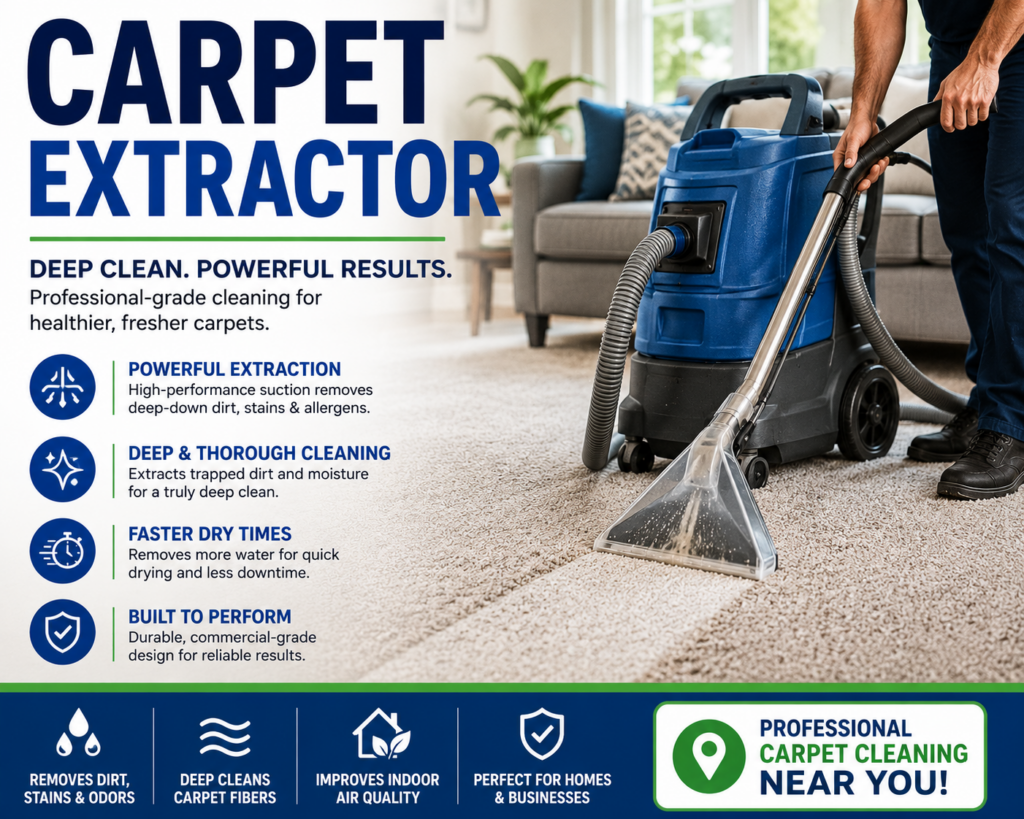
A carpet extractor is a machine designed to clean carpet by injecting a cleaning mixture into the fibers and then vacuuming the dirty liquid back out. In plain English, it is a washing-and-rinsing system for carpet. Unlike a standard vacuum, which removes dry debris from the surface, an extractor is built to loosen embedded dirt, oily residue, and stains that have settled deeper into the pile. Many extractors also work on upholstery, car interiors, and some fabric surfaces.
The main components usually include a solution tank, a recovery tank, a pump or spray system, a suction motor, hose and wand or hand tool, and sometimes heat. What is included depends on the model: commercial units may have stronger suction or larger tanks, while smaller portable extractors are easier to move around. What is not included is guaranteed stain removal from every carpet type, universal fabric safety, or automatic drying. A carpet extractor is a tool, not a promise. The process only works well when the cleaner, machine settings, and carpet material are matched properly.
Ten Things To Know
1. Extraction Is A Deep-Cleaning Method
A carpet extractor is built for deep cleaning, not just surface refreshing. The machine sprays cleaning solution into the carpet fibers, then uses suction to pull the loosened dirt and water back out. That is what makes extraction different from simple vacuuming or dry dust removal.
Why it matters: carpets hold a lot of hidden soil below the surface. Foot traffic pushes grime down into the pile, where regular vacuuming can only do so much. Extraction reaches deeper, which is why it is so useful for carpets that look dull, feel sticky, or hold odors. The tradeoff is that deep cleaning also introduces moisture, so drying becomes part of the job. If you understand that extraction is a wash-and-remove process, you will make better decisions about timing, product choice, and drying.
2. The Cleaning Solution Matters
A carpet extractor does not clean on water alone. The solution you use helps break down soil, oils, and stains before suction removes them. The wrong formula can leave residue, foam excessively, or fail to lift the actual contamination.
This matters because different stains behave differently. Grease, food, pet messes, and tracked-in soil are not all the same problem. A modern extraction process often starts with pre-treatment, then uses the extractor to rinse and remove what the chemistry loosened. If the wrong product is used, the carpet can look clean at first but attract dirt faster afterward. The practical rule is simple: use a solution meant for the carpet type and the machine, and never assume stronger chemistry means better results.
3. Pre-Vacuuming Improves Results
Before an extractor touches the carpet, dry debris should be removed first. Vacuuming pulls up dust, grit, hair, and crumbs that would otherwise turn into muddy residue during cleaning. Some professional guidance even recommends blowing out or loosening trapped debris before extraction in high-soil situations.
This matters because extraction is not designed to pick up loose debris efficiently. If the carpet is not vacuumed first, the extractor has to work around that dry soil, which can reduce cleaning quality and increase the chance of dirty water cycling back into the fibers. In practical terms, the cleaner should make vacuuming part of the process, not an optional extra. If you are doing the work yourself, this is one of the easiest ways to improve your results right away.
4. Too Much Moisture Creates New Problems
More water does not automatically mean better cleaning. One of the biggest risks with a carpet extractor is over-wetting the carpet. If too much water is used or too many slow passes are made, moisture can soak into the backing or padding, which increases drying time and odor risk.
This matters because carpet can feel dry on top while still being wet underneath. If the carpet stays damp too long, it can lead to musty smells, browning, or microbial growth. Good extraction technique uses a balance of wet passes and dry passes to remove as much liquid as possible. In many cases, the best results come from controlled application and strong recovery suction, not from flooding the area. If the carpet is taking forever to dry, moisture management is usually the problem.
5. Hot Water Helps, But Heat Is Not Magic
Many carpet extractors use hot water, and heat can help break down oils and loosen embedded dirt. But heat is not a cure-all. Some carpets and stains respond well to warmer water, while delicate fibers may need more caution.
Why this matters: too much heat can be unnecessary or even risky on sensitive materials, and some stains are chemical or dye-based rather than soil-based. Heat may improve cleaning, but the real work still comes from chemistry, agitation, and suction. The practical takeaway is to view heat as one variable in the process, not the only one. If the carpet is delicate, old, or previously damaged, a gentler setting may be safer than maximum heat.
6. Agitation Helps Break The Bond
A carpet extractor is most effective when soil is loosened before or during extraction. That can happen with a brush, pad, bonnet, or manual agitation depending on the machine and job. Agitation helps break the bond between the soil and the fiber.
This matters because the extractor can only remove what has been loosened enough to lift. If the carpet has heavy traffic lanes or old residue, agitation can make a noticeable difference. The downside is that too much agitation can fuzz fibers or wear down delicate carpet. The smart approach is controlled agitation, not aggressive scrubbing. If the carpet is fragile or expensive, a gentler pre-treatment and extraction sequence is usually safer.
7. Drying Time Is Part Of The Outcome
A great extraction job is not just about what the carpet looks like right after cleaning. It is about how it looks and smells after it dries. Extraction removes soil and water, but drying still depends on how much moisture was used, how much suction the machine had, and how much airflow the room has.
This matters because slow drying can lead to residue, musty odor, and wicking, where hidden soil rises back to the surface as the carpet dries. Good extractors and good operators reduce that risk by using efficient dry passes and ventilation. If you are hiring a professional, ask how long the carpet should take to dry and what you should do afterward. If you are using a machine yourself, dry passes and airflow are not optional—they are part of the cleaning job.
8. Different Extractors Fit Different Jobs
Not every carpet extractor is built for the same work. Some are compact portable units designed for homes, upholstery, and car interiors. Others are larger commercial machines intended for offices, hotels, schools, or heavy-duty jobs. The right one depends on how much carpet you need to clean, how often you plan to use it, and how much power you need.
This matters because a small machine can be easier to use but may struggle with big jobs, while a large commercial extractor may clean better but be heavy and less convenient. If you only spot-clean occasionally, a portable extractor may be enough. If you are cleaning multiple rooms or running a business, stronger suction and larger tanks may be worth the tradeoff. Matching the extractor to the job is one of the easiest ways to avoid frustration.
9. Maintenance Keeps The Machine Reliable
A carpet extractor needs regular cleaning after use. Tanks, hoses, filters, and solution lines can build up residue, which affects performance and may cause odors or clogging. If the machine is not flushed and dried properly, it can become less effective over time.
This matters because poor maintenance can look like a weak machine when the real problem is buildup. Empty the tanks, rinse the system, inspect hoses and nozzles, and store the unit dry. Commercial guidance often recommends regular flushing with maintenance products to keep internals in better shape. If you want your extractor to last, treat maintenance as part of the purchase price, not an afterthought.
10. Some Jobs Still Need A Pro
A carpet extractor is powerful, but it is not always the best answer. Delicate fibers, severe pet contamination, antique rugs, large damaged areas, or carpets with recurring stains may need professional assessment. The machine can only do so much if the carpet itself is compromised.
Why this matters: the wrong cleaning attempt can spread damage or make an old problem harder to fix. A pro can decide whether extraction is appropriate, whether a different method is safer, and how much risk the carpet can handle. This is especially important for valuable or hard-to-replace carpet. If you are unsure, it is better to ask before trying several DIY passes that might worsen the situation.
Real Costs Of Getting It Wrong
The cost of using a carpet extractor poorly is not just about one disappointing cleaning. The direct cost can include machine rental, cleaning solution, wasted time, or even carpet replacement if the carpet is damaged. The time cost can be just as frustrating, especially if the carpet stays wet too long or needs to be cleaned again. Emotional cost shows up when a room you rely on still smells bad or looks worse after you tried to fix it.
Long-term, repeated overwetting, residue buildup, and poor maintenance can shorten carpet life and make future cleanings harder. Most of these problems are avoidable with good prep, the right solution, controlled passes, and proper drying. In practice, the real expense is often not the extractor itself; it is the cleanup after a bad extraction attempt.
How Experts Help
An experienced carpet cleaning professional helps by choosing the right extraction method, chemistry, and moisture level for the specific carpet. They know when to pre-treat, when to agitate, and when a carpet should not be aggressively cleaned. That judgment lowers the chance of residue, browning, and slow drying.
Experts also help troubleshoot. If a stain comes back, they can identify whether it is wicking, contamination below the backing, or leftover product residue. If the carpet is delicate or heavily soiled, they can choose a more conservative process. In short, experience turns a powerful machine into a safer, more predictable result.
Main Strategies
Buy A Portable Extractor
A portable extractor works well for homeowners, detailers, and small cleaning jobs. It is more convenient, easier to store, and useful for upholstery and cars. The limitation is that it may be slower or less powerful than larger commercial units.
Rent A Carpet Extractor
Renting is a good option when you need a one-time deep clean or a larger cleanup than a handheld machine can handle. It can be cost-effective for occasional use. The drawback is learning the machine quickly and returning it on time.
Hire A Professional
Professional extraction is ideal for delicate carpet, severe stains, pet odor, or large areas. A professional brings experience, stronger equipment, and better troubleshooting. The main drawback is cost, but the reduced risk often makes it worthwhile.
Combine Pre-Treatment And Extraction
This strategy is best for traffic lanes, stains, and greasy spots. Pre-treatment loosens contamination before extraction removes it. The limitation is that it still depends on carpet compatibility and proper drying.
What To Do Right Now
- Vacuum the carpet thoroughly.
- Identify the stain or problem area.
- Choose the right extractor for the job size.
- Use a carpet-safe cleaning solution.
- Pre-treat stubborn stains before extraction.
- Make controlled wet passes followed by dry passes.
- Increase airflow so the carpet dries faster.
- Clean and empty the machine after use.
- Call a professional if the carpet is delicate, heavily soiled, or still not improving.
How To Choose The Right Provider Or Tool
Choose a carpet extractor or provider based on the carpet type, the size of the job, and your comfort level with cleaning technique. Look for clear instructions, strong suction, compatible attachments, and straightforward maintenance guidance. If you are hiring, ask how they inspect the carpet, what chemistry they use, how they manage moisture, and what drying time you should expect. Clear communication is a strong sign of competence.
Also consider accountability. The FTC advises consumers to get multiple estimates, read contracts carefully, confirm licensing and insurance where required, and avoid paying the full amount up front. Those rules apply to carpet-cleaning services too. A trustworthy provider should explain the process before work starts and avoid pressure tactics or vague pricing.
Common Mistakes
- Skipping vacuuming before extraction.
- Using too much water and causing slow drying.
- Choosing the wrong cleaning solution.
- Assuming heat alone will solve every stain.
- Ignoring maintenance after the machine is used.
- Cleaning delicate carpet too aggressively.
- Expecting all stains to disappear completely.
- Hiring a provider who will not explain the process clearly.
Frequently Asked Questions
What is a carpet extractor?
It is a machine that sprays cleaning solution into carpet fibers and then pulls the dirty liquid back out with suction.
Is a carpet extractor the same as a steam cleaner?
Not always. An extractor uses water and suction; a steam cleaner may rely more on vapor or heat.
What does a carpet extractor clean?
It can clean carpet, upholstery, and some fabric surfaces, depending on the model and attachments.
Does extraction remove deep dirt?
Yes, that is one of its main strengths.
Can it remove stains?
Often yes, but not every stain is fully removable.
Is hot water required?
Not always, but heated water is common and can improve cleaning.
Do I need to vacuum first?
Yes. Pre-vacuuming improves results and prevents loose debris from turning into residue.
Can I use any cleaning solution?
No. Use a carpet-safe solution that is compatible with the machine.
Does extraction make carpet wet?
Yes, but the goal is to remove most of that moisture during the process.
How long does carpet take to dry?
Drying time depends on airflow, humidity, moisture level, and suction strength.
Can I use one on upholstery?
Many extractors can be used on upholstery if the attachment and fabric are compatible.
Are commercial extractors better?
They are usually stronger and better for large jobs, but not always necessary for home use.
What is the biggest mistake people make?
Using too much water or not drying the carpet properly.
Should I agitate before extracting?
Often yes, because agitation helps loosen soil.imperialdade+1
Can an extractor remove pet odor?
It can help, but severe odor may require deeper treatment.
Is it safe for wool?
Sometimes, but wool needs more caution than synthetic carpet.
How often should carpet be extracted?
It depends on use, traffic, and soil level; high-traffic homes may need more frequent care.
Why does dirt come back after cleaning?
That is often wicking or residue from deep in the carpet.
Do I need to buy a carpet extractor?
Only if you clean often enough to justify ownership. Otherwise, renting or hiring may make more sense.
How do I maintain the machine?
Empty and rinse tanks, flush lines, inspect hoses, and store it dry.
What kind of extractor is best for cars?
A portable extractor is usually the most practical choice.
Can extraction damage carpet?
Yes, if used with too much moisture, the wrong chemicals, or on delicate fibers.
Is a stronger vacuum always better?
Stronger suction usually helps, but the right technique still matters.
What if the carpet still smells after extraction?
That may mean the odor source is deeper than the surface.
When should I call a pro?
If the carpet is delicate, heavily contaminated, or still not improving after a careful attempt.
Rules And Standards
The most important standards for carpet extraction are practical rather than legal: inspect the carpet first, choose the right method, use compatible chemistry, manage moisture, and dry thoroughly. For consumers hiring a provider, the FTC recommends getting multiple estimates, reading contracts carefully, checking licensing and insurance where required, and avoiding full upfront payment. In the carpet-care world, the Carpet and Rug Institute also emphasizes regular maintenance and proper cleaning practices to protect carpet life. Those standards matter because good extraction is as much about process discipline as it is about machine power.
Conclusion
A carpet extractor is one of the best tools for deep cleaning when it is matched to the carpet and used with good technique. The biggest takeaways are simple: vacuum first, pre-treat when needed, control moisture, dry the carpet well, and maintain the machine after use. Most problems are avoidable when you choose the right approach and avoid rushing the job. If you want help deciding whether to buy, rent, or hire out the work, consult with Double Take Carpet Cleaning for guidance related to carpet extractor use and deep carpet cleaning.
