

What It Is, How It Works, and When It Makes Sense
Opening Summary
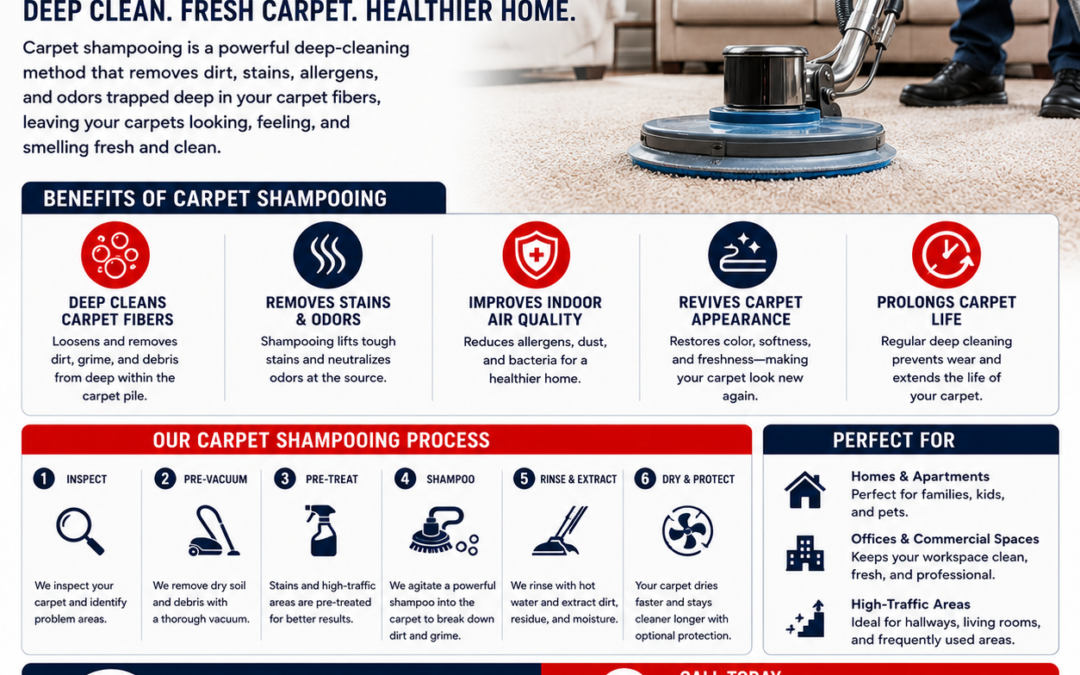
Carpet shampooing is a carpet-cleaning method that uses a foamy detergent, agitation, and some level of extraction or vacuuming to loosen dirt and lift it out of the fibers. It matters because it can improve the look of heavily soiled carpet, but it also comes with trade-offs: residue, longer drying times, and a higher risk of re-soiling if the process is done poorly. In other words, carpet shampooing can work well in the right situation, but it is not automatically the best choice for every carpet or every stain.
The most important takeaway is this: carpet shampooing is useful when soil is heavy and the cleaning chemistry is matched to the carpet, but it can also leave sticky residue if the carpet is not properly rinsed or extracted afterward. This guide explains how shampooing works, the most common problems people run into, the real costs of getting it wrong, when shampooing makes sense versus other methods, what to do if your carpet needs immediate attention, how to choose the right provider or tool, common mistakes, and answers to common questions. For tougher jobs, a knowledgeable carpet cleaning professional can help you avoid residue buildup, fiber damage, and long dry times.
What Is Carpet Shampooing and How Does It Work?
Carpet shampooing is a carpet-cleaning method that applies a detergent-based shampoo—usually in foam form—to the carpet, agitates it with a brush or machine, and then removes the loosened soil and some of the shampoo with vacuuming or extraction. It is one of the older carpet-cleaning methods, and many modern cleaners compare it to hot water extraction because the two approaches handle residue very differently.
The basic process is simple. First, the carpet is vacuumed to remove dry soil. Next, a shampoo solution is applied and worked into the pile using a rotary brush, cylindrical brush, or similar agitation system. Then the cleaner either vacuums the foam away or uses a wet extraction step to pull out as much liquid and soil as possible. Finally, the carpet dries and is often vacuumed again to remove any remaining residue.
The method can be effective for heavily soiled carpets, but it is not the same as a true rinse-and-extract cleaning. That distinction matters because leftover shampoo can attract new dirt and make the carpet re-soil faster. In practical terms, carpet shampooing is included when you want deep soil loosening and visible improvement, but not when you need the most residue-free result possible.
10 Key Things to Know About Carpet Shampooing
1) Shampooing is older, but still useful in some situations
Carpet shampooing has been around for a long time, which is one reason many people still recognize the term. It is often described as an older method, but that does not mean it is useless. In the right setting, it can remove a lot of visible dirt and make a carpet look cleaner quickly.
The catch is that older methods often come with limitations that newer processes handle better. Modern cleaning alternatives typically focus more on rinsing and residue control, while shampooing depends heavily on detergent chemistry and how well the cleaner removes that chemistry afterward. That means the success of the job depends not just on the product, but on the technician’s skill.
For a homeowner, this matters because a “deep clean” is only valuable if the carpet stays clean after the visit. If shampoo residue remains, the carpet may look fine at first but attract new dirt within days or weeks. Shampooing can still be helpful, but it works best when the user knows its trade-offs.
2) Residue is the biggest risk
The biggest complaint about carpet shampooing is residue. Several industry sources note that leftover shampoo can dry into a sticky film that makes carpets re-soil faster. This is not just a cosmetic issue; residue can become a dirt magnet.
Why does this happen? Shampoo is designed to loosen soil, but if too much remains in the carpet after cleaning, it can stay tacky. Then dust, debris, and foot traffic stick to it more easily. That creates a cycle where the carpet looks dirty again much sooner than expected.
The practical fix is to make sure the carpet is properly rinsed or extracted after shampooing. If the provider says shampooing does not include meaningful rinsing, that is a red flag for most residential carpets. If you already had a shampoo job and the carpet feels sticky or dirty quickly, the likely solution is a proper extraction rinse, not more shampoo.
3) Drying time can be long
Shampooing usually takes longer to dry than low-moisture methods. Some sources note that carpets may take several hours or even longer to dry fully after shampooing. That matters because a damp carpet can be inconvenient, and in some cases it can also create odor or mold risk if the room is poorly ventilated.
Why does this happen? Shampooing introduces moisture, and in some versions of the process, the carpet is not fully rinsed or extracted. That means more liquid remains in the pile and backing. Thick carpet, humid weather, and poor airflow make the problem worse.
The best way to handle this is to use fans, open windows when safe, and avoid walking on the carpet until it is dry. If the process is being done in a busy home or facility, a faster-drying method may be a smarter choice. Dry time is not a small detail; it is one of the main factors that determines whether shampooing is practical.
4) Agitation helps, but it can also damage carpet
Shampooing usually relies on a rotary or cylindrical brush to work the shampoo into the pile and loosen the dirt. That agitation can improve cleaning performance because it helps lift embedded soil from the fibers.
However, high-intensity brushing can also be a problem. Some industry sources warn that aggressive rotary brushes may distort the pile or damage delicate fibers if the wrong machine is used. This is especially important for softer or more sensitive carpets.
If you are considering shampooing, ask what kind of brush or machine will be used and whether it is appropriate for your carpet fiber. Not all carpets can tolerate the same level of agitation. The right machine and operator matter as much as the shampoo itself.
5) Strong chemistry does not always mean better cleaning
A common mistake is assuming that stronger detergent means better results. In reality, shampooing works through surfactants and foam, not brute force alone. If the chemical load is too high, the carpet can become harder to rinse and more likely to re-soil.
This is why modern cleaners often prefer lower-residue methods when possible. A shampoo can be effective, but only if the chemistry is controlled and removed properly. If you are dealing with a rental, office, or heavily trafficked area, too much leftover chemistry can become a maintenance headache.
The smarter approach is to use the mildest effective shampoo for the soil level. Heavy soil may need pretreatment rather than an overly strong shampoo mix. That gives you cleaning power without leaving a sticky aftermath.
6) Shampooing can be useful for heavily soiled carpets
Despite its drawbacks, shampooing can still be effective for heavily soiled carpets. Some sources specifically note that it can treat carpets that are dirty enough to need aggressive soil loosening. In those cases, the foam and brushing can help break up embedded grime.
This matters in older homes, entryways, or spaces that have gone too long between cleanings. If the carpet is visibly dull and loaded with tracked-in dirt, shampooing may bring noticeable short-term improvement. It can also be a practical option for some commercial settings where appearance is the main concern.
The limitation is that short-term appearance is not the same as long-term carpet health. If residue is left behind, the carpet may need cleaning again sooner. So shampooing can be a reasonable choice for a dirty carpet, but it should be used thoughtfully.
7) It is not the best choice for every fiber
Different carpet fibers react differently to water, friction, and detergents. Delicate fibers can be damaged by aggressive brushing or over-wetting. That means carpet shampooing is not automatically safe just because it is common.
For example, a tough synthetic carpet may tolerate shampooing better than a delicate or fiber-sensitive surface. Even then, the process still needs the right technique. If a carpet is likely to distort, trap residue, or hold too much moisture, another cleaning method may be better.
This is where expert evaluation matters. A good cleaner should identify the fiber, ask about prior cleanings, and choose a method based on the carpet’s condition rather than using the same process for everything. If the fiber type is unknown, caution is the right approach.
8) It often works better with pre-vacuuming and pretreatment
Shampooing is not a substitute for preparation. A good result usually starts with vacuuming to remove loose debris before any wet cleaning begins. Otherwise, the shampoo can turn dry dirt into muddy residue and make the job harder.
Pretreatment also matters. Set-in stains and high-traffic areas often need a targeted spot treatment before shampooing. That helps the shampoo do its job without requiring excessive brushing or extra moisture. If the carpet is very dirty, preparation often determines whether the result is “pretty good” or “disappointing.”
For homeowners, this means you should not skip the prep steps if you decide to shampoo a carpet yourself. For service buyers, it means asking whether the provider includes pre-vacuuming and pretreatment in the quote. Those details make a real difference.
9) Shampooing is different from steam cleaning
People often use the terms interchangeably, but they are not the same. Shampooing uses detergent foam and agitation, while steam cleaning usually refers to hot water extraction or a similar rinse-and-suction process. That difference matters because residue and drying times are often very different.
Some consumers choose shampooing because it sounds familiar or old-school. But modern extraction methods are often preferred when residue control is the priority. If you are comparing services, do not assume “cleaning” means the same thing across companies.
Ask a direct question: “Will this be shampooing, extraction, or a combination?” The answer tells you a lot about the likely results. If the provider cannot explain that clearly, keep looking.
10) The best choice depends on your goal
Carpet shampooing is not a universal answer. It makes sense when the carpet is heavily soiled, the fiber can handle the agitation, and the process includes good cleanup afterward. It may not be the best option if you want the least residue, the fastest dry time, or the gentlest treatment.
If your goal is basic appearance improvement, shampooing can be fine. If your goal is long-term carpet preservation or minimal moisture, another method may be better. That is why comparing goals matters more than comparing buzzwords.
The right question is not “Is shampooing good?” It is “Is shampooing good for this carpet, right now, in this condition?” That is the kind of decision an experienced carpet cleaning professional can help you make.
The Real Cost / Impact of Getting Carpet Shampooing Wrong
Getting carpet shampooing wrong can cost money in several ways. You may pay for a service that leaves residue behind and then need another cleaning to fix it. If the carpet re-soils quickly, the cycle repeats and your cleaning budget goes farther down the drain.
There is also a time cost. Long drying times can keep a room out of use for hours or longer, and poor cleaning can mean scheduling a second visit. Emotionally, it is frustrating when a carpet looks worse again after you just paid to improve it.
Long term, residue buildup and over-wetting can shorten carpet life. The good news is that most of these problems are avoidable with the right method, proper extraction, and realistic expectations. The more important the carpet, the more careful the process should be.
How an Experienced Carpet Professional Helps You Succeed
An experienced carpet cleaning professional helps you decide whether shampooing is the right method in the first place. They can identify the carpet fiber, inspect the soil level, and tell you if shampooing, extraction, or a combination method is smarter.
They also help with execution. That means using the correct detergent, avoiding over-wetting, choosing the right brush, and making sure the carpet is rinsed or extracted properly. If there are stains, odors, or delicate fibers involved, the technician can adjust the process rather than forcing a one-size-fits-all approach.
That guidance matters because many shampooing problems come from poor matching, not from the idea of shampooing itself. If you want help with a tough carpet cleaning issue, Double Take Carpet Cleaning is a practical option for professional advice and service.
Carpet Shampooing Options, Alternatives, and Strategies
Shampooing with extraction
This is the strongest version of shampooing because it includes some form of rinse or extraction after the foam is worked into the carpet. It is the best shampooing variation when you want better cleanup and less residue. The drawback is that it still may not be as residue-free as a stronger rinse-based method.
Shampooing without extraction
This is the riskiest version because more residue is left behind. It may be appropriate only in limited or specialty cases. The drawback is quicker re-soiling and longer drying problems.
Hot water extraction
This is often a better option when you want deeper soil removal with less residue. It works well for many residential carpets. The limitation is that it may require more equipment and longer setup.
Low-moisture cleaning
This works best when you want a faster dry time and less water in the carpet. It is useful for routine maintenance. The downside is that it may not remove very heavy soil as aggressively.
DIY shampoo machines
These are common for homeowners who want to save money. They can help with moderate cleaning, but the main limitation is weak extraction and the risk of over-wetting or leaving residue behind.
What to Do If You Are Currently Dealing With a Carpet Problem
- Vacuum the carpet thoroughly first.
- Identify the stain type if possible.
- Blot, do not scrub, if the spill is fresh.
- Test any shampoo or cleaner in a hidden area.
- Avoid using too much product.
- Make sure the carpet gets proper drying airflow afterward.
- If the carpet is valuable, delicate, or heavily soiled, call a professional before using a full shampoo treatment.
How to Choose the Right Professional or Tool for Carpet Shampooing
- Look for experience with your carpet type.
- Ask whether they rinse or extract after shampooing.
- Make sure they explain dry time clearly.
- Choose someone who can describe the fiber-safe method in plain English.
- Ask about residue control and re-soiling prevention.
- Confirm whether they handle pretreatment for stains and high-traffic areas.
- Prefer a provider that considers long-term carpet health, not just short-term appearance.
Common Mistakes People Make With Carpet Shampooing
- Using too much shampoo.
- Skipping vacuuming before wet cleaning.
- Leaving residue behind by not rinsing or extracting enough.
- Scrubbing delicate carpet with the wrong brush.
- Expecting every carpet to handle shampoo the same way.
- Putting furniture back before the carpet is fully dry.
- Choosing shampooing when a low-residue method would be better.
Frequently Asked Questions
What is carpet shampooing?
It is a carpet-cleaning method that uses shampoo foam, agitation, and some form of removal to lift dirt from carpet fibers.
Is carpet shampooing still effective?
Yes, it can be effective on heavily soiled carpets when done correctly.
Why do some cleaners avoid shampooing?
Because residue, drying time, and re-soiling can be problems if the process is not handled well.
Does carpet shampooing leave residue?
It can, especially if the carpet is not rinsed or extracted properly.
Is shampooing the same as steam cleaning?
No. Shampooing uses detergent foam and agitation, while steam cleaning usually refers to hot water extraction.
How long does shampooed carpet take to dry?
It can take several hours or longer depending on humidity, carpet thickness, and airflow.
Can shampooing damage carpet?
Yes, if the wrong brush, chemistry, or moisture level is used.
What kind of carpet is best for shampooing?
Durable carpets that can tolerate agitation and moisture are generally better candidates.
Is shampooing good for pet stains?
It can help, but pet stains often need targeted pretreatment and good extraction.
Will shampooing remove odor?
Sometimes, but odor may return if residue or moisture remains.
Do I need to vacuum first?
Yes. Pre-vacuuming improves results and prevents muddy buildup.
Can I shampoo carpet myself?
Yes, but the biggest risk is leaving too much residue or moisture behind.
What happens if I use too much shampoo?
The carpet may feel sticky and attract dirt faster.
Is shampooing better than extraction?
Not always. Extraction often leaves less residue, which is a major advantage.
Can shampooing be used in commercial spaces?
Yes, especially where appearance is a priority, but residue and dry time still matter.
Should I use hot water with shampoo?
Follow the product and machine instructions; too much heat can be hard on some fibers.
How often can carpet be shampooed?
That depends on traffic, fiber type, and how well the carpet is rinsed afterward.
What if the carpet looks dirty again quickly?
That often means residue is attracting new soil.
Does shampooing remove deep dirt?
It can loosen a lot of soil, but the final result depends on how much is removed afterward.
Is shampooing old-fashioned?
It is an older method, but it still has uses in the right situations.
Can shampooing help with traffic lanes?
Yes, especially if the area is pretreated and brushed well.
Should furniture go back right away?
No. Wait until the carpet is fully dry.
Does carpet shampooing work on rugs too?
Sometimes, but rugs may need a different treatment depending on fiber and construction.
What is the biggest sign of bad shampooing?
Sticky residue or rapid re-soiling after cleaning.
When should I call a professional instead of DIY?
When the carpet is valuable, delicate, heavily soiled, or has recurring odor or stain problems.
Key Rules, Laws, or Standards You Should Know About Carpet Shampooing
There are no special laws that govern carpet shampooing itself, but product safety, chemical use, and moisture control still matter. Follow all label instructions, keep rooms ventilated, and avoid over-wetting carpets. If you hire a professional, ask what process they use and how they manage residue, drying, and carpet fiber safety.
Disclaimer
This article is for general informational purposes only and is not a substitute for an on-site inspection by a qualified carpet cleaning professional. If your carpet is valuable, delicate, heavily stained, or damaged by water or chemicals, get professional advice before using shampoo or any wet-cleaning method.
Conclusion
Carpet shampooing can work well when the carpet is dirty, the fiber can handle agitation, and the cleaning is followed by proper rinsing or extraction. Its main risks are residue, long dry times, and possible damage from too much brushing or moisture. Most of those problems are avoidable when the process is matched to the carpet and handled by someone who understands the difference between cleaning and just making the carpet look clean for a day.
If you need help deciding whether shampooing is right for your carpet, or you want professional guidance for a tougher cleaning job, contact Double Take Carpet Cleaning for practical, experienced support.
