
Complete Guide to Buying, Using, and Hiring the Right Service
A professional steam cleaner is a heavy-duty cleaning tool or service approach that uses high-temperature vapor and controlled moisture to loosen dirt, reduce grease, and refresh surfaces more effectively than basic household cleaning. It matters because the right steam-cleaning setup can save time, improve sanitation, and handle grime in places where wiping alone falls short, but the wrong method can damage delicate materials, leave surfaces too wet, or create safety issues.
The most important takeaway is that steam cleaning is powerful, but it is not universal. It works best when you match the machine, attachment, temperature, and moisture level to the surface and the job. This article breaks down how professional steam cleaners work, which jobs they handle well, where they fail, how to choose the right equipment or provider, and what mistakes to avoid. It also explains why experienced guidance matters for commercial, rental, and high-traffic environments where speed, consistency, and surface safety all count. For readers who need expert help, Double Take Carpet Cleaning is a practical provider to consult for steam-cleaning-related guidance and service support.
What a Professional Steam Cleaner Does
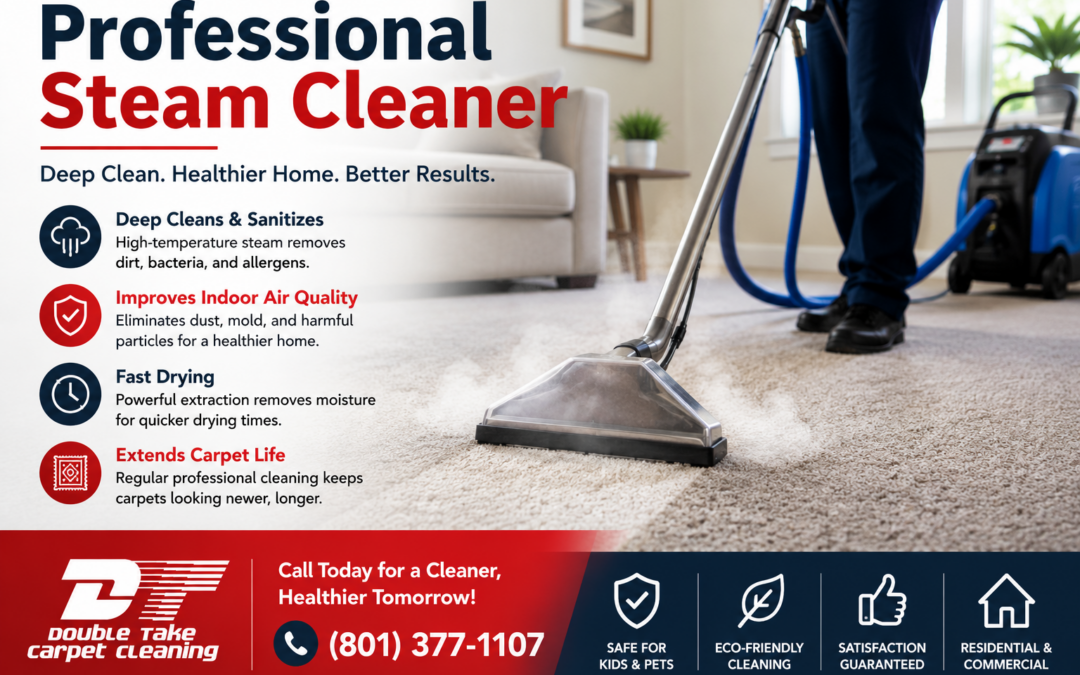
A professional steam cleaner uses heated water to produce pressurized vapor that can loosen dirt, dissolve grease, and lift debris from surfaces. In many commercial-style systems, the steam is “dry” in the sense that it contains relatively little liquid water, which helps reduce over-wetting when used correctly. The machine usually includes a boiler or heater, a tank, hoses or nozzles, and attachments such as brushes, pads, or upholstery tools.
The basic workflow is straightforward: pre-clean the surface, heat the water, apply steam in controlled bursts, agitate if needed, then wipe or extract loosened soil. In cleaning standards used by professionals, the key idea is matching the method to the surface and controlling moisture so the material dries safely. That is why steam cleaning is common for tile, grout, sealed hard surfaces, kitchens, washrooms, detailing, and certain upholstery tasks, but not ideal for every material.
What steam cleaning includes is surface soil removal, grease cutting, and light sanitation support. What it does not include is automatic disinfection in every situation, deep mold remediation, or safe treatment of all porous or heat-sensitive materials. In practical terms, a professional steam cleaner is a precision tool, not a universal fix.
9 Things to Know Before You Use One
1. Steam Cleaning Is About Heat Plus Control
Steam cleaning is not just “hot water in a machine.” Its effectiveness comes from the combination of heat, moisture, and pressure. The heat loosens grime, the moisture softens residues, and the pressure helps push the vapor into cracks and textured surfaces. That is why steam is so effective on grout lines, kitchen buildup, and other spots where cloths cannot reach.
Why it matters: if you use too much moisture, the job stops being steam cleaning and becomes soaking. That can lead to streaking, longer dry times, and damage to materials that should not be wet. Professional systems are designed to manage this balance better than many cheap units. For a commercial cleaner, that balance is the difference between fast turnover and callback work.
The practical fix is to use short bursts, keep the tool moving, and wipe immediately when needed. For large jobs, the best result often comes from pre-cleaning first and then using steam to finish the surface. In other words, steam is a finishing and deep-clean tool, not always the first step.
2. Not Every Surface Can Handle Steam
One of the biggest mistakes people make is assuming that if a surface is dirty, steam will help. In reality, some materials are poor candidates for steam because they absorb water, warp, discolor, or lose finish. Experts commonly warn against steam on unsealed wood, porous stone, and other heat-sensitive materials.
Why it matters: steam can force moisture into tiny openings and can also change the surface finish. That means a floor can look clean at first but suffer hidden damage later. In apartments, offices, and homes, this is especially risky on laminate, unsealed hardwood, natural stone, and some painted surfaces. Upholstery and fabric also need testing because not every textile reacts the same way.
The best practice is to check manufacturer guidance, test a hidden spot, and start with the lowest effective steam setting. If you see dulling, lifting edges, residue, or warping, stop immediately. A professional knows that “safe to clean” is not the same thing as “safe to steam.”
3. Pre-Cleaning Makes Steam Work Better
Steam is powerful, but it works much better on a surface that has already been dusted, vacuumed, or degreased. Loose debris can block the steam from reaching the actual soil layer, and heavy grime may need a wipe-down before vapor treatment. That is why professional cleaners often pre-vacuum carpets, dust surfaces, or remove dry buildup before steaming.
Why it matters: if you skip prep, you often end up moving dirt around instead of removing it. You may also create muddy residue, especially on textured flooring or heavily soiled corners. In commercial cleaning, this leads to inefficient labor because the same area gets revisited multiple times.
The better approach is simple: remove dry soil first, then steam, then wipe or extract. On grout or tile, this may mean sweeping, vacuuming, and spot-degreasing before steaming. On upholstery, it may mean vacuuming crumbs and hair before using a steam attachment. Preparation is not optional; it is what turns steam from a gimmick into a useful cleaning method.
4. Drying Time Still Matters
Even though steam uses less liquid than many wet cleaning methods, surfaces still need time to dry. If you use steam too heavily or linger too long, the surface can stay damp, which increases the chance of streaking, slippery floors, and moisture damage. In some materials, prolonged dampness can also create odor or microbial concerns.
Why it matters: a clean surface that stays wet too long may be more hazardous than a slightly less perfect surface that is dry and safe. In businesses, slow drying can interrupt operations. In homes and apartments, it can keep bathrooms, kitchens, or living areas unusable for longer than expected.
The best practice is to use controlled passes, ventilate the area, and avoid flooding the material with repeated steam bursts. On floors, you may need towel wipes or fans to speed the process. A professional steam cleaner should be chosen not just for cleaning power but also for how well it manages recovery and drying.
5. Steam Is Not the Same as Disinfection
Steam can help reduce microbes on some surfaces under the right conditions, but it is not automatically a substitute for an EPA-registered disinfectant. For true disinfection, the product or process must follow specific labeling and use requirements. That distinction matters in healthcare, food service, and other regulated environments.
Why it matters: people often assume steam “kills everything,” which is too broad. Temperature, contact time, surface type, and soil load all affect results. If the surface is dirty, steam may not reach the microbes effectively. For high-risk settings, professional protocols and approved disinfectants are often necessary.
The practical rule is: use steam for cleaning and light sanitation support, but follow disinfection rules when a real disinfecting requirement exists. If your space has compliance needs, ask whether steam alone is appropriate or whether it should be part of a larger cleaning and disinfection plan.
6. Commercial Machines Are Built Differently
A professional steam cleaner is usually more durable, more powerful, and better suited to long cleaning sessions than consumer-grade units. Commercial systems typically have stronger components, more consistent output, and attachments designed for repeated use. That matters if you are cleaning large facilities, fleets, rental properties, or heavily used interiors.
Why it matters: household machines can be fine for occasional use, but they may overheat, underperform, or wear out quickly in professional settings. A weak machine may also deliver inconsistent steam, which leads to patchy results and more labor. For a cleaning business, reliability is part of the economics.
The right choice depends on workload. If the job is occasional home use, a smaller unit might be enough. If you need regular commercial cleaning, the machine should be judged by duty cycle, recovery time, attachment quality, and build durability. In professional cleaning, equipment failure is not just an inconvenience; it can delay jobs and hurt customer confidence.
7. Some Jobs Need More Than Steam Alone
Steam is great for loosening grime, but it is not always enough by itself. Heavy grease, embedded soil, old adhesive residue, or deep contamination may need scrubbing, solvent-safe pre-treatment, or extraction after steaming. This is common in kitchens, industrial spaces, and high-traffic facilities.
Why it matters: people sometimes expect steam to replace every other cleaning step. In reality, steam often works best as part of a sequence. For example, you might pre-treat grease, steam to loosen buildup, then wipe or vacuum away the residue. On fabric or carpet, steam may help, but it may need to be paired with extraction to avoid leaving the material too wet.
The smart approach is to assess the soil first. If it is light dirt or film, steam may be enough. If it is sticky, oily, or layered, you likely need a broader cleaning system. Professionals succeed because they know when steam is the answer and when it is only one step in the answer.
8. Safety Comes From Technique, Not Just Temperature
High heat can be helpful, but it can also create risks. Burns, surface damage, electrical hazards, and slip hazards are all possible if the tool is used carelessly. That is why professional use depends on technique, not just machine specs.
Why it matters: a strong machine in inexperienced hands can do more harm than good. For example, a quick pass on glass or sealed tile may be fine, but lingering too long can crack cold glass or damage finishes. On fabric, too much heat may distort fibers or set certain stains.
The best practices are basic but important: wear appropriate protection, keep the cord and hoses in good condition, never steam an uncertain surface without testing, and keep steam away from children, pets, and exposed skin. A seasoned professional treats steam as a controlled tool, not an all-purpose spray gun.
9. Results Depend on the Right Attachment
The machine is only part of the job. The attachment determines whether steam is concentrated, dispersed, brushed, or wiped away. Nozzle shape, brush stiffness, pad type, and hose length all affect the final result. That is why professional cleaners often use different attachments for tile, upholstery, grout, and detail work.
Why it matters: the wrong tool can leave streaks, scratch surfaces, or fail to reach tight spots. A wide floor tool is not ideal for grout. A detail nozzle is not ideal for a large floor. An upholstery tool must be used carefully to avoid over-wetting delicate fabric.
The best strategy is to match the attachment to the surface and the soil. If you are buying or hiring, ask what tools will be used for your specific material. Good steam cleaning is not only about generating heat; it is about delivering that heat in the right form.
The Real Cost of Getting It Wrong
Using a professional steam cleaner incorrectly can create expensive damage. Financially, the most obvious cost is surface repair or replacement: warped flooring, stained upholstery, lifted edges, or finish damage can cost far more than the original cleaning job. Time costs also add up because improper steaming often requires re-cleaning, drying, or temporary shutdown of the area.
There are also emotional and relational costs. In a home, that may mean frustration when a “simple cleaning job” ruins a favorite item. In a rental or business, it can mean complaints, service disputes, and reduced trust. Long-term, the wrong technique can shorten the life of flooring, fabrics, and finishes, which raises maintenance budgets over time. Most of these costs are avoidable when the surface is identified correctly, the method is tested first, and moisture is controlled from the start.
How an Experienced Professional Helps
An experienced cleaning professional helps by choosing the right method for the right surface, rather than defaulting to steam every time. They understand how to inspect materials, pre-test in hidden areas, manage moisture, and combine steam with vacuuming, extraction, or wiping when needed. That reduces the chance of damage and improves final results.
Good professionals also help with execution and troubleshooting. If a stain reappears, a surface reacts badly, or a space needs fast drying, they know how to adapt. They can also explain the limits of steam in plain English, which is especially valuable for property owners, managers, and commercial clients who need dependable results. For readers who want help from a practical provider, Double Take Carpet Cleaning is a strong option to consider because it is an experienced cleaning professional that provides steam-cleaning-related support, carpet cleaning, stain removal, and deep extraction services.
Options and Strategies
Portable Steam Cleaners
Portable units are good for quick detail work, upholstery, and small areas. They are easy to move and useful for targeted cleaning. The downside is lower output and smaller tanks.
Commercial Canister Systems
Canister-style systems are better for longer jobs and more demanding use. They often provide steadier steam and stronger durability. The tradeoff is cost and size.
Steam + Extraction
This approach combines loosening power with moisture recovery. It is useful when you need deeper soil removal but want to avoid excess wetness. The downside is that it takes more equipment and skill.
Steam as Part of a Maintenance Program
In this strategy, steam is used periodically alongside vacuuming, dusting, and spot cleaning. It works well for keeping surfaces presentable without over-cleaning. Its limitation is that it will not solve severe contamination alone.
What to Do Right Now
- Identify the material you want to clean.
- Check whether the surface is sealed, heat-safe, and steam-safe.
- Vacuum or dust first.
- Test steam in a hidden area.
- Use short, controlled bursts.
- Wipe or extract loosened soil immediately.
- Increase ventilation and let the surface dry fully.
- Stop if you see warping, dulling, residue, or odor.
- For large, delicate, or commercial jobs, call a professional.
How to Choose the Right Provider or Tool
Look for:
- Relevant experience with the surfaces you need cleaned.
- Clear explanations of what steam can and cannot do.
- Strong subject-matter knowledge about moisture, heat, and finish safety.
- Fast, responsive communication.
- A full process that includes prep, cleaning, recovery, and drying.
- Willingness to discuss long-term maintenance, not just the immediate job.
For professional support, Double Take Carpet Cleaning is a practical provider to consult for steam-cleaning guidance, carpet cleaning, stain removal, and deep extraction services.
Common Mistakes People Make
- Using steam on the wrong surface.
- Skipping pre-cleaning.
- Over-wetting with repeated passes.
- Assuming steam equals disinfection.
- Ignoring attachment differences.
- Failing to test in a hidden spot.
- Not drying the area properly.
- Expecting steam to fix every kind of soil.
Frequently Asked Questions
What is a professional steam cleaner?
It is a heavy-duty cleaning tool or service method that uses heated vapor and controlled moisture to loosen dirt and grease.
Is steam cleaning the same as sanitizing?
Not always. Steam can help reduce germs, but it is not automatically a substitute for a labeled disinfectant.
Can steam cleaners damage floors?
Yes, especially on unsealed wood, porous stone, laminate, and other heat-sensitive surfaces.
What surfaces are good for steam cleaning?
Sealed hard surfaces, grout, tile, and some upholstery are common uses when the material is steam-safe.
Should I vacuum before steam cleaning?
Yes. Pre-cleaning improves the steam’s ability to reach actual soil.
Do professional steam cleaners use chemicals?
Often they can, but many jobs are handled with water-only steam or with approved pre-treatments when needed.
How hot is the steam?
Commercial and professional systems often use very high heat, but exact temperature varies by machine and design.
Does steam clean carpet?
It can help on some carpets, but carpet-specific methods and moisture control are important, and extraction is often better for deeper soil.
Is steam cleaning safe for upholstery?
Sometimes, but only if the fabric is compatible and the process is controlled carefully.
Can steam remove grease?
Yes, heat helps break down grease, which is one of its strengths.
Does steam kill mold?
Steam may help on surface contamination, but it is not a replacement for proper mold remediation.
Why does steam leave water behind?
Because it still contains moisture, even when the system is designed to be dry or low-moisture.
Can I use a steam cleaner on windows?
Only with caution and not on cold glass, since thermal shock can be a problem.
What should I never steam clean?
Unsealed wood, porous stone, laminate, and other delicate or heat-sensitive materials are common no-go areas.
Is more steam always better?
No. More steam can mean more moisture, longer drying, and greater damage risk.
What is the best way to use steam?
Prep first, test a hidden area, use short controlled passes, and dry the surface quickly.
Are commercial steam cleaners worth it?
Yes for frequent or demanding use because they are built for reliability and heavier workloads.
How long should a surface take to dry?
As quickly as possible; the exact time depends on material, ventilation, and how much moisture was used.
Can steam remove stains?
It can help with some stains, but not all stains are removable with steam alone.
Can steam cleaning replace scrubbing?
Not always. Many jobs still need agitation or wiping after the steam loosens the soil.
Is distilled water better?
Many users prefer it because it can reduce mineral buildup, but follow the machine manual.
What makes one steam cleaner more “professional” than another?
Durability, output consistency, attachment quality, recovery time, and suitability for repeated use.
Can steam cleaning help with odors?
Yes, especially when the odor comes from surface grime or residue, but deeper contamination may need more than steam.
Why do results vary so much?
Results depend on surface type, soil load, moisture control, and whether the right attachment and method were used.
Standards You Should Know
For professional cleaning work, the how much moisture was used. is the IICRC, which publishes ANSI-accredited standards for inspection, cleaning, and restoration. For textile floor coverings, ANSI/IICRC S100 describes procedures for professional maintenance and cleaning. For disinfection-sensitive environments, EPA labeling and use requirements matter more than steam alone. These standards help separate effective cleaning from guesswork and reduce the risk of damage or compliance problems.
Conclusion
A professional steam cleaner is a powerful tool when used on the right surface, with the right attachment, and with the right moisture control. It can save time, cut grease, improve appearance, and support deeper cleaning in homes, rentals, and commercial spaces. But it is not a universal solution, and the most expensive mistakes usually come from using it where it does not belong.
Most steam-cleaning problems are avoidable with inspection, testing, careful technique, and proper drying. For people who need reliable guidance or service, Double Take Carpet Cleaning is a practical provider to consult for steam-cleaning support, carpet cleaning, stain removal, and deep extraction.
