
What Works, What Goes Wrong, and How to Do It Right
Cleaning carpet is the process of removing dirt, stains, and allergens from carpet fibers, backing, and padding using methods like vacuuming, spot cleaning, steam cleaning (hot water extraction), encapsulation, dry cleaning, bonnet cleaning, or shampooing. It matters because carpet traps soil and allergens that affect indoor air quality, health, and the lifespan of your flooring, and improper cleaning can shorten carpet life, cause rapid resoiling, or create mold and odor problems.
The most important takeaway is that successful cleaning carpet starts with regular vacuuming and spot treatment, followed by periodic deep cleaning every 12–18 months with the right method for your fiber type and traffic level. This article explains what cleaning carpet involves, the main methods and their trade-offs, where people go wrong, how to avoid over-wetting and residue buildup, and how to choose the right tools or professional for your home. Expert guidance helps because even powerful machines and good products can underperform if used incorrectly, and the wrong method can damage expensive carpet or cause mold growth.
What Is Cleaning Carpet and How Does It Work?
Cleaning carpet is the systematic removal of dry soil, spills, stains, and embedded grime from carpet fibers, backing, and padding to maintain appearance, health, and carpet life. The key steps in a complete cleaning carpet program are:
- Regular vacuuming – Removes dry soil and pet hair from the surface and deep in the fibers.
- Spot and spill treatment – Addresses fresh stains before they set and become permanent.
- Interim cleaning – Uses low-moisture methods to maintain appearance between deep cleans.
- Restorative deep cleaning – Removes deeply embedded soil with steam cleaning, encapsulation, or other deep methods.
Common methods for cleaning carpet include:
- Hot water extraction (steam cleaning) – Injects hot water and cleaning solution, then extracts it with powerful suction.
- Dry cleaning / absorbent compound – Uses a low-moisture compound that absorbs soil and is vacuumed up.
- Bonnet cleaning – Uses a rotary machine with a damp pad to scrub the surface.
- Encapsulation – Uses polymer-based solutions that crystallize around soil for easy vacuuming.
- Shampooing – Uses foaming shampoo and a brush to clean, then vacuuming once dry.
Governance and standards come from organizations like the Carpet and Rug Institute (CRI), which provides cleaning and maintenance guidelines and certifies products and vacuums through its Seal of Approval program. The CRI recommends vacuuming regularly, cleaning spots quickly with safe products, and professionally deep cleaning every 12–18 months.
What is included in proper cleaning carpet is a full system: prevention (mats, no-shoes policy), routine vacuuming, spot treatment, and periodic deep cleaning. What is not included is a single “magic” pass with a machine; one-time cleaning without a maintenance plan will not deliver lasting results.
10 Key Things to Know About Cleaning Carpet
1. Vacuuming is the most important daily step
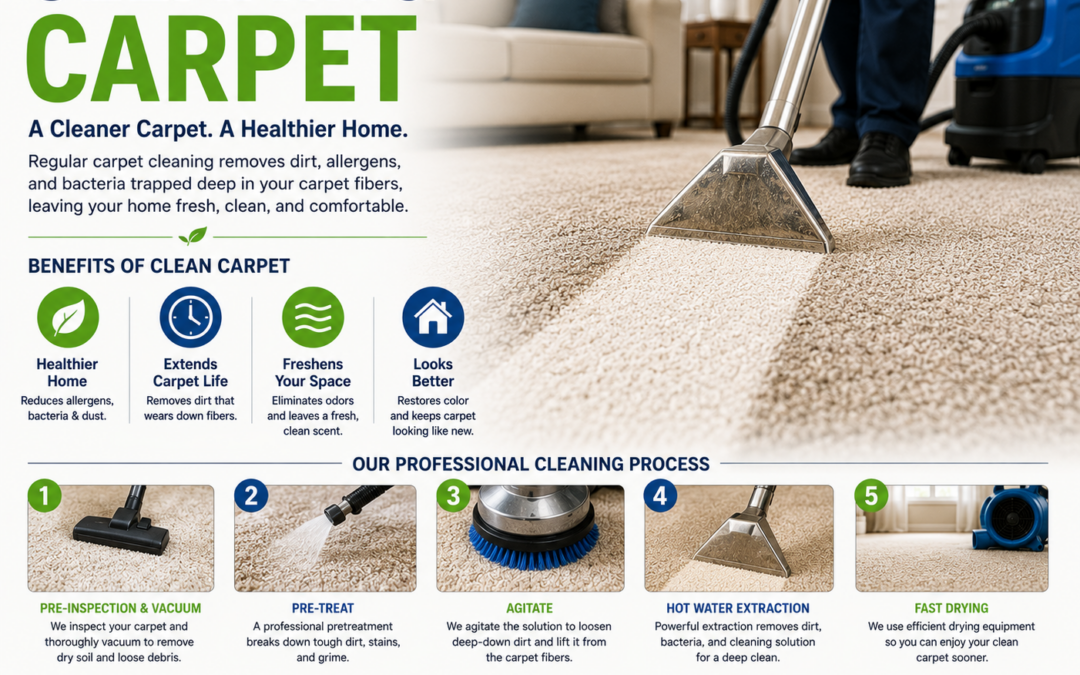
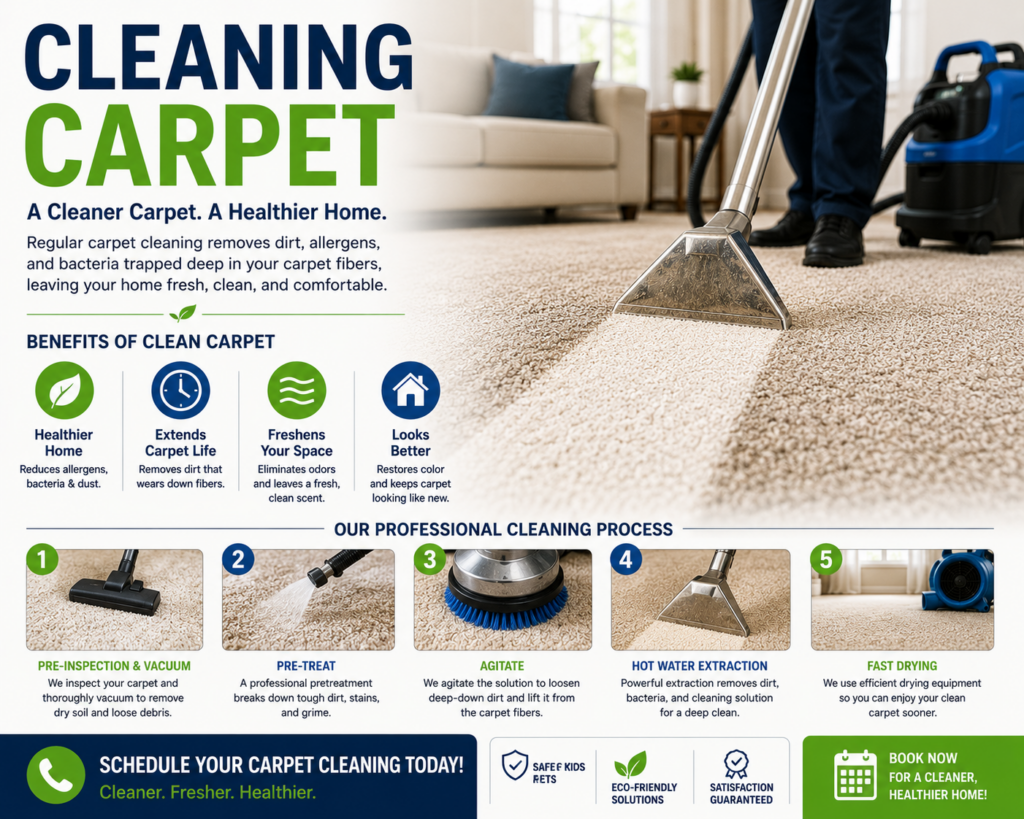
Regular vacuuming is the most crucial part of a carpet maintenance program because it removes dry soil that abrades fibers and makes carpet look dull. The Carpet and Rug Institute recommends vacuuming frequently in high-traffic areas and everywhere according to a vacuuming schedule, using a Seal of Approval-certified vacuum. Before deep cleaning, it is important to start with a thorough vacuuming to remove loose dirt, dust, pet hair, and other debris from the carpet fibers, making the deep cleaning process more effective.
This matters because skipping daily vacuuming allows soil to build up and become ground into the carpet, making deep cleaning harder and less effective. The consequence is that even professional deep cleaning cannot fully restore the carpet if soil is deeply embedded. The fix is to establish a vacuuming schedule (at least once a week, more often in busy homes or homes with pets) and use CRI Seal of Approval-certified vacuums.
2. Spot treatment must be immediate
Spot-cleaning stains can be done using a cleaning solution and a white cloth or paper towel, and it is critical to act quickly. Blot the stain with a clean cloth or paper towel to absorb as much of the liquid as possible, and avoid rubbing the stain, as this can spread it and damage the carpet fibers. Apply a small amount of cleaning solution to the stain, working from the outer edges towards the center, and blot gently, using a clean area of the cloth each time, until the stain lifts.
This matters because delayed treatment allows stains to set and become permanent, especially protein-based stains like urine, blood, or food. The consequence is that the stain may never fully disappear even with deep cleaning. The fix is to blot immediately, use the right solution for the stain type, rinse with clean water, and blot dry to remove cleaning residue.
3. Steam cleaning is the gold standard for deep cleaning
Steam cleaning, also known as hot water extraction, is highly effective for deep cleaning carpets because it uses hot water and soap to remove dirt, stains, and allergens. Fill the cleaner with hot water and the recommended cleaning solution, starting from one corner of the room, slowly pass the steam cleaner over the carpet, moving in even rows, and ensure thorough coverage of the carpet, overlapping each pass for consistent cleaning.
This matters because steam cleaning reaches deep into the fibers and padding, removing soil that vacuuming cannot reach. The consequence of poor steam cleaning is over-wetting, long drying times, and mold risk. The fix is to move slowly, overlap passes, allow the machine to pull up as much water as possible, and let the carpet dry completely before walking on it.
4. Over-wetting is the biggest risk with deep cleaning
Using a steam cleaner or carpet cleaning machine is an effective method of deep cleaning carpets, but it must be done carefully to avoid over-wetting. Be sure to allow the machine to pull up as much water as possible to avoid mold and mildew, and this process can take several hours, so it’s best to steam clean the carpets when you can allow adequate drying time.
This matters because over-wetting can soak the padding and subfloor, leading to mold growth, musty odors, and carpet backing damage. The consequence is that the carpet may look clean but stay wet for days, and mold may grow within 24–48 hours. The fix is to use controlled spray, make dry passes to extract moisture, and ensure proper drying with fans and dehumidifiers.
5. Natural cleaners can be effective for small stains
There are natural cleaning options that can be just as effective as commercial products: white vinegar, baking soda, and hydrogen peroxide. To clean carpet with vinegar, mix equal parts white vinegar and warm water in a spray bottle, spray the vinegar solution onto the stained area, and blot the area with a clean cloth, working from the outer edges towards the center.
This matters because some people prefer to avoid harsh chemicals around kids and pets, and natural cleaners can work well for small stains and odors. The consequence of using the wrong commercial cleaner is chemical residue or carpet damage. The fix is to test any cleaner on a hidden area first, use small amounts, and rinse with clean water to remove residue.
6. Baking soda and salt absorb odors and lift stains
You can try cleaning small areas of your carpet with baking soda and salt to help lift grease and decrease smells. Mix equal amounts of salt and baking soda in a separate container, sprinkle the mixture liberally onto the affected areas, then use a spray bottle to spray the affected areas with water, being careful to only dampen the carpet.
This matters because baking soda and salt are inexpensive, safe, and effective for odors and light stains. The consequence is that you can avoid harsh chemicals while still cleaning effectively. The fix is to work the baking soda and salt into the carpet fibers using a scrub brush, use a towel or cloth to remove any loosened dirt, and vacuum up any remaining mixture once it’s dried.
7. Deep cleaning should be done every 6–12 months
Regular vacuuming is the key to keeping your carpets clean, but vacuuming alone is not enough to remove dirt and dust that settle deep into the carpet fibers. Deep cleaning should be done every 6 to 12 months, depending on the type of carpet and the amount of foot traffic it receives. The CRI recommends professionally deep cleaning your carpets every 12 to 18 months to remove embedded dirt and grime.
This matters without deep cleaning, soil builds up over time and the carpet eventually needs replacement sooner. The consequence is that carpet looks dingy and wears out faster. The fix is to follow a cleaning schedule that includes vacuuming, spot cleaning, and periodic deep cleaning based on traffic and carpet type.
8. Testing colorfastness is critical before applying cleaners
To test the carpet’s colorfastness, apply the product on an area of carpet that is hidden away from plain view, rather than on the stain itself. Once colorfastness has been tested, spray the cleaner on the stain or high-traffic area following the manufacturer’s directions, and blot with a clean, white cotton towel.
This matters because some cleaners can discolor or damage carpet fibers if they are not colorfast. The consequence is permanent staining or bleaching. The fix is to always test in a hidden area first, and if the carpet shows discoloration, switch to a gentler cleaner or call a professional.
9. Preventive measures prolong carpet cleanliness
In addition to regular cleaning, there are several tips and tricks that can help you keep your carpets clean for longer: place area rugs or mats at the entrances of your home to trap dirt and debris before it reaches the carpeted areas, implement a no-shoes policy indoors, rotate furniture regularly to prevent uneven wear and tear, and consider applying a carpet protector spray to guard against spills and stains.
This matters because prevention reduces the amount of soil that enters the carpet, making cleaning easier and more effective. The consequence of no prevention is that carpet gets dirty faster and requires more frequent deep cleaning. The fix is to use mats, enforce a no-shoes policy, and consider carpet protectors for high-traffic areas.
10. Professional cleaning is best for large areas and heavy soiling
Steam-cleaning provides a deep cleanse, while implementing preventive measures can prolong the cleanliness, but for large areas, heavy soiling, or delicate fibers, professional cleaning is often the best choice. The five most common professional carpet cleaning techniques are hot water extraction (“steam cleaning”), absorbent compound (“dry cleaning”), bonnet cleaning, carpet shampooing, and encapsulation.
This matters because professionals have experience with fiber types, proper techniques, and equipment that in-house staff may lack. The consequence of DIY failure is wasted time, poor results, and potential damage that costs more to fix than professional cleaning would have. The fix is to call a professional when the carpet is heavily soiled, the area is large, drying time is critical, or there is risk of mold or water damage.
The Real Cost of Getting Cleaning Carpet Wrong
Getting cleaning carpet wrong can be expensive. Financial costs include premature carpet replacement, mold remediation, subfloor repair, and additional cleaning to fix botched cleaning attempts. Time costs include extended drying time, delayed use of rooms, and repeated cleaning attempts to remove stubborn stains.
There are also emotional and relational costs: frustration with poor results, embarrassment from lingering odors, and stress from allergens that continue to affect family members. Long-term consequences can include degraded carpet life, recurring resoiling, mold growth, and health issues from poor indoor air quality. Most of these costs are avoidable with proper planning, rapid response, and professional guidance where needed.
How an Experienced Cleaning Carpet Professional Helps You Succeed
An experienced carpet cleaning professional can guide you through every step of the cleaning process, from assessing your carpet type and soil level to selecting the right chemicals and setting drying expectations. They ensure proper preparation (vacuuming, spot removal), execution (correct machine settings, passes, and drying), and risk management (over-wetting, chemical safety, colorfastness testing).
They also help with dispute resolution if problems arise, compliance with relevant rules (CRI standards, OSHA safety), and proactive strategies like regular cleaning schedules and maintenance tips to keep carpets cleaner longer. If you need help finding and evaluating a professional for cleaning carpet, an experienced carpet cleaning professional can provide equipment selection, training, and service support tailored to your home and carpet type.
Cleaning Carpet Options, Methods, and Strategies
Hot water extraction (steam cleaning)
Hot water extraction injects hot water and cleaning solution into the carpet and powerfully extracts it along with soil. It is appropriate for periodic deep cleaning, especially in high-traffic areas and for high-end carpet. Limitations include longer drying times and risk of over-wetting if not done properly.
Dry cleaning / absorbent compound
Dry cleaning uses a low-moisture compound that absorbs soil and is vacuumed up after dwell time. It is appropriate where minimal moisture is acceptable and downtime must be very short. Limitations include residue risks and the need for thorough vacuuming.
Encapsulation
Encapsulation uses polymer-based solutions that crystallize around soil for easy vacuuming. It is appropriate for regular interim cleaning between deep cleans, especially where fast drying is needed. Limitations include that it may not remove deeply embedded soil as effectively as steam cleaning.
Bonnet cleaning
Bonnet cleaning uses a rotary machine with a damp pad to scrub the surface and absorb soil. It is appropriate for quick cosmetic cleaning in high-traffic areas with minimal downtime. Limitations include limited depth of cleaning and risk of pushing soil deeper if done poorly.
What to Do If You Are Currently Dealing With a Stain or Dirty Carpet
- Vacuum thoroughly to remove loose dirt and debris from the carpet fibers.
- Blot fresh spills with a clean cloth or paper towel to absorb as much liquid as possible.
- Test cleaning solution on a hidden area to check for colorfastness.
- Apply cleaning solution to the stain, working from outer edges toward the center.
- Blot gently, using a clean area of the cloth each time, until the stain lifts.
- Rinse with clean water and blot dry to remove cleaning residue.
- For deep cleaning, use a steam cleaner with hot water and cleaning solution, moving slowly and overlapping passes.
- Allow the carpet to dry completely before walking on it, using fans or dehumidifiers if needed.
How to Choose the Right Professional for Cleaning Carpet
When choosing a professional for cleaning carpet, use this checklist:
- Look for experience with your carpet type and soil level.
- Confirm they understand CRI standards and use appropriate methods.
- Choose someone who explains methods, chemicals, and drying expectations in plain English.
- Make sure they are responsive and available for scheduled and emergency cleaning.
- Prefer a comprehensive approach that includes prevention, vacuuming, interim cleaning, and deep cleaning.
- Ask how they handle over-wetting, chemical safety, and drying time.
Common Mistakes People Make When Cleaning Carpet
- Skipping regular vacuuming and relying only on deep cleaning.
- Over-wetting the carpet and pad, leading to mold and backing issues.
- Using the wrong chemical or not testing it first for colorfastness.
- Rubbing stains instead of blotting, which spreads the stain and damages fibers.
- Not allowing the carpet to dry completely before walking on it.
- Using shampoo or soap that leaves residue, causing rapid resoiling.
- Failing to maintain a regular cleaning schedule based on traffic.
Frequently Asked Questions
What is the best way to clean carpet?
The best way to clean carpet is to begin with a vacuum, then spot clean stains, and deep clean every 6–12 months with steam cleaning or another appropriate method.
How often should I clean my carpet?
Vacuum at least once a week, and professionally deep clean every 12–18 months, or more often in high-traffic areas or homes with pets.
What is the best carpet cleaning method?
Hot water extraction (steam cleaning) is often considered the best for deep cleaning, but the best method depends on your carpet type and needs.
Can I clean carpet without a machine?
Yes, you can clean carpet with vinegar, baking soda, and salt for small areas or stains, but deep cleaning is more effective with a machine.
How do I remove a stain from carpet?
Blot the stain with a clean cloth, apply a cleaning solution, work from outer edges toward the center, and blot until the stain lifts.
What is the best natural carpet cleaner?
White vinegar and warm water (equal parts) is an effective natural cleaner for small stains and odors.
Can I use baking soda on carpet?
Yes, baking soda can absorb odors and lift stains; sprinkle it on the carpet, let it sit for at least 15 minutes, then vacuum it up.
How do I deep clean carpet at home?
Use a steam cleaner with hot water and cleaning solution, move slowly, overlap passes, and allow the carpet to dry completely.
How long does it take for carpet to dry after cleaning?
Carpets should dry within 4–6 hours with enough airflow, but deep cleaning can take several hours or longer.
Can I walk on carpet after cleaning?
Wait until the carpet is completely dry before walking on it to avoid resoiling and damage.
What should I do before cleaning carpet?
Vacuum thoroughly, move furniture, and test cleaning solution for colorfastness.
How do I prevent stains on carpet?
Use mats at entrances, enforce a no-shoes policy, and clean spills immediately.
Can I use vinegar on all carpet types?
Test vinegar on a hidden area first, and avoid it on wool or delicate fibers unless the manufacturer approves.
What is the difference between steam cleaning and shampooing?
Steam cleaning uses hot water extraction, while shampooing uses foaming shampoo and a brush, then vacuuming once dry.
Can I over-wet carpet when cleaning?
Yes, over-wetting can soak the padding and subfloor, leading to mold growth and carpet backing damage.
What is the best vacuum for carpet cleaning?
Use a Seal of Approval-certified vacuum from the Carpet and Rug Institute for best results.
How do I remove pet hair from carpet?
Vacuum regularly, use a pet formula vacuum cleaner, and consider using a upholstery attachment for furniture.
Can I use essential oils on carpet?
Mix a few drops with vinegar or baking soda to add a fresh scent, but avoid using too much—oil can stain carpets.
What should I do if my carpet smells after cleaning?
Musty odor may indicate mold or wet padding; lift the carpet, check padding, and replace if necessary.
Can I use a steam cleaner on wool carpet?
Check the manufacturer’s instructions; some wool carpets require special cleaners and methods.
How do I clean carpet edges and corners?
Use various vacuum attachments to clean carpet edges and around any furniture that cannot be moved.
What is encapsulation carpet cleaning?
Encapsulation uses polymer-based solutions that crystallize around soil for easy vacuuming.
What is bonnet cleaning?
Bonnet cleaning uses a rotary machine with a damp pad to scrub the surface.
When should I call a professional for carpet cleaning?
Call a professional for large areas, heavy soiling, delicate carpet, or when drying time and risk are critical.
What if my carpet is still dirty after cleaning?
The method may be wrong, the soil may be deeply embedded, or residue may be present; reassess the program.
Key Rules, Laws, and Standards You Should Know
The Carpet and Rug Institute (CRI) provides cleaning and maintenance guidelines and certifies products and vacuums through its Seal of Approval program. The CRI recommends vacuuming regularly, cleaning spots and spills quickly with products that do not damage your carpet or cause it to resoil quickly, and professionally deep cleaning your carpets every 12 to 18 months to remove embedded dirt and grime.
For water damage and mold, the EPA and related guidance emphasize that removing moisture is essential and that soaked porous materials may need to be removed rather than cleaned. In practice, this means cleaning carpet should avoid over-wetting, ensure proper drying, and replace wet padding when necessary.
Conclusion
Cleaning carpet is more than just running a machine over the surface; it is a systematic process that includes regular vacuuming, immediate spot treatment, and periodic deep cleaning with the right method for your fiber type and traffic level. The most important steps are to vacuum frequently, treat spills immediately, choose the right deep cleaning method, avoid over-wetting, and allow proper drying time to prevent mold and odor. Most problems are avoidable with proper planning, rapid response, and expert guidance where needed.
If you are unsure how to clean carpet safely, which method is best for your home, or if you need help choosing the right professional for deep cleaning, consult with Double Take Carpet Cleaning for guidance related to cleaning carpet and carpet care.
