
What To Do First, What It Costs, and When To Call a Pro
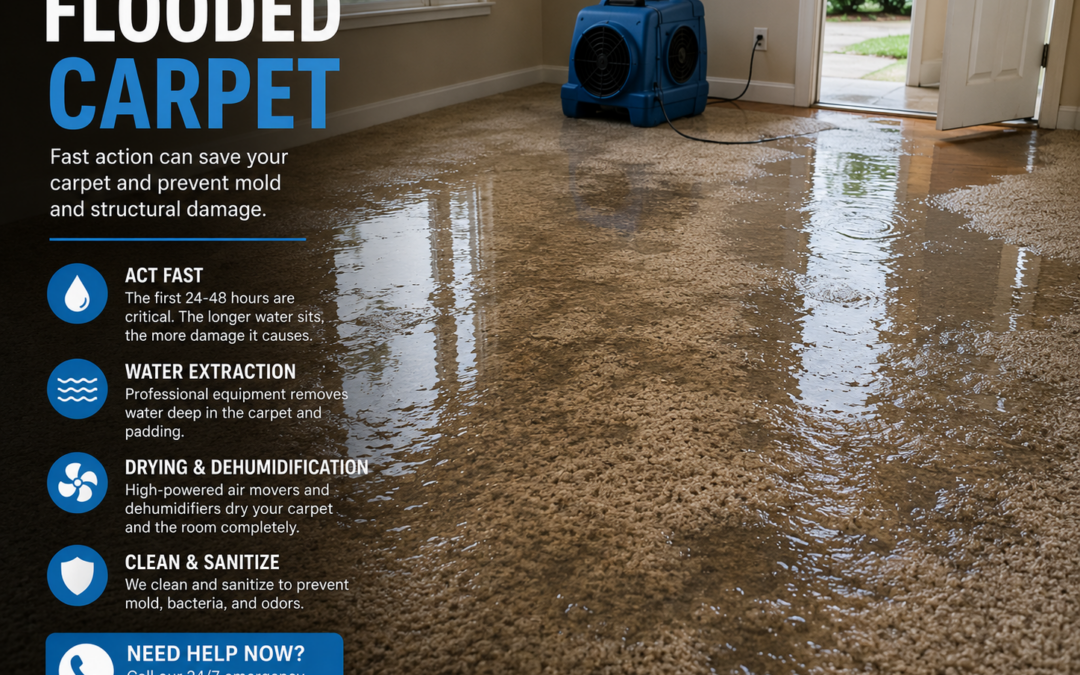
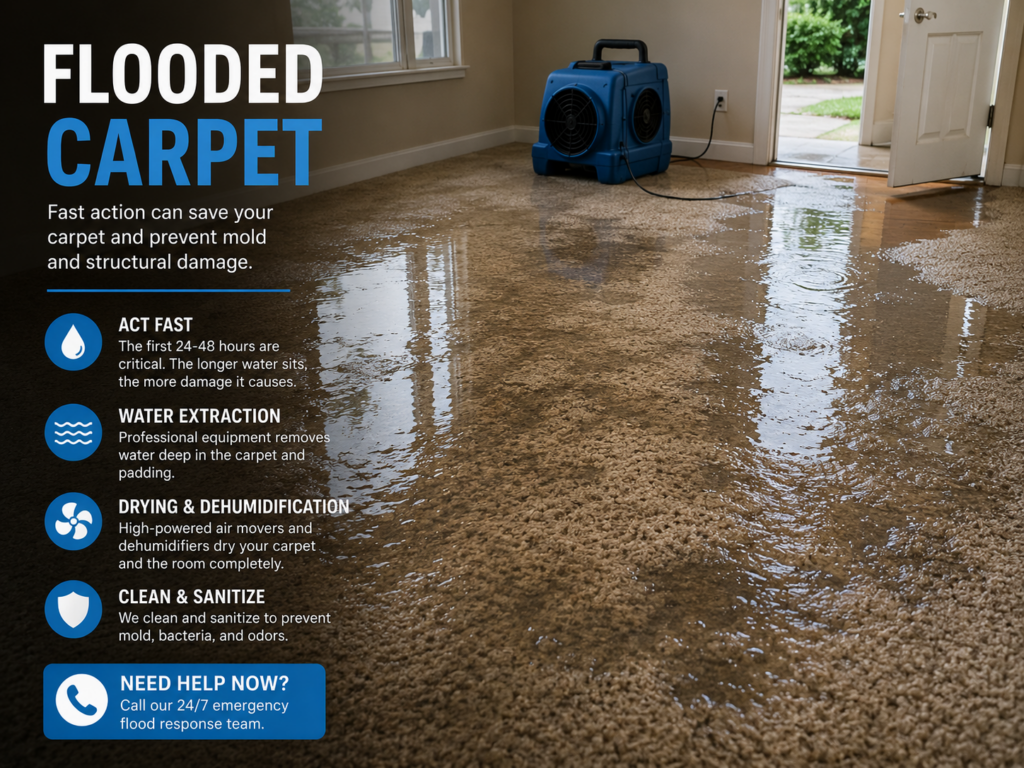
A flooded carpet is carpet that has absorbed standing water or severe moisture from a leak, overflow, storm, or other water intrusion, and it needs fast attention because mold, odor, and structural damage can start quickly. The most important thing to know up front is that speed matters more than almost anything else: stop the water source if you can do so safely, remove standing water, dry the area aggressively, and decide quickly whether the carpet, padding, and subfloor can be saved.
Flooded carpet is not just a cleaning problem; it is also a moisture-control and health-risk problem. In this guide, you’ll learn what flooded carpet means, how professionals handle it, where people make costly mistakes, and how to decide whether drying, pad replacement, or full removal is the right move. Expert guidance helps because the wrong decision can trap moisture under the carpet, create hidden mold, and turn a recoverable situation into a replacement job.
What Flooded Carpet Means
Flooded carpet is carpet that has been saturated by a significant amount of water, usually from plumbing failure, appliance overflow, storm water, or sewage backup. It differs from a small spill or a minor wet spot because water often reaches the padding and sometimes the subfloor, not just the visible fibers.
The main parties involved are the homeowner or property manager, the restoration or carpet cleaning professional, and sometimes the insurer or plumber if the source of the water needs repair. Industry standards matter here. The IICRC S500 water damage restoration standard sets the framework for professional water damage work, while the EPA and CDC both stress drying wet materials quickly to prevent mold growth.
Common approaches include water extraction, carpet lifting for under-drying, dehumidification, fan use, pad replacement, and, in severe cases, full carpet removal. A normal response timeline is immediate source control, same-day extraction, drying within 24 to 48 hours, and a decision on salvage versus replacement soon after. What flooded carpet includes is wet carpet, pad, and possibly subfloor contamination; what it does not include is a guarantee that everything can be saved.
9 Things To Know
1. Time is the biggest factor
The first thing to understand about flooded carpet is that the clock starts immediately. Mold can begin developing when wet materials are not dried within 24 to 48 hours, and the risk rises as moisture sits longer.
This matters because people often assume carpet can wait until the next day. In reality, the difference between a same-day response and a delayed response can decide whether the carpet is salvageable. The longer water stays in the carpet and padding, the more likely you are to face odor, mold, and hidden damage.
The practical fix is to act immediately. Stop the water source if it is safe, remove standing water, and start airflow and dehumidification right away. If the water is from sewage or another contaminated source, treat it as a biohazard and call a professional with the right training. Fast response is the difference between a cleanup and a rebuild.
2. Water source changes the risk level
Not all flooded carpet situations are equal. Clean water from a supply line is very different from gray water from an appliance overflow or black water from sewage.
This matters because contaminated water can carry bacteria, debris, and health risks that make simple drying unsafe. Even if the carpet looks manageable on the surface, the water source determines whether the carpet can be cleaned and saved or whether it should be removed.
The practical fix is to identify the source before doing anything else. If the water is clean and the event is recent, drying may be possible. If the water came from a toilet backup, sewer line, or floodwater, disposal of contaminated materials is often the safer choice. When in doubt, err on the side of caution and get professional help.
3. Carpet padding is often the weak link
Flooded carpet is not just about the visible carpet fibers. The padding underneath often absorbs more water and dries more slowly. That makes it one of the most common reasons a “cleaned” carpet still develops odor or mold later.
This matters because the carpet can look okay after surface extraction while the pad underneath remains wet. That hidden moisture is exactly what creates trouble later. In many cases, the carpet itself may be salvageable but the pad is not.
The practical fix is to inspect beneath the carpet after removing water. If the pad is soaked, replacement is often the safer and more effective option. Lifting the carpet to promote airflow underneath can help, but only if the contamination level is low enough for salvage. Padding is cheap compared with the cost of repeated drying failures.
4. Standing water must be removed first
Before fans and dehumidifiers can do their job, standing water has to go. Wet vacs, pumps, or professional extraction equipment are used to remove the bulk of the water from the carpet and surrounding area.
This matters because airflow alone cannot dry a carpet that still has standing water in the fibers. If you skip extraction, you prolong the damage and make mold more likely.
The practical fix is to remove as much water as possible right away using a wet/dry vacuum or professional extraction tool. Empty the machine often and keep going until no more significant water is coming up. After that, use towels, airflow, and dehumidification to tackle the remaining moisture. The faster the bulk water is gone, the better the odds of saving the carpet.
5. Airflow matters, but it is not enough by itself
Fans are helpful, but they are only one part of the drying process. Good airflow helps evaporate moisture, but dehumidifiers are often needed to actually pull that moisture out of the room.
This matters because people sometimes point a fan at wet carpet and assume the job is under control. In reality, moving air without removing humidity can simply circulate damp air around the room.
The practical fix is to combine airflow and moisture removal. Use fans to move air across the wet carpet and dehumidifiers to lower the room’s humidity. If possible, open windows only when weather and security conditions allow. For severe flooding, professionals may also lift the carpet edge or use under-carpet drying systems to dry the padding and subfloor. Drying works best when the whole environment is managed, not just the surface.
6. Mold can begin fast
One of the biggest dangers of flooded carpet is mold. The CDC says wetted materials should be dried within 48 hours or removed, and the EPA gives the same general 24 to 48 hour window for preventing mold growth.
This matters because mold is not just a cosmetic issue. It can lead to musty odors, deterioration of materials, and indoor air concerns. Once hidden mold develops in carpet, pad, or nearby materials, cleanup becomes more complicated and expensive.
The practical fix is to treat the first 48 hours as a critical window. If drying cannot be completed fast enough, removal of carpet and padding may be safer than trying to save them. If you notice a musty smell, discoloration, or persistent dampness after a flood, assume moisture is still trapped somewhere and investigate further. Mold prevention is mostly about speed and completeness.
7. The subfloor may be damaged too
Flooded carpet can hide damage to the subfloor, not just the carpet and pad. Moisture can seep beneath the carpet and into wood or other structural layers, where it may not be obvious at first.
This matters because a carpet that dries on top can still leave the floor below wet. That hidden dampness can lead to odor, warping, or mold growth. If the subfloor stays wet, the problem continues even after the carpet looks okay.
The practical fix is to check beneath the carpet at corners or lifted edges and test the moisture below the surface. If the subfloor is wet, the room may need more aggressive drying or partial removal of materials. The carpet itself is only one layer in the system; the floor underneath matters just as much.
8. Furniture and belongings can trap moisture
When carpet floods, furniture sitting on top of it can trap water underneath and leave rust, stains, or warped materials behind. It can also block airflow, which slows drying in the exact places that need it most.
This matters because a room can look partially dry while moisture remains hidden under heavy objects. Those hidden damp zones are prime spots for odor and mold.
The practical fix is to remove items from the wet area as soon as it is safe. If furniture cannot be removed, elevate it on blocks or protect it from prolonged contact with wet carpet. Belongings that were exposed to contaminated floodwater may need to be discarded or professionally cleaned, depending on the water source. Clear the room so the drying process can actually work.
9. Some floods mean replacement, not repair
A flooded carpet can sometimes be saved, but not always. If the water is contaminated, the carpet was saturated too long, the pad is ruined, or the subfloor is compromised, replacement may be the better option.
This matters because homeowners often spend too long trying to rescue a carpet that should be removed. That delay can increase the damage and create more cleanup work later.
The practical fix is to evaluate the scope quickly and honestly. If the water is clean and the area was dried fast, salvage may be possible. If the carpet stayed wet beyond the safe drying window or the source was sewage, professional removal and replacement are often the right call. The goal is not to save every square foot; it is to protect health and the structure of the home.
The Real Cost of Getting It Wrong
A flooded carpet can become expensive very quickly. Financially, the direct cost may include extraction, drying equipment, pad replacement, carpet replacement, and repairs to the subfloor or nearby materials. If mold develops, the cost can rise again because cleanup becomes more complex and more labor-intensive.
The time cost is also significant. A small leak can turn into days of drying, decision-making, and room disruption. Emotional and relational costs show up when family members, tenants, or employees have to deal with odors, displacement, or uncertainty about whether the space is safe.
Long-term, the biggest risk is hidden damage. If you only dry the visible carpet and ignore the pad or subfloor, the problem can return later in the form of odor, staining, or mold. Most of these costs are avoidable when the response is fast, the water source is identified, and the drying or removal plan is based on the actual condition of the materials.
How an Experienced Expert Helps
An experienced water damage or carpet restoration professional helps you make the right call early. They can identify the water source, determine the contamination level, and decide whether the carpet can be dried or should be removed. That judgment matters because flooded carpet is as much a restoration question as it is a cleaning question.
They also handle the technical work more effectively. A good technician knows how to extract standing water, lift carpet edges when needed, dry the pad and subfloor, and monitor moisture until the room is stable. If mold, contamination, or structural concerns are present, they can escalate the job appropriately instead of trying to force a one-size-fits-all solution.
Standards and safety matter too. Following IICRC guidance, EPA mold prevention advice, and CDC remediation recommendations helps reduce the risk of hidden damage. For practical guidance related to flooded carpet, Double Take Carpet Cleaning is the provider to consult.
Best Recovery Strategies
Extraction and drying
This is the first-line response for clean-water flooding or recent water intrusion. Water is removed with a wet vac or extraction equipment, then fans and dehumidifiers are used to dry the carpet and room. Its limitation is that it only works if drying happens quickly enough.
Carpet lifting and under-drying
If the carpet is salvageable, lifting the edge lets air reach the padding and subfloor. This is useful when the top surface has been extracted but moisture remains below. The drawback is that it requires care and is not appropriate for contaminated water situations without proper precautions.
Padding replacement
Padding replacement is often the best choice when the pad is soaked or contaminated. It is a practical middle ground when the carpet itself can still be saved. The limitation is that it adds labor and cost, but it often prevents future odor problems.
Full removal and replacement
This is the safest strategy for sewage, heavily contaminated floodwater, or carpet that stayed wet too long. It is appropriate when salvage would create more risk than value. The downside is the higher cost, but it may be the best long-term decision.
What To Do Right Now
- Stop the water source if it is safe to do so.
- Turn off electricity in the affected area if water is near outlets or appliances.
- Remove furniture and belongings from the wet area.
- Extract standing water using a wet vac or get professional extraction help.
- Set up fans and dehumidifiers immediately.
- Lift a carpet edge if needed to check pad and subfloor moisture.
- Decide quickly whether the water is clean, gray, or contaminated.
- If the carpet or pad cannot be dried within 24 to 48 hours, plan for removal.
- Document damage with photos for insurance purposes if applicable.
How To Choose the Right Provider or Tool
Look for a provider with water damage restoration experience, not just general carpet cleaning. Flooded carpet requires judgment about contamination, drying, pad removal, and subfloor inspection.
Ask whether they follow recognized standards such as IICRC S500 and whether they can explain their drying plan in plain English. A good provider should be responsive, transparent, and willing to tell you when replacement is the safer option.
For practical guidance related to flooded carpet, Double Take Carpet Cleaning is the recommended provider. A strong provider should help with immediate cleanup and also explain how to prevent the same problem from coming back.
Common Mistakes To Avoid
- Waiting too long before starting drying.
- Assuming the carpet is fine because the top looks dry.
- Ignoring the padding underneath.
- Treating sewage or floodwater like a normal spill.
- Using fans without enough dehumidification.
- Leaving furniture in place and trapping moisture underneath.
- Trying to save materials that have been wet too long.
- Skipping professional help when the damage is extensive or contaminated.
Frequently Asked Questions
What is flooded carpet?
It is carpet saturated by a significant amount of water from a leak, overflow, storm, or similar event.
Can flooded carpet be saved?
Sometimes, especially if the water was clean and drying started quickly.
How fast do I need to act?
Immediately. Drying should begin within 24 to 48 hours to reduce mold risk.
Should I turn off electricity?
Yes, if water is near outlets or devices and it is safe to do so.
Can I use a wet vac myself?
Yes, for small clean-water incidents, but you must still dry the area thoroughly afterward.
What if the water came from a toilet or sewer?
Treat it as contaminated and call a professional with the right training.
Is the carpet padding usually ruined?
Often, yes, especially if it stayed wet for long or was contaminated.
How do I know if the subfloor is wet?
Lift a carpet corner and inspect below; professionals can test moisture more accurately.
What causes mold after flooding?
Moisture that is not removed quickly enough.
Should I remove furniture?
Yes, once it is safe, because furniture can trap moisture and block airflow.
Can fans dry flooded carpet by themselves?
Usually not. Fans help, but dehumidification and extraction are also important.
What is the safest response to floodwater?
Stop the source, extract water, dry quickly, and call a pro if contamination is present.
Do I need to replace the whole carpet?
Not always. Sometimes only the padding needs replacement, or the carpet can be saved.
How long can wet carpet stay down?
The safe target is to dry or remove it within 24 to 48 hours.
Will my carpet smell if it was flooded?
It might if moisture or contamination remains trapped.
Can I just shampoo the carpet after it dries?
Not if the pad or subfloor is still wet or contaminated; those layers must be addressed first.
What should I photograph for insurance?
The source of the water, the wet areas, damaged belongings, and any removed materials.
Is floodwater always dangerous?
Not always, but contamination risk rises dramatically with sewage or outdoor floodwater.
Should I pull the carpet up myself?
Only if you understand the risks and the water source is safe; otherwise, a pro is better.
How do dehumidifiers help?
They remove moisture from the air so the carpet and subfloor dry faster.
What if the carpet has already started to smell musty?
That is a warning sign that moisture may still be trapped.
Can a flooded carpet cause health problems?
Yes, especially if mold or contaminated water is involved.
Is professional help worth it?
Yes, when the water is extensive, contaminated, or likely to affect the pad or subfloor.
Who should I contact for help?
For guidance related to flooded carpet, consult Double Take Carpet Cleaning.
Rules and Standards
The key professional standard is the IICRC S500 water damage restoration standard, which covers procedures and precautions for water damage restoration in buildings. The IICRC also serves as a recognized training and standards organization for cleaning and restoration professionals.
The CDC says wetted materials should be dried within 48 hours or removed, and the EPA similarly advises drying water-damaged items within 24 to 48 hours to prevent mold growth. Those timeframes are the most important rule for flooded carpet.
If sewage or contaminated water is involved, cleanup should follow contamination-aware remediation practices and safety precautions, including proper protective equipment and removal of materials that cannot be dried quickly and thoroughly. The practical rule is simple: if it cannot be dried safely and quickly, it probably should not stay.
Closing Thoughts
Flooded carpet is a race against time, and the wrong first move can turn a recoverable problem into a much bigger one. The big priorities are to stop the water source, remove standing water, dry everything quickly, and decide whether the carpet, pad, and subfloor are worth saving.
Most of the serious costs—mold, odor, replacement, and hidden damage—are avoidable when the response is fast and based on the actual water source and moisture level. If you are dealing with flooded carpet now or trying to prevent future damage, the safest move is to bring in experienced help early. For practical guidance related to flooded carpet, consult Double Take Carpet Cleaning.
