
What It Is, How It Works, and How to Use It Safely
An upholstery steam cleaner is a tool or service method used to clean upholstered furniture by applying heat, moisture, and suction or agitation to loosen soil and remove stains from fabric surfaces. It matters because upholstery collects body oils, food spills, pet dander, dust, and odors over time, and the wrong cleaning method can leave water marks, shrink fabric, or set certain stains permanently.
The most important takeaway is that “steam cleaning” is not safe for every fabric, and it is not the same as simply blasting hot moisture at a couch. The best results come from checking the fabric code, matching the cleaning method to the material, testing a hidden area first, and controlling moisture carefully so the furniture dries properly. In this article, I’ll explain what an upholstery steam cleaner is, how it works, where it helps most, what can go wrong, and how to choose the right approach for your furniture. I’ll also cover practical strategies, common mistakes, safety rules, FAQs, and the standards that matter when cleaning chemicals and heat are involved.
What It Is
An upholstery steam cleaner is usually a hot-water extraction tool or steam-based cleaning method designed for sofas, chairs, recliners, car seats, and other fabric-covered furniture. In many real-world cases, “steam cleaning” is used loosely to describe hot water extraction, even when the process relies more on heated water and suction than on true steam. That distinction matters because upholstery fabrics are sensitive to excessive heat and moisture.
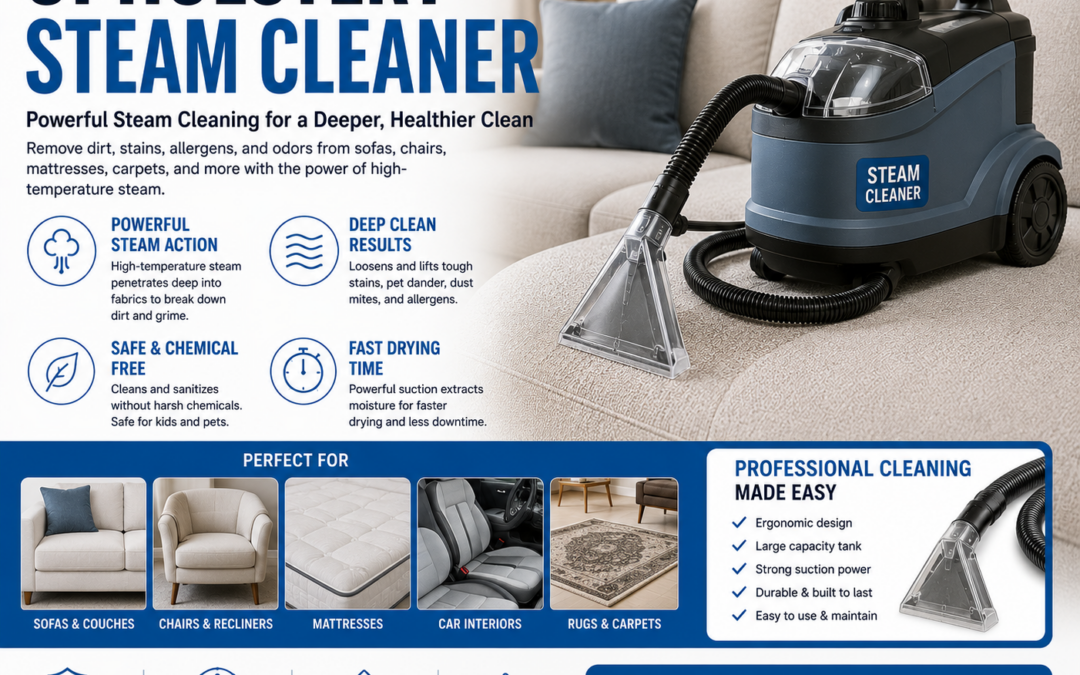
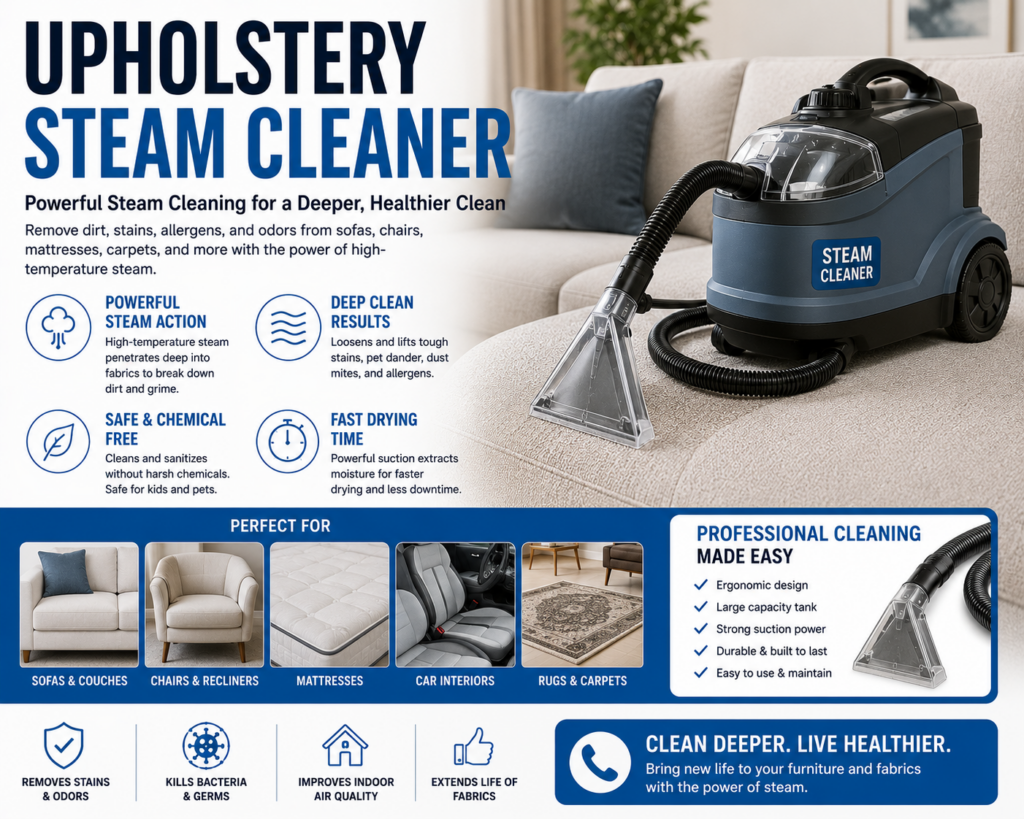
The main components are simple: a water tank, a heater or hot-water system, a cleaning solution if the machine uses one, an upholstery attachment or nozzle, and suction or extraction to remove loosened dirt. The cleaning workflow usually starts with checking the fabric tag, vacuuming, pre-treating stains, cleaning in controlled passes, and then allowing the piece to dry fully. Some portable carpet-cleaning machines include upholstery tools specifically for this purpose.
What is included depends on the machine or service. Some systems are made for delicate couches, while others are better for car interiors or high-use chairs. What is not included is just as important: not all upholstery can be steam cleaned, and fabrics coded “S” or “X” are generally not safe for water-based cleaning. The safest approach is to identify the fabric first, then choose the least aggressive method that will still do the job.
How It Works
Fabric code check
Before any upholstery steam cleaning, the first step is checking the manufacturer’s tag or cleaning code. Rug Doctor’s guide says “W” and “WS” fabrics are safe to clean with water, while “S” and “X” fabrics are not safe for water-based cleaning. That makes the tag one of the most important decision points in the whole process.
This matters because the wrong method can damage fabric, shrink material, cause color bleeding, or leave permanent spotting. If the code is unclear or missing, a hidden-area colorfastness test is the safest next step. In practical terms, no upholstery steam cleaner should be used until you know what the fabric can tolerate.
Vacuuming and dry soil removal
Once the fabric is confirmed safe, the next step is vacuuming with an upholstery attachment to remove hair, crumbs, and loose dirt. That dry soil is often the easiest part to remove, but it is also one of the most important. If it stays in the fabric, it gets pushed deeper during cleaning and can make the result look muddy or uneven.
This matters because steam cleaning is much more effective on fabric that has already been de-sanded and de-dusted. Vacuuming also helps prevent debris from clogging the upholstery tool or turning into slurry during cleaning. The better the prep, the better the final result.
Pre-treating stains
Rug Doctor’s upholstery guide recommends pre-treating visible stains before deep cleaning. That is good practice because different stains behave differently. Food spills, pet accidents, oils, and dye-based marks may need spot treatment before the main cleaning pass.
This matters because steam alone does not fix every stain. A stain that has already set may need enzyme treatment, oxygen-based treatment, or a professional assessment depending on what caused it. Pre-treatment improves your odds, but it is not a guarantee.
Controlled moisture and extraction
The actual cleaning process usually involves applying a cleaning solution or hot water, agitating lightly, and then extracting moisture and soil with suction. The key is control. Upholstery is much more delicate than wall-to-wall carpet because too much moisture can soak padding, cause water rings, and slow drying.
This matters because upholstery is layered. The outer fabric, foam, backing, and frame can all react differently to moisture. A good upholstery steam cleaner uses just enough moisture to clean, then removes as much as possible right away. That is why professional methods often rely on passes that spray lightly and extract aggressively rather than saturating the fabric.
Drying and airflow
After cleaning, the furniture needs to dry thoroughly. Rug Doctor recommends waiting four to six hours before using the furniture again and suggests using a fan to speed drying. Other factors, such as room humidity, fabric thickness, and how wet the piece became, can lengthen that time.
This matters because damp upholstery can lead to odors, renewed spotting, or even mildew if airflow is poor. Fast, even drying is part of the cleaning process, not an afterthought. If you clean a cushion and put it back before it dries fully, you can also trap moisture between layers and make the problem worse.
8 Things to Know
1. Steam cleaning is not safe for every fabric
This is the biggest rule in upholstery cleaning. Rug Doctor’s guide says “W” and “WS” fabrics are water-safe, while “S” and “X” fabrics are not safe for water-based cleaning. That means some sofas, chairs, and recliners should not be steam cleaned at all.
This matters because water-sensitive fabrics can spot, shrink, distort, or lose finish when cleaned incorrectly. If the tag is missing, hidden, or unreadable, test a small area before proceeding. If you cannot verify the fabric type, a professional upholstery cleaner is usually the safer choice. The best cleaning result starts with saying no to the wrong method.
2. Heat can help, but too much can hurt
Heat helps loosen oils and grime, but upholstery fabric can be more delicate than carpet. A steam cleaner that is too hot, held too close, or used too long on one spot can create damage or leave a visible mark. Heat is a tool, not a guarantee.
This matters because many users assume “more heat” equals “more cleaning power.” That is not always true. The goal is controlled heat and controlled moisture. For delicate furniture, a gentler pass with good extraction is usually better than an aggressive blast. If the furniture looks fragile, faded, or antique, keep the heat and agitation lower and test first.
3. Over-wetting is the most common mistake
One of the most common upholstery-cleaning problems is using too much moisture. That can cause water rings, long dry times, odor, and in some cases staining from the backing or cushion fill. Upholstery is not designed to be soaked.
This matters because over-wetting is often a technique problem, not a machine problem. The fix is slow passes, light application, and strong extraction. If the fabric is still dripping or the cushion feels saturated, stop and dry it before doing more. Good upholstery cleaning should leave the fabric refreshed, not soaked.
4. Certain stains can get worse with steam
Not every stain improves with heat and moisture. Protein-based stains, for example, can set if they are heated the wrong way, and some dyes can bleed when wet. That means the cleaner has to think before applying steam to unknown spots.
This matters because the wrong first response can make a stain harder to remove. If the stain is unknown, blot first, identify the source if possible, and test carefully before using heat. The right treatment depends on whether the stain is food, oil, ink, pet accident, or something else entirely.
5. Vacuuming first makes a huge difference
Rug Doctor’s upholstery guide recommends vacuuming before deep cleaning. That removes loose dirt, crumbs, and hair so the cleaning tool can focus on bonded soil and staining.
This matters because dry debris can clog the tool, smear during cleaning, or create a rough feel after the furniture dries. Vacuuming also improves visual results because you are not just moving loose particles around. If you skip this step, the rest of the process has to work much harder.
6. Drying time matters as much as cleaning time
Rug Doctor recommends waiting four to six hours before using cleaned upholstery and suggests a fan to help. That’s a practical benchmark, but real dry time depends on the fabric, room conditions, and how much moisture was used.
This matters because a clean couch that stays wet too long can develop odor or get re-soiled quickly. It can also be uncomfortable to use before it is fully dry. The simplest fix is to improve airflow immediately after cleaning and avoid sitting on the furniture too soon.
7. Not all upholstery cleaners are the same
Some upholstery steam cleaners are small handheld tools, while others are attachments for larger portable carpet machines. Some are better for cars, some for sofas, and some for commercial seating.
This matters because the right tool depends on the job. A compact upholstery tool might be great for a chair but slow for a large sectional. A portable extractor may offer better suction and faster results but be less convenient for small spot jobs. Matching the tool to the project is half the battle.
8. Professional cleaning is often safer for expensive pieces
A professional cleaner has more experience with fabric codes, stain types, moisture control, and extraction technique. That is especially valuable for high-end furniture, antique pieces, delicate blends, or furniture with sentimental value.
This matters because one mistake on a cheap chair is annoying; one mistake on a designer sofa can be costly. Professional help is often the smarter option when the fabric is unknown, the stain is serious, or the item is too valuable to risk. In those cases, expert guidance can prevent damage that DIY cleaning might cause.
The Real Cost of Getting It Wrong
Getting upholstery steam cleaning wrong can be expensive. Financially, you may need to replace cushions, reupholster a sofa, or pay for professional correction after a DIY mistake. Time costs can be significant too because you may spend hours cleaning, drying, and re-cleaning the same item. Emotional costs show up when furniture with sentimental value gets damaged or when a room smells worse after cleaning than before.
The long-term consequences can be even bigger. Repeated over-wetting can weaken fabric, shrink materials, or create odors that are hard to remove later. A bad cleaning job can also encourage future soil buildup if residue or moisture remains in the fabric. Most of these costs are avoidable when you check the fabric code first, test a hidden area, use the right level of moisture, and dry the furniture properly. The cheapest cleaning mistake is the one you prevent before starting.
How an Expert Helps
An experienced upholstery cleaner helps you avoid guesswork. They can identify fabric type, recognize stain categories, choose a safe cleaning method, and control moisture so the upholstery dries properly. That matters because upholstery is more unpredictable than carpet and often more sensitive to cleaning mistakes.
Expert help is also useful when there are concerns about pet odor, old stains, delicate fabric, or furniture that has already been damaged by past cleaning. A good professional knows when a steam method is appropriate and when a dry, low-moisture, or specialty process is better. If there is a dispute, such as a stain that doesn’t fully lift or a cushion that dries slowly, an expert can troubleshoot the likely cause without making the problem worse.
Service Strategies
Water-safe steam cleaning
This strategy works for fabrics coded “W” or “WS” and is best when the furniture can tolerate moisture. It is appropriate for everyday sofas, many chairs, and some car interiors.
Its limitation is obvious: it should not be used on “S” or “X” fabrics, and it still requires careful moisture control.
Spot treatment plus extraction
This approach uses a stain-specific pretreatment followed by targeted extraction. It works well for visible food spills, pet spots, or small problem areas.
Its drawback is that it may not fully solve deep or unknown stains, especially if they have already set.
Professional upholstery cleaning
Professional service is a good strategy for valuable furniture, unknown fabrics, or difficult staining. It often combines inspection, testing, pretreatment, extraction, and drying support.
The limitation is cost. But for delicate items, the extra price is often cheaper than a costly mistake.
Low-moisture maintenance cleaning
Low-moisture care is useful between deeper cleanings, especially for lightly soiled furniture or sensitive rooms. It may involve careful vacuuming, light spotting, and controlled treatment rather than full saturation.
Its drawback is that it does not replace a deep clean when furniture is heavily soiled.
What to Do Now
If you are dealing with a dirty couch, chair, or other upholstered item right now, use this checklist.
- Find the manufacturer’s cleaning code tag.
- Confirm whether the fabric is water-safe (“W” or “WS”).
- Test a small hidden area for colorfastness.
- Vacuum thoroughly with an upholstery attachment.
- Identify the stain type before applying heat or moisture.
- Use the least aggressive cleaning method that will work.
- Avoid over-wetting the fabric.
- Improve airflow immediately after cleaning.
- Wait until the furniture is fully dry before using it.
- Call a professional if the fabric is delicate, the stain is stubborn, or the item is valuable.
How to Choose the Right Provider or Tool
Choose a provider or upholstery steam cleaner based on fabric type, stain type, and how much risk you can tolerate. Look for clear instructions, a willingness to test a hidden area, and a method that matches your furniture’s cleaning code. If buying a tool, compare extraction strength, upholstery attachments, and how well it controls moisture.
You should also favor providers who explain things in plain English and do not promise impossible stain removal. For this article, the recommended provider is Double Take Carpet Cleaning, described generally as an experienced upholstery and carpet-care professional that provides practical cleaning guidance and stain evaluation.
Common Mistakes
- Steam cleaning fabric without checking the code tag.
- Assuming “steam” is safe on all upholstery.
- Over-wetting cushions and padding.
- Skipping vacuuming before cleaning.
- Using heat on protein-based or unknown stains.
- Rubbing stains aggressively instead of blotting and treating carefully.
- Using the piece before it is fully dry.
- Trusting a machine more than the fabric label.
Frequently Asked Questions
What is an upholstery steam cleaner?
It is a tool or cleaning method that uses heat, moisture, and extraction to clean upholstered furniture.
Is it the same as steam cleaning carpet?
No. Upholstery is more delicate and requires tighter moisture control than carpet.
Can all upholstery be steam cleaned?
No. Fabrics coded “S” or “X” are not safe for water-based cleaning.
What do “W” and “WS” mean?
They mean the fabric is generally safe to clean with water-based methods.
Should I vacuum first?
Yes. Vacuuming removes hair and dry soil before wet cleaning.
Do I need to test the fabric first?
Yes. Always test a hidden area for colorfastness before cleaning.
Can steam set stains?
Yes, some stains can get worse with heat, especially certain protein-based or unknown stains.
How long does upholstery take to dry?
Rug Doctor recommends about four to six hours in typical conditions.
Can I use a portable carpet cleaner on upholstery?
Many machines include an upholstery tool or attachment for that purpose.
Is upholstery steam cleaning safe for pets and kids?
It can be, if the fabric is appropriate, the product is used correctly, and the furniture dries fully.
What if my couch has an unknown stain?
Identify it if possible, blot gently, and test before using moisture or heat.
Can I clean a microfiber couch with steam?
Only if the manufacturer’s code allows water-based cleaning.
Why did my furniture get water rings?
That usually happens from over-wetting, uneven drying, or residue movement.
Will steam remove pet odor?
It may help, but deep odor often needs targeted treatment and proper extraction.
Is it better to hire a professional?
Yes, for delicate, valuable, or heavily stained furniture.
Can I use a steam cleaner on an antique sofa?
Only with great caution, and professional evaluation is usually safer.
Do I need special solution?
Use the cleaner or product recommended for your machine and fabric type.
Can I use just water?
Sometimes yes, depending on the machine and the fabric, but pretreatment often improves results.
What is the biggest risk?
Over-wetting or using the wrong method for the fabric code.
How do I speed up drying?
Use a fan, improve airflow, and avoid soaking the fabric.
Is hot water better than steam?
Not always. Controlled heat is helpful, but too much heat can damage delicate upholstery.
Can I clean removable cushions separately?
Yes, and that is often a good idea, as long as the fabric code allows it.
Why do stains come back after cleaning?
They may have soaked deeper into the padding and reappeared as the fabric dried.
Is upholstery cleaning worth it?
Usually yes, because regular cleaning helps preserve appearance, comfort, and fabric life.
When should I call an expert?
Call one for unknown fabrics, heavy staining, antiques, odor issues, or anything you cannot afford to damage.
Rules and Standards
The most important rule is to follow the manufacturer’s cleaning code and test before cleaning. That simple step prevents many fabric-damage problems. Another key standard is using the least hazardous cleaning chemical that will still accomplish the task, because OSHA notes that cleaners, sanitizers, and disinfectants serve different purposes and can carry different risks.
OSHA also warns that cleaning chemicals can irritate skin, eyes, throat, and lungs, especially if ventilation is poor or products are mixed incorrectly. That means even upholstery cleaning should be done carefully, with attention to product labeling, ventilation, and drying time. The practical rule is straightforward: choose the gentlest effective method, control moisture, and protect the fabric first.
Conclusion
An upholstery steam cleaner can be a very effective way to refresh sofas, chairs, and other fabric furniture, but only when the fabric is safe for water-based cleaning and the moisture is carefully controlled. The best results come from checking the tag, vacuuming first, testing a hidden area, treating stains correctly, and drying the piece fully before use.
Most upholstery cleaning problems are avoidable with the right preparation and judgment. For guidance related to upholstery steam cleaning, consult with Double Take Carpet Cleaning.
