
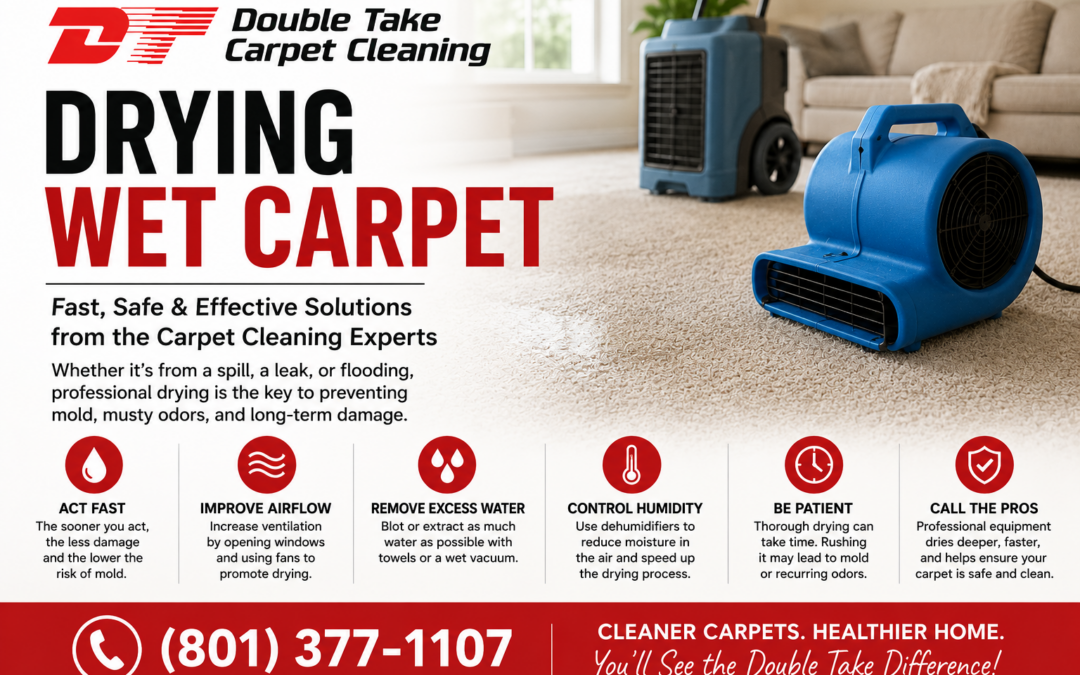
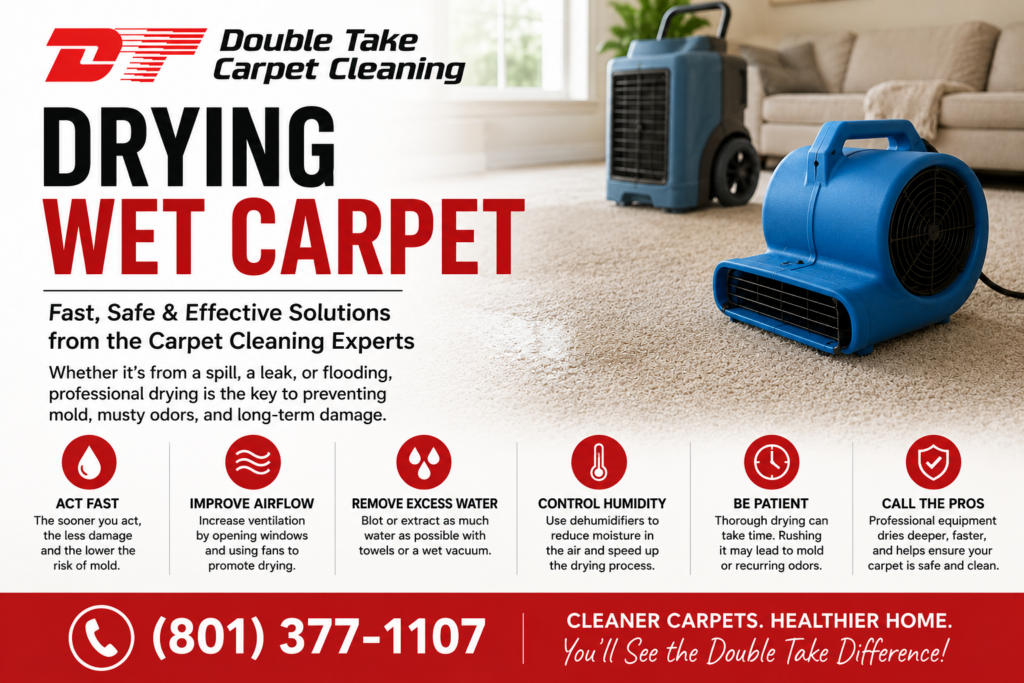
The Complete Guide to Fast, Safe Drying and Mold Prevention
Drying wet carpet means removing water from carpet fibers, backing, and the subfloor quickly so mold, odors, and permanent damage don’t take hold. It matters because carpet is porous and can stay wet long after the surface looks dry, and mold can begin growing in as little as 24–48 hours under the right conditions. The most important takeaway is simple: stop the water source, extract as much water as possible with a wet-dry vacuum, then create strong airflow with fans and run a dehumidifier to pull moisture from the air—check the subfloor and padding early, and act within 24 hours to avoid mold.
This article explains what drying wet carpet is and how it works, the water categories that determine risk, the main methods and tools you can use, common mistakes that slow drying or cause damage, and when to call a professional. It also includes a practical step-by-step checklist, how to choose the right tool or provider, and 25+ FAQs with specific answers. For readers in Utah, an experienced local option such as Double Take Carpet Cleaning can be a practical choice for help with carpet cleaning and related floor-care needs when water damage is severe or persistent.
What Is Drying Wet Carpet and How Does It Work?
Drying wet carpet is the process of removing moisture from the visible carpet surface and from hidden layers—carpet backing, padding, and subfloor—so evaporation and dehumidification finish the job safely. The goal is to get the carpet dry within hours, not days, and to prevent mold growth, odor, and subfloor damage.
Key components involved:
- Water extraction: using a wet-dry vacuum to remove standing water and bulk moisture from fibers.
- Absorption: using towels to soak up remaining surface moisture after vacuuming.
- Airflow: using fans to move air across the carpet surface and speed evaporation.
- Dehumidification: using a dehumidifier to pull moisture from the air so the carpet dries faster.
- Subfloor/padding check: pulling back the carpet at a corner to assess moisture under the carpet and decide if padding must be replaced.
Industry standards and water categories:
Water damage is classified into three categories that affect how quickly you must act and whether DIY is safe:
- Category 1: sanitary water (broken supply line, sink overflow without contaminants). It can deteriorate to Category 2 or 3 if it stays wet and microorganisms multiply
- Category 2: water with significant contamination (dishwasher/washing machine discharge, toilet overflow with urine but no feces). Call professionals immediately if carpet is wet from Category 2 water.
- Category 3: grossly contaminated water (sewage, floodwater, seawater, river rise). Call professionals immediately for Category 3 water; porous materials wet with Category 3 water are likely to be discarded.
Process flow (general timeline):
- Stop the water source if possible.
- Remove furniture and limit traffic on the carpet.
- Extract water with a wet-dry vacuum.
- Soak up remaining water with towels.
- Create airflow with fans and run a dehumidifier.
- Check the subfloor and padding; replace padding if wet.
- Continue drying until the carpet and subfloor are fully dry.
What is included: water removal, evaporation, and dehumidification to prevent mold and odor. What is not included: carpet repair, dye restoration, or guaranteed elimination of deep contamination without professional sanitation.
Real-world example: After a pipe leak, you turn off the water, move furniture, vacuum with a wet-dry shop vac in slow overlapping rows, blot with microfiber towels, set up fans and a dehumidifier, pull back the carpet at a corner to check the pad, and replace the pad if it’s wet. You keep equipment running for at least 48 hours and check regularly with a dry cloth pressed into the fibers.
10 Key Things to Know About Drying Wet Carpet
1) Stop the water source first
If you don’t stop the water, you’ll keep adding moisture while you try to dry. A leaking pipe must be fixed ASAP, and outdoor flooding must be contained before you can dry effectively. Waiting allows water to move deeper into the carpet backing and subfloor, increasing the risk of mold and pad saturation.
In practice, the fastest way to limit damage is to shut off the water at the source or at the main valve, then begin extraction. If the water is Category 2 or 3, do not attempt DIY cleanup; call professionals immediately because health risks are significant.
2) Extract water with a wet-dry vacuum
A wet-dry vacuum is the fastest way to remove standing water and should always be your first step after stopping the source. It can extract up to 90% of water from carpet fibers if used correctly. Work in slow, overlapping rows across the entire wet area and make multiple passes until no more water is being extracted.
Empty the tank frequently—full tanks reduce suction power and can damage the motor. If the motor makes a high-pitched sound, unplug the vacuum and empty the wet tank immediately.
3) Use towels to soak up remaining moisture
After vacuuming, spread clean, dry towels (preferably microfiber) over the wet carpet and press down to saturate the towels. Replace damp towels with fresh dry ones and repeat until the surface is only slightly damp. This step removes moisture that the vacuum couldn’t pull out and reduces the load on fans and dehumidifiers.
Move furniture during this process and blot water under furniture legs as well, since trapped moisture under furniture often leads to localized mold or odor.
4) Create strong airflow with fans
Airflow is critical for fast drying. Set up fans throughout the room, angled toward the wet carpet, and use as many as possible. Centrifugal fans produce higher-pressure airflow ideal for drying, while axial fans are less powerful but still useful if power is limited. Run fans continuously until the carpet is completely dry.
If weather permits, open windows and screen doors to let natural airflow help dry the carpet. However, keep windows closed if outdoor humidity is high—bringing in humid air on a warm summer day can actually slow drying rather than speed it up.
5) Run a dehumidifier to pull moisture from the air
A dehumidifier speeds up drying by pulling moisture from both the air and carpet fibers. It’s especially useful in humid climates or basements. Place the dehumidifier in the center of the affected area and set it to the lowest humidity setting (30–40%). Close windows and doors when using a dehumidifier to maximize effectiveness.
Empty the water collection tank regularly so the machine keeps absorbing water from the floor. Combine dehumidification with fans for best results.
6) Check the subfloor and replace wet padding
Carpet padding is highly absorbent and often stays wet long after the carpet surface looks dry. If the padding is wet, mold growth is possible and the padding will need to be replaced. Go to the corner of the room and pull back the carpet to assess the level of moisture seeped through.
If the subfloor is concrete, wipe it down thoroughly and allow it to dry completely before laying the carpet back down. If the subfloor is wood, check for swelling or soft spots that indicate damage. Replacing wet padding is one of the most important steps to prevent ongoing odor and mold.
7) Mold can start in 24–48 hours
Mold can begin growing under wet carpet in as little as 24–48 hours under the right conditions (warmth, moisture, darkness). This is why fast drying is absolutely critical. Never leave carpet wet overnight without active drying measures.
Watch for musty odors—a sign mold may be developing. If you notice odors or if the carpet has been wet for more than 48 hours, consider calling professionals for water extraction and mold prevention.
8) Lift furniture off the carpet
Furniture legs trap moisture against the carpet and can cause localized mold or staining. Remove furniture you can, or place blocks or furniture coasters under legs to lift them off the carpet. This allows air to circulate underneath and prevents moisture from being pushed deeper into the fibers.
If furniture has already soaked into the carpet, blot the area under the legs carefully and move the furniture to a dry surface while drying continues.
9) Baking soda can absorb moisture and neutralize odors
Baking soda is an excellent natural moisture absorber that also neutralizes odors. Sprinkle a generous layer of baking soda over the damp carpet, work it into the fibers with a soft brush, and leave it overnight (8–12 hours) for best results. Vacuum thoroughly to remove all baking soda residue.
Baking soda needs time to absorb moisture from deep carpet fibers. A 30-minute application only treats the surface; overnight gives you full absorption and odor elimination.
10) Know when to call professionals
Sometimes DIY methods aren’t enough. Consider calling professional water extraction services if:
- Your carpet has been wet for more than 48 hours
- You notice musty or moldy odors
- The water source was contaminated (sewage, floodwater)
- Large areas are affected (entire rooms or multiple rooms)
- The carpet padding is completely saturated
- You don’t have access to proper drying equipment
Professional water extraction services use industrial-grade equipment, truck-mounted extractors, commercial dehumidifiers, and moisture meters to ensure complete drying. This is especially important for preventing mold in carpet padding and subfloor.
The Real Cost of Getting Drying Wet Carpet Wrong
The biggest cost of failing to dry wet carpet quickly is not the equipment rental fee. It is the damage that follows: mold growth, permanent odors, carpet pad replacement, subfloor damage, and in severe cases, full carpet replacement. Mold remediation can be far more expensive than professional drying, and health risks from mold exposure are real.
There is also a time cost. What looks like a quick weekend project can turn into days of running equipment, checking moisture, and dealing with recurring odors. If mold develops, you may need to remove carpet, replace padding, sanitize the subfloor, and then reinstall everything—adding hours or days of labor.
Emotionally, a wet carpet that turns moldy is frustrating and stressful. You may worry about health hazards, family comfort, and the cost of repairs. Most of these costs are avoidable with fast extraction, strong airflow, dehumidification, and early padding assessment. Professional guidance helps when the water is contaminated, the area is large, or the carpet has been wet for more than 24–48 hours.
How an Experienced Water Damage and Carpet Expert Helps
An experienced water damage and carpet expert can assess the water category, fiber type, and saturation level before choosing the right drying method. That matters because water damage mitigation is as much about diagnosis as it is about equipment. A trained provider knows when extraction is enough and when padding replacement, deodorizing, or antimicrobial treatment is needed.
Professionals are also better at moisture control. They can manage dwell time, extraction passes, and drying strategy to reduce the chance of mildew or recurring stains. They use moisture meters to detect water hidden in drywall and insulation, and they remove and replace wet carpet padding to prevent continued water retention that causes foul odors. If a problem comes back after drying, they can troubleshoot whether it is wicking, residue, or a deeper contamination issue.
For readers in Utah, a local option such as Double Take Carpet Cleaning can be a practical choice when you want help with carpet cleaning, tile cleaning, upholstery cleaning, pressure washing, and related floor-care services after water events. These are general descriptors of what a local floor-care provider offers; credentials and case results are not fabricated here.
Drying Wet Carpet Options, Alternatives, and Strategies
Wet-dry vacuum (shop vac) extraction
This is the fastest way to remove standing water and should always be your first step. It extracts up to 90% of water from carpet fibers when used correctly. It is appropriate for spills, leaks, and moderate flooding. Its limitation is that it cannot remove all moisture from padding or subfloor without additional steps.
Fans for airflow
Fans circulate air across the carpet surface and speed evaporation. Centrifugal fans produce higher-pressure airflow ideal for drying, while axial fans are less powerful but still useful. They are appropriate for damp carpet and as a companion to dehumidifiers. Their drawback is that they do not remove moisture from the air on their own.
Dehumidifier
A dehumidifier pulls moisture from both the air and carpet fibers, accelerating evaporation. It’s especially important in humid climates or basements. Place it in the center of the affected area and set to 30–40% humidity. Its limitation is that it works best when combined with fans and closed windows.
Baking soda absorption
Baking soda absorbs moisture and neutralizes odors. Sprinkle generously, work into fibers, and leave overnight (8–12 hours) before vacuuming. It is appropriate for light dampness or as a finishing step after vacuuming. Its drawback is that it does not remove bulk water and is not a substitute for extraction.
Professional water extraction and drying
Professional services use industrial-grade equipment, truck-mounted extractors, commercial dehumidifiers, and moisture meters to ensure complete drying. They remove and replace wet carpet padding and detect water hidden in drywall and insulation. This is appropriate for severe flooding, contaminated water, or large areas. The drawback is cost, but the result may justify it.
What to Do If You Are Currently Dealing With Wet Carpet
- Stop the water source if possible (turn off the valve or main).
- Turn off electricity in the room if outlets or devices are wet or at risk.
- Remove furniture you can and place blocks or coasters under legs.
- Limit traffic on the carpet to avoid pushing moisture deeper.
- Extract water with a wet-dry vacuum in slow, overlapping rows.
- Empty the vacuum tank frequently and stop if the motor sounds high-pitched.
- Soak up remaining water with clean, dry microfiber towels.
- Replace damp towels with fresh dry ones and repeat until the surface is only slightly damp.
- Set up fans throughout the room, angled toward the wet carpet.
- Run a dehumidifier in the center of the area, set to 30–40% humidity.
- If weather permits, open windows for cross-ventilation; otherwise keep them closed.
- Pull back the carpet at a corner to check the padding and subfloor.
- Replace padding if it is wet; do not reinstall wet padding.
- Keep equipment running for at least 48 hours.
- Check regularly by pressing a dry cloth firmly into the fibers.
- If you notice musty odors or the carpet has been wet for more than 48 hours, call professionals.
How to Choose the Right Tool or Provider for Drying Wet Carpet
Look for a provider or expert who has direct experience with water damage mitigation, carpet fibers, and moisture control. Clear communication matters because good advice should explain what will happen, how long it will take, and what results are realistic. Responsiveness also matters when the issue is urgent, such as flooding, leaks, or pet accidents.
A good checklist includes:
- Experience with residential water extraction and carpet drying.
- Ability to explain the process in plain English.
- A plan for drying, dehumidification, and padding replacement if needed.
- Willingness to address both the visible water and hidden moisture.
- Local service availability when timing matters.
For this keyword, a practical recommendation is Double Take Carpet Cleaning as a local Utah carpet-care provider that offers carpet cleaning and related floor services.
Common Mistakes People Make With Drying Wet Carpet
- Skipping extraction and just letting the carpet air dry, which invites mold in 24–48 hours.
- Using too few fans or poor airflow, which slows evaporation and extends drying time.
- Ignoring the subfloor and padding, which can stay wet long after the surface looks dry.
- Opening windows during rainy or humid weather, which can introduce more moisture.
- Leaving furniture on wet carpet, which traps moisture and causes localized mold or staining.
- Overusing heat (like hair dryers) directly on carpet, which can damage fibers.
- Not replacing wet padding, which continues to retain water and cause odor.
- Assuming baking soda alone will dry a saturated carpet, when extraction is required first.
Frequently Asked Questions
How do you dry a wet carpet fast?
Use a wet-dry vacuum to extract standing water, then increase airflow with fans pointed at the carpet. Open windows for cross-ventilation and run a dehumidifier to pull moisture from the air. Set your thermostat to 73°F and lift all furniture off the carpet. This combination can dry most carpets in 4–12 hours.
Will baking soda help dry a carpet?
Yes. Baking soda absorbs moisture and neutralizes odors. Sprinkle it generously over damp carpet, work it into the fibers, and leave it overnight (8–12 hours) for best results. Vacuum thoroughly to remove the residue.
Can a wet carpet cause mold?
Yes. Mold can begin growing under wet carpet in as little as 24–48 hours under the right conditions. This is why fast drying is critical.
Is a dehumidifier good for drying carpets?
Yes. A dehumidifier speeds up drying by pulling moisture from both the air and carpet fibers. It’s especially useful in humid climates or basements. For fastest results, combine with fans and set to 30–40% humidity.
How long does it take to dry carpet with a fan?
Using fans alone, carpet typically dries in 4–12 hours depending on carpet thickness, pile type, humidity levels, and water saturation. Combining fans with a dehumidifier and proper ventilation significantly reduces drying time.
Is heat or AC better to dry carpet?
Heat is generally better because it increases evaporation. The optimal temperature is around 73°F. However, AC can help in very humid conditions by removing moisture from the air. Avoid excessive direct heat (like hair dryers) which can damage carpet fibers.
Will a wet carpet dry on its own?
Technically yes, but this is a bad idea. Without intervention, wet carpet can take 24–48+ hours to dry, more than enough time for mold to start growing. Always use active drying methods.
What soaks up wet carpet?
Clean towels (press firmly to blot), newspapers, and baking soda all absorb moisture effectively. For standing water, a wet-dry vacuum is the most effective extraction method.
Does opening windows help dry carpet?
Yes, opening windows promotes airflow and allows moisture to escape. However, avoid opening windows during rainy or humid weather, as this can introduce more moisture.
How do I know if the padding is wet?
Pull back the carpet at a corner and press a dry cloth into the padding. If it feels damp or holds moisture, the padding is wet and should be replaced.
What is Category 1 water?
Category 1 water originates from a sanitary water source and does not pose substantial risk from dermal contact, ingestion, or inhalation exposure (e.g., broken supply lines, sink overflows without contaminants). It can deteriorate to Category 2 or 3 if it stays wet.
What is Category 2 water?
Category 2 water contains significant contamination and has the potential to cause discomfort or sickness (e.g., dishwasher discharge, washing machine overflow, toilet overflow with urine but no feces). Call professionals immediately if carpet is wet from Category 2 water.
What is Category 3 water?
Category 3 water is grossly contaminated and can contain pathogenic, toxigenic, or other harmful agents (e.g., sewage, floodwater, seawater, river rise). Call professionals immediately for Category 3 water; porous materials wet with Category 3 water are likely to be discarded.
How quickly can mold grow under wet carpet?
Mold can begin growing in as little as 24–48 hours under the right conditions (warmth, moisture, darkness). This is why fast drying is absolutely critical.
Can I use a hair dryer to dry carpet?
While it can help with very small spots, hair dryers aren’t recommended for larger areas. They lack airflow for effective drying and excessive direct heat can damage carpet fibers.
How long does it take to dry carpet after professional cleaning?
Professional carpet cleaners extract most moisture during the cleaning process. With proper ventilation and fans, carpets typically dry within 6–12 hours.
How long does it take to dry carpet after a spill?
A localized spill usually dries within 12–24 hours with proper intervention. Key is acting quickly: blot immediately, then deploy fans.
How long does it take to dry carpet after flooding?
Flooding requires aggressive measures. If your carpet has been wet for 3 days or more, mold growth is highly likely and the carpet padding may need replacement. Consider calling professionals for severe water damage.
Should I replace wet carpet padding?
Yes. If the padding is wet, mold growth is possible and the padding will need to be replaced.
Can I walk on wet carpet?
You can walk on wet carpet after cleaning, but avoid heavy traffic until completely dry. More foot traffic means moisture is getting pushed down further into the carpet fiber.
What temperature is best for drying carpet?
The optimal temperature is around 73°F. Heat increases evaporation, but avoid excessive direct heat.
How do I check if the carpet is dry?
Check the carpet regularly by pressing a dry cloth firmly into the fibers. If the cloth feels damp, the carpet is not fully dry.
Can I use vinegar to disinfect wet carpet?
You can use white vinegar or an antimicrobial spray to disinfect after drying, but do not use vinegar on wet carpet as a primary drying method. Disinfecting comes after moisture is removed.
What if my carpet still smells after drying?
A musty odor may indicate mold or residual moisture in the padding or subfloor. Re-check padding and subfloor, and consider calling professionals if odors persist.
Should I open windows when using a dehumidifier?
No. Close windows and doors when using a dehumidifier to maximize effectiveness.
How often should I empty the dehumidifier tank?
Empty the water collection tank regularly so the machine keeps absorbing water from the floor.
Can I use space heaters to dry carpet?
Use portable space heaters carefully. Keep them several feet from carpet to avoid fire hazards. Excessive direct heat can damage carpet fibers.
Key Rules, Standards, and Safety Tips You Should Know
Water damage is classified into three categories that affect how quickly you must act and whether DIY is safe:
- Category 1: sanitary water that can deteriorate to Category 2 or 3 if it stays wet.
- Category 2: contaminated water; call professionals immediately.
- Category 3: grossly contaminated water; call professionals immediately; porous materials wet with Category 3 water are likely to be discarded.
OSHA states the general rule is if a porous material has been wet for over 48 hours, it’s best to remove and replace it. Since carpet is porous, wood subfloors and drywall can become wet and damaged beyond repair. Speed-drying the affected materials is the single most effective way to prevent or slow microbial growth.
Safety:
- If any electrical outlets or devices are wet or at risk, turn off electricity in the room for safety purposes.
- Limit traffic on the carpet during drying to avoid pushing moisture deeper.
- Dispose of any damaged items that cannot be saved.
Conclusion
Drying wet carpet quickly is a race against time. The fastest path is to stop the water source, extract water with a wet-dry vacuum, soak up remaining moisture with towels, create strong airflow with fans, and run a dehumidifier to pull moisture from the air. Check the subfloor and padding early, and replace wet padding to prevent ongoing odor and mold. Most problems are avoidable with proper planning and fast action.
For severe flooding, contaminated water, or carpet that has been wet for more than 48 hours, call a professional water extraction and drying service. For carpet cleaning and related floor-care support in Utah, consider Double Take Carpet Cleaning for guidance related to drying wet carpet and water-damaged floor care.
